What's the difference?
Chery would likely prefer you forget its initial foray into the Australian market, but doing so would do a disservice to the brand.
We don’t need to go into the nitty gritty of what went wrong back then, but needless to say the first Chery models of around 15 years ago were not particularly good.
Since its return in 2022 Chery is unrecognisable from that first attempt at cracking this market. The Omoda 5, the first model of its relaunch, was flawed but light years ahead of the earlier models in terms of design, presentation and build quality.
It has since expanded with the larger Tiggo 7 Pro and Tiggo 8 Pro Max SUVs and then in late 2024 it added this, the Tiggo 4 Pro. This is Chery’s answer to the likes of the Hyundai Venue, Mazda CX-30, Toyota Yaris Cross, etc in what’s known as the ‘light SUV’ segment.
Chery had a very good 2024, more than doubling its sales, so there are clear signs the brand is enjoying far greater success with its second attempt in Australia.
But is the Tiggo 4 Pro worth buying, if you’re in the market for a compact SUV? Let’s answer that question as we go through all the details.
Australia is experiencing a mass extinction event.
Like the dinosaurs before them, and hopefully not the bees in the near future, the sub-$20,000 car is nearing the bitter end.
An evolutionary dead-end, as higher emissions and safety regulations relegate older models (read Mitsubishi Mirage) to the great scrap-heap in the sky and prevent newer ones (read Honda Jazz) from leaving their local markets.
For you, this means there are quite literally a handful of brand-new vehicles left in Australia which wear before-on-road price-tags under the magic $20,000 number.
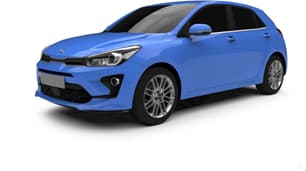
One of them is the car we’re looking at for this review: The Kia Rio S, with the catch being you’ll have to be happy changing gears yourself.
So, is this most basic Rio worth your while, or is it best left as a puzzling fossil for future generations to study? Let’s have a look.
Is the Tiggo 4 Pro the best light SUV on the market? No, it falls short in some key areas, but there’s also a lot to like about it.
The driving dynamics needs more tuning to put it on par with its class rivals. I believe the Chinese brand that invests in a local ride and handling program in the same way Hyundai and Kia have done in the past decade will have a big advantage with customers. The Tiggo 4 feels too vague and unresolved at times, especially in the wet, and that could be rectified with some minor tweaks.
The safety systems also need some major work to make them smoother and less intrusive so you don’t go searching for the button to switch them off - which defeats the purpose of having them in the first place.
But if you can look past (or accept) the driving and active safety issues, there are some big plus points for Chery’s latest model. It looks great inside and out, offers up plenty of value and is as practical as a compact SUV can be.
Chery has come a long way in a short space of time and with some more improvements it’s easy to see it continuing its sales growth with models like the Tiggo 4 Pro.
The Rio S Manual is a fun-to-drive little car with a big practicality and multimedia offering in a segment rapidly heading towards extinction.
While some elements of the drive experience are reminiscent of budget cars from 10-20 years ago, Kia makes up for it by wrapping the Rio in a contemporary looking and feeling package, ready for the buyer who needs no frills and demands no nonsense. Until the manual transmission goes the way of the dodo, there is almost no better option.