What's the difference?
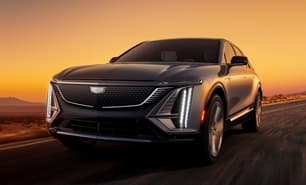
General Motors Australia & New Zealand (GMANZ) has recently expanded its full-electric Cadillac SUV range in Australia from one to three models, with the new Optiq and Vistiq joining the pioneering Lyriq in the company's local line-up of luxurious US-sourced SUVs and pickups.
The five-seater Lyriq is now the happy medium of the Cadillac trio, as it’s positioned between the smaller Optiq and larger Vistiq; the latter with a unique seven-seat design.
We recently spent a week aboard the Lyriq to see if its opulence, practicality, performance, driving range and price provide a compelling alternative to full-electric or combustion-powered rivals for high-end luxury SUV buyers.
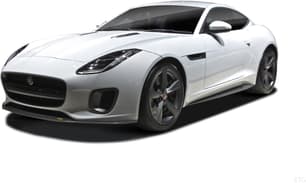
After a long gestation period where a variety of Jaguar corporate overlords toyed with the idea of a successor to the all-time iconic E-Type, the F-Type finally emerged in late 2013 to a global intake of breath.
It managed to capture just the right amount of Jag heritage, folded into a high-tech package, with a simple choice of supercharged V6 and V8 engines, housed in a supremely sleek convertible body.
Over time the formula has become more complex, with the arrival of a coupe version, powerhouse R and full-fat SVR variants, special editions including the exotic Project 7, and more recently, 2.0-litre, turbo four-cylinder models to make this stunning two-seater more accessible.
A late 2019 update added some extra catnip, including a redesigned nose and this is the flagship F-Type R, complete with supercharged V8 power and performance-focused underpinnings. Time to dive into this latest chapter of the Jaguar F-Type story.
The Lyriq Luxury combines handsome styling and luxurious appointments with responsive yet supple ride quality, the choice of relaxed driving or exhilarating performance as desired and a decent driving range. Its lack of towing ability may be a deal breaker for some, but it's certainly worthy of consideration by prestige SUV buyers with a penchant for electric power and (for now at least) sub-$100K drive-away pricing.
The Jaguar F-Type R is as fast and capable as it is beautiful. Although it's a little thirsty and comes up short on active safety, it's technically outstanding, delivering a stunning mix of performance, dynamics, and comfort.
The Lyriq has a generous 3095mm wheelbase, is more than five metres long (5005mm) and almost two metres wide (1977mm, including mirrors). Its 1620mm roof height is relatively low for a large SUV, resulting in a sleek and sporty profile combined with a muscular surefooted stance fronted by a finely-etched solid grille.
It rides on five-link independent suspension with GM’s ‘passive plus’ dampers, plus there’s electric power-assisted steering and big Brembo disc brakes in each corner featuring classy Cadillac scripts on the calipers. Turning circle is 12.1 metres, which is to be expected for a car of this size.
The interior design is an elegant blend of soft-touch materials and discreetly textured surface finishes with an emphasis on chrome and satin chrome highlights. It’s also spacious as you’d expect, with the panoramic sunroof creating a bright and airy feel.
We applaud Cadillac’s adherence to tradition with physical buttons and knurled dials and knobs for controlling key cabin and driving functions, in preference to annoying and distracting touchscreen menus. There’s also nice attention to detail with small jewel-like Cadillac emblems and scripts contributing to its prestige look and feel.
Although it kicked off as a roadster, a coupe version of the F-Type was always part of the plan. In fact, Jaguar's C-X16 concept, that in 2011 previewed the eventual production car, was a hardtop.
Following the Coupe's public reveal at the 2013 Los Angeles motor show, I asked Jaguar's then head of design, Ian Callum, if the bean counters had vetoed the concept's ultra-cool side-opening hatch door; one of many styling hat tips to the E-Type. His response was a wry smile and slow nod of the head.
It's a shame that door didn't make it to the showroom floor, but the E-Type is still a strong design influence on its successor.
At close to 4.5m long, around 1.9m wide, and a fraction over 1.3m tall, the F-Type R looks more compact in the metal than it does in photographs, arguably the hallmark of a successful sports car design.
A long, flowing (front-hinged) bonnet (Jaguar calls its shape 'liquid metal' sculpture) projects forward from a rear-set cabin, with broad but tightly wrapped haunches behind it. The 20-inch, 10-spoke rims (in 'Gloss Black' with diamond-turned finish) fill the wheel arches perfectly.
I'm a huge fan of the tail-light cluster design, subtly reprofiled in the late 2019 update, which echoes the shape of the Series 1 E-Type and other classic Jags, but found it harder to warm to the outgoing F-Type's squarish headlight treatment.
Always a subjective call, but to my eyes this car's slimmer, more feline (LED) eyes and ever-so-slightly larger grille deliver a better front to rear balance. And slender, flush-fitting pop-out exterior door handles remain sub-zero cool.
Our 'Santorini Black' test car had been optioned with the 'Exterior Black Design Pack' ($1820) for an extra hint of menace. It applies body-colour to the front splitter, side sills, and rear diffuser, at the same time blacking out the grille surround, side vents, side window surrounds, rear valance, Jaguar script, F-Type badge and 'Leaper' emblem.
Jaguar describes this two-seater as a '1+1', confirming the F-Type's focus on the driver, and our test car's tan leather interior emphasises the fact.
Tan dash on the passenger side, complete with flying buttress-style grab handle for extra support when g-force starts to build. Contrasted by all black and all business on the driver's side.
A broad centre stack houses the 10-inch multimedia touchscreen, with easy-to-use dials for the climate control system below. And the 12.3-inch reconfigurable hi-def instrument cluster (with graphics unique to the F-type) is a model of clarity and simplicity.
The latter offers a choice of display themes, including full nav map, but the default mode highlights a large central tachometer. Nice.
An impressive design feature carried over from the previous model is deployable front air vents. The dashtop remains flat until a given climate control temperature setting causes an upper section, housing a pair of adjustable vents, to gently rise. Very cool (no pun intended).
The Lyriq’s 2687kg kerb weight (largely due to its hefty propulsion battery) and 3200kg GVM results in a modest 513kg load capacity, which could easily be used up by five large adults before you could think about loading their luggage. It’s also not rated for towing in Australia which limits its appeal as a recreational vehicle.
Driver and front passenger enjoy palatial space and comfort plus ample storage with a bottle-holder and bin in each door. There's also a large glove box, pop-out drawer in the dash and a ‘floating’ centre console equipped with a lower tray, three USB-C ports, a 12V socket, wireless phone charging and a felt-lined box at the back with padded lid that doubles as an elbow rest.
The rear doors open wide for easy entry to the rear bench seat which even for tall people (I’m 186cm) offers ample room for knees and feet, enhanced by a flat floor with no transmission tunnel for centre passengers to straddle.
However, the top of my head brushes the roof lining and the unusually high floor height (we assume caused by the underfloor battery) results in raised thigh angles that concentrate more weight on the lower back.
Given the rounded lower backrest cushions, which integrate with the ISOFIX child seat anchorages in the outer seating positions, also protrude into a passenger's lower back region, the rear seat provides less than ideal comfort for tall passengers in contrast to the sublime luxury up front.
Even so, rear passenger storage is well catered for with a bottle-holder in each door, pockets on both front seat backrests and two cupholders in the fold-down centre armrest. The rear of the centre console offers two more USB-C ports, adjustable air vents and adjustments for numerous comfort settings.
The power tailgate provides access to the fully carpeted rear luggage area, which offers up to 793 litres (almost 0.8 cubic metres) of load volume with the rear seats upright and up to 1722 litres (almost 1.8 cubic metres) with the seats power-folded flat. This provides a versatile space for carrying everything from a mountain bike to flatpack furniture.
The luggage area also has four tie-down hooks, a 12V socket and a hinged floor section which when opened reveals an underfloor bin ideal for storing charging cables (see image).
If you're intending to daily drive your F-Type R, make sure your yoga fees are up to date, because entry and egress are for the fleet of foot and flexible of limb.
Once inside, though, within the bounds of its two-door coupe format, the F-Type offers an array of storage options, including a decent glove box, centre storage box/armrest, small door bins, a netted pocket on the top of the bulkhead between the seats, and a pair of console cupholders.
Power and connectivity runs to a 12V socket in the dash, with another in the central storage bin, alongside two USB-A ports, and a micro SIM slot.
Notwithstanding the (alloy) space saver plonked on the boot floor, the F-Type Coupe delivers worthwhile cargo space, with 310 litres on offer, rising to 408 with the load cover removed.
That's enough to swallow small (36-litre) and large (95-litre) suitcases together, and there are two (nicely chromed) tie-down anchor, as well as elasticised retaining straps at either end of a small ledge on the bulkhead.
The Lyriq is available in two trim levels comprising the Luxury from $122,000 and the Sport from $124,000 (both before on-road costs) but GMANZ is currently offering both for $95,000, drive-away.
These list and drive-away prices compare more than favourably when cross-shopping German luxury EV SUV alternatives like the Audi Q8 e-tron ($140,090), BMW iX ($142,900) or Mercedes-Benz EQE ($146,700).
The key differences between the Lyriq duo are visual, with the Luxury emphasising traditional elegance with lavish chrome detailing while the Sport is more performance oriented with greater use of dark trim elements.
Our test vehicle is the Luxury variant, finished in optional ‘Crystal White Tricoat’ paired with what GM describes as ‘Noir with Santorini Blue Accents’ interior trim.
Large and stylish in true Cadillac tradition, the Lyriq is built in right-hand drive form at GM’s Spring Hill manufacturing plant in Tennessee, instead of local RHD remanufacturing like its Chevrolet pick-up siblings.
Luxurious standard equipment includes big 21-inch multi-spoke alloy wheels and 275/45R21 self-sealing tyres (no spare), a full-length panoramic sunroof with power internal sunshade, power tailgate, rear roof spoiler, heated door mirrors with puddle lamps and more.
Concealed door handles discreetly extend to allow access to a sumptuous synthetic-leather interior with power adjustable/heated steering wheel, power front seats with heating/ventilation/massage/memory functions, outer rear seating also with heating/ventilation/massage, tri-zone climate control, five USB ports, 360-degree camera, wireless phone charging, a choice of 126 ambient interior lighting colours and more.
The driver is treated to a curved 33-inch colour LED instrument cluster/multimedia display which controls premium 19-speaker AKG Studio sound (including speakers in the front seat head restraints) and numerous multimedia functions including wireless Apple CarPlay/Android Auto connectivity.
It's hard to pin down direct competitors for the $262,936 F-Type R, except one; Porsche's 911 Carrera S, a clear price and performance rival at $274,000.
With a 3.0-litre, twin-turbo 'flat' six producing 331kW/530Nm the 911 is capable of accelerating from 0-100km/h in just 3.7sec, which (surprise, surprise) exactly matches the Jag's claimed performance number.
Cast the net a little wider and you'll snag the likes of Nissan's GT-R Track Edition on the low side ($235,000), and the Mercedes-Benz S 560 Coupe ($326,635) for around $50K above the F-Type's asking price. So, the standard features list needs to be impressive, and long story short, it is.
Drilling down to the depths of detail on this car's equipment spec would need a review of its own, so here's the highlights package.
The 10-inch 'Touch Pro' multimedia screen manages a 380-watt Meridian audio system featuring 10 speakers (including subwoofer), digital radio, dynamic volume control and a 10-channel amp, as well as Apple CarPlay, Android Auto, and Bluetooth connectivity.
It's also the gateway to the car's configurable dynamic set-up, 'Navigation Pro', phone connection, ambient lighting, reversing camera, and a lot more.
Full-grain 'Windsor' leather is applied to the 12-way, electrically-adjustable (plus memory) performance seats. There's also a 12.3-inch customisable digital instrument cluster, cruise control (and speed limiter), keyless entry and start, auto rain-sensing wipers, auto-dimming and power folding heated door mirrors (with memory), a switchable active exhaust, LED headlights, DRLs and tail-lights, as well as an electrically adjustable steering column (with memory), climate control, powered boot lid, 20-inch alloy wheels, racy red brake calipers, and specific 'R' branding on the leather-trimmed sports steering wheel, door tread plates, and centre console.
The Lyriq features drive units with single-speed transmissions located at the front and rear which provide permanent all-wheel drive. Each is equipped with an electric motor, which combined produce 388kW of power and 610Nm of torque. There are also numerous selectable drive modes. Claimed 0-100km/h acceleration time is a rapid 5.3 seconds.
The F-Type R is powered by Jaguar's all-alloy (AJ133) 5.0-litre supercharged V8 engine, featuring direct-injection, variable (intake) cam timing, and an Eaton (Roots-type) blower to produce 423kW (567hp) at 6500rpm, and 700Nm from 3500-5000rpm.
Drive goes to all four wheels via an eight-speed 'Quickshift' automatic transmission and Jaguar's own adaptive AWD system with 'Intelligent Driveline Dynamics' (IDD).
The AWD system is based on an electro-hydraulic multi-plate (wet) clutch, controlled by a centrifugal electro-hydraulic actuator. Default front/rear drive balance is 10/90, although Jaguar claims even a full shift of power from 100 per cent rear to 100 per cent front takes just 165 milliseconds.
The IDD system continuously monitors each wheel's speed and traction, suspension compression, steering angle and braking force, as well as the car's rotational state.
It then uses an algorithm to determine which wheel(s) are likely to lose traction, and before grip is lost, transfer drive to the wheels that can make best use of it.
GMANZ claims official combined consumption of 22.5kWh/100km and up to 530km of driving range from the Lyriq’s 102kW lithium-ion propulsion battery.
When we collected our test vehicle the dash display was showing 100 per cent charge and an estimated driving range of 583km.
We drove 239km over five days and still had 52 per cent charge and 300km of range remaining when we did an overnight charge at home using the supplied AC charger with a domestic three-pin plug.
However, after 15 hours the charge only increased from 52 to 65 per cent for just 76km of extra driving range, so we would recommend installing a dedicated wall box for faster home charging.
In total we covered 297km across our usual mix of suburban, city and highway driving with average energy consumption just under the Cadillac's official figure, so based on our test results a driving range of around 500km per charge is credible.
GMANZ claims 7.4kW AC charging can add up to 43km of range per hour, which increases to 94km with 22.1kW charging. And up to 128km of range can be added in just 10 minutes using 190kW DC fast charging.
Claimed fuel economy for the combined (ADR 81/02 - urban, extra-urban) cycle is 11.3L/100km, the F-Type R emitting 269g/km of CO2 in the process.
Despite the standard auto stop/start function, over close to 350km of city, suburban, and freeway running we recorded a (dash-indicated) average of 16.1L/100km.
That's a solid drinking habit, but it kind of goes with this performance territory, and we did lean into the throttle on a regular basis.
Recommended fuel is 95 RON premium unleaded, and you'll need 70 litres of it to fill the tank. That equates to a range of 619km in line with the factory claim, and 434km using our real-world number as a guide.
The driving position is supportive and comfortable with multiple power-adjustment of the seat and steering wheel ensuring people of most heights and girths can enjoy luxurious travel.
The low dashboard height ensures vision to the front of the bonnet and its array of physical buttons, knurled dials and knobs minimise touchscreen use, which makes driving far less distracting than having to search through digital menus.
It’s very quiet given its electric drivetrain. Most noise emanates from the tyres but that is also minimised by the audio system’s noise cancellation technology and the cabin’s effective acoustic insulation.
Ride quality and handling are excellent thanks to the Lyriq’s suspension refinement and close to an ideal 50-50 weight distribution mostly influenced by the positioning of its drive battery.
This battery’s considerable heft (we reckon it weighs at least half a tonne) also creates ample sprung weight to assist the suspension in smoothing out bumps and its underfloor location ensures a low centre of gravity for surefooted cornering.
Standing start acceleration is more than impressive for a luxury car weighing almost 2.7 tonnes, with instantaneous torque from its two electric motors helping to propel the Lyriq to a neck-straining 100km/h in about five seconds.
This spirited response creates a sporty and engaging drive that belies the vehicle’s weight, particularly in Sport mode with its sharper throttle response and firmer steering feel.
We also like the choices for regenerative braking which include ‘One Pedal Driving’ mode with 'Normal' and 'High' settings, both of which make the quartet of disc brakes largely redundant (the High setting feels like heavy pedal braking) while optimising battery charge. There’s also a small paddle on the steering wheel which increases regenerative braking in response to the amount of finger pressure applied to it.
Our only criticism from a driver’s point of view is the absence of a head-up display (HUD) and traffic sign recognition (TSR), both of which are notable omissions for a prestige vehicle in this price range.
Yep, no surprise, the 2021 Jaguar F-Type R is a proper, rip-snorting, beast of a machine. Weighing in at just over 1.7 tonnes, with 423kW/700Nm to propel it forward, in terms of straight line acceleration, it's every bit the scalded cat.
Bury the right foot and it will storm from 0-100km/h in just 3.7 seconds, with furious aural accompaniment courtesy of the 4.0-litre supercharged V8 and sports exhaust system. Electrically-actuated bypass valves in the latter's rear silencer remain closed until they automatically open under load, and boy, do they open up.
Prospective F-Type R owners wishing to remain on good terms with their neighbours will be pleased to know there's a 'Quiet Start function', but once you're a few blocks clear the engine is capable of alerting the entire suburb to you presence, complete with raucous crackles and pops on the overrun.
All 700Nm of maximum torque is available from 3500rpm through to 5000rpm, and mid-range thrust is ferocious. If you have access to a long enough private road Jaguar claims this car will storm on to a (electronically-limited!) maximum velocity of 300km/h.
The eight-speed auto transmission has picked up several tweaks courtesy of the XE-based SV Project 8, and it's brilliant. A conventional torque-converter based unit, rather than a dual-clutch, it's dubbed 'Quickshift', and that it does. Manual flicks between ratios, using the wheel-mounted paddles, are rapid and positive.
Head for your favourite B-road, and it's the F-Type R's ability to put every bit of its power down, without fuss, that impresses next. Push into a series of tight corners and the car grips, settles, and simply surges from one bend to the next, the tricky AWD system seamlessly shuffling torque between the axles and individual wheels.
The standard electronic active diff, and torque vectoring (by braking) also help keep everything under control, turning backroad tryhards into apex hunting virtuosos.
Suspension is by (aluminium) double wishbones front and rear, with revised springs and anti-roll bars added in the 2019 upgrade. Continuously-variable dampers underpin the 'Adaptive Dynamics' system, learning your style and adjusting accordingly.
The electrically-assisted power steering combines great road feel with satisfying accuracy, and the car feels balanced yet agile and responsive in enthusiastic driving.
In a more relaxed mode the adaptive set-up detects rough road conditions and adjusts the suspension settings for greater ride comfort. According to Jaguar, the damper valves and control algorithms have been recalibrated to improve low-speed comfort and high-speed control, and I can vouch for their effectiveness.
Not long after steering this F-Type R I spent some time in the supercharged V6 F-Type P380 R-Dynamic, and this R is far more compliant.
Rubber is a specially-developed Pirelli P Zero (265/35 fr - 305/30 rr), and the supremely efficient brakes are ventilated 380mm at the front, and 376mm rear.
The Lyriq does not come with an ANCAP rating (typical for small volume production) but has a suite of passive and active features like multiple airbags including dual head side-curtains, AEB with intersection/front pedestrian/cyclist detection, lane-keeping, a 360-degree camera, parking assist, tyre pressure monitoring, adaptive cruise control and lots more. The rear bench seat has ISOFIX child seat anchorages on the outer seating positions and top tethers across all three.
In this part of the market it's fair to expect a head-up display and traffic sign recognition as standard but both are missing in action.
The F-Type hasn't been assessed by ANCAP, but as well as the usual active safety suspects like ABS, EBD, traction and dynamic stability controls, the R features an AEB system operating at speeds above five km/h, Vehicle detection is in place at speeds of up to 80km/h, and pedestrian detection up to 60km/h.
The AWD system facilitates specific 'Rain', 'Ice', and 'Snow' modes, plus there's active high-beam, lane keep assist, a reversing camera, as well as front and rear parking sensors, and a 'Driver Condition Monitor.'
But cross-traffic alert (front or rear) is missing-in-action, blind spot assist is an option ($900), as is park assist ($700), and tyre pressure monitoring ($700). Any car that's crested the $250K barrier should have all of these as standard.
If an impact's unavoidable there are six airbags (front, side, and curtain). But remember, the front passenger seat is a no-go zone for a rear-facing child restraint. And Jaguar says, "A child should only travel in the front passenger seat if it is essential and national or state legislation permits it."
The Lyriq comes standard with a five-year/unlimited km warranty including five years' of roadside assist, while the propulsion battery is covered by a separate eight-year/160,000km warranty.
Scheduled servicing is every 12 months/12,000km whichever occurs first, with costs for the first five years of scheduled servicing or five scheduled services included in the vehicle’s purchase price. These servicing terms are generous for this segment, although some rivals offer similar enticements like Audi’s six-year ‘complimentary’ servicing for its Q8 e-tron.
GMANZ has a national network of 45-50 dealerships across most capital cities and some regional areas but not all offer vehicle servicing.
Jaguar covers its Australian new car range with a three-year/100,000km warranty, which looks particularly stingy next to the mainstream market norm of five years/unlimited km, and lags other premium players like Mercedes-Benz and Genesis, both sitting at five years/unlimited km.
On the plus side, paint and corrosion (perforation) are warranted for three years, and roadside assistance is complimentary for 12 months.
And on the big plus side, scheduled servicing for the F-Type (determined by an on-board service interval indicator) is free-of-charge for five years/130,000km.