What's the difference?
We appear to have reached a tipping point in the acceptance of electric vehicles in this country. The early adopters have made their switch but the technology has become more widely accepted, so now carmakers need to woo buyers with conventional means.
That means the tried and tested methods for making any car more appealing to a customer - lower cost and more equipment.
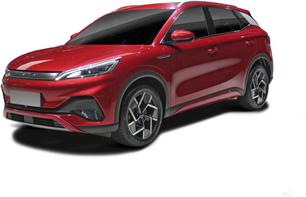
No car demonstrates this better than the BYD Atto 3, which is one of the most popular electric vehicles in Australia. But after an initial surge of buyers happy for a more affordable EV, BYD needs to find fresh ways to attract new customers.
So, for this updated 2024 Atto 3, BYD has made it cheaper and added some key new equipment, while retaining its previous strengths in terms of value and technology.
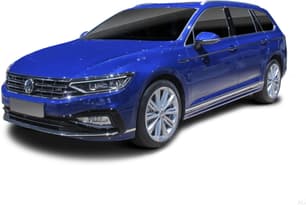
I'm calling it - the Volkswagen Passat is the forgotten hero of station wagons.
It's surprisingly large while retaining the creature comforts and understated styling of old-world glamour.
Then enters the R-Line. A badge that diehard Volkswagen enthusiasts know is synonymous with sporty performance and handling.
However, it can be overlooked for its more affordable rivals, the Mazda6 and Skoda Octavia wagons.
But does affordability take it out of the running for the family market? Or is this the answer for the drivers who don't want to compromise on performance but still have a kid (or three) to throw in the back?
I've been hauling my little family of three around town this week to see what the big blue wagon could do.
BYD hasn’t made dramatic changes to the Atto 3 for 2024, but has it done enough to lure in more buyers?
The additional equipment, namely the larger infotainment screen and new tyres, will certainly help make the Atto 3 more appealing. And the technology behind EVs is more understood by the average motorists, so the barriers to making the switch to electrification are dropping.
But the single biggest factor is likely to be the price. At a time when inflation (and other reasons) is driving the cost of new vehicles up, having your updated model go in the wrong direction will only help make potential buyers take notice.
Especially when you consider Toyota’s closest rival to the Atto 3, the bZ4X, starts at $66,000, while the Tesla Model Y is priced from $55,900, making both significantly more expensive propositions. Heck, the cheapest Toyota RAV4 hybrid model starts at $42,260, only marginally cheaper than the Atto 3 Standard Range.
So, if BYD can make its value argument strongly it will help lure more new buyers to take the plunge into the world of EVs.
I so enjoyed driving the Volkswagen Passat 206TSI R-Line. It's a roomy wagon that should fit a lot of different types of families. It still has sporty performance that will entice even the most reluctant family car buyer, so don't be turned off by its large proportions! I really like the comfort, convenience and handling of this one, so it gets an easy 8.0/10 from me.
My kid thought the blue colour was cool and loved having so many things to play with in the back seat. His only complaint was about the heavier doors but he still managed. He gives it an 8.0/10, too.
In a couple of words, not really. At least when it comes to the exterior design.
In fact, the biggest design change for 2024 is actually the colour of our test car, the new Cosmos Black. Apart from that, the rest of the Atto 3 is unchanged visually, which is becoming something of a trademark for EVs, at least from newer brands like BYD and Tesla.
Instead of worrying about adding a new grille, different headlights or an alternative alloy wheel design, brands like BYD are focusing on updating batteries, the technology and other software enhancements to keep their models fresh.
The only exterior change is at the rear, where the previous 'Build Your Dreams' lettering has been replaced by a simple 'BYD' badge.
As for the interior design, kudos to BYD for not following Tesla down the cost-saving-disguised-as-minimalist-design path, but personally the design aesthetic and the variety of colours and trims used aren’t to my taste, but I can see why others may love it. The ‘guitar string’ door pockets are likely a particularly polarsing design choice.
BYD has added a new interior option, with a black/blue trim for the examples finished with grey and black exteriors, while white and blue painted cars get a blue/grey interior.
The Passat is a large car and stands at 4708mm long, 1832mm wide and 1504mm high. The boxier rear and long nose make these proportions feel even larger.
The 2023 model doesn't see much change, if any, to the previous iteration. The exterior features the classic VW sharp pleat that runs the length of the body, slim-line LED lights and pronounce grille with lots of chrome accents found throughout.
It looks shiny, new and stylish, but not garish. You'd be proud to be seen in this.
The interior is also classically VW – sharp, a little pared back and hosting easy to see buttons and dials. The adjustable ambient lighting elevates the cabin space, as does the black headliner (R-Line exclusive).
An interesting feature is the directional air vents, the slatted design is carried the entire length of the dash which accentuates the width of the car. It all looks seamless and well thought out.
The Atto 3 remains classified as a ‘Medium SUV’ but blurs the line between mid-size and small in terms of dimensions, especially inside. It’s not in the same size game as the Toyota RAV4 or Mitsubishi Outlander, but is close in size to the likes of the Honda ZR-V and Mazda CX-5.
While there’s a few key practical storage spaces, there aren’t as many as some newer rivals, which does suggest the Atto 3 design is starting to date or just wasn’t well thought-out enough in the first place; such as putting all the switchgear in the centre console rather than on the dashboard.
This was probably done, at least in part, to accommodate the rotating touchscreen, which seems like a poor design and practicality choice to me. Especially the new one, which at 15.8-inches when rotated to the portrait mode it starts to interfere with your vision and the layout is more user-friendly in landscape mode - both when using the native multimedia system or your smartphone connection.
Space is respectable in the back seats, and there’s both a USB-A and USB-C port for charging devices. While out the back the boot measures 440 litres, which is a respectable amount of space for an SUV this size, but there’s only a tyre repair kit instead of a spare wheel.
A very practical family wagon with all passengers enjoying ample head and legroom.
The amenities in both rows are very good. The seats are fairly comfortable but the lumbar support isn't awesome. The massage function on the driver's side is a nice novelty but not strong enough to be called a massage. Think of it as gently stretching.
For storage, you get a decently sized middle console, dedicated phone tray, cooled glove box, drink bottle holders in each door and two cupholders.
There are plenty of charging options available for the front with two USB-C ports and a 12-volt socket. Bonus having the wireless Apple CarPlay (and Android Auto), as it's one less cable you have to worry about.
In general, I like how easy the tech is to use. The 9.2-inch touchscreen multimedia system looks great and is responsive.
It's easy to get all the connections going and you can pull the built-in satellite navigation directions through to the 10.25-inch digital instrument panel. I did miss having a head-up display this week but the info on the instrument panel is displayed clearly.
The back seat gets a couple of cupholders in the fold-down armrest and drink bottle holders in each door. It also has directional air vents with climate control, reading lights and one USB-C port for charging. However, I would have liked to have seen another charging port, to limit sibling squabbles.
There are ISOFIX child seat mounts on the outboard seats plus three top tether anchor points.
The backseat is wide enough to fit three child seats side by side if needed, and there's plenty of room for front passengers when a 0-4 rearward facing child seat is installed.
The windows are wide and offer good visibility but I really like the 142mm ground clearance. It was super easy for my six-year old to climb in and out.
The only thing he mentioned he didn't like was how heavy the doors were to operate. I don't mind this because they feel solid but they do swing wide, so be wary of letting any wild kids just hop out themselves in a crowded car park. You may get (or inflict) some dings.
The boot is a great size at 650L, with all seats in use, but if you pop down the backseats, that jumps up to 1780L.
The back seat also split-folds 40/20/40, which opens up your storage options. I enjoyed using the powered tailgate with kick function, it's handy on the grocery run.
As we just mentioned, price has been a critical tool for carmakers looking to keep demand for EVs rolling along as the early adopters fade, and BYD is not immune from this. Earlier in 2024 the Atto 3 Extended Range, the model we’re testing here, started at $50,011 before on-road costs. Then in April 2024, BYD announced a drive-away deal for $45,990 for pre-registered demos.
Now this updated model is priced from $47,499 (plus on-road costs), which is a jump up from the sale price, but is more than $3500 cheaper than the Atto 3 was at the start of 2024. Meanwhile, the Standard model is priced from $44,990 (plus on-road costs), which is also a saving of more than $3000 on the previous model.
The key difference between the Standard and Extended Range models are the batteries, so the specification is similar. Both variants are equipped with LED headlights, power tailgate, synthetic leather upholstery, power-adjustable front seats, 5.0-inch digital instrument panel and in-built satellite navigation.
One of the big ticket item changes for 2024 is the upgraded 15.8-inch multimedia touchscreen, which comes with BYD’s signature trick - rotating between portrait and landscape modes. This is upsized from 12.8-inch in the old model. Wireless Apple CarPlay and Android Auto are now standard too.
The 206 TSI R-Line is top of a (small) two-model line-up. Our example has been finished in 'Lapiz Blue', a colour exclusive to the R-Line. Otherwise, expect a sea of monochromatic colour options.
We say top model but it's not necessarily a massive jump up in specifications from the 162 TSI Elegance, you're paying for the engine performance on this one.
This R-Line will cost you $67,790, before on-road costs. That's a $4K price hike from the 2022 model with no discernible upgrades.
And that price tag still puts it well above its closest rivals, with the Octavia RS 180 TSI being $53,090 and the Mazda6 Atenza at $52,140 (all before on-road costs).
However, you won't be disappointed with the features list with Nappa leather-appointed seat trim, R-Line stitched detailing on the floor mats and seats, electric and heated front seats, massage function on the driver's seat, a panoramic sunroof as well as wireless Apple CarPlay and Android Auto all coming as standard.
The R-Line also enjoys 19-inch alloy wheels, a full-sized spare, heat insulating tinted glass, 65 per cent light reducing rear privacy glass and 30-way adjustable ambient lighting in the cabin.
As with the design there isn’t much to say about what’s powering the Atto 3 because it’s the same as the 2023 model. Both the Standard and Extended Range use the same front-mounted electric motor, which makes 150kW/310Nm and drives the front wheels through a single speed transmission.
With 0-100km/h times of 7.9 seconds and 7.3 seconds respectively for the Standard and Extended Range, the Atto 3 won’t shove you back in your seat, but it has adequate performance for a mid-size SUV.
The R-Line has a 2.0-litre, four-cylinder turbo-petrol powertrain with a maximum output of 206kW/350Nm.
That puts its engine specs 44kW up on the Elegance model and you feel that difference when you put your foot down.
The six-speed auto transmission provides surprisingly smooth shifting in most settings. The grunty engine combined with the all-wheel drive creates a sporty and purposeful driving experience.
The Standard Range has a rated driving range of 345km (WLTP) from a 49.92kWh ‘Blade’ lithium-iron phosphate (LFP) battery while the Extended Range’s bigger 60.48kWh unit increases that to 420km.
Charging is capped at 70kW (DC) for the Standard and 80kW (DC) for the Extended.
One of the major hurdles for EV brands is convincing people that they won’t run out of charge every day. At 420km the Extended Range Atto 3 will get most people through multiple days of commuting, so even with public charging you shouldn’t worry about range anxiety.
Those drivers with commutes longer than 420km per day should be looking at something other than an electric car (and probably a job closer to home).
That powerful engine does cost you a little bit with efficiency. The official combined fuel figure is 8.1L/100km and real-world testing saw my figure at 8.6L.
Not too bad for the type of driving I did this week, which was a combo of open-road and urban. I wasn't scared of putting my foot down but I would expect to see a double-digit figure in an urban setting.
This has a 66L fuel tank and based on the official combined figure, you should be able to get around 815km driving range, which is great.
Driving the updated Atto 3 feels… fine. Nothing special or class-leading, but within the expectations buyers should look for in a mid-size SUV. Which is meant as a compliment to BYD, as it is still a relatively new brand in this very competitive market and there are certainly some noticeably worse rivals in this same segment.
The Atto 3 may not be the most comfortable, most powerful or most dynamic mid-size SUV, but it’s a perfectly nice thing to drive and it will get you from Point A to Point B quietly and smoothly.
Another of the major changes for 2024 is BYD’s decision to ditch the fantastically named, but not very good Atlas Batman tyres, replacing them with Continental rubber. The Atlas tyres were a major drawback on the old model, lacking grip and detracting from the driving experience, with the new ‘Contis’ solving those problems.
The performance of this is to be commended. Powerful but poised, there's a sense of performance in reserve when you put your foot down and while still fun, it's not unbridled power.
It inspires confidence, the lower centre of gravity and firm steering meaning you tackle corners with minimum roll. You can accelerate out of a corner a little earlier than you might normally in this.
The cabin is nice and quiet with some road noise at higher speeds but not enough to intrude on chatting.
Despite suspension that feels sporty, aka stiff, the ride comfort is very good, with back seat passengers also feeling the comfort. There's not a lot of jostling in this.
Let's talk parking. It is a large car but you don't feel those dimensions when you park it.
It's very forgiving to manoeuvre with the front and rear parking sensors, crisp 360-degree view camera and tight 11.7m turning circle!
And if you're not confident it has a self-parking feature.
In terms of safety, both Atto 3 variants get a comprehensive list of both passive and active safety features, enough to score a five-star ANCAP rating.
There’s airbag coverage for all occupants, 360-degree parking cameras, adaptive cruise control, autonomous emergency braking, forward and rear collision warning, blind spot detection, lane departure warning, lane keeping assist, rear cross-traffic alert, rear cross-traffic brake and door open warning.
Most of these systems behaved themselves during our testing, although the forward collision warning did seem overly sensitive at times, and sounded alarms over potential accidents that simply weren’t a problem. Still, compared to some modern brands, the BYD systems performed well.
This has a good list of safety features with the following being standard: LED daytime running lights, lane departure alert, lane keeping aid, blind-spot monitoring, rear cross-traffic alert, 360-degree view reversing camera with dynamic guidelines, front and rear parking sensors, driver fatigue alert, and adaptive cruise control (with stop/go function).
I like the Emergency Assist feature which will provide multiple visual and sound alerts if there's no steering wheel activity detected. If there's still no driver input, the car will slow down and ultimately come to a complete stop.
The Passat's maximum five-star ANCAP safety rating has just expired and at the time of writing was yet to be retested.
The 2023 Passat has nine airbags, including side airbags for the rear outboard seats, as well as curtain airbags covering both rows.
There are three top tethers across the rear row and ISOFIX child seat mounts on the outboard positions.
BYD offers a six-year/150,000km warrant for the vehicle, with eight years/160,000km coverage for the batteries.
Service intervals are every 12 months of 20,000km and while a minor service is only $165, every second visit is more expensive, ranging from $498 to more than $600. There may be less oily bits under the bonnet but there’s still a cost to owning an electric car.
The Passat comes with a market standard five-year/unlimited km warranty, and roadside assistance is included for one year (through Allianz Insurance) if you get your car serviced at a VW centre.
There is a three- or five-year capped price servicing plan that can be pre-purchased and will save you money compared to the pay-as-you go option. Servicing averages $620 though, which is expensive for the class.
Servicing intervals are reasonable at every 12 months or 16,500km – whichever occurs first.