What's the difference?
We appear to have reached a tipping point in the acceptance of electric vehicles in this country. The early adopters have made their switch but the technology has become more widely accepted, so now carmakers need to woo buyers with conventional means.
That means the tried and tested methods for making any car more appealing to a customer - lower cost and more equipment.
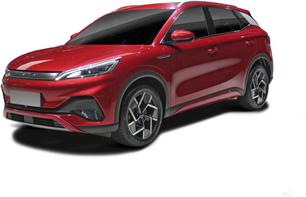
No car demonstrates this better than the BYD Atto 3, which is one of the most popular electric vehicles in Australia. But after an initial surge of buyers happy for a more affordable EV, BYD needs to find fresh ways to attract new customers.
So, for this updated 2024 Atto 3, BYD has made it cheaper and added some key new equipment, while retaining its previous strengths in terms of value and technology.
The Subaru WRX – do we even need to introduce this iconic beastie at all? With its rally winning roots to being a legend in its own suburb, the ‘Rex’ is a sports car that’s affordable and fun – although the one we’re testing here is one of the pricier versions: the WRX tS Spec B.
So what is a tS Spec B? Well, the old king of the WRX world – the STI – was retired at the end of the previous generation. Now this new grade – the tS Spec B – is the new WRX monarch.
So does this mean the tS Spec B has more superpower than the rest of the line-up? Does it have a bigger engine? How much more does it cost? Does it have a manual gearbox? So many questions – the answers are below.
BYD hasn’t made dramatic changes to the Atto 3 for 2024, but has it done enough to lure in more buyers?
The additional equipment, namely the larger infotainment screen and new tyres, will certainly help make the Atto 3 more appealing. And the technology behind EVs is more understood by the average motorists, so the barriers to making the switch to electrification are dropping.
But the single biggest factor is likely to be the price. At a time when inflation (and other reasons) is driving the cost of new vehicles up, having your updated model go in the wrong direction will only help make potential buyers take notice.
Especially when you consider Toyota’s closest rival to the Atto 3, the bZ4X, starts at $66,000, while the Tesla Model Y is priced from $55,900, making both significantly more expensive propositions. Heck, the cheapest Toyota RAV4 hybrid model starts at $42,260, only marginally cheaper than the Atto 3 Standard Range.
So, if BYD can make its value argument strongly it will help lure more new buyers to take the plunge into the world of EVs.
Possibly one of the most perfect performance cars you can drive daily for the price. Dynamic and fun to drive, but also easy to live with thanks to the drive modes for extra comfort, the high ground clearance and the practicality that comes with four doors, lots of storage and a big boot.
The tS Spec B is the priciest WRX in the range, but compared to rivals it's also great value. A car I would buy with my own money for sure.
In a couple of words, not really. At least when it comes to the exterior design.
In fact, the biggest design change for 2024 is actually the colour of our test car, the new Cosmos Black. Apart from that, the rest of the Atto 3 is unchanged visually, which is becoming something of a trademark for EVs, at least from newer brands like BYD and Tesla.
Instead of worrying about adding a new grille, different headlights or an alternative alloy wheel design, brands like BYD are focusing on updating batteries, the technology and other software enhancements to keep their models fresh.
The only exterior change is at the rear, where the previous 'Build Your Dreams' lettering has been replaced by a simple 'BYD' badge.
As for the interior design, kudos to BYD for not following Tesla down the cost-saving-disguised-as-minimalist-design path, but personally the design aesthetic and the variety of colours and trims used aren’t to my taste, but I can see why others may love it. The ‘guitar string’ door pockets are likely a particularly polarsing design choice.
BYD has added a new interior option, with a black/blue trim for the examples finished with grey and black exteriors, while white and blue painted cars get a blue/grey interior.
The WRX tS Spec B stands out from its siblings with 19-inch matte-grey alloy wheels with gold Brembo brakes and if you don’t notice any of that, then surely you won’t miss the gigantic rear wing planted on the boot lid.
The air scoop jutting out of the bonnet like a pizza oven is standard across the WRX range and it looks tough. There’s the rear diffuser which also looks beefy but also a bit plasticky, and the quad exhaust, that’s nice, and so is the note which wafts out of them at idle.
The tS Spec B’s Recaro sports seats are also in other tS grades – they do look and feel good, and offer outstanding comfort and support.
The rest of the cabin is much the same as other WRX grades with a large portrait-style screen, physical buttons for climate control, and yes, that is a traditional, mechanical handbrake you can see in images.
This is a sporty-looking although slightly outdated cabin compared with more modern rivals.
The Atto 3 remains classified as a ‘Medium SUV’ but blurs the line between mid-size and small in terms of dimensions, especially inside. It’s not in the same size game as the Toyota RAV4 or Mitsubishi Outlander, but is close in size to the likes of the Honda ZR-V and Mazda CX-5.
While there’s a few key practical storage spaces, there aren’t as many as some newer rivals, which does suggest the Atto 3 design is starting to date or just wasn’t well thought-out enough in the first place; such as putting all the switchgear in the centre console rather than on the dashboard.
This was probably done, at least in part, to accommodate the rotating touchscreen, which seems like a poor design and practicality choice to me. Especially the new one, which at 15.8-inches when rotated to the portrait mode it starts to interfere with your vision and the layout is more user-friendly in landscape mode - both when using the native multimedia system or your smartphone connection.
Space is respectable in the back seats, and there’s both a USB-A and USB-C port for charging devices. While out the back the boot measures 440 litres, which is a respectable amount of space for an SUV this size, but there’s only a tyre repair kit instead of a spare wheel.
What’s so appealing about the WRX is that despite it being a performance car, it’s based on a regular 'small' sedan and with that comes all the practicality of a four-door, five-seater with a big 411-litre boot.
Space inside is excellent with plenty of room up front, while rear legroom is ample enough for me, at 189cm tall, to sit behind my driving position with plenty of headroom, too.
That all said the Recaro seats up front are on the snug side and I know they’re supposed to be, but I’m just saying they might not suit everybody – and by that I mean everybody.
Those with long legs might also find they have to adjust their driving position when letting out the clutch.
Big door pockets throughout, four cupholders, and hidey-holes for items throughout make for good cabin storage.
There are four USB ports and one 12V outlet, but no wireless phone charging to be found.
As we just mentioned, price has been a critical tool for carmakers looking to keep demand for EVs rolling along as the early adopters fade, and BYD is not immune from this. Earlier in 2024 the Atto 3 Extended Range, the model we’re testing here, started at $50,011 before on-road costs. Then in April 2024, BYD announced a drive-away deal for $45,990 for pre-registered demos.
Now this updated model is priced from $47,499 (plus on-road costs), which is a jump up from the sale price, but is more than $3500 cheaper than the Atto 3 was at the start of 2024. Meanwhile, the Standard model is priced from $44,990 (plus on-road costs), which is also a saving of more than $3000 on the previous model.
The key difference between the Standard and Extended Range models are the batteries, so the specification is similar. Both variants are equipped with LED headlights, power tailgate, synthetic leather upholstery, power-adjustable front seats, 5.0-inch digital instrument panel and in-built satellite navigation.
One of the big ticket item changes for 2024 is the upgraded 15.8-inch multimedia touchscreen, which comes with BYD’s signature trick - rotating between portrait and landscape modes. This is upsized from 12.8-inch in the old model. Wireless Apple CarPlay and Android Auto are now standard too.
The WRX tS Spec B sits at the top of its range and lists for $61,490 plus on-road costs, making it expensive for the model compared to say the entry-grade WRX which is only $48,190 and pairs the same engine with the same gearbox.
Still, it comes with some unique features which makes this grade stand out from the other lower rungs in the WRX hierarchy.
The tS Spec B comes standard with 19-inch alloy wheels, six-piston front and two-piston rear high-performance Brembo brakes with ventilated and drilled discs, an enormous rear spoiler, STI Performance Mufflers at no extra cost, Recaro sports bucket seats in the front, a leather STI steering wheel and a 12.3-inch instrument cluster.
Also unique to the grade are drive modes which allow the suspension, engine, and steering to be customised for comfort or performance.
Standard on the ts Spec B, too, is equipment you'll find on lower grades in the WRX range, including LED headlights and daytime running lights, privacy glass, dual-zone climate control, an 11.6-inch touchscreen, a 10-speaker Harman Kardon sound system, wireless Apple CarPlay and Android Auto, proximity locking and push-button start.
Rivals to the WRX tS Spec B include the Hyundai i30 N Sedan that's $10K cheaper, and the Honda Civic Type R and Volkswagen Golf R which are both at least $10K more. The value for money in the tS Spec B is great compared to competitors, but there’s even better value to be found in the lower-grade WRXs.
As with the design there isn’t much to say about what’s powering the Atto 3 because it’s the same as the 2023 model. Both the Standard and Extended Range use the same front-mounted electric motor, which makes 150kW/310Nm and drives the front wheels through a single speed transmission.
With 0-100km/h times of 7.9 seconds and 7.3 seconds respectively for the Standard and Extended Range, the Atto 3 won’t shove you back in your seat, but it has adequate performance for a mid-size SUV.
Who doesn’t love the sound of a boxer engine? Well, probably your neighbours if you own a WRX. And while the tS Spec B doesn’t have any more power than any of the other WRXs – with it sharing the same 2.4-litre turbo-petrol four-cylinder boxer engine as the rest of the line-up – the 202kW and 350Nm feel like the perfect amount of power and torque for this package.
It’s probably been about six months since I last drove a car with a manual gearbox, and that shows how rare they’re becoming when you’re testing a new car nearly every week.
The six-speed manual in the tS Spec B has satisfying clunky shifts and a heavy-feeling clutch pedal, but it all plays along perfectly with this engine, sending the drive to all four wheels.
If you’re looking for a version of the tS Spec B with an automatic transmission you’ll be searching forever because this grade only comes with a manual gearbox. There are WRXs with autos – well, a CVT – the entry grade, the RS and the tS.
The Standard Range has a rated driving range of 345km (WLTP) from a 49.92kWh ‘Blade’ lithium-iron phosphate (LFP) battery while the Extended Range’s bigger 60.48kWh unit increases that to 420km.
Charging is capped at 70kW (DC) for the Standard and 80kW (DC) for the Extended.
One of the major hurdles for EV brands is convincing people that they won’t run out of charge every day. At 420km the Extended Range Atto 3 will get most people through multiple days of commuting, so even with public charging you shouldn’t worry about range anxiety.
Those drivers with commutes longer than 420km per day should be looking at something other than an electric car (and probably a job closer to home).
The WRX tS Spec B manual really likes its fuel – it’s a hungry beastie and everybody who’s about to get into the WRX life should be aware that, like most petrol performance cars, it’s not super fuel efficient.
Subaru is beautifully honest with its fuel consumption figures, which have the the WRX tS Spec B using 10.4L/100km in combined driving and 14.2L/100km in urban environment, which is so close to what we recorded - ours was 14.1/100km after mainly urban driving. You'll also have to feed it 95 RON.
The fuel tank is a healthy 63 litres in volume and that should give you a range of 606km – in theory. Do not test this theoretical range somewhere remote, okay?
Driving the updated Atto 3 feels… fine. Nothing special or class-leading, but within the expectations buyers should look for in a mid-size SUV. Which is meant as a compliment to BYD, as it is still a relatively new brand in this very competitive market and there are certainly some noticeably worse rivals in this same segment.
The Atto 3 may not be the most comfortable, most powerful or most dynamic mid-size SUV, but it’s a perfectly nice thing to drive and it will get you from Point A to Point B quietly and smoothly.
Another of the major changes for 2024 is BYD’s decision to ditch the fantastically named, but not very good Atlas Batman tyres, replacing them with Continental rubber. The Atlas tyres were a major drawback on the old model, lacking grip and detracting from the driving experience, with the new ‘Contis’ solving those problems.
This may sound strange, but a few months ago I was squished into the tiny cockpit of a 2025 Chevrolet Corvette Z06 sitting at the traffic lights wishing I was in the 2020 Subaru WRX STI beside me. And having driven so many supercars and muscle cars in the past, many costing hundreds of thousands of dollars, I still see the WRX as being such a perfect daily driver performance car.
Sure, it doesn't have Porsche 911 dynamics or the straight-line acceleration of many electric cars, but it's the way the way this boxer engine interacts so beautifully the six-speed manual gearbox, combined with sticky all-wheel drive, a wonderful balance and such direct steering that make the WRX ts Spec B feel exactly right.
The tS Spec B is very much at home in the suburbs dotted with roundabouts and obstacles like speed bumps, but they all become part of the fun of driving this car in the same way that when you let it loose and open road it performs happily and so well, too.
The suspension does feel firm, but part of the big news of this tS Spec B is that it now has a drive mode function and this allow you to adjust the suspension, the steering and the throttle response to either sporty or comfort settings. This just makes this car an even more agreeable thing to live with daily.
In terms of safety, both Atto 3 variants get a comprehensive list of both passive and active safety features, enough to score a five-star ANCAP rating.
There’s airbag coverage for all occupants, 360-degree parking cameras, adaptive cruise control, autonomous emergency braking, forward and rear collision warning, blind spot detection, lane departure warning, lane keeping assist, rear cross-traffic alert, rear cross-traffic brake and door open warning.
Most of these systems behaved themselves during our testing, although the forward collision warning did seem overly sensitive at times, and sounded alarms over potential accidents that simply weren’t a problem. Still, compared to some modern brands, the BYD systems performed well.
The WRX hasn’t been given an ANCAP rating and up until only last year manual versions weren’t equipped with safety tech such as autonomous emergency braking.
The WRX tS Spec B manual has AEB, blind-spot warning, rear cross-traffic alert, adaptive cruise control, lane departure warning and high-beam assist.
It’s interesting but not particularly good that manual versions of the WRX don’t have parking sensors. I don't need to tell you that parking sensors on cars in the city are so helpful for squeezing into tight spots without nudging the vehicle or railing behind you.
A space-saver spare wheel instead of a full-sized spare isn’t ideal either in Australia where dirt and gravel roads beckon the WRX.
For child seats there are three top-tether anchor points and two ISOFIX mounts across the second row.
BYD offers a six-year/150,000km warrant for the vehicle, with eight years/160,000km coverage for the batteries.
Service intervals are every 12 months of 20,000km and while a minor service is only $165, every second visit is more expensive, ranging from $498 to more than $600. There may be less oily bits under the bonnet but there’s still a cost to owning an electric car.
The WRX tS Spec B is covered by Subaru’s five-year/unlimited-kilometre warranty, which while the standard for the mainstream segment, is behind the seven-plus terms we're now seeing from a lot of Chinese and Japanese car brands.
Servicing is recommended every 15,000km/12 months and can be expensive compared to other brands, with the five years of capped price servicing coming to $2692.