What's the difference?
We appear to have reached a tipping point in the acceptance of electric vehicles in this country. The early adopters have made their switch but the technology has become more widely accepted, so now carmakers need to woo buyers with conventional means.
That means the tried and tested methods for making any car more appealing to a customer - lower cost and more equipment.
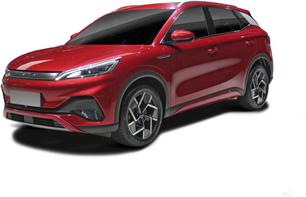
No car demonstrates this better than the BYD Atto 3, which is one of the most popular electric vehicles in Australia. But after an initial surge of buyers happy for a more affordable EV, BYD needs to find fresh ways to attract new customers.
So, for this updated 2024 Atto 3, BYD has made it cheaper and added some key new equipment, while retaining its previous strengths in terms of value and technology.
Start occupying the top step of the World Rally Championship podium and the brand benefits are huge. Just ask Audi, Ford, Mitsubishi, Subaru, Toyota, Volkswagen and the many others which have done exactly that to great effect over the years.
And Hyundai’s most recent foray into the WRC has focused on the compact i20, and here we have that rally weapon’s civilian offspring, the much-anticipated i20 N.
It’s a lightweight, high-tech, city-sized, hot hatch designed to steer you away from Ford’s Fiesta ST or VW’s Polo GTI, and add even more lustre to Hyundai’s N performance badge.
BYD hasn’t made dramatic changes to the Atto 3 for 2024, but has it done enough to lure in more buyers?
The additional equipment, namely the larger infotainment screen and new tyres, will certainly help make the Atto 3 more appealing. And the technology behind EVs is more understood by the average motorists, so the barriers to making the switch to electrification are dropping.
But the single biggest factor is likely to be the price. At a time when inflation (and other reasons) is driving the cost of new vehicles up, having your updated model go in the wrong direction will only help make potential buyers take notice.
Especially when you consider Toyota’s closest rival to the Atto 3, the bZ4X, starts at $66,000, while the Tesla Model Y is priced from $55,900, making both significantly more expensive propositions. Heck, the cheapest Toyota RAV4 hybrid model starts at $42,260, only marginally cheaper than the Atto 3 Standard Range.
So, if BYD can make its value argument strongly it will help lure more new buyers to take the plunge into the world of EVs.
The i20 N hatch is so much fun, and not in a special occasion kind of way. It’s an affordable, compact performance car that’ll put a smile on your face no matter where or when you drive it. The Fiesta ST and Polo GTI have a worthy new playmate. I love it!
In a couple of words, not really. At least when it comes to the exterior design.
In fact, the biggest design change for 2024 is actually the colour of our test car, the new Cosmos Black. Apart from that, the rest of the Atto 3 is unchanged visually, which is becoming something of a trademark for EVs, at least from newer brands like BYD and Tesla.
Instead of worrying about adding a new grille, different headlights or an alternative alloy wheel design, brands like BYD are focusing on updating batteries, the technology and other software enhancements to keep their models fresh.
The only exterior change is at the rear, where the previous 'Build Your Dreams' lettering has been replaced by a simple 'BYD' badge.
As for the interior design, kudos to BYD for not following Tesla down the cost-saving-disguised-as-minimalist-design path, but personally the design aesthetic and the variety of colours and trims used aren’t to my taste, but I can see why others may love it. The ‘guitar string’ door pockets are likely a particularly polarsing design choice.
BYD has added a new interior option, with a black/blue trim for the examples finished with grey and black exteriors, while white and blue painted cars get a blue/grey interior.
Hyundai’s current WRC challenger may be a coupe but this angry little five-door hatch absolutely looks the part.
We’re assured the N is the only current-generation i20 we’ll see in the Aussie market, and it runs with a relatively low (101mm) ground clearance, a grille pattern inspired by a chequered flag, black mirror shells, and menacing, angular LED headlights.
The ‘Satin Grey’ 18-inch alloys are unique to this car, as are the side skirts, raised rear spoiler, darkened LED tail-lights, a ‘sort-of’ diffuser under the rear bumper and a single fat exhaust exiting on the right-hand side.
There are three standard paint options - ‘Polar White’, ‘Sleek Silver’, and N’s signature shade of ‘Performance Blue’ (as per our test car) as well as two premium shades - ‘Dragon Red’, and ‘Phantom Black’ (+$495). A contrasting Phantom Black roof adds $1000.
Inside, the N-branded sports seats, trimmed in black cloth, featuring integrated headrests and blue contrast stitching, are unique to the i20 N. There’s a leather-trimmed sports steering wheel, handbrake lever and gear knob, as well as metal finishers on the pedals.
The 10.25-inch digital instrument cluster and same-sized multimedia screen look slick, and ambient lighting heightens the hi-tech mood.
The Atto 3 remains classified as a ‘Medium SUV’ but blurs the line between mid-size and small in terms of dimensions, especially inside. It’s not in the same size game as the Toyota RAV4 or Mitsubishi Outlander, but is close in size to the likes of the Honda ZR-V and Mazda CX-5.
While there’s a few key practical storage spaces, there aren’t as many as some newer rivals, which does suggest the Atto 3 design is starting to date or just wasn’t well thought-out enough in the first place; such as putting all the switchgear in the centre console rather than on the dashboard.
This was probably done, at least in part, to accommodate the rotating touchscreen, which seems like a poor design and practicality choice to me. Especially the new one, which at 15.8-inches when rotated to the portrait mode it starts to interfere with your vision and the layout is more user-friendly in landscape mode - both when using the native multimedia system or your smartphone connection.
Space is respectable in the back seats, and there’s both a USB-A and USB-C port for charging devices. While out the back the boot measures 440 litres, which is a respectable amount of space for an SUV this size, but there’s only a tyre repair kit instead of a spare wheel.
Although it’s just 4.1m long, the i20N is impressively space efficient with decent room up front and a surprising amount of head and legroom in the back.
Sitting behind the driver's seat, set for my 183cm position, I had plenty of head and legroom, although, understandably, three people across the back will need to be kids or understanding adults, on a short journey.
And there are plenty of storage and power options, including the wireless device charge pad in front of the gear lever, which doubles as an oddments tray when not in use, two cupholders in the front centre console, door bins with room for large bottles, a modest glove box and a lidded cubby/armrest between the front seats.
No armrest or air vents in the back, but there are map pockets on the front seat backs, and again, bins in the doors with room for bottles
There is a media USB-A socket and another for charging, as well as a 12V outlet in the front, and another USB-A power socket in the back. Hyundai suggests the latter could be handy for powering track day cameras. Great idea!
Boot space is impressive for such a compact hatch. With the rear seats upright there’s 310 litres (VDA) available. Fold the 60/40 split-folding rear backrest and no less than 1123 litres opens up.
A dual-height floor can be flat for long stuff, or deep for tall stuff, there are bag hooks provided, four tie down anchors, and a luggage net included. The spare is a space saver.
As we just mentioned, price has been a critical tool for carmakers looking to keep demand for EVs rolling along as the early adopters fade, and BYD is not immune from this. Earlier in 2024 the Atto 3 Extended Range, the model we’re testing here, started at $50,011 before on-road costs. Then in April 2024, BYD announced a drive-away deal for $45,990 for pre-registered demos.
Now this updated model is priced from $47,499 (plus on-road costs), which is a jump up from the sale price, but is more than $3500 cheaper than the Atto 3 was at the start of 2024. Meanwhile, the Standard model is priced from $44,990 (plus on-road costs), which is also a saving of more than $3000 on the previous model.
The key difference between the Standard and Extended Range models are the batteries, so the specification is similar. Both variants are equipped with LED headlights, power tailgate, synthetic leather upholstery, power-adjustable front seats, 5.0-inch digital instrument panel and in-built satellite navigation.
One of the big ticket item changes for 2024 is the upgraded 15.8-inch multimedia touchscreen, which comes with BYD’s signature trick - rotating between portrait and landscape modes. This is upsized from 12.8-inch in the old model. Wireless Apple CarPlay and Android Auto are now standard too.
At $32,490, before on-road costs, the i20 N is to all intents and purposes the same price as Ford’s Fiesta ST ($32,290), and the VW Polo GTI ($32,890).
It’s offered in one spec only, and aside from the standard safety and performance tech, this new hot Hunday boasts a solid standard features list, including: climate control, LED headlights, tail-lights, daytime running lights and fog lights, 18-inch alloys, Bose audio with Apple CarPlay/Android Auto and digital radio, cruise control, nav (with live traffic updates), rear privacy glass, keyless entry and start (as well as remote start), sports front seats, the leather-trimmed sports steering wheel, handbrake lever and gear knob, alloy-faced pedals, auto rain-sensing wipers, power-folding exterior mirrors, plus 15W Qi wireless smartphone charging.
There’s more, like the 10.25-inch ‘N Supervision’ digital instrument cluster, plus a same-size multimedia touchscreen in the centre of the dash, a track maps feature (Sydney Motorsport Park is already in there), as well as an acceleration timer, g-force meter, plus power, engine temperature, turbo boost, brake pressure and throttle gauges.
You get the idea, and it goes toe-to-toe with the Fiesta ST and Polo GTI.
As with the design there isn’t much to say about what’s powering the Atto 3 because it’s the same as the 2023 model. Both the Standard and Extended Range use the same front-mounted electric motor, which makes 150kW/310Nm and drives the front wheels through a single speed transmission.
With 0-100km/h times of 7.9 seconds and 7.3 seconds respectively for the Standard and Extended Range, the Atto 3 won’t shove you back in your seat, but it has adequate performance for a mid-size SUV.
The i20 N is powered by a turbo intercooled 1.6 litre four-cylinder petrol engine, driving the front wheels via a six-speed manual gearbox and Torsen-type mechanical limited slip differential.
The all-alloy (G4FP) engine features high-pressure direct-injection and an overboost function, producing 150kW from 5500-6000rpm, and 275Nm from 1750-4500rpm (rising to 304Nm on overboost at max throttle from 2000-4000rpm).
And the engine’s mechanical ‘Continuously Variable Valve Duration’ set-up is something of a breakthrough. In fact, Hyundai claims it as a world’s first for a production engine.
Not timing, not lift, but variable duration of valve opening (managed independently of timing and lift), to strike the optimal balance between power and economy across the rev range.
The Standard Range has a rated driving range of 345km (WLTP) from a 49.92kWh ‘Blade’ lithium-iron phosphate (LFP) battery while the Extended Range’s bigger 60.48kWh unit increases that to 420km.
Charging is capped at 70kW (DC) for the Standard and 80kW (DC) for the Extended.
One of the major hurdles for EV brands is convincing people that they won’t run out of charge every day. At 420km the Extended Range Atto 3 will get most people through multiple days of commuting, so even with public charging you shouldn’t worry about range anxiety.
Those drivers with commutes longer than 420km per day should be looking at something other than an electric car (and probably a job closer to home).
Hyundai’s official fuel economy figure for the i20 N, on the ADR 81/02 - urban, extra-urban cycle, is 6.9L/100km, the 1.6-litre four emitting 157g/km of C02 in the process.
Stop/start is standard, and we saw a dash-indicated average of 7.1L/100km over several hundred km of city, B-road and freeway running on the occasionally ‘spirited’ launch drive.
You’ll need 40 litres of ‘standard’ 91 RON unleaded to brim the tank, which translates to a range of 580km using the official figure and 563 kays using our launch test drive number.
Driving the updated Atto 3 feels… fine. Nothing special or class-leading, but within the expectations buyers should look for in a mid-size SUV. Which is meant as a compliment to BYD, as it is still a relatively new brand in this very competitive market and there are certainly some noticeably worse rivals in this same segment.
The Atto 3 may not be the most comfortable, most powerful or most dynamic mid-size SUV, but it’s a perfectly nice thing to drive and it will get you from Point A to Point B quietly and smoothly.
Another of the major changes for 2024 is BYD’s decision to ditch the fantastically named, but not very good Atlas Batman tyres, replacing them with Continental rubber. The Atlas tyres were a major drawback on the old model, lacking grip and detracting from the driving experience, with the new ‘Contis’ solving those problems.
Unusually for a manual car, the i20 N features a launch control system (with an adjustable rpm setting), which we found fiddly to get working, but with or without it, Hyundai claims a snappy 0-100km/h time of 6.7sec.
And it’s such a pleasure to steer a car with a slick-shifting manual gearbox. The six-speed unit features a rev-matching function accessed via the press of a racy red button on the steering wheel.
Buf for those who prefer an old-school, double-shuffle, heal-and-toe tap dance across the pedals, the relationship between the brake and accelerator is perfect.
And if you’re keen on Walter Rohrl-style left-foot braking, to help steady the car or steer it in fast cornering, the ESC is switchable through to Sport mode or completely off, allowing fuss-free simultaneous brake and throttle application.
There’s even a shift-timing indicator near the top of the instrument cluster, with colour bars closing in on each other as the tacho needle pushes towards the rev limiter. Fun.
Engine and exhaust noise is a combination of a raspy induction note and adjustable crackle and pop out the back, courtesy of a mechanical flap in the exhaust system, adjustable through three settings in N mode.
Traditionalists may not be thrilled by the addition of in-cabin synthetic enhancement of all of the above, but the net effect is thoroughly enjoyable.
It’s worth remembering in this context N stands for Namyang, Hyundai’s sprawling proving ground south of Seoul where the car was developed, and the Nürburgring where this go-fast i20 was fine-tuned.
The body has been specifically reinforced at 12 key points, along with additional welds, and “bolt-in underbody structures” to make the i20 N stiffer and more responsive.
The strut front, coupled (dual) torsion beam rear suspension has also been set up with increased (neg) camber and a revised anti-roll bar at the front, as well as specific springs, shocks and bushings.
A compact, mechanical LSD is added to the mix, and grippy 215/40 x 18 Pirelli P-Zero rubber was produced specifically for the car and is stamped ‘HN’ for Hyundai N. Impressive.
The end result is outstanding. Low-speed ride is firm, with suburban bumps and lumps making their presence felt, but that’s what you’re signing on for in a hot hatch at this price point.
This car feels balanced and well buttoned down. Power delivery is agreeably linear and at a fraction over 1.2 tonnes the i20 N is light, responsive and nimble. Mid-range urge is strong.
Steering feel is good, with assistance from a column-mounted motor taking nothing away from an intimate connection with the front tyres.
The sports front seats proved grippy and comfortable over long stints behind the wheel, and playing with the multiple N drive modes tweaking the engine, ESC, exhaust, and steering just adds to the involvement. There are twin N switches on the wheel for quick access to custom set-ups.
And that Torsen LSD is brilliant. I tried my best to provoke a spinning inside front wheel on the exit of tight corners, but the i20 N just puts its power down without so much as a chirp, as it rockets towards the next bend.
The brakes are 320mm vented at the front and 262mm solid at the rear. Calipers are single piston, but they’ve been beefed up and fitted with high-friction pads. The master cylinder is bigger than the standard i20 and the front rotors are cooled by lower control arm mounted air guides blowing through vented knuckles.
The launch i20 N fleet of around half a dozen cars copped an hours long hot lap pounding at Wakefield Park Raceway, near Goulburn NSW without drama. They’re well up to the task.
One niggle is a large turning circle. The data sheet says 10.5m but it feels like the car is carving a wide arc in U-turns or three-point turns.
A 2580mm wheelbase between the bumpers of a 4075mm car is substantial, and the steering’s relatively low gearing (2.2 turns lock-to-lock) no doubt has a lot to do with it. The price you pay for quick turn-in.
In terms of safety, both Atto 3 variants get a comprehensive list of both passive and active safety features, enough to score a five-star ANCAP rating.
There’s airbag coverage for all occupants, 360-degree parking cameras, adaptive cruise control, autonomous emergency braking, forward and rear collision warning, blind spot detection, lane departure warning, lane keeping assist, rear cross-traffic alert, rear cross-traffic brake and door open warning.
Most of these systems behaved themselves during our testing, although the forward collision warning did seem overly sensitive at times, and sounded alarms over potential accidents that simply weren’t a problem. Still, compared to some modern brands, the BYD systems performed well.
Although it hasn’t been assessed by ANCAP or Euro NCAP, the headline on active safety tech in the i20N is the inclusion of ‘Forward Collision-Avoidance Assist’, which is Hyundai-speak for AEB (city and urban speed with pedestrian detection).
And from there it’s assist city, with ‘Lane Keeping Assist’, ‘Lane Following Assist’, ‘High Beam Assist’, and ‘Intelligent Speed Limit Assist.’
Followed by all the warnings: ‘Blind Spot Collision Warning’, ‘Rear Cross-Traffic Collision Warning’, ‘Driver Attention Warning’, and ‘Parking Distance Warning’ (front and rear).
The i20 N also features a tyre pressure monitoring system and a reversing camera. But if, despite all that, a crash is unavoidable there are six airbags on-board - driver and front passenger front and side (thorax), and side curtain - as well as three top tether points and two ISOFIX locations across the back row for child seats.
BYD offers a six-year/150,000km warrant for the vehicle, with eight years/160,000km coverage for the batteries.
Service intervals are every 12 months of 20,000km and while a minor service is only $165, every second visit is more expensive, ranging from $498 to more than $600. There may be less oily bits under the bonnet but there’s still a cost to owning an electric car.
Hyundai covers the i20 N with a five year/unlimited km warranty, and the ‘iCare’ program includes a ‘Lifetime Service Plan’, as well as 12 months 24/7 roadside assist and an annual sat nav map update (the latter two renewed free-of-charge each year, up to 10 years, if the car is serviced at an authorised Hyundai dealer).
Maintenance is scheduled every 12-months/10,000km (whichever comes first) and there’s a pre-paid option which means you can lock in prices and/or fold service costs into your finance package.
Owners also have access to the ‘myHyundai’ online portal providing details on the car’s operation and features as well special offers and customer support.
Service for the i20 N will set you back $309 for each of the first five years, which is competitive for a hot hatch in this part of the market.