What's the difference?
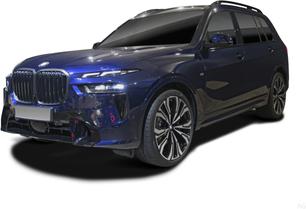
Large family-friendly luxury SUVs tend to be handsome in design but somewhat restrained. Until now. BMW has introduced a major facelift for its flagship SUV, the six- or seven-seat X7. Emphasis on face.
The new X7 adopts the striking but controversial front-end from the new 7 Series sedan, but the big, bold SUV is hiding some rather significant changes under the skin. Aside from a beefier diesel that now comes with mild hybrid tech, there’s also a redesigned cabin, massively upgraded tech, more standard features, oh, and a price increase.
You might have some traditional notions of what a 'sports car' is.
Low and light, slick and aerodynamic, purely mechanical and centred around the driver. These notions may have held true for a long time, but in an age where Lamborghini makes a Touareg-based super SUV is there room for those parameters to move?
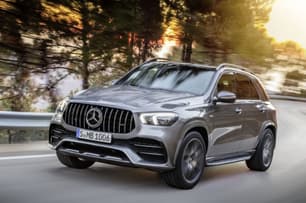
Especially with consumer sentiment indicating the somewhat oxymoronic idea of a low-slung coupe SUV with an AMG powertrain is more than just a niche.
Mercedes told us the previous generation GLE coupe was a major success, amassing up to 25 per cent of the model line's sales split, and its research indicated a buyer of this massive SUV was drawn to its "performance, style and technology" and was even "a motorsport fan."
Sounds like this buyer would have once been looking for a 'sports car' and like it or not, performance coupe SUVs are here to stay. But does the new GLE 53 Coupe really make for a compelling experience behind the wheel? We found out at its local launch.
When lined up against its direct rivals, the expensive X7 xDrive40d represents reasonable value for money.
It has a unique and bold look and a sumptuous, visually striking and well-appointed interior that has acres of space for family, friends, or for ferrying frequent flyers to the airport.
That wallop of performance from the big beefy diesel is the cherry on the top. This is how you do a mid-life update.
The GLE Coupe isn't going to click with a traditional enthusiast but will appeal to a new age of mainstream performance buyers. It's a total tech showcase and you can feel all of those 48-volt benefits from behind the wheel.
Love it or hate its shape, then, you have to appreciate how Mercedes has gone to the nth degree on the details on an SUV it probably could have sold on looks alone.
There’s quite a bit that’s interesting about the X7’s design. Especially looking at it front on.
BMW certainly took a bold step when it introduced its toothy grille design for the X7 and the 4 Series range.
But the Bavarian brand has made some even braver design moves recently by introducing a blocky front-end with split headlights on its new-gen 7 Series flagship sedan. That look has now found its way onto the face of the updated X7.
As with the 7 Series, it won’t be to everyone’s taste. But you can’t deny it has a lot of presence.
The tail-lights have been tweaked and look good, but the sheer size of the X7 - it’s 5.2 metres long and 1.8 metres tall - means there’s no disguising the fact that it is a big, boxy SUV.
Inside the update ushers in significant design changes. The old dash and cowl is gone in favour of the ‘Curved Display’ that connects the instrument cluster and multimedia.
New slimline air vents, LED backlit ‘X7’ graphics on the passenger side of the dash, and a new gear shift toggle that replaces the old shifter elevate the cabin and give it a much more modern vibe than the old X7 - one that’s in keeping with the excellent iX electric SUV.
Hate the very concept of a large SUV coupe or not, you have to at least agree this second-generation GLE Coupe looks infinitely better than the model preceding it.
This time the Coupe version was front of mind from the outset of the GLEs development and is significantly different from the wagon version in more ways than just a sloping roofline.
The wheelbase has been cropped in 60mm compared to the wagon, and the GLE Coupe is a full 7.0mm wider and 39mm longer than its predecessor.
All this adds up to an imposing and more resolved SUV Coupe. I especially like the way its bootlid flicks up into a spoiler, and how the tail-lights round out the profile nicely.
Still, there's always going to be something a little off about the proportions when it comes to a coupe SUV this big, and it's certainly a re-imagining of what a sporty vehicle should look like.
This car's cabin is almost as confronting as its exterior. Up front you're met with an assault of chrome, a ventilation overload and a totally dominant expanse of screens.
This all hints at the advanced tech which lies beneath, but the real wood and leather trims also elevate the cabin to something you might expect at the tall asking price.
It may appeal to a particular taste and makes the BMW X6's cabin look almost conventional.
Regardless of the price point, a three-row SUV needs to be super practical and capable of family duties.
And if you want a BMW X5 but need a lot more space, this is the next logical step.
Let’s start in the front row. As mentioned, the new X7 gains the screen and tech set-up from other new BMW models like the iX and updated 3 Series. The Curved Display combines a 12.3-inch digital instrument cluster with digital speedo and a 14.9-inch multimedia screen.
You can customise the cluster layout and move things around on the multimedia screen, too. The latter is a touchscreen but you can also find what you need via the 'iDrive' controller in the console.
I have had some experience with this system in the iX and while it’s not without its flaws, it is a top notch system. There’s a lot to wrap your head around, but the use of app icons helps. And you can swipe through to your chosen screen.
It took far too long to work out how to find the trip computer, something that should be much easier to access, as well as a couple of other functions. And the climate controls are housed in the digital screen. I would always prefer a separate space with buttons for air-con.
But the graphics and displays - including the excellent head-up display - are excellent.
Other tech you get with the X7 includes the BMW’s 'Digital Key', which is an app that allows iPhone users to lock and unlock their car remotely, and BMW ID driver profile.
If you buy this car, just allow yourself some time to familiarise yourself with all that tech.
Elsewhere up front there’s a lovely new three-spoke steering wheel, and cute touches like the metal air vent toggles, black and metal touches and the choice of inserts.
The front seats are luxurious and comfortable and offer loads of side and thigh support. They have memory functions, too. There’s no shortage of headroom up front, either.
Storage-wise, the door will fit the largest of bottles, as well as other items thanks to generous door bins, while the central lidded box is also sizeable.
What about that second row?
The X7 xDrive40d usually comes standard with seven seats, but our test car was fitted with the $1500 captain’s chair option which drops seating capacity down to six people.
If you need the extra seating this is not the option for you, but it is great for families with bigger kids, and it would make for an excellent airport transfer car.
The seats are unbelievably comfortable and can be adjusted to suit your preference. They also have ISOFIX points and armrests.
Rear seat occupants have access to their own climate controls, air vents, USB ports, cupholders and ample door storage.
There is a massive amount of occupant space as well - stretch those legs out and enjoy it!
One of the X7’s selling points is that it is a genuine three-row SUV. That third row is not just for occasional use for very small children, like so many seven-seat SUVs. That row can be used every day.
Even with my six foot stature, I could easily climb in and out of the third row. That’s made even easier thanks to the mechanical seat functions.
Just hit the lever at the top of the second row seat and the motor moves the seat forward and up to ensure there’s a big enough aperture to get in and out of the rear seats.
You can also raise and lower the third row electronically via buttons on the boot wall - and they stow flush into the boot floor. Neat!
Once in the third row, there’s air vents, USB ports, bottle holders and storage and quite comfortable seats with more than enough leg and head room.
There’s even a third row section of the sunroof, operated from the second row. Lots of clever touches that people who use the third row will appreciate.
The boot has a few cool features, too, including a split tailgate.
You can even sit on the lower section - it can handle a load of up to 250kg - a perfect place to sit and watch the polo.
You can lower the suspension to aid loading larger items, and the X7 comes with a space-saver spare wheel.
Capacity is 300 litres with all seats in place, and I easily fit a pair of smaller suitcases in with that configuration. It increases to 2120L with the two rear rows folded.
In some ways, the GLE Coupe makes the most of its extra dimensions, but in other more obvious ways, it's quite compromised.
Benz tells us there's now 40 litres of combined cabin storage, and with the large door bins, centre console box, convertible cupholders, and glove box, I'm inclined to believe them.
The brand also told us much of the extra 39mm of body length has gone into the rear passenger space, and this seems true when it comes to legroom.
You definitely notice the decline of the C-Pillar, though, making an otherwise large space feel slightly claustrophobic, particularly with the 53's dark headlining and heavily tinted rear windows.
The almost absurd ride height does make peering over the bonnet a chore at times, although I enjoyed the adjustability and comfort afforded by the front two seats.
In terms of connectivity, front passengers get a plethora of USB-C jacks, a wireless charging bay, and a 12V power outlet. There's no USB-A connectivity, so you'll want to stock up on converters.
Rear passengers benefit from dual USB-C ports in a fold out tray, and also score dual adjustable air vents. Two extra climate control zones can be optioned for rear passengers ($1450), and there's also an exorbitant option package to include two screens and wireless headsets for the full business-class experience in the back seats ('Entertainment Package' - $6000!).
You might be surprised given this SUV's shape, but a lot of thought was also poured into the design of the boot area. Thanks to a large footprint, the GLE 53 Coupe's boot is large at 655 litres, five litres up on its predecessor. It's still a whopping 170-litres down on the wagon version, though.
The boot lip has been lowered significantly to increase ease of use, too.
Our test car did not have a spare wheel, with only an inflator kit or run-flat tyres to be working with. This is despite a large area under the boot floor which, to my eyes at least, could easily have fit a space-saver spare.
We are way out of Kluger and Sorento territory with the BMW X7. This is a bus for cashed-up families.
The upper-large SUV was introduced in mid-2019, but as part of the mid-life update, BMW has changed up the model grades. There are still two, but the xDrive30d and M50i have been replaced by the diesel-powered xDrive40d M Sport, and the performance-focused V8 petrol-powered M60i.
For the purpose of this review, we drove the 40d M Sport, which gets a power boost over the outgoing 30d - more on that in a bit.
As a result of the significant update, BMW has increased pricing on both grades. For the xDrive40d, it now starts at $174,900, before on-road costs, which represents an increase of more than $30,000 over the old 30d.
If you’re after a bigger dollop of performance, the M60i will cost you $205,900.
While the xDrive40d pricing seems steep, it undercuts a couple of other big luxury diesel SUVs including the Mercedes-Benz GLS400d ($179,500 BOC) and the Toyota LandCruiser-based Lexus LX F Sport ($176,091 BOC).
The most affordable diesel-powered version of the new-generation Range Rover starts from $226,806, so in that regard, the X7 40d is the best value in its class!
As well as the updated powertrain and in-car tech, the X7 xDrive 40d now comes with a hefty standard features list including metallic paint, 22-inch wheels, the M Sport pack, five-zone climate control, Harman Kardon 16-speaker sound system, a drive recorder, comfort seats, ‘Comfort Access’, roof rails, electric sunblinds, panoramic glass sunroof, digital radio, a head-up display, ambient lighting, wireless Apple CarPlay and Android Auto, and leather interior.
Our test car was fitted with a number of options that pushed the price to just under $185,000. The extras included huge 23-inch alloy wheels ($3500), BMW Individual 'Dravit Grey' body paint ($2400), a trailer tow hitch ($2500) and second row captain’s chairs ($1500).
Note that if you opt for that tow hitch, you’ll lose the ability to open the hands-free tailgate with a kick motion.
Does price matter when it comes to a machine like this? The GLE 53 variant with which this generation of Coupe will launch is the mid-grade car in a three-variant line-up.
It wears a very premium MSRP of $171,800. Soon it will be joined by the only non-AMG badged variant, the GLE 450 Coupe ($137,000) and the top-spec V8 bruiser, the GLE 63 S ($222,700).
To put those numbers (and this car's very existence) in context, it's best to look at its direct competitors.
You'll likely know of its arch rival, the BMW X6. Another Coupe SUV at the pointy end of the price scale, the closest rival variant to our GLE 53 is the M50i starting from $159,900.
Other rivals in this rapidly growing space include the Porsche Cayenne Coupe S at $166,200, and the yet-to-arrive Audi SQ8 which has not yet had its pricing locked in for the Australian market. See what I mean? Coupe SUVs are beyond just an oddity.
So, it's more expensive than its direct rivals, but does it have good reason to be? The GLE 53 is equipment laden from the get-go.
Included are the standard fitments from all new Benz models, including the headline dual 12.3-inch screens adorning its massive dashboard, complete with Apple CarPlay, Android Auto, built-in navigation and voice activation, real leather interior trim with fully electrically adjustable heated and cooled front seats, 21-inch alloys, 'multibeam' LED headlights, AMG styling items, a wireless charging bay, head-up display, and, of course, a panoramic opening sunroof.
An impressive list, but the technology under the skin of the new GLE goes a step beyond. Read about its engine and transmission tech and impressive safety suite later in this review.
The X7 xDrive40d is powered by a 3.0-litre, in-line six-cylinder turbo-diesel engine, that gets a boost in power - it pumps out 259kW of power and 720Nm of torque - 64kW/100Nm more than the 30d.
It now also comes with 48-volt mild hybrid tech, which uses an electric motor integrated in the eight-speed automatic transmission.
It drives all four wheels via BMW’s 'xDrive' all-wheel drive system and it is fitted with air suspension for a cushy ride. Towing capacity is rated at 3.5 tonnes braked or 750kg unbraked.
If you are keen on off-roading in the X7, it has a 221mm ground clearance, and a fording depth of 500mm, but maybe best to keep it on the tarmac.
Here's where this car gets particularly interesting. It's a hybrid. But not your gran's Prius. It's hybrid in a way which will make you re-think the technology.
Residing under the bonnet is a 3.0-litre, twin-turbo, straight-six engine mated to a very complex looking nine-speed (torque converter) automatic transmission.
One of those two turbochargers is driven by an electric motor rather than the exhaust (in order to provide its peak benefits at the lowest possible rpm), and there's also an electric motor inside the transmission which takes the load off the engine at low speeds and between gears.
This isn't where the 48-volt tech ends, with the GLE 53 also sporting active anti-roll bars and dampers, which significantly adjust the ride and body-roll on-the-fly.
All four wheels are driven via Benz's 4MATIC+ all-wheel drive system.
According to BMW, the official combined cycle fuel figure for the X7 40d is 8.0 litres per 100 kilometres.
Our fuel figure after nearly a week of mixed city, freeway and country driving was 9.0L/100km, which isn’t too far off the mark.
It has an 80 litre fuel tank and an approximate driving range of 1000km.
It's a performance car, so fuel consumption is probably not going to be front of mind for potential buyers. That said, the hybrid tech delivers a surprisingly good number.
The official combined cycle consumption number is ambitiously under 10L/100km at 9.3L/100km.
After three days of (roughly) combined testing and about 300km of distance travelled, our car was showing a dash-reported 14.1L/100km. Not near the claim, but is it really bad for a performance SUV weighing 2447kg? I would argue, not.
The GLE 53 requires the top-shelf 98 RON hydrocarbons to fill its 85-litre tank, giving it a maximum theoretical range of 726km between fills.
With a big plush SUV like this, you’d expect a comfortable ride. And for the most part, the X7 delivers that, while offering more than a bit of grunt, as well.
The X7’s height ensures a high driving position, and there’s plenty of glass for decent visibility.
Propelling a 2.5-tonne SUV could be a struggle for a lesser engine, but the meaty diesel offers ample torque and the mild hybrid set-up helps to reduce initial turbo lag significantly - that means it is responsive from a standing start.
I wouldn't have thought a vehicle of this size and shape was capable of a 5.9-second 0-100km/h time, but here we are.
As a result of all that torque and power, overtaking is a breeze - providing there is enough room on the other side of the road for both cars to fit.
That size and heft have an impact on cornering and dynamics. You simply can’t carve through tight corners in this car, but with that said, it’s more entertaining than you’d think.
Steering feel is weighted on the heavier side and it’s as sharp as it needs to be in a car like this. It would be weird if the steering was too pointy.
Ride quality is top notch - as it should be - and while the massive optional 23-inch wheels and low profile tyres mean you’ll notice potholes and the like, it largely soaks up imperfections with ease.
That level of refinement extends to the hushed ride, too. The cabin is a quiet and serene place to spend time - but not quite to the same degree as a 7 Series.
Parking in tight spots is a challenge, and manoeuvring in narrow streets could take a while, too. But you could tell that just by looking at the X7.
This Benz feels about as imposing from behind the wheel as it is to look at. Straight away, you'll notice you tower over the road. I felt as though I was sitting high enough to be on the roof of passing hatchbacks, so there's nothing traditionally 'sporty' about it from the get-go.
I know you're probably thinking visibility is average with that roofline, and you'd be right. You just can't see much, full-stop, out the back.
Thankfully, an array of sensors and very wide-angle mirrors help with overall visibility, so you won't have to be too paranoid about unseen vehicles in your blind spots.
I'm pleased to report all the technology which goes under this SUV's skin is evident when it comes to the drive experience.
The hybrid tech is ultra-slick and impressive in every department, from trawling in traffic to the curvy stuff and the open road.
The responsiveness of this powertrain is something to be experienced (with the pre-spooled turbo) and the way the hybrid motor in the transmission smooths out shifts removes all the worst characteristics of a traditional torque converter automatic.
One thing to note about the GLE 53 – while it's quick, it's not quite a fire breather. There's no getting around this car's almost two and a half tonne weight, and while I love the smooth feel and note of the 3.0-litre straight six, it's simply not as thunderous or full of theatre as I imagine the 63 S will be.
Despite its height and weight, the altered steering ratios and 48-volt driven suspension and anti-roll systems cause a suspense in belief when it comes to the corners.
And grip levels are certifiably absurd with those gigantic rear tyres also pitching in to do their part to help something this large deny gravity and physics.
It's not all amazing though. You really feel every millimetre of this SUVs width, and at the end of the day there's no getting around it. It just doesn't feel anything like a sports machine in the traditional sense.
When it comes to ride quality, the GLE impresses, but has its limits. Sure there's air suspension at work, but it offers up nowhere near the ride quality of the more comfort-tuned GLC 300e I recently tested.
Seems as though there's an inevitable cost to keeping the GLE feeling well and truly planted at all times.
On the freeway the GLE Coupe is ridiculous in the way it can basically drive itself, so this offers up a real plus for those looking for a balance of performance and sensibility for longer trips.
The X7 has size on its side when it comes to occupant protection, but it also comes with a decent level of safety gear as standard.
Features include auto emergency braking (AEB) with pedestrian and cyclist detection, a safe exit assist function to avoid 'dooring', and an advanced lane keeping aid, ‘Parking Assistant Professional’, ‘Trailer Assistant’, and hill descent control.
The X7 is yet to be crash tested by the local safety authority, ANCAP, or by Euro NCAP.
It would be no good having a 2.5-tonne rolling tech showcase without top-tier safety to match, and the GLE 53 Coupe doesn't disappoint.
Standard is autobahn-spec auto emergency braking, which combined with lane change assist is beyond just the radar cruise in most cars, it's truly autonomous.
Don't try this at home, but the GLE is capable of completely driving itself on the freeway should you... theoretically... let go of the wheel.
Also included is blind spot monitoring, rear cross-traffic alert, traffic sign recognition, and driver attention alert.
There's a top-down camera suite, too (will help maneuvering given it's tough to see over the dash and out the back), and a compliment of nine airbags.
You won't be surprised to hear the GLE range is covered by a maximum five-star ANCAP safety rating to the stringent 2019 standards.
After copping a bit of flack from motoring media and buyers, BMW finally increased its warranty terms last year from three years to an industry standard five-year, unlimited kilometre warranty on its vehicles, including the X7.
Rather than a set servicing schedule, BMW offers condition-based servicing which is when the vehicle’s computer alerts the owner that it requires a service.
BMW doesn’t offer capped-price servicing, but does have a pre-paid 'Service Inclusive Package' with terms ranging from three years/40,000km to five years/80,000km and beyond.
A five-year basic package for the X7 costs $2800, which is not too bad considering the positioning of this model.
Mercedes has recently made a jump to the front of the luxury segment, offering an industry-wide standard of a five-year/unlimited kilometre warranty. Here it is only rivalled by Korean newcomer, Genesis.
Service intervals occur once every 12 months or 25,000km and prices can be pre-packaged at a discount.
A three-year service plan can be had for $2800 ($3500 if you choose to 'fix' the price), four years can be had at $3800, while a full five-year plan will set you back $5200. Not cheap, but then, neither is the car itself...