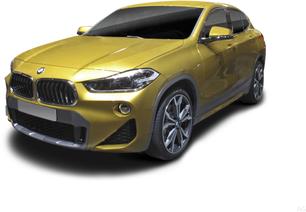
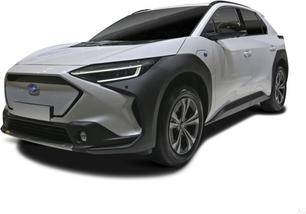
What's the difference?
BMW’s original X2 crossover from 2018 was not a massive sales success in Australia. The related X1, however, was and continues to be a very popular pick in the ultra competitive premium small SUV class.
BMW has flipped the script for the second-generation X2, giving it a dramatic makeover that ushers in a bold design that’s now in keeping with its SUV strategy. That is to offer a ‘conventional’ SUV - X1, X3 and X5 - and then a coupe-style sibling - the X2, X4 and X6 - to sit alongside it.
Beyond the new look there are significant changes throughout the car, including the introduction of an all electric version - the iX2.
We drove the two flagship grades at the international launch in Lisbon, Portugal - the petrol-powered M35i xDrive, and the iX2 xDrive30. They might look the same, but they maintain their own distinct characters. Let’s dive in…
The Solterra AWD is the base grade in a two-model line-up and the first EV Subaru has offered in our market.
Created in partnership with Toyota, the Subaru Solterra is being launched alongside its Toyota twin, the bZ4X.
They share electrical and mechanical underpinnings, tech and even some internal styling but Subaru is only offering the Solterra as an AWD for the Australian market which reflects the brand's adventuring heart. Whereas, Toyota is offering some of its variants in a FWD format.
The Solterra competes against other medium SUV rivals, like the Kia EV6 and market-leading Tesla Model Y.
My family of three has put the base model through its paces so keep reading to see what we discovered!
There is little doubt the new X2 represents a vast improvement over the original model. The design alone gives it a lot more presence.
More interior and boot space also helps widen the SUV’s appeal and the significant tech updates are welcome.
It is on the pricey side and there are a few too many options that should be standard.
However, the M35i is hard to ignore as a sporty premium crossover, and the iX2 xDrive30 is the sort of electric SUV that should worry Volvo.
They both have their own distinct flavours, so there’s no dud in this line-up. Of course, we will hold final thoughts for the local launch when we can drive all four grades. But until then, it’s a welcome return to form for the X2.
The new Subaru Solterra AWD gets a lot right and is a well-rounded effort in showcasing an electric medium SUV that has passenger comfort, sharp external styling and is easy to drive.
Once you start comparing it to some rivals, it doesn’t always come out ahead of the pack but I still like it for what it is. My seven-year old thinks its fun and very comfortable. He enjoys the easy practicality of getting in and out without any assistance, too.
The second-gen X2 looks very different to the original from 2018. That first X2 had a squat stance, looked more like a hatchback than an SUV, and the glasshouse appeared as though it had been squished into the body of the car.
The 2024 X2 adopts a similar design philosophy to the X4 and X6 - swoopy, coupe-like roofline and liftback, and bold styling elements at the front and rear.
It has a much more upright, flush front end, freshly designed large kidney grille and an edgy headlight design. There’s flared wheel arches and broad shoulders at the rear, as well as a cool new horizontal tail-light signature.
The X2 has grown in size in a big way. It’s 194mm longer, 21mm wider, and 64mm taller than the outgoing model. That naturally means more space inside, too.
Inside there are big changes. The X2 adopts elements introduced by the excellent iX SUV a couple of years ago. They include the curved display, and a floating arm rest with a control panel. Some of this is also familiar from the X1.
The materials mostly look and feel like they are high quality, and there is an appealing minimalism to the overall design and layout. The chunky sports steering wheel is visually appealing, but it’s a bit too thick in my hand.
The Solterra has its own vibe compared to the rest of the Subaru family and that’s most likely due to the Toyota partnering.
The tail-lights are sharply pronounced and the many pleats across the body panelling swing more towards Toyota styling than Subaru but it doesn't stick out like a sore thumb.
The heavy-use of black plastic mouldings on our test model's 'Smoked Carbon' paintwork looks okay but it wouldn't do any favours on a lighter colour.
The exterior on the whole looks bold and fun, and I like the fact that it's not pillowy in its shape as some of its rivals are. Those hunting for a sporty-looking EV will find something charming here.
The cabin is different from anything I’ve seen from Subaru so far. Some of it's fun, like the squared off steering wheel which looks rally car-ish but some of it’s odd, like the way the 7.0-inch digital instrument panel has been pushed back towards the windscreen in its own little nook.
The steering wheel can get in the way of viewing the graphics of the instrument panel and its placement looks disjointed from the rest of the dashboard elements.
The black and grey knit-looking cloth upholstery is warm and inviting and is found across the dashboard, seats and some door panels but there is enough cheap-looking black cloth throughout to detract from the general aesthetic. Had the Solterra not been pushing $70K, that wouldn't bother me, but it is, and it does.
The interior is pleasant but the exterior is definitely the highlight of the design.
Where the previous X2 was a very small crossover with niche appeal, the increase in size for the new model means more people will be interested in it. Possibly even people with a small family.
Those increased dimensions pay dividends inside, with ample headroom up front and more than enough space across the front row, although the raised armrest console is somewhat narrow.
The seats in both the iX2 xDrive30 and the M35i xDrive are very supportive thanks to ample bolstering, but both were also on the firm side. The iX2’s synthetic leather was slightly more comfortable than the M35i’s sports-focused front seats.
The power-adjustable seats and height- and reach-adjustable steering wheel means it’s not hard to find a decent driving position, but forward vision is impeded by a very thick A-pillar, and the letterbox-like rear windscreen in the X2 means rearward vision is limited. Good thing it has excellent parking cameras and sensors.
Storage is decent in the X2, with room for big bottles in the door cavity, and a few nooks and large open spaces in the console. Although secure storage is limited with the armrest housing a very shallow space. I do like BMW’s phone charger setup. Rather than lying on a pad, it slots into a vertical holder that has a latch to keep it in place when cornering. The only drawback is that you can see the screen which could potentially distract some drivers.
The X2 introduces operating system nine to iDrive, which is housed in the central part of the curved display and operated by touchscreen or the controller on the floating central console. After some familiarisation, the functionality isn’t that much different to the previous version of the operating system. The main menu looks cool and is mostly easy to navigate. The sub-menu icons - of which there are heaps - look a little Microsoft Windows.
The X2 has drive modes that also interact with the interior of the car and change lighting, EV noise and more. They include Personal Mode, Sport Mode and Efficient Mode as standard, but if you opt for (and pay extra for) BMW Digital Premium, the modes extend to Expressive Mode, Relax Mode and Digital Art Mode. Some of these are quite cool, especially some of the EV sounds, but would I use them everyday? Probably not.
The clearest indication of increased space is in the second row. There’s much more legroom than the old X2, and behind my six-foot frame I had enough space with a couple of centimetres between my knees and the front seat backs. Toe room was very limited, however.
The roof has been scalloped out to ensure more headroom, which is welcome given the extra sloping roofline.
There are a pair of USB-C ports back there, lower air vents, map pockets, decent door storage, and a centre armrest with cup holders.
The boot is sizeable, in both engine grades but you only get a tyre repair kit. There is underfloor storage for the charging cables in the iX2.
At 560 litres with all seats in place and 1470L with the second row stowed, the petrol grades have a bit more space than the iX2 at 525L (all seats in place) and 1400L (second row lowered).
The practicality of the cabin is good for the class and the 212mm ground clearance means it's an easy car to get in and out of.
The extra-wide centre console makes the front look cramped but it isn't. And the the backseat is huge on space. Seriously decent headroom and legroom for the class and the flat floor means middle seaters will be comfortable, too.
Both the front and rear seats are well-cushioned and comfortable. You could easily do a long trip.
The driver's is the only powered seat (it also has lumbar support) but it's great that all but the middle seat feature a heat function for added comfort.
My seven-year old finds the back row comfortable because of its directional air vents and tall seating position providing a good view out of the wide window.
Individual storage is a bit low for the class but it does feature a handy shelf underneath the centre console which is large enough for a small handbag or the manual and logbook... because there is no glove box in this model!
To be fair, most are too small to be of real use outside of storing the 'ahem' manual and logbook.
Each door gets storage pockets and a skinny drink bottle holder and both rows get two cupholders. The rear gets map pockets too but that's it.
The boot features a tyre puncture repair kit, level loading space and 410L of boot capacity with all seats in use. The capacity is a bit lower than its rivals but has been adequate for my grocery run and the odd errand. It's great both Solterra models have a powered tailgate as standard.
The 12.3-inch touchscreen multimedia system looks good and is pulled directly from Toyota so the graphics and accessibility are on-point for everyday use.
You also get built-in satellite navigation which is always handy to have but you miss out on any over-the-air updates or a dedicated Subaru connected services app.
The rest of the technology is solid with each row getting two USB-C ports and the front also featuring a USB-A socket and 12-volt outlet.
In Australia, there will be four X2 grades in total - the xDrive20i and M35i xDrive petrol models, and the iX2 eDrive20 and xDrive30 all-electric models.
The iX2 xDrive 30 and the two X2 petrol grades are expected late in quarter one, or early in quarter two. The iX2 eDrive20 will follow shortly after in the third quarter.
The model grades largely mirror that of the X2’s mechanical twin, the X1, although the X1 is also offered in base front-wheel-drive sDrive18i guise as a range-opener.
At the international launch event, the two grades available to drive were the iX2 xDrive30 and the X2 M35i, so I will focus on those two models when it comes to the driving and practicality sections of this review. But I will detail elements of the whole range in other sections.
That X2 xDrive20i kicks off the range from $75,900 before on-road costs. For that you get features like a leather sports steering wheel, dual-zone automatic climate control, satellite navigation, an automatic tailgate, 19-inch alloy wheels, four USB-C ports and more driver-assistance systems and digital services compared with the previous model.
The $92,900 X2 M35i xDrive adds an extra dollop of performance but also includes 20-inch alloy wheels, a 12-speaker Harman/Kardon sound system, leather upholstery, a panoramic glass roof, a BMW M body kit and more.
The most affordable iX2 is the eDrive20 that kicks off at $82,900, while the iX2 xDrive30 dual-motor all-wheel-drive is $85,700. Both of these currently fall under the luxury car tax threshold at the time of writing.
There are several individual options and options packages across the range that can quickly push these prices up.
The X2 is a bit more expensive than the equivalent grades of the X1. The X2 xDrive20i costs $5500 more than the same X1 grade, while the M35i is only $2000 dearer than the equivalent X1.
For the EV, the X2 price premium is $4000 for the eDrive20 and just $800 for the xDrive30.
When it comes to rivals, pricing is a little higher than similar swoopy small SUVs like the Audi Q3 Sportback when it comes to the petrol models.
For the EV, competitors include the Lexus UX300e ($79,990-$87,665), Mercedes-Benz EQA (from $82,300-$102,579), and the Volvo C40 Recharge ($78,990-$87,990).
There are two variants for the Solterra range and both come with dual-motored electric powertrains. Our test example is the base model, priced from $69,990, before on-road costs.
Compared to its dual-motored rivals it’s almost as affordable as the Tesla Model Y Long Range priced from $69,900 MSRP, with the Toyota bZ4X AWD at $74,900 MSRP and the Kia EV6 GT-Line almost $20K more expensive at $87,590 MSRP.
However, its rivals sit at higher grade levels and some items on the Solterra AWD, like its cloth seats and manually adjustable front passenger seat, remind you it is still a ‘base’ model.
That said, the Solterra AWD is well-specified for an entry model with standard features like heated front seats, a heated steering wheel, power-adjustable driver's seat, power-adjustable lumbar support (driver only) and even the rear outboard seats have a heat function.
The technology features a 12.3-inch touchscreen multimedia system, built-in satellite navigation, wireless Apple CarPlay and Android Auto, two fast USB-C ports in each row and a clear 360-degree camera system.
For practicality, it features a powered tailgate, tyre puncture repair kit and remote air-conditioning start (from the key fob) to set your ideal cabin climate before you get in.
Each of the four grades come with a different powertrain, and the xDrive20i kicks it all off with its 2.0-litre four-cylinder turbocharged petrol unit, making 150kW of power and 300Nm of torque. It drives all four wheels via a seven-speed dual-clutch transmission and can hit 100km/h in 7.4 seconds.
The xDrive M35i ups the fun factor with a gruntier 2.0-litre four-cylinder turbo-petrol unit, driving all four wheels via the same transmission as the 20i, all while delivering power and torque of 233kW/400Nm This ensures a 0-100km/h dash of 5.4 seconds.
The iX2 eDrive20 is powered by a 150kW/247Nm electric motor on its front axle, and the iX2 xDrive 30 uses two motors - one on the front and one on the rear axle for all-wheel-drive traction. The total system output is 230kW and 494Nm and the xDrive30 gets to 100km/h in just 5.6 seconds.
The Solterra AWD has dual electric motors producing a combined 160kW for power and 337Nm of torque. It’s got enough grunt to be fun and zippy, even on the open road, but isn’t as powerful as some of its dual-motored rivals.
For example, the Kia EV6 GT-Line produces 239kW/605Nm, which looks almost indecent compared to the Solterra's specs.
A fuel-use figure for the xDrive20i is yet to be confirmed, but the front-wheel-drive sDrive20i offered in Europe with a three-cylinder engine sips as little as six litres per 100 kilometres on the combined cycle. Expect the Australian version to be a little higher than that given it’s AWD and has a more potent engine.
The M35i consumes 7.7L/100km.
The high-voltage 64.8kWh lithium-ion battery in the iX2 ensures a driving range on the WLTP cycle of between up to 477 kilometres in the eDrive20 and between 417 and 449km for the xDrive30.
The latter has an energy efficiency range of 16.3 to 17.7kWh/100km, and BMW says you should be able to top up the battery from 10 to 80 per cent in 29 minutes at a fast charging station.
That driving range is not bad compared with the Lexus UX300e and Peugeot e-2008, but not quite as impressive as the Volvo C40 twin-motor.
I missed out on checking the energy efficiency figure of the iX2 xDrive30 following our drive, but after an 88km drive loop, the iX2’s range had dropped by 91km, which is just a 3km difference.
The benefit of motors which aren't 'performance' grade means you win out eventually with energy consumption and its here the Solterra AWD shines.
The official combined cycle energy consumption figure is a low 14.1kWh/100km and I averaged 15.2kWh after a week of mostly urban driving.
The consumption is fantastic but the official driving range from the large 71.4kWh lithium-ion battery is only up to 414km (WLTP), which, again, is lower than most of its rivals by a good portion. I would have range anxiety on a longer journey.
The Solterra has a Type 2 CCS charging port which means you can benefit from faster DC charging speeds (up to 150kW on DC power).
On a 150kW DC system you can go from 0-80 per cent in just 30 minutes.
On a 7.0kW AC power charger, you can go from 0-100 per cent in 9.5-hours and that drops to 6.5 hours on an 11kW system. Which isn’t as fast as it you might like but still makes it worthwhile plugging in while you're frequently the local shops.
The M135i xDriveis undeniably quick off the mark. The lovely 2.0L turbo engine is well matched to the seven-speed dual-clutch and it’s responsive and willing from a standing start and when overtaking.
The engine sounds lovely too, although we suspect it’s amplified in the cabin, and steering is as sharp as it should be in a warmed-up performance SUV. We darted through some very twisty roads outside Lisbon and had quite a lot of fun in the process, so the M Performance badge is justified.
I drove the previous-generation X2 M35i a few years back and was disappointed with the ride quality. It was quite jiggly on uneven road surfaces and way too firm.
While the new version still has a firm tune to aid dynamic driving, it is much more compliant than the old car and overall ride comfort has improved.
The iX2 is also quick off the mark and in xDrive30 guise is only 0.2sec slower to 100km/h than the M35i.
That lively, smooth EV acceleration is present here, adding a sense of fun to the iX2.
It too has sharp steering, and the cabin is hushed. Not just because it’s an EV either. We were on coastal roads on a windy day and there was only a hint of wind noise in the cabin.
In some instances taking corners that had typical European walls or houses right up against the road, the iX2 would slow before I had a chance to tap the brakes. But it was hard to tell if that was a vehicle safety function, or the regenerative braking.
The ride in the iX2 was a bit of a mixed bag. It coped with some of the pockmarked roads exceptionally well, soaking up the imperfections. But then on other roads it was a little choppy.
It also bounces a little when you go over speed bumps, but that’s not exclusively an iX2 trait. I’ve felt it on many an EV, given the placement of the very heavy battery packs under the floor.
On the driving tech front, the X2 has a well executed head-up display projected directly onto the windscreen. It includes the speedo of course, nav guidance, a crystal clear display and more info.
The Solterra underlines in bold everything you would expect from a Subaru. The power delivery is well balanced, it grips the road and the handling is comfortable.
Even when cornering there’s not a lot of passenger movement and the steering is on the right side of firm. Manoeuvring is nimble and fun thanks to an the 11.2-metre turning circle that also makes it easy to park.
The 360-degree camera system is top notch and you get great visibility out of the windows. Being only 4690mm in length and 1650mm tall even the smallest city carparks shouldn't daunt you.
The ride comfort is very good with suspension that absorbs the bumps well enough that they don’t bother you. There is a little road noise but not enough to annoy and overall the ride is refined.
The X2 and iX2 are yet to be crash tested by ANCAP or Euro NCAP for that matter.
As mentioned, it gets a more generous list of standard safety features than its predecessor. Features include the latest version of BMW’s front collision warning system, auto emergency braking, speed limit detection, active pedestrian protection and a front centre airbag.
All X2s come standard with BMW’s Driving Assistant Professional which features ‘Steering and Lane Control System’, adaptive cruise control with stop and go braking function, and a blind-spot monitor, as well as Parking Assistant Plus with a surround-view camera, reversing assistant and ‘Drive Recorder’.
The Solterra comes with great standard safety features like forward collision warning, blind-spot monitoring, driver attention alert, safe exit warning, LED DRLs, rear cross-traffic alert, lane-departure alert and keeping aid, adaptive cruise control, traffic sign recognition, front and rear parking sensors and a clear 360-degree camera system.
It also features a digital rearview mirror, which is handy when you have a carload of passengers or gear. While you're aware of all of the safety items none of them are intrusive, which is awesome.
The Solterra has seven airbags, including a front centre airbag and a maximum five-star ANCAP safety rating from testing done in 2022. Its twin, the Toyota bZ4X was the tested model.
The Solterra has AEB which is operational from 5.0-80km/h for pedestrian and cyclist detection and up to 180km/h for cars.
There are ISOFIX child-seat mounts on the rear outboard seats and three top-tether anchor points across the second row.
Two child seats will fit best and I had no trouble fitting my monster booster seat.
The X2 range is covered by BMW’s five-year, unlimited kilometre warranty - something the German giant only increased from three years back in 2022. This is now the minimum standard.
The battery warranty for the iX2 is eight years or 160,000 kilometres.
BMW does not have scheduled servicing terms, instead, servicing is condition-based and the car’s computer will alert the driver when to book in for a service.
A five-year servicing package will cost you $3171 for the petrol X2s, while the iX2 is $2186 for six years.
The Solterra comes with a usual warranty term of five-years/unlimited km and the battery is covered by an eight-year or up to 160,000km warranty term.
However, one of the best things about the Solterra has to be the free servicing (yes, you read that right) for five years or up to 75,000km.
Servicing intervals are more in line with a fuel-based car at every 12 months or 15,000km. But, hey, free is free!