What's the difference?
BMW’s X1 has changed. In a good way. Especially if you’re thinking about buying one as a family car.
Yep, last year the third-generation X1 arrived and after 13 years and three different attempts on a design, BMW has nailed it. And by ‘it’ I mean built a super practical and spacious small SUV that’s great to drive.
See, as a dad of two kids, when it comes to cars and my family ‘it’ means something totally different to what ‘it’ meant 10 years ago.
And that’s what this review is about: does the BMW X1, and specifically this xDrive20i M Sport variant we’ve tested here, make a good family car?
If you're thinking of buying it for your family then you need to read this and also consider the likes of Audi’s Q3 and the Mercedes-Benz GLB.
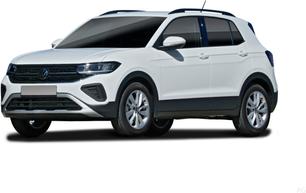
The Volkswagen T-Cross is the smallest SUV in the brand’s entire range, but it’s incredibly practical, great to drive and has an excellent level of safety.
It’s just been updated with some new features and it’s probably more affordable than you think.
So if you are thinking of a Mazda CX-3 or a Toyota Yaris Cross, then put the T-Cross on your list to check out, too.
This new BMW X1 feels like it's been built by a team of parents because it’s one of the most practical and easy to use small SUVs my family and I have ever lived with and, trust me, they’ve seen a lot of test cars come through the Berry garage.
We loved the roomy interior with high ceilings, the clever storage everywhere from the giant door pockets to the floating centre armrest up front and big boot for our pram.
Entry and exit is easy through the tall and wide doors, something my back was thankful for every time I had to put our baby into her car seat.
Driving is easy, with great visibility and the engine that comes in the xDrive20i M Sport makes this X1 sporty and fun to pilot, too.
The only drawback is the price, it's a bit expensive but at the same time you are getting a high-quality feeling SUV.
There are so many new little SUVs out there and it might be easy to think they’re all the same - a tiny cheap SUV is just a tiny cheap SUV. But I’m convinced the Volkswagen T-Cross isn’t like the others.
Yes, it’s tiny and relatively cheap, but it can do more than most of the others from the storage and space it offers to the value-for-money and its level of refinement. Then there’s the way it drives - which can’t in my books be matched by any of its rivals.
The sweet spot in the range is the entry grade Life. At $35K drive-away the value is best and with no difference in engines between the grades there are no huge reasons to step up higher in the range unless you have the money.
Note: CarsGuide attended this event as a guest of the manufacturer, with travel, accommodation and meals provided.
This current generation of X1 arrived in late 2022 and finally looked more like part of the BMW SUV family with tall and boxy styling rather than the sleek, but raised hatchback it seemed to be before.
My test car had 'M Portimao Blue' metallic paint - a flattering hue that showed off the X1’s lines as you can see in the images.
I like the X1’s oversized grille which suits the angry looking front bumper that comes with the M Sport inclusions, but balanced by pretty headlights.
Inside, the X1 xDrive20i M Sport is modern and minimalist in design. I like the floating centre armrest in between the driver and front passenger and the way it creates a feeling of more space and adds more storage.
The double screens are nice, but we’re seeing this same design and tech now in budget cars such as the Chery Omoda 5 and Haval H6. BMW needs to be even slicker and more stylish if it wants to maintain its edge.
If you like your SUVs sporty looking then check out the BMW X2, X4 and X6. These are coupe style SUVs (but with four doors).
The T-Cross is Volkswagen’s smallest SUV at 4.1m long and even though it’s closely related to the little Polo hatchback it looks more like a mini version of the Tiguan.
It might be tiny and relatively affordable but it has Volkswagen’s premium looks and sharp styling, with creases in the panels so crisp it looks like somebody just ironed it.
This update has brought new front and rear bumper designs, and new styling to the LED running lights and tail-lights. That’s typically how car companies do exterior design updates, inside the styling changes are pretty minimal, too.
There’s new dashboard design and new media screen, but again the design and quality feels refined and high quality, which I can't say goes for a lot of this car's rivals.
The entry-grade Life misses out on the cross design tail-lights of the Style and R-Line, and gets hubcaps rather than alloy wheels like the other two grades.
My family found the X1 xDrive20i to be one of the most practical small SUVs we’ve lived with thanks to its spacious interior, clever cabin storage and plenty of convenient features.
I need to point out the door pockets - they’re the biggest I’ve ever seen. They’re more door buckets than pockets and super helpful over the week not just for bottles but for everything else that I needed to dump out of my own pockets and into them.
The floating centre armrest up front looks like an ironing board and has a tonne of storage underneath.
The wireless charging is handy but the holster is a bit un-user friendly in terms of access, but it held the phone tight and stopped it becoming a projectile when driving, which is what you want.
There are power outlets galore, too, proximity unlocking, and a gesture tailgate.
Legroom in the back is excellent and there’s so much headroom throughout.
The X1’s 540-litre boot capacity is excellent for the class and meant we could fit our baby’s big pram and the seven-year old’s scooter and still have room for the grocery shopping.
You really should take a look at my video to get an idea of how good space and storage is in the T-Cross. I’m tall at 189cm but I can drive with plenty of elbow room and legroom. The front seats also have really long bases which offer great under-thigh support, too.
Legroom in the back is great for the class and I can sit behind my driving position without my knees touching the seatback, while headroom is excellent, too. The second row also slides on rails to increase the boot side which is enormous for the class at 455L.
The second row doors also have large apertures making entry and exit easier.
Cabin storage is great with giant door pockets in the front and back, a wireless phone charger with four USB-C ports (two in the front and two in the second row).
In the space of driving this SUV and writing this review the list price of the X1 xDrive20i M Sport has risen from $68,900 to $73,400.
That price hike was part of an increase across the model range and all grades now cost more, even the entry-level sDrive18i which is now 13K less than the xDrive20i M Sport.
But you’re paying for the more powerful, athletic and only all-wheel drive one in the X1 range.
You’re also getting loads of standard features in the xDrive20i M Sport.
There’s the 10.25-inch instrument display with three different styles for your speedo and other gauges, while flowing into that is the 10.7-inch media screen with sat nav, wireless Apple CarPlay and Android Auto, and digital radio.
There are LED headlights, plus proximity unlocking, a head-up display, dual-zone climate control, a power tailgate, sports seats (the front ones are heated and power adjustable) and adaptive cruise control.
As the name suggests the xDrive20i M Sport is fitted with BMW M Sport goodies as standard. These include adaptive M Suspension, M leather steering wheel, M roof rails, M headliner and M interior trim.
My test car also had $8900 worth of options fitted including the sunroof, Harman Kardon stereo, the ‘Vernasca Black’ leather seats and 20-inch M light alloy multi-spoke wheels.
Is it good value? Well, you do get a lot of nice things here but at a $13,000 premium over the entry grade, plus the $3500 price jump in the past few weeks, I’d say the value isn’t great.
If you’re trying to keep the cost down, the sDrive18i is the budget pick.
There are three grades in the T-Cross line up, the entry level Life which lists for $33,990, the Style for $37,490 and at the top of the range is the R-Line for $40,990.
At the time of the launch of this updated T-Cross, Volkswagen was doing drive-away pricing of $34,990 for the Life, $39,990 for the Style and $43,990 for the R-Line.
Compared to rivals like the Mazda CX-3 and Toyota Yaris Cross, a drive-away price of $35K for the Life is excellent and $40K for the Style is also a good deal, especially when you look at the healthy standard features list.
Coming standard on the Life are LED headlights, black roof rails and power folding mirrors, there’s a leather steering wheel, a digital driver display (which is new, too), there’s an 8.0-inch media screen, wireless phone charging, air con, digital radio, Apple CarPlay and Android Auto.
Stepping up into the Style grade adds 17-inch alloys wheels, matrix LED headlights - those are new - chrome-look roof rails, an LED grille strip, proximity unlocking, dual-zone climate control, sat nav, and a new, larger digital driver display. The Style also gets the fancy 'cross' LED tail-lights like the R-Line grade above it.
The R-line is a new model sitting at the top of the line-up and it comes with sporty R-Line exterior styling plus 18-inch alloy wheels and dark tinted rear windows. Inside there’s R-line interior styling, 'Drive Modes' and a Beats sound system.
The X1 xDrive20i M Sport has a more powerful engine than the grades below it in the range - it’s a 2.0-litre, turbo-petrol, four-cylinder making 150kW and 300Nm.
A seven-speed dual-clutch automatic transmission does the shifting for you.
This is also the only all-wheel drive X1 currently in the range.
The T-Cross has a 1.0-litre three-cylinder engine which sounds tiny and it is, but it's turbo-charged and the 85kW/200Nm it produces is plenty of grunt to move this little SUV which at just under 1.3 tonnes is relatively light.
All grades in the T-Cross line-up have this same engine and there’s no high-performance variant, although the R-Line has selectable drive modes. Every T-Cross is front-wheel drive with a seven-speed dual-clutch auto transmission.
This three-cylinder is a mighty little beastie with a growly tone to it. There is some turbo lag during stop-start city driving, but it’s so eager to play that if it was a dog it’d be a Jack Russell with every intention to chase anything it sees but no idea how small it is.
BMW says that after a combination of open and urban roads the X1 xDrive20i M Sport will use 7.4L/100km.
In my own testing my driving was mainly city and suburban, which uses quite a lot of fuel. We did dashes to birthday parties, the grocery shopping, school drop offs and all of it in busy traffic.
I recorded 8.9L/100km, but that’s not overly thirsty considering I was carrying two car seats with children, and all the gear that goes with them.
A small 45 litre tank means the xDrive 20i M Sport has a range of about 608km, which is on the shorter side.
Smaller engines use less fuel than larger ones and the 1.0-litre three-cylinder in the T-Cross is little and Volkswagen says over a combination of open and urban roads it uses 5.6L/100km.
That’s fuel efficient but these days larger SUVs with hybrid systems are achieving the same low consumption. Toyota’s Yaris Cross is available with a hybrid system and will use about 3.8L/100km.
Volkswagen doesn’t have a hybrid version of the T-Cross, but it should, especially given these little cars will spend more time in urban environments where fuel consumption will generally be higher.
That said, most tiny SUVs don’t have hybrid systems so that makes the Yaris Cross exceptional while the T-Cross is about average.
Only a week before testing the X1 xDrive20i M Sport I’d been reviewing a BMW 330e and going from the 3 Series to the SUV was like changing my seating position from being in a bathtub to sitting on a bar stool.
Actually, the X1’s seat is far more comfortable than a stool and the refined quality is what you’d expect from BMW.
But compared to the low slung 330e the visibility and the upright driving angle of the X1 is very different.
It’s something you want in an SUV that puts practicality before performance.
As much as I liked the sporty sedan, as a dad I preferred being able to see better when parking in the X1, and this made life a lot easier.
Easy is a good word to describe what the X1 xDrive20i M Sport is like to drive - from that visibility to the light steering, comfortable ride and that great engine with all-wheel drive.
That 2.0-litre four-cylinder has more than enough grunt to run up the steep hills in my neighbourhood without struggling, the transmission is smooth and the all-wheel drive system adds a bit more reassurance in the wet weather.
All of this makes for an easy, enjoyable drive.
Quite possibly the best little SUV to drive for this price and size, the only drawback is that there’s a touch of lag in the time it takes the power to arrive at low speeds in stop-start traffic, but that can be remedied by putting the transmission in 'Sport' mode.
The steering is light and accurate, the visibility is excellent thanks to the big windows and raised ride height, the pedal feel under your feet is great and the brakes are responsive.
The car feels stable, planted and secure whether it's on a motorway, or a winding country road, while the little 1.0-litre engine is a champion that keeps punching with a throaty growl that matches its enthusiasm.
The seven-speed transmission is superb and changes gears fast, while the paddle shifter lets you take control to keep the revs high.
These little SUVs aren't sports cars but some are so underwhelming to drive it feels like performance was never thought about while developing the vehicle.
But the T-Cross made me grin until my face hurt on the steep winding hairpin filled roads we tested it on at its launch.
The X1xDrive20i M Sport like all X1s scored the maximum five-star ANCAP rating in 2022.
A score of 88 per cent was given to child protection and the ANCAP report found that a 10-year old and six-year old in the second row had adequate to good protection in a front offset collision and a side impact.
For child seats there are two ISOFIX points and three top tether anchor mounts across the second row.
As you would expect from a model that’s hasn’t even been around a year yet, the X1 xDrive20i M Sport has the very latest in advanced safety tech.
There’s AEB which is operational from 5.0km/h to 210km/h and also works at road junctions. There’s lane keeping assistance, blind-spot warning and rear cross-traffic alert.
There are curtain airbags for front and rear passengers, a centre airbag for the driver and co-pilot along with frontal airbags plus side chest and side pelvis airbags.
The T-Cross was given the maximum five-star ANCAP rating in 2019. What is truly great is that on every grade you’ve got AEB, adaptive cruise control, lane keeping assistance, rear cross-traffic alert, manoeuvre braking, plus front and rear and parking sensors.
For child seats there are three top tether anchor points and two ISOFIX points in the second row.
A space saver spare wheel can be found under the boot floor.
The X1 xDrive20i M Sport is covered by BMW’s five-year/unlimited kilometre warranty.
A five-year/80,000km service plan through BMW will cost $2150. You’ll be looking to pay an average of $430 per service every 12 months.
The T-Cross is covered by Volkswagen’s five-year unlimited kilometre warranty.
Servicing is recommended every 15,000km or yearly and while there’s no capped price servicing you can buy a five-year plan for $2800, which equates to $560 per workshop visit.