What's the difference?
To say the BMW M4 CS is a hot ticket in Australia is something of an understatement.
Consider this. There is an even more expensive one, the M4 CS Edition VR46 – at a cool $346,900 – and it sold out in less than an hour. Now, granted, Australia only got four examples, but still, demand was running hot.
That car makes this one, the regular M4 CS, seem like an absolute steal. It's only $254,900 (yes, the word 'only' is doing a lot of heavy lifting in that sentence), and it shares the same upgrades, and makes the same monstrous power, as the VR46 – for Valentino Rossi’s 46th birthday – only it does it for around $100K less.
See? A bargain. At least, that's how I'd be justifying it to myself if I had a quarter of a million burning a hole in my pocket.
So, this or a Porsche 911? Read on.
This is the new Tesla Model Y L, of course, but before we even start I need to ask you a very important question.
How often, honestly, do you use all seven seats in your seven-seater? Or if you only have five seats, how often is there a human in every single one?
Rarely, if ever?
Yep, me too. So stick around, because this is, by far, the best family SUV seating layout. And one where there’ll finally be no fighting over who gets stuck with the dodgy seat.
And as a result, the six-seat Tesla Model Y L might just be among the best all-electric SUV offerings around.
Brutal, bruising and utterly brilliant, the M4 CS will be an acquired taste due to its no-compromise approach, but those willing to take the leap will find a performance car like few others at their disposal.
If you like the five-seat Model Y, then you'll like the six-seat L version even more. I think this the best example of Tesla's electric SUV to date, and the cabin layout just makes a lot of sense, and would suit plenty of families who don't need to squeeze someone into a compromised middle seat.
Note: The author, Andrew Chesterton, is a co-owner of Smart As Media, a content agency and media distribution service with a number of automotive brands among its clients. When producing content for CarsGuide, he does so in accordance with the CarsGuide Editorial Guidelines and Code of Ethics, and the views and opinions expressed in this article are solely those of the author.
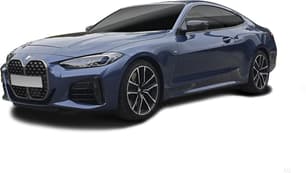
The M4 CS is familiar in all the right ways, but definitely looks significantly jacked up compared to its lesser siblings.
Part of that is the extensive use of carbon everywhere, from its bonnet panels to its roof, front lip, side skirting and boot spoiler. But also because of its super-muscular angles and creases, including the huge dome in its bonnet.
Also exclusive to this M4 CS is the light treatment, with the front LEDs lighting up with yellow highlights the brand says are supposed to be reminiscent of GT racing cars.
At the back, the rear lights are flush with fibre optic lighting, lending a flowing and unique light signature that looks epic at night.
Inside, it's a sea of carbon, with the lightweight racing seats, the dash inserts and the centre console all lined in it. It is a perfectly finished space, though, and one that's also flecked with red, including a 12 o'clock band on the thick-rimmed steering wheel, the seat backs, the contrast stitching and the paddle shifts.
Be warned, though, it takes some acrobatics to climb into or out of the CS. The seat bottoms have these super high edges that double as grab handles, but require some awkward contortions to navigate.
In short, it looks angry, this M4 CS, inside and out.
Spoiler alert - it looks a lot like a five-seat Model Y, doesn’t it, albeit a slightly bigger one. And you’d have to be a bigger Tesla head than me to immediately spot the differences at a glance.
The wheelbase is longer, the rear doors are bigger as are the rear 3/4 panels and the roof line is higher, helping with headroom in the third row.
Still, safe to say if you like the look of the five-seat Model Y, you’ll like this one. And if you hate it, well, good luck.
The alloys are 19-inch and shaded by the aerodynamic caps and there are light bars front and rear which debuted on the updated five-seat Model Y when it arrived mid-last year.
The bigger changes are inside, of course. I promise we’ll get to the second and third rows in the Practicality section, but let’s talk about the look and feel first.
There’s a love/hate relationship with Tesla’s stripped-back aesthetics, and I’m probably somewhere in the middle. I like the airiness of the space in the cabin, and I think it feels nicely put together, and I really dig the contrasting fabric used on the doors and dash which add a little visual interest to the cabin.
But I hate using the central screen to select a gear and I hate not being able to see how fast I’m going without turning my head. A head-up display would work wonders in the Model Y L cabin.
It all boils down to how you classify practicality in a car like this. I mean, the basic stuff is all there – it's got two doors, four seats and a boot capacity of 440 litres.
It measures 4801mm in length, 1918mm in width and 1399mm in height, and room for front seat riders is good, but less so for anyone you squeeze into the back. There are even ISOFIX points for a child seat.
But if you consider practicality the practical pursuit of performance, then the M4 CS has plenty of perks.
Captain’s chairs are simply a more luxurious version of second-row seating. With that there is no argument and the heated and cooled chairs that occupy the second row of the Model Y L are pretty good examples of them.
Space, both knee and headroom, is ample, and you can adjust each seat individually if you want to grant a bit more space to any third row occupants. Armrests deploy at the push of a button — as do the two hidden cupholders — and it really is easy to settle in and get comfy.
The third row is a bit more hit and miss. I’m 175cm and found I had enough legroom and headroom, but the big plastic mouldings that emerge from each side of the Model Y (which house a cupholder) are a miss. They end up pushing you into the seat next to you, and I can foresee a lot of arm rubbing with anything like two adults back there.
Also confusing is how to actually get out of it. You can fold the seat in front of you flat, but then you have to climb over it. I found it easier to just walk out between the seats.
There are another two USB-C ports in the rear row and you get air vents but no temperature controls.
The Model Y L stretches 4969mm in length, 1668mm in height and 2129mm in width, which is roughly 18cm longer and 4.5cm taller than the five-seat model. The extra space doesn’t sound like that much, but start dropping rows and you find a heap of storage space.
Both the second and third row stow electronically from the boot, but with them in place you’ll find 420 litres of storage in the double-layer boot. Drop the third row, and that number grows to 1076 litres. With the third row folded there is a massive 2423 litres of space. The frunk serves up another 116 litres.
There’s also room (and the ISOFIX attachment points) for four child seats.
We're talking a $254,900 entry price for the M4 CS, which – despite my attempts at justification – is a lot. Remember, the regular M4 is $168,700, and the M4 Competition is $186,500, so we're talking a sizeable premium here.
BMW justifies that price increase in two ways. The first is scarcity, with the M4 CS limited to just 50 examples in Australia. And the second is by dialling up every aspect of the M4's performance to terrifying levels.
The engine outputs are up, the weight is 20kg down, there are better brakes, better seats, a louder exhaust, a stiffer chassis – it goes on and on.
We'll get to some of the performance stuff in a moment, but here's what else your money buys you with the M4 CS.
It starts outside with staggered alloys, 19-inch up front and 20-inch at the rear, wrapped in track-ready rubber. There's also hi-po 'M Compound' brakes with red calipers, lightweight carbon racing seats that are heated up front, an Alcantara-trimmed steering wheel, the 'M Carbon' exterior package with carbon bonnet and roof, adaptive 'M Suspension' and a titanium exhaust that howls like the winds of hell.
The less performance-focused stuff is similar enough to the other M4 models including a 12.3-inch centre screen with digital radio, Apple CarPlay and Android Auto, a second 14.9-inch screen that handles your driving data and a head-up display. There's also twin-zone climate control, Merino leather upholstery and ambient interior lighting.
But all of that is secondary, really. This is about performance, specifically of the brutal kind.
The Model Y L sits smack bang between the $68,900 Long Range AWD and the $89,400 Performance, setting you back $74,900, before your on-road costs. It’s also the only three-row option in the Tesla family.
Aside from people movers, we’re not swimming with options in the three-row electric space, either. The Kia EV9 will get it done from $97,000, the Hyundai IONIQ 9 starts from around $120K and the Volvo EX90 is more expensive again (from $124,990).
Anyway, in Tesla land, the Model Y L rides on 19-inch alloy wheels, has a glass roof, automatic wipers and Tesla’s smartphone access key, as well as the little credit-card swipe.
Inside, there’s a 16.0-inch central screen that handles everything. And I mean everything. It's your gear selector, your speedometer, and everything else, too. There’s no Apple CarPlay or Android Auto, but you can access things like Spotify and podcasts through the in-built apps and the on-board navigation system is a good one, too.
All of that pairs with a 19-speaker sound system, and there are dual wireless charge pads. All three rows of seats are heated, while the first and second row get ventilation, too.
A second 8.0-inch touchscreen in the middle row then handles things like the seat heating or cooling, music and games to amuse the kids. And the Model Y L also debuts V2L, or Vehicle to Load, for Tesla in Australia, using a connector in the external charger.
BMW has found yet more grunt lurking in its trusty 3.0-litre 'M TwinPower' six-cylinder petrol engine, with the M4 CS now pumping out 405kW and 650Nm.
That's a decent jump from the 390kW and 620Nm served up by the M4 Competition, and a giant leap from the outputs of the 'base' M4 – 353kW and 550Nm.
Predictably, then, the CS is the fastest of the lot, knocking off the run from 0-100km/h in 3.4 seconds, compared to 3.5 and 4.2 in the Competition and M4, respectively. The top speed is also dialled up to 302km/h.
All that power is channeled through an eight-speed automatic and sent to all four wheels on demand, with the help of an 'Active M Differential'.
The Model Y L gets Tesla’s dual-motor AWD powertrain, with two electric motors producing a total 378kW and 590Nm. That’s enough, Tesla says, to knock off the sprint to 100km/h in five seconds flat.
The M4 CS is fitted with a 59-litre fuel tank, which – given the BMW's official fuel claim of 10.2 litres per hundred kilometres – should deliver a driving range on a full tank of 541 kilometres.
But... BMW also says the regular M4 – you know, the one that makes 52 fewer kilowatts and 55Nm less torque – uses 10.1L/100km, so do with that information what you will.
Tesla is always a little vague when it comes to the size of its batteries, but reports point to the Model Y L carrying a 84Wh (useable) NMC battery.
Whatever the specifics, the range is strong, with Tesla promising a 681km driving range on the WLTP combined (urban/extra-urban) cycle.
It’s also set up for 250kW DC fast charging, which should see you take on 288km in 15 minutes, according to Tesla.
The hardest and angriest M4 of all time is, perhaps unsurprisingly, hard and angry. This is a race track specialist, but because I don't happen to own one of those, my first experience with the barking (and barking mad) M4 CS was navigating my way back from BMW's inner-city dealership.
Like it or lump it, you're going to read some Porsche comparisons here, because you're talking not too far off base 911 Carrera money, and suddenly I find the two Germans doing battle for a spot in my dream garage.
First things first, the BMW won't be much chop for daily driving for most people. Happily, I have a sickness for uncomfortable sports cars. It tells me that no compromises have been made in the pursuit of punishing performance.
A good thing, too, because the BMW, at city speeds, can be punishing. Everything feels heavy, the seats aren't overly comfortable – especially the hard bits that tend to dig in when cornering – and it stiff-arms its way over road imperfections, that exhaust booming and barking as it does.
Again, I loved it, and you probably will, too. But it's still not the kind of car I'd relish sitting in the morning peak hour rush in.
But escape the confines of the city and the BMW M4 CS suddenly makes a whole heap of sense. The acceleration is genuinely brutal, and wonderfully theatrical, with that quad-tipped titanium exhaust barking and snarling as you rocket towards 100km/h.
The steering is brilliant, with feedback fed to your wrists via that thick-rimmed wheel, and the entire experience feels sharp, super engaging and edgy.
You can push the M4 hard and fast, and I'm certain my limited talents would run out far before the BMW's would, but there's this thrilling sense of peril sparked by the aggression of the experience, that I love.
It's like the magic of a roller-coaster, I guess. Even if you know nothing is going to happen, you never really know, right? And in that lies the magic.
But back to original question, this or a Porsche 911? There's no doubt a Carrera is a better all-rounder, in terms of comfy commuting and race track fun, but this angry M4 is all shouty theatrics, all of the time.
I bloody love it.
Honestly, it feels like the Tesla Model Y has grown up. I didn’t love earlier iterations of this car and I found the Performance to be fast but lacking any emotional fizz.
This one, though, feels solid and composed, and the power on tap (of which there is ample) is more about effortless progress than it is attempting to offer sports car excitement.
The steering is now nicely weighted and feels direct enough without being too sharp, and the cabin is well insulated, with often the slightly off-putting sort of rubbing noise the steering wheel makes when you turn it the only intrusive sound.
One drawback is a ride that definitely errs on the side of firm. This Model Y L gets electronic damping designed to iron out some of the more jagged stuff, but it still feels brittle in places, and you can definitely feel some sharpness in the cabin. Now, to be fair, it’s not too firm for me, but it might be for you.
Another is a bizarre turning circle which constantly reminds you you’re driving a big bus, especially when you try to complete a tight three-point turn.
But despite its stretched dimensions, I found the Model Y L easy to drive and park in the city, and once you're up to speed with Tesla's operating system (there's no Apple CarPlay or Android Auto), then the screen is pretty easy to use, too.
Expect no ANCAP rating here, I'm afraid. But the BMW 4 Series does wear a five-star rating from 2019.
The M4 CS gets six airbags (driver and passenger, side airbags, head airbags), along with what BMW calls its 'Driving Assistant Professional', which bundles active cruise control (with stop and go function), front and rear cross-traffic warning, 'Steering & Lane Control' and 'Lane Keeping with Side Collision Warning'.
The Model Y L gets the same maximum five-star ACNAP safety rating as the rest of the Model Y range, with nine airbags (up from seven in the five-seat model), and things like AEB (Auto Emergency Braking), lane-keeping assist, 'Forward Collision Warning' and blind-spot monitoring all along for the ride.
Interestingly, the curtain airbags from the five-seat version haven't been replaced, with coverage still only extending to the second row. New airbags have instead been added for third-row occupants.
One more analogue quirk of the Tesla Model Y L is the thick B-pillar, which does a good job of almost completely obscuring driver-side blind-spot checks (for those of us who still like to do those manually).
Tesla warranty is a these-days-underwhelming five years and unlimited kilometres, while the high-voltage battery is covered for eight years or (a wildly specific) 192,000km.
There’s also five years' of roadside assistance, including puncture repair (a good thing, given the lack of a spare wheel). I also couldn’t find a puncture repair kit and later research suggests Tesla sells them, rather than provides them as standard.
Tesla servicing is condition-based, so there’s no fixed schedule, with a summary on the car’s touchscreen providing a record of when vehicle maintenance was last carried out and prompts for when they should be performed next.
In the absence of a combustion powertrain the emphasis is on things like wheel rotation, balancing and alignment, brake fluid testing, air-con servicing, camera precision, radiator cleaning and high-voltage battery maintenance.
Expecty a ‘Vehicle Health Check’ to come in under $300 with ‘General Diagnosis’ at around $270 per hour.