What's the difference?
There’s no point waxing too lyrical here, because the facts surrounding the M3 Touring are more than exciting enough.
It’s a (kind of) family friendly wagon with oodles of space and practicality. It’s also an unhinged performance weapon with a thumping 3.0-litre twin-turbo-petrol inline six-cylinder engine.
And it has been years — decades, even — in the making. So, has it been worth the wait? Let’s strap in and find out.
Subaru struck gold when it first launched the BRZ in 2011.
It, alongside the related Toyota 86 (now GR86), has been the standard for budget two-door sports cars for 15 years now. Nothing besides the MX-5 convertible is in the same class.
However, buyer’s preferences have changed dramatically over the years and sports cars are at risk of becoming more mundane and vanilla to please the general public. It’s great that Subaru continues to offer the BRZ, importantly with the availability of a manual gearbox. Hallelujah.
Last year Subaru made some slight tweaks to the BRZ, including adding active safety tech and a ‘Sport’ mode to the manual trims, plus a full-size spare wheel on the top-spec tS grade.
Speaking of, we’ve got the BRZ tS manual on test here, so let’s see how it fares in 2026.
Long live the mighty wagon. The BMW M3 Touring is treat to look at, and an even bigger treat to drive.
If you want one, act fast. We waited a long time for a wagon-shaped M3, and with electrification increasing in the automotive industry, this will likely be your last chance.
The Subaru BRZ is a classic modern-day sports car that is a driver’s car through and through. This top-spec tS tester with the litany of accessories is a great example of what’s possible straight from the dealer, but it’s definitely not the best bang for your buck.
Thankfully you still get virtually every benefit the BRZ offers in the entry-level model. You’ll save thousands of dollars which you can use to pay for fuel on a road trip or modify your car exactly how you’d like.
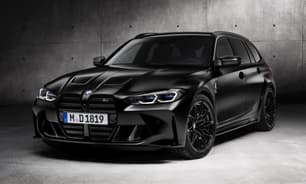
It looks spectacular, this M3 Touring, and even more so given a) wagons are so rare, and b) proper low-riding performance wagons with massive alloys are even rarer.
That said, I expect it will be polarising – and possibly too shouty for some – but I've got to say, I like it.
I’ve seen it described elsewhere as a bit of a sleeper, but for mine, you’d need painted-on eyes to not see there’s plenty going on with the Touring, especially one finished in the same Frozen Black paint as our test car.
It is at once sleek and swept back, and bulging and aggressive, especially at the flared wheel arches and fat exhausts poking from its diffuser-filled rump.
Inside, it’s mostly business as BMW usual, though with more carbon-fibre elements — our vehicle was equipped with the M Carbon Experience pack — but snug-fitting seats aside, it’s a premium, if performance-focused, place to spend time.
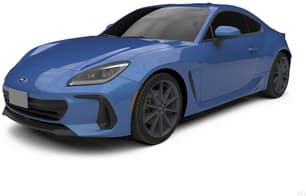
The Subaru BRZ has a timeless exterior design that screams dynamic sports car from every angle.
Even though the second-generation BRZ is around halfway through its lifecycle now, the design is aging like fine wine. It’s also a lovely evolution of the original which dates back to 2011.
The BRZ is low slung, has an aggressive front fascia plus the rear has prominent exhaust pipes. All of this stacks up to make a tough-looking car.
Thankfully this test example is also finished in 'WR Blue' exterior paint, which in my books is still the best colour for a Subaru performance car.
Adding all the genuine accessory goodies onto this car not only amplifies its street appeal, but also harnesses its racing intent. The carbon rear wing in particular has a swan neck design much like the Porsche 911 GT3. Many interested car-spotters craned their necks to get a good look.
Despite this, all the accessories are too flashy for my taste, especially for a car likely to be driven daily. I’d go for the stock look to retain resale, or something subtle like a small rear lip spoiler.
Inside the BRZ has all of the hallmarks of a sports car, as well. These include a steering wheel with minimal buttons, a prominent rev counter and contoured seats.
The manual gear shifter in this car is prominent and nice to hold. It’s great to still see manual options as they’re slowly but surely falling out of favour with buyers.
The manual handbrake is also a nice touch from a design perspective, but it limits overall interior practicality. More on that in a bit.
You can tell the interior is getting a little dated due to the older central multimedia system. But at the end of the day sports cars are more about the driving experience than the flashy tech.
A performance-focused wagon is still a wagon, right? And that means there is oodles of space in the boot, though the seating choices in our test cars made the front seats less comfortable than they could, and should, be.
But first, the boot. The M3 Touring is a 4.8m-long wagon, which pays dividends when it comes to cargo. BMW says you'll find a minimum 500L of storage space, which grows to 1510L with the rear seat folded.
In the back, you’ll find seating for three, with the requisite ISOFIX attachment points, and with enough head and leg room to get comfortable.
But those carbon front seats are an option I wouldn’t be springing for. They arrive carved out of the rock-hard material, though with big holes throughout to reduce their overall weight, and they’re not only challenging to climb in and out of, but they’re awkward and hard to sit behind.
Stick with the regular seats and both rows will be happier.
Hopping into the BRZ you’re immediately aware you’re getting into a sports car. It’s low-slung and the driving position feels like you’re almost sitting on the road. Perfect for this kind of machine.
The front seats are beautifully contoured and lock you in for when you’re driving through the twisties. Thankfully, the bolstering isn’t too aggressive and it’s still comfortable for everyday driving.
Ahead of the driver, the leather-wrapped steering wheel has a thin rim and is lovely to hold and turn. There aren’t many buttons but the few that remain are purposeful and have a lovely tactile click.
Behind this there is a 7.0-inch digital instrument cluster that permanently displays the rev counter in the middle. It’s a cool set-up that almost has a retro look to it, plus you’re able to configure the content that is displayed on the left-hand side.
Moving across, the central touchscreen multimedia system is classic Subaru. Nothing revolutionary, but I appreciate the physical shortcut buttons and dials on both sides of the screen.
It’s very easy to navigate around the screen, though as the photos show it is prone to glare, especially in bright scenarios.
Disappointingly there is only wired Apple CarPlay and Android Auto, with no wireless versions offered. You need to plug your phone in with a USB-A cable in a slot under the split-fold centre armrest.
While this means your phone will reliably charge, rather than having your phone overheat on a wireless charger, there’s no nice spot to put your phone given the physical handbrake takes up so much valuable centre armrest space.
You can put your phone in one of the cupholder spots, but when you do you don’t get a centre armrest. It’s too compromised for my liking.
While I’m on the topic of storage, there isn’t a great deal of it. There’s a small glove box and if you want, you can technically use the backseat area as they’re way too compromised for adults to fit into.
The rear seats are so small I didn’t even bother trying to fit as in my default driving position there is zero legroom. Even kids would struggle.
In terms of boot space, there is 201L available with the rear seats upright. It’s a fine space, though it’s impeded by the full-size spare wheel poking above the load floor. As a result you need to pack around the wheel.
Folding the rear seats makes the boot space more usable, though the envelope to slot things into the boot is narrow.
While the full-size spare wheel impedes the boot area, I’m glad it’s there because it’s much more usable than a dinky space-saver spare wheel or nothing at all. It gives you peace of mind in the event you have a puncture in the middle of nowhere.
The BMW M3 Touring lists at $180,100, which isn’t chump change, and positions the wagon body shape a fair way above a regular M3 sedan.
That’s before on-road costs, of course. According to BMW’s website, putting an M3 Touring on the road in NSW will be more like $194,039 — before you start ticking option boxes.
The 'M Carbon Experience' adds $17,500, and reduces overall weight by close to 10kg through carbon bucket seats, and adds more visible carbon and even more possible headroom to fit a helmet
The 'M Carbon ceramic brakes' add another $16,500, and while there are plenty of free paint colours, you can pay up to $7000 for the 'Frozen White' paintwork.
Our test car was finished in 'Frozen Black', a bargain at $5K.
Elsewhere, there is plenty of equipment on a stacked standard features list.
That includes staggered 19- and 20-inch alloys, BMW’s digital 'Laserlight' headlights, and an automatic boot.
Inside, there’s a 'BMW Live Cockpit' with a 12.3-inch instrument display, a 14.9-inch central screen, a head-up display, wireless device charging, Apple CarPlay and Android Auto and a premium Harman Kardon surround sound stereo.
You also get three-zone climate, leather seats, an 'Active M Differential' and 'Adaptive M Suspension', and seat heating up front.
Oh, and there is lots — lots — of performance, but we’ll come back to that shortly.
The 2026 Subaru BRZ line-up starts at $47,890, before on-road costs, for the entry-level model regardless of whether you opt for the manual or automatic.
On test here, however, is the flagship tS trim which starts from $52,790, before on-roads. That's $4100 more expensive than it was when it first launched in 2024.
It’s worth noting this is overlooking the limited-edition tS Kiiro ($53,590, before on-roads) with its bright yellow paint.
As a base, the BRZ comes with a solid amount of kit. This includes 18-inch alloy wheels, LED headlights, power-folding side mirrors, an 8.0-inch touchscreen multimedia system with wired Apple CarPlay and Android Auto plus dual-zone climate control.
One of the few things missing is wireless Apple CarPlay and Android Auto. This is becoming commonplace in many cars and while it can be a hassle to plug into a USB port, it also means your phone will reliably charge.
You need to step up to the S trim if you want features like leather-accented upholstery and heated front seats. The top-spec tS in particular gains STI-tuned suspension, Brembo front and rear brakes, black door mirror covers and tS badging.
Adding to this, our particular tester comes equipped with a wealth of optional accessories. These include an STI body kit, STI alloy wheels and an STI carbon boot spoiler, totalling just over $14,500 fitted… Goodness me. For reference, the carbon rear wing is almost half of that.
Altogether, this kitted-up BRZ tS tester costs around $67,300, before on-road costs. While this is much more than the top-spec Toyota GR86 and Mazda MX-5, it’s still less than an entry-level Ford Mustang Ecoboost or BMW 2 Series.
The M3 Touring’s engine might well be one of the best in the business – a hard-charging 3.0-litre twin-turbo-petrol inline six-cylinder engine that produces a sizeable 375kW and 650Nm.
That power is sent to all four wheels via BMW’s 'M xDrive' with Active M Differential, producing a sprint to 100km/h of just 3.6 seconds.
Officially, you should see a claimed 10.4L/100km on the combined cycle, but as is often the case in cars with engines that tempt you to be aggressive with the accelerator, the reality can be a little different.
We saw more like 16.4L/100km, but in the big bruiser’s defence, we spent a lot of time in city and suburbs, and a lot more time standing on the accelerator.
The M3 Touring is fitted with a 59-litre tank, and will only accept 98RON premium fuel.
Range is close to 570km using the official consumption figure and around 360km using our real-world number.
Subaru claims the BRZ manual consumes an average of 9.5L/100km on the (ADR 81/02) combined (urban/extra-urban) cycle.
We almost matched this during our largely urban-based testing, achieving an average of 9.7L/100km. There’s a 50L fuel tank which means there’s a total theoretical range of 515km using our as-tested fuel consumption.
A minimum of 98 RON premium unleaded petrol is required which isn’t uncommon for sports cars, but it still hurts your hip pocket nerve.
In a word? Delightful.
Don’t get me wrong, it’s not the easiest car in the world to daily drive. The carbon-fibre seats fitted to ours, for example, made getting in and out a slightly embarrassing challenge, and there’s a surging eagerness to the delivery of power that makes you look a little like you're showing off.
But the adaptive suspension serves up a far more comfortable ride than you might be expecting (more comfortable, in fact, than lesser, cheaper M models), making tootling around town easier and less chiropractic than I was expecting.
But it’s away from the city, with its traffic and red lights, that owning the M3 Touring becomes a delight, from its potent and punchy powertrain to the thrum of its exhaust, and the EV-like immediacy of its power delivery.
This is a driver’s wagon, there’s no doubt about it, with proper seatback-pushing acceleration, direct and confident steering and enough body stiffening and bracing that you really would have no idea you’re driving a wagon when cornering.
Engage its sportiest settings, and disengage its electronic nanny systems, and you can even set to work judging your drifting skills, courtesy of the (as yet untested, honestly) 'M Drift Analyser'.
A family car like few others, then. That you can also take it to Bunnings and throw some sleepers in the back is just a very welcome bonus.
This is where the BRZ has always excelled and this kitted-out tS manual is no exception.
Firing up with a cold engine, you’re immediately aware this is powered by a horizontally-opposed 'boxer' engine. It has that classic high idle that eventually simmers down once the engine has warmed up a bit.
Setting off you need to acquaint yourself with how this manual gearbox works. Every manual is a little different, however this BRZ is easy to pick up and understand quickly.
I particularly like the notchy and direct gear throw. It makes changing gears easy, fun and engaging.
If I am to be critical, the clutch bite point is a little high and there is a touch too much rev hang when changing gears, especially in the ‘Sport’ drive mode, but you get used to it eventually.
In everyday driving scenarios there is enough power available. Some more wouldn’t go astray due to the lack of a turbocharger, but this constraint makes the car more fun to drive as you have to work harder with the gears.
Speaking of, the gearing is short, which means you will be shifting gears quickly. At 60km/h, for example, the car can be driven around in sixth gear, which is clearly focused on maximising efficiency.
Once you’ve reached your set speed there’s enough torque to maintain it without having to dive back through the gears. This is nice because you don’t have to shuffle through the gears to keep up with traffic.
Out on the open road is where the BRZ comes into its own. The steering in particular highlights how balanced and poised the car feels. It’s so fun to chuck around on twisty bends and feel the weight transfer.
The STI-tuned suspension in this particular trim also highlights how sporty and dialled-in this car is. It can feel a little rough and taut on pimpled urban roads, though you need to remind yourself this is a sports car, not a comfort-oriented SUV.
In a similar vein, at higher speeds there is a lot of road and tyre noise that transfers into the cabin. This is made worse when the rear seats are folded. While more sound insulation would likely fix this, I like it being left out in the name of lighter weight (kerb weight is only 1.3 tonnes).
Neither the M3 or M3 Touring have been independently crash tested to date, but it’s worth pointing out the 3 Series and 4 Series received maximum five-star scores from Euro NCAP.
Standard safety kit includes AEB with pedestrian detection, active lane keeping assist, blind spot monitoring, adaptive cruise control and rear cross-traffic alert.
You’ll also find six airbags on board.
The current-generation Subaru BRZ hasn’t been crash-tested by ANCAP and is therefore unrated.
In 2025, the manual BRZ joined the auto version when it gained Subaru’s 'EyeSight' camera system, which brings autonomous emergency braking (AEB), lane departure warning and even adaptive cruise control. It’s rare for manual-equipped vehicles to feature the latter.
This is above and beyond the seven airbags, blind-spot monitoring, rear cross-traffic alert, lane change assist, reverse camera and tyre pressure monitoring.
It’s worth noting manual versions of the BRZ do not have any parking sensors, front or rear, as standard. Automatic versions gain rear parking sensors and a rear AEB system.
There are two ISOFIX anchors and two top-tether points for child seats in the second row, though space is rather limited.
The BMW M3 Touring is covered by a five-year, unlimited kilometre warranty, and servicing is "condition based", in that the vehicle will tell you what maintenance is required, and when.
You can prepay your service costs at the time of purchase for all BMW vehicles, covering the first five years of ownership.
Subaru BRZ owners are covered by a five-year, 100,000km warranty which is now commonplace in the mainstream segment. Many carmakers are now extending their coverage out to seven years and beyond.
Logbook servicing is required every 12 months or 15,000km, whichever comes first. The first five services cost a total of $2595.51, which averages out to around $519 per service. For the performance car space this isn’t cheap but not as exorbitant as more premium offerings.
Subaru has a total of 128 dealers around Australia, with a spread across metro, rural and regional areas.