What's the difference?
Anyone unfortunate enough to hear me banging on about electric cars - or perhaps more accurately, electrified cars - will be aware of my undying love for the existence of plug-in hybrid electric vehicles (PHEVs).
I love them because they offer a drama-free step into electrification. You don't need a big box on the wall to make sure you're charged overnight and because there's a petrol engine under the bonnet, as long as you've got fuel in the tank, your range anxiety disappears.
You can get around town in electrified silence and emissions-free smugness while still planning that around-Australia trip you'll never go on. It's absolutely the best of both worlds for those reluctant to take the next step. A genuine win-win, if you like.
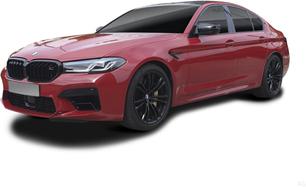
Except that very few people buy them. Their existence in the catalogues of a number of car companies feels like a weary, "We should at least do something" from product planners. BMW has been trying with PHEVs for a while, with selected offerings in the 3, 5 and X5 range. Given the 5 Series has had its mid-life facelift, what BMW calls the LCI, it's time for another look.
The Infiniti Q50 Red Sport sedan really wants you to love it, and this latest version is doing its best to impress the heck out of you with its looks and features.
So much so that you'll take it home... and live with it, forever. And then there's that engine – armed with a formidable twin-turbo petrol V6, the Q50 Red Sport's outpowers all its rivals.
But then there's the BMW 340i which is not that much more expensive... and it's a BMW. And what about the Lexus IS 350? That's more like the Infiniti, but also more popular.
Oh, and don't forget that we when first met the Q50 Red Sport last year we didn't exactly get off on the right foot. The engine's formidable grunt seemed too much for the car to handle. Then there was the jiggly ride, and the steering wasn't great either unless you were in Sport + mode. It's all coming back now...
Perhaps the Q50 Red Sport had changed. This is the new one, and Infiniti had assured us it's a different car now.
Do we give it another chance? Of course, and we do, in a quick 48-hour test. So, has it changed? Is it better? Would we live with it forever?
The G30 5 Series is an excellent car and unless you're looking for the serious punch of the V8 M550i, or want to run with the cops in the diesel, the 530e is a great option. No slower than the 530i, well-equipped and that rarest of things, a truly elegant BMW. Nobody buys a BMW with an eye on the budget, so at this level, the $3000 gap is nothing to worry too much about. For EV-sceptics, the range anxious or just for someone who just can't take the full EV plunge now, a PHEV is a great bridge between the two worlds.
And if nothing else, it's not a giant SUV.
The Q50 Red Sport is a premium sedan that's great value, with a cracker of an engine. While Infiniti has improved the ride and steering, it still feels to me that the engine is too powerful for the wheels and chassis to handle. But if you're looking for something of an untamed beast, this car could be for you. Just don't say we didn't warn you.
The G30 5 Series dates back to a time when people thought the grille on this was A Bit Much. How wrong they were. The 5, like the 3, used to be part of a clutch of executive sedans that formed the backbone of the company's expansion and success from the 1980s onwards. That means the styling is never too adventurous and even Chris Bangle's E60 5 Series, while striking, was not particularly controversial.
The only problem with the G30 is that it's hard to distinguish from its predecessor, but that's not a real issue when you see how elegant this car is. Easy on the chrome, proportional grille, big wheels, it's a proper smooth operator, visually speaking.
The cabin is holding up nicely and fits with the rest of the BMW range. It's impeccably well built, full of nice materials and even the wood trim is all right. The black Nappa leather is quite lovely but I can't tell you what the standard stuff is like, so you'll have to work that one out for yourself. It's very calm in here, with a good balance of buttons and screens with which to operate the car and while it doesn't have the you-beaut wow of its E Class rival, with its two massive slabs of screen in front of you, it has plenty to offer.
The Q50 Red Sport looks cranky from front on, which I like in a car. Yes, the grille is simplistic and gaping, the nose is a bit bulbous, and sure, side on the car looks like a Lexus IS 350, but those rear haunches and the aggro body kit with its front splitter and boot lid spoiler make for an impressive looking four-door sedan.
The update brought restyled front and rear bumpers, those red brake calipers and the dark chrome 20-inch rims and new LED tail-lights.
Inside, the cabin is an asymmetrical paradise (or hell, if you're a bit OCD like me) full of sweeping lines, angles, as well as different textures and materials.
The red stitched quilted leather seats are an addition that came with the update, so is the new steering wheel and the ambient lighting.
The 'Sunstone Red' colour of our test car is also a new hue which looks a bit like Mazda's Soul Red. If red is not you, there are other colours – hope you like blue or white or black or grey because there's 'Iridium Blue', 'Midnight Black', 'Liquid Platinum', 'Graphite Shadow', 'Black Obsidian', 'Majestic White' and 'Pure White'.
The Q50 has similar dimensions to the IS 350: both are 1430mm tall, the Infiniti is 10mm wider at 1820mm, 120mm longer at 4800mm, and has a wheelbase that's 50mm longer at 2850mm.
The 5 is almost five metres long, so as you might expect, it's big inside. Back-seat passengers have a ton of space to play with and even three across back there is doable for a distance. The outboard seats have some nice shapes to them, too, so they hold rear passengers in if the driver gets a bit ambitious. Loads of legroom, good headroom and very importantly, a good view out through the big side windows. Properly comfortable, then.
Front and rear passengers each score a pair of cupholders for a total of four as well as the same number of bottle holders. The centre-console bin is long and shallow, but does feature a USB-C port. The wireless-charging pad also has a USB-A port for those without the functionality and/or a phone too big to fit. Both the cupholders and charging pad have a sliding cover.
The boot is smaller than the standard car's as there is a lithium-ion battery hidden underneath the now-sloping floor. With 410 litres, it's smaller than a 3 Series' but it doesn't look that small. There is also a spot for the charging cable and its bag behind the left wheel arch.
The Q50 Red Sport is a five-seat four-door sedan and is vastly more practical than its two-door Q60 Red Sport sister, in that I can actually sit in the back seat. The Q60's coupe styling looks amazing, but the sloping roofline means headroom is so severely limited that it reduces the rear seats to a place to throw your jacket.
True, I'm tall at 191cm, but in the Q50 Red Sport I can sit behind my driving position with legroom to spare and more than enough headroom.
Boot space is good at 500 litres, which is 20 litres more than the luggage capacity of the IS 350.
Storage throughout the cabin is good with two cup holders in the rear centre fold-down armrest, two more up front and bottle holders in all doors. A large centre console storage bin and another big storage area in front of the shifter are great for keeping junk under control and your valuables covered.
The 530e sits almost smack-bang in the middle of a still reasonably extensive 5 Series range. While you can have an "entry" level 520i for $99,900 (before on-roads), the 530e lands at $122,900 (before on roads), which itself is $3000 more than the 530i, and the same amount less than the NSW cops' favourite, the 530d.
Given the price, you'd expect some gear and boy howdy does BMW deliver. You get 19-inch alloys, a 16-speaker stereo, multi-zone climate control, ambient LED lighting, reversing camera to go with the front and side cameras, keyless entry and start, electronic dampers, active cruise control, electric and heated front seats, sat nav, auto LED headlights, heat-insulated glass, head-up display, a mostly real leather interior, auto parking, auto wipers, digital dashboard, wireless charging and run-flat tyres.
The huge touchscreen on the dash runs BMW OS7, which accepts inputs via touch, the console-mounted rotary dial and (optional) various hand wavey-movements. The speakers have harmon/kardon badges on them and there is DAB digital radio and wireless connectivity for both Apple CarPlay and Android Auto.
In something of a classic BMW own-goal, the wireless charge pad that is designed to keep your phone snug is too snug for bigger phones like my over-compensatory iPhone. Even with the cover off, it just won't fit. Thankfully there's also a USB-C port in the centre-console bin.
The 520e I had for the week also had the $5900 Enhance package (20-inch M alloy wheels, glass sunroof and the excellent BMW Laserlight headlights), $2300 Nappa Black leather package, comfort front seats ($500) and a built-in dash cam ($390) called BMW Drive Recorder. This brought the price up to $131,990 before on-roads. Just so you know, the Laserlights are $2400 on their own.
Maybe sit down for this next bit. The Q50 Red Sport lists for $79,900. Are you okay? Do you want a moment? Remember, though that only seems like a lot because it's not a Benz or a BMW. Truth is the value is pretty good – better than a German car of the equivalent size and grunt.
Look at the standard features list: 8.0-inch and 7.0-inch stacked touchscreens, the 16-speaker Bose 'Performance Series' stereo system, digital radio, road noise cancellation, sat nav, 360-degree camera, leather seats, power adjustable from sports seats, dual-zone climate control, proximity key, sunroof, auto wipers and adaptive LED headlights.
The 2017 update brought new standard features to the Red Sport including, red stitching on the seats and dash, quilted leather seats, new 19-inch alloy wheels and red brake calipers.
Don't forget that the bang-for-buck factor is strong with the Red Sport, too. In that nose is a twin-turbo V6 that makes almost as much grunt as the BMW M3 for about $100K less. Even the 340i, which Infiniti says is a Red Sport rival, is $10K more. Truth is though, the Lexus IS 350 is the real rival to the Q50 Red Sport.
The 530e comes with a 2.0-litre four-cylinder turbocharged engine developing 135kW and 290Nm, with the eight-speed ZF automatic sending power to the rear wheels. The electric motor spins up 83kW and 230Nm, also driving the rear wheels. When everything is working together, the combined output is 185kW and 420Nm, which delivers a quick 6.1-second dash to 100km/h, which isn't mucking about.
You can choose four drive modes. EV will (mostly) drain the battery, Hybrid will keep the two working together and Sport will deliver the most power. And drain the battery, albeit more slowly. Adaptive works the averages and decides what you need or want by how frisky you're being with your driving style.
Inside the Q50 Red Sport's nose is a 3.0-litre twin-turbo V6 petrol engine and it is a beautiful thing. To me this car is piece of technologically sophisticated jewellery that cradles a precious gem that pumps out 298kW/475Nm.
But I have my concerns... you can read about those in the driving section.
Shifting gears is a seven-speed automatic which delivers drive to the rear wheels.
The 12kWh battery takes up the same amount of space as the old one, but has more capacity, extending its EV range. The claimed EV range is 57km on the WLTP standard.
The iDrive system has a bunch of settings that you can play with to squeeze more out of the silent-running mode and there's also a battery-charging mode button to force the ICE to charge the battery while you're on the move. Also useful is a timing system, so you can schedule when the car charges to take advantage of the cheap power available in the dead of night.
Recharging is easy but sadly a bit slow off a domestic power point. Having said that, if you plug it in after a day's commuting, you'll be topped up to 100 percent overnight. It's a long charge, but it's not as if you'll be stranded if you forget. You can get a wallbox, but there's not much point.
The fuel tank is just 46 litres. The WLTP combined cycle figure is a laughable 2.3L/100km. On that official figure, you'll cover an unlikely 2000km. My week with the car, which included 70km on EV-only power with one charge off my solar panels, got me an indicated 6.1L/100km in a mostly suburban week of driving. So based off that, you'll get about 530km from one full charge and a full tank, which is a bit confusing. Keep charging and, if you're an average Australian who travels little more than 30km per day, you won't use much petrol at all.
Having said all of that, out on the freeway, you'll probably slide towards that 2.3L/100km and make it from Sydney and Melbourne on a single tank. Just.
Infiniti says the V6 petrol engine in the Q50 Red Sport should use 9.3L/100km if you're using it on a mix of highways, urban streets and country roads. We only had the Q60 Red Sport for 48 hours and after a couple of days of Sydney city commutes and a trip to the Royal National Park our trip computer was reporting 11.1L/100km.
The reason I like PHEVs as a tool for pushing people towards electrification is about more than the fact that it will likely cure buyers of range anxiety once they're realistic about their actual car usage. I mean it does do that, but it's more about the fact that PHEVs drive like a normal car, with few exceptions.
In EV mode, the acceleration is swift but not that brutal, YouTuber-friendly thrust EV fanboys use as proof that legacy car makers are dead. It's all very serene and very, very quiet as you move from traffic light to traffic light in near silence, while more than keeping up with traffic. The blue of the dashboard indicates your progress and the iDrive screen can keep you updated with power consumption.
The switch between EV and ICE propulsion is very smooth and it's almost like BMW has been doing this forever. You'll also discover an appreciable lift in performance, more in line with the M Sport badges. BMW's engineers have done nothing to make the 2.0-litre petrol sound better than a whirring mixmaster, though.
Slightly less M Sport-ey is the suspension. While there's absolutely nothing wrong with it, the adaptive dampers never dial things up too much for the average motorist. Granted the 5 will leave just about anything this size for dead as far as driver involvement goes, but it certainly keeps the dial closer to comfort than, say, the M550i does. Once again, it's a serene thing to get around in and passengers will love the quietness and easy flow of conversation. Or the lovely sound from the harmon kardon speakers.
You don't have to try too hard to cover a good chunk of the claimed 57km of EV range. Realistically you'll get close to 45km, even after my colleague Matt Campbell drained 20km of charge in a six-kilometre trip that he maintains was driven gently (snigger) and normally (guffaw). Without trying too hard, I managed 41km in pure EV after his attempts to ruin my numbers (not really, but I do enjoy the amusing false narrative).
Perhaps the biggest complaint we had about the previous Q50 Red Sport, which launched in 2016, was that it felt as though the chassis wasn't up to the amount of grunt running through it, and those rear wheels struggled to transfer the oomph to the road without losing traction.
We experienced the same issue again in this new car. I was breaking traction, not just in 'Sport+' and 'Sport' modes, but in 'Standard' and 'Eco', too. That was happening without pushing it hard and with all electronic traction and stability aids on.
If I was 18 I'd declare to the world I'd found my dream car - something that always wants to 'light 'em up' given half a chance. But like that one mate who always gets into trouble on a night out it's only funny when you're young.
A truly great performance car is planted, balanced and able to deliver the grunt to the road effectively. The Nissan R35 GT-R is the perfect example – a brilliant piece of machinery, a weapon of a performance car and with a chassis matched perfectly to its engine.
And that could be the issue with Q50 Red Sport - that engine feels overpowered for the chassis, and wheel and tyre package.
We also felt the previous Q50 Red Sport's ride, with its constantly adapting 'Dynamic Digital Suspension', was overly busy. Infiniti says it has developed the suspension system further and it does feel as though the ride is more comfortable and composed.
Steering was another area that we weren't overly impressed with when we drove the previous car. Infiniti's 'Direct Adaptive Steering' (DAS) system is super sophisticated and was the first in the world not to have any mechanical connection between the steering wheel and the wheels – it's all electronic.
The new Q50 Red Sport uses the upgraded 'DAS 2' and while it feels better than before, it's only in Sport+ mode that it seems most natural and accurate.
The big price tag buys you a comprehensive safety package. It has seven airbags, ABS, stability and traction controls, blind-spot monitoring, active lane-departure warning, forward AEB, reversing AEB, forward collision warning, front cross traffic alert, reverse cross traffic alert, lane-keep assist, pedestrian alert in EV mode and tyre-pressure sensors.
The forward AEB works at high and low speeds. The pedestrian detection works at urban speeds and there does not appear to be cyclist detection.
There are also two ISOFIX and three top-tether anchors.
The 5 Series was last tested in 2017 and was awarded five ANCAP stars.
The Q50 was given the maximum five-star ANCAP rating in 2014 and the amount of advanced safety equipment which comes standard on the Red Sport is impressive. There's AEB, that works forwards and when you're reversing, forward collision and blind spot warning, lane keeping assistance and moving object detection.
There are two ISOFIX points and two top tether anchor points in the back row, for child seats.
The Q60 Red Sport doesn't come with a spare tyre because the 245/40 R19 tyres are run flats, which means even after a puncture you should be able to keep driving for about 80km. Not ideal in Australia where distances are seriously vast.
BMW really needs to up its game, as do Audi and Porsche (among others). Munich is still sticking with a three-year/unlimited-kilometre warranty while German rival Mercedes is up at five years and Japanese competitor Lexus four. You do get three years roadside assist thrown in.
All 5 Series (excluding M5) are eligible for service plans. For $1950, you're covered for five years/80,000km of servicing. As with most BMWs, servicing is based on how you drive but really, if we're being honest, the car will get you into the dealer once every 12 months or 15,000km. Roughly.
The Q50 Red Sport is covered by Infiniti's four year/unlimited kilometre warranty with servicing recommended every 12 months or 15,000km.
Infiniti has a scheduled servicing program which will cost $1283 (in total) for three years.