What's the difference?
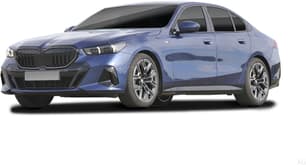
More than half a century of 5 Series pedigree has led BMW to this, the first electric version of its venerable sedan, the i5.
It's true that electric cars come with benefits that suit the realm of luxury (or at least executive) motoring like their effortless acceleration and near-silent operation, so this new G60 5 Series has the potential to be the best yet in its ‘i5’ form.
But there are rivals, well-liked ones at that, which BMW must contend with to snatch the spot at the top of the large premium sedan ladder technically held currently by the Porsche Taycan in terms of sales - though Mercedes’ E-Class would lead if its electric cousin EQE’s sales were combined.
So, with names like that to go up against, BMW better have brought its A-game.
James Cleary road tests and reviews the new Ferrari 488 Spider with specs, fuel consumption and verdict.
It’s almost inevitable. Tell someone you’re a motoring journo and the first question will be, ‘So, what’s the best car you’ve ever driven?’
Without getting into an esoteric analysis of what the word 'best' actually means in this context, it’s clear people want you to nominate your favourite. The fastest, the fanciest, the car you’ve enjoyed the most; the one that’s delivered a clearly superior experience.
And if I enter the room of mirrors (where you can always take a good hard look at yourself) the answer is clear. From the thousands of cars I’ve had the privilege of sliding my backside into, the best so far is Ferrari’s 458 Italia, an impossibly pure combination of dynamic brilliance, fierce acceleration, howling soundtrack and flawless beauty.
So, the opportunity to steer the open-roof Spider version of its successor, the 488, is a significant one. By rights, the best should be about to get better. But does it?
There’s no getting around the i5 being a rather expensive offering. More than $150,000 to get into an electric sedan that’s not much faster than a hot hatch is a big ask, but there’s plenty to enjoy about the 5 Series.
Things like its heated leather seats shouldn’t be the reason you’re willing to spend so much on a sedan when a $50,000 hybrid SUV will score you the same, instead it’s the fact the 5 Series is a delight to drive and hasn’t lost the feeling of prestige the badge has earned over the last half a century.
In terms of value - if speed isn’t your focus and you’re less of a gadget-type-operator when looking at cars like this - the 520i has the style and comfort you’d need and at $100K less than the M60.
And in terms of large electric sedans, the i5 eDrive40 is cheaper than a Porsche Taycan (by a little) or an Audi e-Tron (by a lot). The Genesis G80 Electrified is the closest cheaper rival, by about $10K, or the less powerful Mercedes EQE is similarly priced at $154,900.
Essentially, if you’re looking at a 5 Series, it might be worth considering if you really need it to be electric, but if so, there aren’t many alternatives in its category for the price.
Note: CarsGuide attended this event as a guest of the manufacturer, with meals provided.
The Ferrari 488 Spider is a brilliant machine. It's properly supercar fast, in a straight line and around corners. It looks stunning, and attention to design detail, engineering refinement and overall quality oozes from its every pore.
Is it the best car I’ve ever driven? Close, but not quite. Others may disagree, but for what it’s worth, I think the Ferrari 458 Italia, in all its high-revving, naturally aspirated glory is still the sweetest ride of all.
If you’ve watched other members of the BMW family go into a new generation within the last few years - the 3, 4 and 7 Series particularly, you won’t be too surprised by what you see here. Especially with the latter, having seen the petrol variants look roughly the same as the electric ones.
BMW specifically made the petrol 520i and the i5 variants look similar for egalitarian purposes - to not disenfranchise 520i buyers who are still spending a fair chunk of cash but might not be ready to go EV.
That means all three variants score a mix of new and old. The kidney grille remains and isn’t as large as on the M3 or 4 Series, while the bonnet line following it and the ‘character line’ down the car’s side also remain. And yes, the Hoffmeister kink where the C-pillar meets the passenger window’s lower corner is still there.
On that C-pillar though is a ‘5’ stamped into the bodywork, new to this generation, while the front grille as mentioned has a glowing light surround - the brand’s ‘Iconic Glow’ already seen on the 7 Series.
Overall, thanks to being slightly larger in every dimension, the new 5 is starting to look bigger than a 7 Series from a little while ago. And that’s because it is - its body is overall longer than an E65 7 Series from the mid-2000s.
It’s 5060mm long 1900mm wide, 1515mm tall (97mm longer, 32mm wider, and 36mm taller). Its wheelbase is 20mm longer too at 2995mm.
Launched in 2015, the 488 is the fourth mid-engine V8 Ferrari based on the aluminium space-frame architecture unveiled with the 360 Modena back in 1999, and unlike its Pininfarina-penned predecessors, was designed in-house at the Ferrari Styling Centre, under the direction of Flavio Manzoni.
The key focus this time around was aero performance, including the additional breathing and cooling needs of the 488’s 3.9-litre twin-turbo V8 (relative to the 458’s 4.5-litre naturally aspirated unit); hence the car’s most obvious visual identifiers - substantial air intakes in each flank.
Measuring 4568mm nose-to-tail, and 1952mm across, the 488 Spider is marginally longer (+41mm) and wider (+15mm) than its 458 equivalent. That said, it’s exactly the same height at just 1211mm tall, and the 2650mm wheelbase is unchanged.
Ferrari is a past master when it comes to sneaky concealment of spectacular aero trickery, and the 488 Spider is no exception.
Inside, the design is all about simplicity and focus for the person with the steering wheel in their hands.
Upper elements of its F1-inspired double front spoiler direct air to the two radiators, while the larger lower section subtly pulls flow under the car where carefully tuned ‘vortex generators’ and a yawning rear diffuser (incorporating computer-controlled, variable flaps) dial up downforce without a significant drag penalty.
The ‘blown’ rear spoiler manages air from intakes at the base of the rear screen, its specific geometry allowing a more pronounced (concave) profile for the main surface to increase upward deflection and maximise downforce without the need for an oversize or raised wing.
Those side intakes are divided by a central, horizontal flap, with air from the upper section directed to exits over the tail, pushing the low-pressure wake directly behind the car further back to again reduce drag. Air flowing into the lower section is sent to the turbo engine’s air-to-air intercoolers to optimise intake charge. All brilliantly efficient and tastefully incognito.
Putting the engine in the centre of the car and fitting only two seats doesn’t just pay off dynamically, it delivers the perfect platform for visual balance, and Ferrari has done a superb job of evolving its ‘junior supercar’ with a nod to the line’s heritage and an eye on extending its reach.
The tension across its multiple curved and contoured surfaces is beautifully managed, and the Spider’s crouching stance screams power and single-minded purpose.
Inside, while the passenger might be enjoying the ride, the design is all about simplicity and focus for the person with the steering wheel in their hands.
To that end, the slightly angular wheel houses a host of controls and displays including a very red start button, driving mode ‘Manettino’ dial, within-thumb’s-reach buttons for indicators, lights, wipers and ‘bumpy road’ (more on that later), as well as sequential max rpm warning lights across the top of the rim.
The steering wheel, dash, doors and console are (optionally) carbon-rich, with the familiar buttons for Auto, Reverse and Launch Control, now housed in a dramatic arching structure between the seats.
The compact instrument binnacle is dominated by a central rev-counter with digital speedo inside it. Readout screens for on-board info across audio, nav, vehicle settings, and other functions sit either side. The seats are grippy, lightweight, hand-crafted works of art, and the overall feeling inside the cockpit is an amazing mix of cool functionality and special event anticipation.
A longer wheelbase means more space inside, where the 5 Series also still looks fairly familiar to those who have spent any significant time in a recent model BMW.
BMW has historically been pretty bang-on with ergonomics, and the new-gen 5 does a good job of sticking to that. Comfortable sports seats and quality feel for the materials on touch points mean the 5 Series feels nice to be in, and relatively restrained interior design for a somewhat luxurious car means it looks nice too.
It’s let down only by a couple of things - its multimedia screen and Operating System 8.5 is a little less simple to use now, and requires more touching the screen than previous iDrive systems, rendering the scroll wheel less useful.
The BMW Interaction Bar too is a little tricky to see controls on, as well as lacking physical feedback for using controls. Vent flow controls are digital sliders on the Bar, while vent direction is controlled by an unusual ‘joystick’ style control nearby.
The rear seat is plenty spacious, as you’d expect from a large sedan, with climate controls and ports for charging devices in the rear.
Okay, so how do you approach practicality in a car that’s so obviously not engaged with the concept?
Best to say there’s cursory consideration in terms of cabin storage, with a modest glovebox, small pockets in the doors, and a pair of piccolo-sized cupholders in the console. There’s also a net and some general oddments space along the bulkhead behind the seats.
But the saving grace is a generous, rectangular boot in the nose, offering 230 litres of easy-to-access load space.
Another attribute fitting broadly under the heading of practicality is the retractable hardtop which smoothly unfolds/retracts in just 14 seconds and operates at speeds up to 40km/h.
There are three members of the new 5 Series family from launch, with a base 520i starting things off from $114,900 before on-road costs.
It’s the only petrol-powered (with mild-hybrid, we’ll come back to this) variant in the trio, but it does have a fairly extensive list of features as standard. In terms of tech and comfort, most of what comes with the 520i is available further up the range too, with the major differences being drivetrain related.
In the 520i, the interior upholstery is synthetic ‘Veganza’ leather with Alcantara, though optional Merino leather is a $4000 BMW Individual option. The front seats are heated as standard, however, and electrically adjustable with memory settings and lumbar support.
A 12.3-inch instrument display paired with a 14.9-inch multimedia display are standard across the range, running BMW’s Operating System 8.5, while a head-up display, ambient lighting, wireless phone charging tray and BMW’s ‘new’ Interaction Bar are included too - a crystalline-style strip across the dash with touch-sensitive ‘buttons’ like the climate controls.
A panoramic glass roof - unable to be opened - is standard too, while the 520i’s sound system is a Harman Kardon set-up with 12 speakers.
Exterior features are quite similar to the more expensive i5 variants, with Adaptive LED headlights, automatic boot opening, an M design kit with front and rear aprons, side sills, and BMW’s Iconic Glow kidney grille surround.
Optional in the 520i is an ‘Enhancement Package’ which adds a choice of aerodynamic 21- or 20-inch wheels, metallic paint, and a 655-watt 17-speaker Bowers & Wilkins surround sound system for $5400. One test car on the launch we attended was painted in a BMW Individual colour - Tanzanite Blue - which upped the price to $7800.
Moving up the range to the mid-tier i5 eDrive40, which starts from $155,900, adds Merino leather interior, metallic paint, Bowers & Wilkins surround sound and aerodynamic 20-inch wheels standard, but it also includes adaptive suspension and some other EV-related features.
BMW’s ‘Adaptive Suspension Professional’ comes with Integral Active Steering (rear-wheel steering) and is a step up over the M Sport suspension from the 520i, while its aero wheels function as a way to keep the electric car’s range being affected by resistance.
The eDrive40 also comes with an acoustic protection system to make ‘electric car noises’ to warn pedestrians, as well as BMW’s ‘Iconic Sounds’ for the occupants - basically a system that uses orchestral sounds composed by Hans Zimmer that are affected by acceleration intensity, speed, and drive mode.
It also comes with the standard kit for an electric car, a Mode 2 and Mode 3 charger, cable, and a five-year Chargefox subscription.
The top-spec i5 M60 xDrive ups the cost to $215,900 and the features list again slightly (as well as being far more powerful).
Its suspension is even more advanced, adding the brand’s Adaptive M Suspension Professional with active anti-roll, plus 21-inch aero wheels as a no-cost option. The M60 also gains an M rear boot lip spoiler.
Inside, BMW’s ‘Crafted Clarity Glass’ controls in the centre console are standard, as is ventilation for the front seats and a four-zone automatic air conditioning system.
Let’s get the big number out of the way. The Ferrari 488 Spider costs $526,888 before on-road costs.
Included in that not inconsequential figure is the ‘E-Diff3’ electronically-controlled differential, ‘F1-Trac’ traction control, ASR & CST, ABS, an anti-theft system, carbon-ceramic brakes, Magnaride shock absorbers, dual-zone climate control, racy leather seats, bi-xenon headlights with LED running lights and indicators, keyless start, Harman multimedia (including 12-speaker, 1280-watt JBL audio), 20-inch alloy rims, tyre pressure and temperature monitoring, and… a car cover.
But that’s just the starting point. Any self-respecting Ferrari owner will need to put a personal stamp on their new toy and the prancing horse is happy to oblige.
If you want an exterior colour to match your favourite polo pony’s eyes, no problem, the Ferrari Tailor-Made program will do whatever it takes. But even the standard options list (if that makes sense) offers more than enough scope to make an already spectacular four-wheel statement even more distinctive.
Our test car featured six new Mazda3’s worth of extras. That’s just under $130k, with the highlights being more than 25 grand in exterior carbon-fibre, $22k for the special, two layer, iridescent effect ‘Blue Corsa’ paint, over $10k for chrome painted forged rims, and $6790 for Apple CarPlay (standard on the Hyundai Accent).
But you’ve got to remember an inverse logic applies here. While some may see $3000 for cavallino rampante shields on the front wings as somewhat pricey, to a proud Ferrari owner they’re badges of honour. In the yacht club carpark, showing off their latest acquisition, you can script the satisfied boast - ‘That’s right. Two grand. Just for the floor mats!’
Despite BMW calling it ‘electrified’, the base 520i is only a mild hybrid so most wouldn’t realise unless they were told.
Its turbocharged 2.0-litre four cylinder puts out a modest 153kW and 330Nm, with power and torque sent to the rear wheels via an eight-speed automatic transmission.
BMW claims it’ll knock over the 0-100km/h sprint in 7.5 seconds, a few seconds too slow to blow anyone’s socks off.
The mid-spec eDrive40 has a little more kick to it, its rear-mounted electric motor capable of 250kW/430Nm and able to cut that time to 6.0 seconds.
It’s fitted with an 84kWh battery to draw its power from, the same as the 442kW/820Nm M60 with its all-wheel drive dual-motor setup.
The M-tuned i5 can hit 100km/h in a claimed 3.8 seconds. Bye bye socks, perhaps.
The 488 Spider is powered by an all-alloy, mid-mounted 3.9-litre, twin-turbo V8, featuring variable valve timing and dry sump lubrication. Claimed outputs are 492kW at 80000rpm and 760Nm at a usefully low 3000rpm. Transmission is a seven-speed 'F1' dual clutch driving the rear wheels only.
BMW claims the petrol 520i sips 6.7 litres per 100km from its 60-litre fuel tank, though we were unable to independently test any of the claimed figures on the launch day.
The base car has a theoretical range of 896km if it was possible to achieve the claimed fuel consumption figure for the duration of the whole tank - but it isn’t and realistically you could knock about 20-30 per cent off that, depending on how enthusiastically you drive.
In the i5 variants, the same 84kWh battery provides slightly different ranges due to the eDrive40 using 16.56kWh per 100km, and the M60 using 18kWh.
The eDrive40 has a claimed 550km maximum range, while the M60 has a 506km figure thanks to its extra motor and weight.
For some cars, the list of features is what really separates the variants, but that’s not the case for the 5 Series. As is a bit of a BMW tradition, the drivetrains dictate the different trim levels and prices, and there are three fairly distinct flavours of 5 Series.
Starting at ground level, the 520i might at first seem like a bit of boring vanilla. Except it’s actually quite smooth and light vanilla.
There’s not a lot to write about when it comes to its drivetrain, but the lightness of its engine and petrol tank combo when compared to EV batteries and motors is refreshing, and makes for a quite dynamic rear-drive sedan.
Its 153kW and 330Nm is delivered smoothly enough with the mild hybrid assistance doing a little in helping responsiveness, but without intervening in the gearshifts it doesn’t feel particularly keen.
It lacks the ride comfort of the i5’s adaptive suspension, but it’s able to be driven in a spirited manner that belies its size and even, to some extent its 1725kg kerb weight. Chocolate sprinkles on the vanilla, if you like.
It’s not fast, but it feels nimble compared to its electric siblings and can carry a fair bit more speed through corners, after which there’s room to notice its rear-drive characteristics.
It’s especially noticeable after getting out of the 2130kg eDrive40, though the extra power from its 250kW/430Nm motor makes for some more spirited acceleration and a little more excitement when exiting a corner, especially if you’re aiming to double-check if it really is rear-wheel drive. There’s a little more than choc-topped vanilla going on here.
The steering is, like in the 520i, direct and responsive, though in most cases is probably best set to ‘comfort’ rather than ‘sport’ in its settings.
The eDrive40 is rather comfortable and capable when barrelling through twisty backroads, and doesn’t feel out of hand for a five-metre-long sedan. It holds its weight well, and telegraphs when you might be approaching the limit quite sensibly.
When considering that, then, it’s impressive how brutally capable the 2305kg M60 is.
Here, we’re looking at a double-choc fudge with extra choc, and maybe some cookie dough in there for good measure. There’s a lot to like, but boy is it heavy.
It’s 580kg (or exactly half a Peugeot 208 GTi) heavier than the 520i, but it feels quick on its feet and its anti-roll seems to do a lot in terms of dynamics, the limiting factor really seems to be its tyres (which can and will squeal quite quickly to let you know when approaching said limit).
While you’ll need to take caution with how much speed you approach a corner with, you’re not going to lack acceleration on the other side, its all-wheel drive being less ‘fun’ but more efficient at getting you away from the bend than in the rear-drive eDrive40.
That adaptive suspension does also translate to a comfortable ride on relatively rough roads - only particularly bad bumps will reveal how much weight and pressure is being placed on each corner of the big sedan.
We had the rare opportunity of driving the 488 Spider on road and track with Ferrari Australasia handing us the keys for a rural run from Sydney to Bathurst, followed by some private bonding time on the roads around town, then a batch of unrestricted hot laps on the Mount Panorama circuit in the lead up to this year’s 12 Hour race (which the scuderia won in emphatic style with the 488 GT3).
On the freeway, cruising at 110km/h with roof open, the 488 Spider is civilised and comfortable. In fact, Ferrari claims normal conversation at speeds over 200km/h isn’t a problem. Top tip (no pun intended) is to keep the side glass and small electric rear window raised to minimise turbulence. With the roof up, the 488 Spider is every bit as quiet and refined at the fixed roof GTB.
The 458 Italia atmo V8’s rising fortissimo howl is one of the world’s greatest mechanical symphonies.
Even with the multi-mode Manettino in its regular ‘Sport’ setting and the seven-speed ‘F1’ dual-clutch gearbox in auto, all it takes is a gentle crank of the right ankle to despatch pesky road users with the temerity to impede the 488’s progress.
On the quiet, open and twisting roads around the outskirts of Bathurst we may have flicked the switch to ‘Race’, slipped the gearbox into manual and given the 488 Spider a nudge. In some sweeping corners on Mount Panorama we might have even tested Einstein’s theory that matter bends the fabric of space and time. In short, we were able to get a good feel for the car’s dynamic abilities, and they are monumental.
Relative to the 458, power is up a lazy 17 per cent (492 v 418kW), and turbo-fed torque leaps a staggering 41 per cent (760 v 540Nm), while kerb weight is trimmed by 10kg (1525 v 1535kg).
The result is 0-100km/h in 3.0 seconds (-0.4sec), 0-400m in 10.5 (-0.9sec), and a maximum velocity of 325km/h (+5km/h).
If you must know, given fuel efficiency and emissions performance was the key driver behind Ferrari’s move to a turbo powerplant, all this is balanced by claimed 11.4L/100km combined economy (down from 11.8 for the 458).
A full blown launch in this car is like lighting the wick on an Atlas rocket, with a seemingly never-ending surge of thrust pinning your back to the seat, and each pull of the column-mounted carbon gear paddle delivering a seamless and near instantaneous shift. Ferrari claims the 488’seven-speed ‘box shifts up 30 per cent quicker, and down 40 per cent faster than the 458’s.
The lofty summit of the twin turbo’s torque mountain arrives at just 3000rpm, and once you’re up there it’s a table top rather than a peak, with more than 700Nm still on call at close to 7000rpm.
Maximum power arrives at 8000 (perilously close to the V8’s 8200rpm rev ceiling), and the delivery of all this brute force is impressively refined and linear. To improve throttle response, the compact turbos incorporate ball-bearing-mounted shafts (rather than the more common sleeve bearing type), while the compressor wheels are made from TiAl, a low-density titanium-aluminium alloy. As a result, turbo lag simply isn’t in the 488’s vocabulary.
And what about the sound? On its way to 9000rpm the 458 Italia atmo V8’s rising fortissimo howl is one of the world’s greatest mechanical symphonies.
Maranello’s exhaust engineers allegedly spent years fine-tuning the 488’s aural output, developing equal length tubes in the manifold to optimise harmonics before gas flow reaches the turbos, to get as close as possible to the high-pitch wail of a naturally aspirated Ferrari V8.
All we can say is the 488’s sound is amazing, immediately turning heads on contact... but it ain’t no 458.
Using the 488 Spider’s incredible dynamic ability to translate forward momentum into lateral g’s is one of life great pleasures.
Supporting the double wishbone front and multi-link rear suspension set-up is a host of high-tech widgets including the tricky E-Diff3, F1-Trac (stability control), High-Performance ABS with Ferrari Pre-Fill, FrS SCM-E (magnetorheological shock absorbers), and SSC (side-slip control).
Combine that with the active aero quietly turning the car into a four-wheel suction cup, plus ultra-high performance Pirelli P Zero rubber, and you have amazing grip (the front end especially, is incredible), perfect balance and stunning corner speed.
Our Mount Panorama blat confirmed the 488 Spider remains poised and throttle steerable through corners and curves at ludicrous speeds.
Chasing gears into the top of the ‘box up mountain straight made the lights on the upper rim of the steering wheel look like a fireworks display. The Spider transmitted its every move across the top of the circuit through the lightweight seat, and the very fast blast into The Chase at the bottom of Conrod Straight was other-worldly. Set the car up on entry, keep squeezing the throttle, grease in just a fraction of steering lock, and it just blazes through like a high-speed hovercraft, at 250km/h-plus.
More time back outside Bathurst confirms feel from the electro-hydraulic rack and pinion steering is brilliant in the real world, although we did notice the column and wheel shaking in our hands over bumpy backroads.
The quick fix there is a flick of the ‘bumpy road’ button on the steering wheel. First seen on the 430 Scuderia (after then Ferrari F1 hero Michael Schumacher pushed for its development), the system de-links the shock absorbers from the Manettino setting, providing extra suspension compliance without sacrificing engine and transmission response. Brilliant.
Stopping power comes courtesy of a ‘Brembo Extreme Design’ system derived from the LaFerrari hypercar, which means standard carbon-ceramic rotors (398mm front, 360mm rear) clamped by massive calipers - six piston front, four piston rear (our car’s were black, for $2700, thank you). After multiple stops from warp speed to walking pace on the circuit they remained firm, progressive, and hugely effective.
ANCAP hasn’t crash tested the new 5 Series. The last generation was a five-star car and it would be unusual to see that change with additional safety features - even with stricter testing.
The 5 Series comes with BMW Driving Assistant Professional as standard, with active cruise, lane assist and departure warning, front and rear cross traffic alert, collision prevention and intervention systems - in fact BMW says it has about 40 safety systems including an augmented reality dash display.
Its list of airbags includes front and side airbags for driver and passenger including one between the two occupants, as well as curtain airbags front and rear.
In terms of active safety the various driver aids mentioned above do their part to avoid a crash, and if the worst comes to worst dual front and side airbags are in place.
The 488 Spider has not been rated for safety performance by ANCAP.
BMW has a fairly industry-standard five-year/unlimited kilometre warranty on its new cars, while its electric car batteries are covered by an eight year/160,000km warranty.
For servicing, BMW offers numerous discounted packs and deals based on your preferences and desire to pay upfront.
For the 5 Series, a five-year/80,000km basic service package is $2400, though the i5 will have different needs and lower servicing costs not yet listed by the brand.
The Ferrari 488 Spider is covered by a three year/unlimited km warranty, and purchase of any new Ferrari via the authorized Australian dealer network includes complimentary scheduled maintenance, through the ‘Ferrari Genuine Maintenance’ program for the first seven years of the vehicle’s life.
Recommended maintenance intervals are 20,000km or 12 months (the latter with no km restrictions).
Genuine Maintenance attaches to the individual vehicle, and extends to any subsequent owner within the seven years. It covers labour, original parts, engine oil and brake fluid.