What's the difference?
Tim Robson road tests and reviews the BMW 4 Series with specs, fuel consumption and verdict at its Australian launch.
Following on from the mid-life tweaks to BMW's mainstay 3 Series in December 2015, the spin-off 4 Series line has now been updated along the same powertrain and equipment lines.
Based on the same mechanicals as the 3 Series, the three-year-old 4 Series was ostensibly formed to give BMW's nomenclature some sense of logic by designating its two-door machines as 'evens' (2 Series, 4 Series and 6 Series) and its four-door cars as 'odds'.
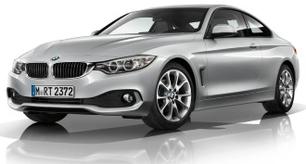
Three variants currently make up the 4 Series range, including a two-door Coupe, a two-door Convertible and – oddly, given the naming regime – a four-door Gran Coupe that also sports a hatch-like tailgate.
There is nothing quite like a car company occasionally building a car that could be considered a risk. And there are all kinds of risks in the car business - the market isn't ready for that car, people don't identify your brand with this or that type of vehicle, the list goes on. And it's long. It's very easy for me to sit on the sidelines and say, "Pft, what were they thinking?" Few cars land on your driveway without years of thinking having already gone into their development.
The Kia Stinger is the kind of car that would have caused lots of thinking and plenty of hand-wringing at Kia HQ in Korea. Not because it was a bad idea - it wasn't. Not because it's a bad car - it is, in fact, the opposite. And not because SUVs have already changed the way we look at cars - Kia has done well out of that.
It's just that Kia has never produced a car like the Stinger. A five-door coupe-sedan, rear-wheel drive and with a focus on driver dynamics. Most of us know very well how the Stinger GT burst on to the scene in a blaze of well-deserved glory. It's not all about the GT, though. There's a whole range of Stingers and just below that very accomplished sports sedan is the Stinger GT-Line.
The 4 Series line offers three distinct points of difference from the more traditional 3 Series, each with their own attraction. The sharpening of the sticker prices and the additional spec helps their cause as well, with the 430i Coupe probably our pick of the range. The 440i is the firecracker of the group, while the 420d is also worth a look, thanks to its value and prodigious torque output.
The Stinger GT-Line is a great machine. It looks good, feels good to drive and while it's not the cheapest large sedan, it's also not a Camry. With a strong European vibe, it's a nice bridge between boring-dependable and out-of-reach European. Boasting a strong link to Europe in its chassis DNA, it has it all apart, maybe, from the badge.
But Kia has a habit of doing unexpected things and the Stinger was a bold move worth making just for the halo effect of having such a cool car in the range. It has done good things for the company's reputation, as though the rest of the range isn't proof already.
No external changes to the 4 Series' bodywork have been affected for this midlife refresh, but there have been plenty of tweaks to the standard equipment offerings right across the board.
The Stinger looks fantastic. I know the car has its detractors, but there's a massive Euro influence here that sits well in my visual cortex. It's maybe not as ooh-aah as the A5 or the outgoing BMW 4 Series Gran Coupe, but the Stinger can and should be mentioned in the same breath. It looks terrific, even if it is a bit fussier in the details.
From the signature grille, the low beltline, big wheels and sports coupe roofline, it looks sleek and sophisticated.
Inside is a bit more conventional, with some real classic touches such as circular air vents, conventional-looking gear selector and a flat-bottomed steering wheel. It's cool, clean and, with the big new screen, a bit more techy-looking than before. There are lots of nice materials and the odd rogue one, but it's a good cabin that feels well put-together.
Two-doors are never the most practical devices, but the 4 Series Coupe and Convertible duo make a decent fist of it for front-seat passengers. There are bottle holders in both doors and a pair of cupholders in the centre console, along with a large lockable glovebox.
The centre bin is, however, quite shallow, and houses the car's single USB port inside it. There is covered storage under the dash for smaller items, and a small rubber-lined tray that the current crop of phones has outgrown.
The rear seating in the Coupe is reduced to almost a formality, especially if the front seat passengers are tall and the front seats are set back, while the sloping roofline reduces head space quite considerably. A centre armrest contains a pair of cupholders, and there are small side pockets.
Rainy conditions precluded us from trying the Convertible's metal folding roof, but the rear seat space restrictions also apply here. Its 370 litres of boot space is roomy enough for a drop-top, while a clever lifting function raises the folding roof structure up by about 300mm to allow luggage to be stowed under the panels when the roof is down. Capacity drops, though, to just 230 litres.
The Gran Coupe, on the other hand, is the most practical car in the entire 3 and 4 Series line-up outside of the 3 Series Touring wagon. With a large, flat load area, and a hatch-like tailgate, the Gran Coupe can swallow 480 litres of gear with the seats up and an impressive 1300 litres with the seats lowered.
Face-level rear vents, more head and backseat legroom – not to mention the fact you don't have to squeeze into the rear past the front seat – makes the Gran Coupe a most useful device, and it's little wonder it's the most popular variant of the three.
This is really a four-seater car. While there is good legroom in the rear, the falling roofline, small door aperture and huge transmission tunnel box you in a bit, almost rendering the middle seat useless for all but the shortest of folks. You do get your own air vents, though, which is generous.
The low roof also means limited headroom, made a little worse by the standard sunroof. I had room but taller people might brush the headlining. There are two cupholders front and rear for a total of four and each door has a bottle holder.
The boot is a modest-for-this-size 406 litres, rising to 1114 litres with the seats down. Access to the boot is good if not spectacular; the hatch opens wide but a slightly narrow aperture means loading and stowing flat packs and things like that could be a struggle.
Entry into the 4 Series world now stands at $68,900 plus on-roads for the petrol 420i Coupe and Gran Coupe, and tops out at almost $118,000 for the 440i Convertible.
Both the 420i and 420d have been boosted by the addition of adaptive M dampers, a heads-up display, powered folding rear-view mirrors, lane-change warning, driving assistant and BMW's surround view camera with top and side views.
BMW claims the extra kit is worth just over $8000. Leather seats, sat nav, BMW's ConnectedDrive Emergency call system, bi-Xenon headlights and reversing camera are also featured. An eight-speed automatic transmission is offered as stock, but a six-speed manual can be optioned at no cost.
The diesel version costs an additional $2200 over the petrol powerplant.
Stepping into the 430i, the M Sport Package is offered as standard, with the Luxury line, which includes a leather-trimmed dash, a no-cost option.
Additional standard equipment over the outgoing 428i includes 19-inch M rims, heads-up display, lane change warning, driving assistant and surround view camera. The 430i also gains electric lumbar support for driver and front passenger seats and a nine-speaker stereo system over the base 420i.
Finally, the range-topping 440i scores a heads-up display, lane change warning, driving assistant, surround view camera, adaptive LED headlights, leather dash, front seat heating, high beam assist, active cruise control with stop and go function and parking assistant over the outgoing 435i.
Over the 430i, the 440i also gets variable sport steering, a Harman/Kardon surround sound system with 16 speakers, a leather instrument panel (with M Sport Package), ConnectedDrive internet and concierge service, and air collar neck-warming ducts for the 440i Convertible.
As is the custom at this time of the year, the Stinger scored a mild update for that minty-fresh taste at the dealer. Not much has changed in the looks department (good) and the most obvious tweak is the brand-spanking new media system already seen in the brilliant new Sorento.
The GT-Line is one of two four-cylinder variants of the Stinger, priced at $57,230 or $60,690 driveaway, a solid $7000 more than the 200S and it's $730 more than the MY20. It's also uncomfortably close to the 330S, which has the delicious twin-turbo V6, but obviously a lower equipment level.
For your money you get 19-inch alloy wheels, a 15-speaker stereo, dual-zone climate control, camera package that includes a reversing camera, side cameras and front camera, keyless entry and start, front and rear parking sensors, active cruise control, powered heated and ventilated front seats, sat nav, automatic LED headlights, head up display, leather seats and wheel and even more besides. It's a lot, which is fair given the price.
The 15-speaker stereo is run by the excellent new media system on the excellent new 10.25-inch touchscreen. It's great to look at, has some really cool ideas in it (including the hilarious soundscapes list which includes, for some reason, a noisy cafe environment), DAB and Apple CarPlay and Android Auto.
There are two new petrol engines, two new badges and prices cuts of up to $10,000 right across the board for the line-up, along with additional standard equipment that improves the value equation even further.
The line kicks off with the 420, which can be had in either diesel or petrol guise. The 420i gains BMW's new B48 2.0-litre four-cylinder turbo petrol engine, which gains 5kW over the old motor to produce 135kW and 270Nm.
It also benefits from slightly improved fuel economy, with a drop of 0.3 litres per 100km for the Coupe and 0.5 for the Gran Coupe to 5.8L/100km, and a fall of 0.2L for the Convertible to 6.2L/100km.
The 420d retains its 140kW, 400Nm 2.0-litre four-cylinder turbo diesel engine, which returns 4.3L/100km in the fixed roof cars and 4.7L/100km for the Convertible.
The 430i – formerly known as the 428i – also receives the new 2.0-litre petrol engine, albeit in a 185kW/350Nm tune. Its fuel economy drops a healthy 0.6L for the Coupe and Gran Coupe and 0.4L for the Convertible, posting figures of 5.8 and 6.3L/100km respectively.
The top-spec 435i has been transformed into the 440i with the addition of BMW's new Twinpower 3.0-litre straight six petrol motor. Its output jumps 15kW to 240kW and by 50Nm to 450Nm, and its consumption falls by more than half a litre to 6.8 litres per 100km for the closed-roof pair and 7.2L/100km for the Convertible.
All cars come standard with a 'traditional' ZF eight-speed torque converter automatic transmission with steering wheel paddles as standard fitment, while a six-speed manual gearbox is a no-cost option across the line.
Under the GT-Line's bonnet is Kia's Theta II 2.0-litre four-cylinder turbocharged engine. It's the same as before, with a stout 182kW and 353Nm. Driving the rear wheels is an eight-speed automatic from the Hyundai-Kia empire.
It's pretty rapid, knocking out the 0-100km/h spring in just six seconds, a mere 1.1 seconds slower than its faster sibling's 4.9 for the benchmark.
Our brief test loop on a rainy, blustery Melbourne winter's day in all three model types (but no diesel) netted varying fuel consumption readings across the line; we recorded 8.4L/100km in a 420i sedan against a claimed figure of 5.8, 9.8L/100km for the 430i Gran Coupe against a claimed figure of 5.8L/100km, and 8.4L/100km against the 440i Gran Coupe's 6.8L/100km.
Kia's claimed combined cycle figure is 8.8L/100km. As the Stinger goes without trickery like stop-start or mild hybridness, it's no surprise that my week with it yielded an indicated 10.4L/100km, which isn't bad for a 1750kg sports sedan that was not molly-coddled and also spent some time in a resurgent case of crap traffic in Sydney.
It also drinks standard unleaded, which is a nice touch.
BMW introduced a raft of tweaks to the 3 Series platform late last year, which have translated over to the 4 Series. The key addition across the line is BMW's two-stage adaptive dampers that feature a Sport and a Comfort circuit, fitted as part of the M Sport pack that comes standard on the 430 and 440, and is a $2600 option on the 420.
Larger 19-inch rims are fitted to the 430i and 440i cars, while the 420 gets 18s out of the box. It's possible to fit 18s on the more expensive cars, as part of the no-cost Luxury option pack that supplants the standard M Sport pack.
While our test was brief and held in less than ideal road conditions, the large-wheeled 4 Series really didn't enamour themselves to this author. There's a distinct lack of communication from the tyres and chassis through the steering wheel and your backside, while the combination of firm Sport shocks and large 19-inch wheels with narrow-section tyres made for an uncomfortable ride over country roads.
Sampling a 420i with the Luxury 18-inch rims, however, improved things immensely, with much better feedback and comfort that didn't come at the expense of handling.
One of BMW's strong points should be its steering, given all the 3 and 4 Series cars are still rear-wheel-drive… but it's not, unfortunately. The electrically assisted set up is far from perfectly calibrated, feeling too dull and digital underhand, no matter what the setting.
The pick of the bunch performance wise is – logically – the six-cylinder 440i. The turbo powerplant is potent from right down the rev range, with a muted yet still pleasing engine note permeating the cabin. The self-shifting mode on the eight-speed auto does a good job of keeping up as well.
The updated 2.0-litre four is a sprightly performer, too.
I have driven and loved the Stinger GT. It's tremendous fun, goes like a rat running away from a cut snake, which itself is being chased by a mongoose with its bottom on fire, and it handles like a proper sports sedan.
The GT-Line is obviously not that quick, but it's not slow, either. But it does take a bit of the GT's DNA and delivers a driving experience eerily reminiscent of an E90 BMW 3 Series. That seems like an out-of-date reference, but it was a beautiful car to drive with a lovely balance of ride and handling.
The steering has good feel and you know what's going on underneath the front wheels. You sit towards the centre of the car, also a BMW trademark. Turn the wheel and the car goes with you, despite its bulk, and it's happy to dance a bit with its limited-slip diff.
The 2.0-litre turbo does a good job in most conditions but you feel it coming up short when you're hustling it. It's never breathless, but the torque deficit to the turbo six is clear. If you've not driven the faster Stinger, you may not notice, but there's a touch of lag in the 2.0 that contributes to the idea it's working hard to move the big sedan.
But back off a little and it becomes a fluid, fun drive. In town it's firm but very comfortable, gently bumping rather than crashing into potholes. The rear suspension is a complicated five-link set-up that costs money and eats into boot space but delivers the goods.
Given its length the Stinger is a bit tough to manoeuvre in tight spaces and its 11.2m turning circle isn't too flash either, but you soon get used to it.
six airbags, lane departure warning, pre-collision safety pack, parking sensors, active cruise control with collision warning, AEB and pedestrian warning, along with reversing camera and surround-view cameras across the line.
The Stinger ships with an impressive safety package that includes seven airbags, ABS, stability and traction controls, high- and low-speed forward AEB with pedestrian and cyclist detection, intersection assist, lane-keep assist, steering assist, driver attention alert, high- and low-speed forward collision warning, front cross traffic alert and rear cross traffic alert.
You get two ISOFIX points and three top-tether anchors.
The Stinger scored five ANCAP stars in 2017.
BMW offers a Service Inclusive program at the time of purchase, which for $1340 covers everything – including items like spark plugs, brake fluids and other fluids - for five years or 80,000 km scheduled. The cars are also covered by a three-year free roadside servicing program, in addition to BMW's two year, unlimited kilometre warranty.
Kia's ground-breaking seven year/unlimited kilometre warranty along with roadside assist for the first 12 months. Each time you service your car at Kia, you get an extension on your roadside assist for up to eight years.
Perhaps the only thing that makes you go, "Oh, what?" about the Stinger is the 12 months (Good)/10,000km (Oh...) service intervals. That's pretty common with Kia's turbo engines but is a little inconvenient. Then there's the cost - prices range from $312 to $685, which adds up to $3459 over the first seven services. If you stay under 10,000km/year, that's not bad going at under $500 per year for servicing, but if you're a high-miler, it will add up.
The servicing isn't outrageous - and the prices are capped - but it's not cheap, either.