What's the difference?
Coupes are back.
Heading into the second half of the 2020s, buyers of affordable sports cars seem better-served for choice than when the current BMW 2 Series Coupe surfaced earlier this decade.
Mazda’s MX-5 keeps gently evolving. Toyota and Subaru have rejuvenated their respective firecracker 86/BRZ twins. The glorious Nissan Z is as evocative as it is entertaining. The recent Ford Mustang revamp serves rousing American muscle car. The reborn Honda Prelude looms as a hybrid hero. And even Audi’s TT is set for resurrection soon.
All reinvigorate the genre. Just like the (G42) 2 Series Coupe, the third in the series since 2007, released during 2021 and facelifted in 2024.
Here we revisit the M240i xDrive, our favourite version (sorry, M2 owners), to see if it remains the definitive brand experience.
If you want a Mercedes-AMG A45 sedan, you’re dead out of luck - there isn’t going to be one. Your alternatives are the sleeker, more style-focused CLA 45 four-door ‘coupe’, or the A45 hatch, which is more often associated with boy racer types… with deep pockets.
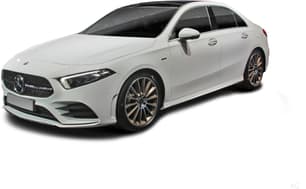
Or you could buy this car - the Mercedes-AMG A35 4Matic sedan. A lot of pundits have questioned the two-prong AMG strategy in the hatchback range, with the A35 slotting between the already-pretty-hot A250 4Matic and A45 S.
In the sedan line-up, however, there’s a different approach, with the Mercedes-AMG A35 4Matic topping the range. So is it a fitting flagship for the small sedan line-up? It certainly has the tech, safety and equipment levels to live up to buyers’ expectations.
And as a rival to the likes of the Audi S3 sedan, BMW 2 Series Gran Coupe and its own sibling, the Mercedes-AMG CLA35, does it offer a compelling alternative?
Let’s go through it, criteria by criteria.
It may be expensive for a small coupe. And EVs have reframed performance standards to the detriment of most internal combustion engine sports cars like this – at least for acceleration times. But the M240i xDrive Coupe is far more than just about numbers, imbuing the soul and spirit of what makes this brand’s vehicles so enjoyable and memorable to drive.
A unique and most-welcome survivor today, the MY25 makeover takes all that, and improves the interior, to be at the heart of what BMW has traditionally done best (styling aside). We found parting with it at the end of our term very difficult.
The Mercedes-AMG A35 sedan is a genuinely fun small car. To me it’s a more mature offering than the A35 hatch, while not being quite as pretentious as a CLA35. Therefore I like it on principle.
Would I personally choose it over an Audi S3? Probably not - but there are plenty of objective reasons why you would.
BMW has iconic form when it comes to coupe, err, form.
Consider the timeless E9 Coupe of 1968, its elegant E24 6 Series successor of 1976 and the chiselled E31 8 Series of 1990.
Even the sinewy E82 1 Series Coupe of 2007 still resonates.
But, despite boasting long-nose/short-tail proportions, today’s G42 looks awkward from some angles, like a Lego version of the preceding F22 of 2014, complete with cartoonishly aggressive detailing that don’t sit happily on the car.
Not Munich’s finest moment. Still, as one of the last surviving small coupes, we’re still very glad it exists. And, in a rare case of more being more, this M240i’s body kit disguises some of the heavy-handedness.
So, what’s new here? Barely earning the facelift tag outside, the MY25 2 Series Coupe gains extra colours, restyled alloys and revised exterior trim, with more body paint in the lower parts and rear apron, as well as high-gloss black for the M240i’s mirror caps.
Inside, the modifications are more profound, updating to BMW’s 'Operating System 8.5', offering improved functionality and all housed within a fetching, single-piece rectangular display screen that also takes in the instrumentation.
Along with a flat-bottomed steering wheel, redesigned air vent knobs, fewer buttons, revised trim and different ambient lighting, they refresh what was a dated-looking cabin.
This is the first AMG A-Class sedan ever, so that’s an interesting design decision. I wasn’t sure whether Mercedes needed a CLA ‘Coupe’ and an A-Class sedan to sit alongside one another, but there are distinct differences in terms of the look and intent of the two compact models.
The A sedan carries over the A-Class hatchback’s aggressive styling, with sharp, angular headlights, a strong presence courtesy of its black exterior highlights (including AMG flics on the front bumper and black side skirts, rear spoiler and rear diffuser for this test vehicle). The black 19-inch black-finish rims fitted to our test car are also optional, with silver being the standard finish.
It has a stumpy little boot with a broad stance thanks to its triangulated tail-lights and horizontal reflectors, while the twin exhaust pipes with black tips are rather pleasant to look at, too.
It’s a very attractive sedan, with nothing clumsy about its proportions at all. Is it gorgeous enough to make you think twice about the Audi A3/S3/RS3 as the ruler of the pretty little sedan? Maybe… it’s not quite there for me, although it’s close. But it is certainly a distinct design, one that Merc fans will undoubtedly adore.
The dimensions of the A35 sedan aren’t what a lot of people would actually consider “small”. It’s 4549mm long (on a 2729mm wheelbase), 1796mm wide and 1446mm tall. For context, that’s longer, wider and taller than the substantial Mazda3 small sedan, if not quite as big as the a Corolla sedan.
And if you’re wondering about how that compares to a CLA, that car has the same wheelbase but is 4688mm long, 1830mm wide and 1439mm tall. That’s bigger than a C-Class. Gosh, how confusing.
What does it all mean when it comes to interior space? Check out the interior images and details below to see for yourself.
You could be forgiven for thinking you’ve stepped into a mid-sized rather than small coupe, with today’s G42 being larger in every area except wheelbase than an E46 3 Series Coupe of about 25 years ago.
Length, width, height and wheelbase dimensions are 4548mm, 1838mm, 1404mm and 2741mm, respectively, which make for a surprisingly easy-to-access and spacious cabin – at least for adults up front.
In fact, if nobody is sat behind, even a 200cm-plus individual can stretch out. German cars are great at accommodating the 99-percentile people. And head room’s not bad either, even with the standard sunroof.
BMW’s are about driving, so no shocks to learn that the M240i’s driving position is first class. Sat low and snug, this is a suitably sporty yet incredibly comfortable and high-quality environment, aided by nicely bolstered M Sport seats, a lovely steering wheel and a beautifully presented dashboard. Everything fits like a glove.
If the notion of reducing the number of buttons in the newly-extended electronic interface raises red flags (how many times have we moaned about this in most software-based Chinese vehicles?), rest assured: the M240i’s ergonomics are spot-on.
There are still plenty of switches alongside the iDrive controller and gearshifter for all major vehicle functions, Porsche-style, as well as big old physical buttons for the (soaring) audio, to back up the screen shortcuts for more-detailed functions. It only takes a few moments to learn how easy and intuitive the whole set-up is. BMW leads the way here.
Crisp, clear and colourful digital graphics almost make up for the fact that the gorgeous old analogue dials of old are extinct. Instead, the company serves up unremarkable angular instrument displays and electronic readouts. Very comprehensive and informative, they do the job, but are utterly bereft of character or style. It’s as if Munich’s designers have forgotten how to make things look pretty nowadays. Hang on, do we see a pattern emerging here?
More solid Teutonic sensibility – this time far-more artfully served up – can be found in the excellent ventilation system, ample console-sited storage and pleasingly deep door pockets, highlighting how easy the M240i is to live with.
Crash regulations demand central posts, so no pillarless sides unfortunately in this modern coupe, but frameless door glass is nice (and assists in entry/egress when retracted), enhancing that sporty sensation.
The flipside is poor side and rear vision for the driver, but – frankly – it is otherwise difficult to fault the M240i’s interior layout and presentation.
Even the back-seat area tries hard.
The seats whirr forward and back (slowly) to increase/decrease the narrow aperture as required (using a shoulder-height lever within easy reach), though you’ll need to be pretty flexible accessing the two-person buckets that await. Once ensconced there, there’s sufficient space, padding and support for most folk of up to about 180cm to travel in reasonable comfort, as long as the front-seat occupants aren’t in maximum chaise longue mode and journeys aren’t too long. The quite-upright backrest angle can’t be adjusted.
Just ensure the climate control is on. Things can become pretty stuffy, quickly. And be thankful for the air vents, extended glass area, middle armrest with cupholders and reading lights.
Further back, there is a large-ish, 390-litre boot with a low, wide and flat floor, that can be extended by tugging on a handle to drop the 40/20/40 split/fold backrests as required.
The usual tie-down hooks, lighting and power outlets are present, but you’ll search in vain for a space-saver wheel. Just the dreaded 'tyre mobility kit' that – once deployed – will likely ruin your tyre and cost hundreds to replace. No thanks.
A gashed tyre. No phone coverage. What a way to ruin a great drive day out on your favourite rural roads and in such an immensely enjoyable car. Australia demands a spare tyre.
I admit, I thought I’d get a bit more in the cabin of the A35 sedan. There’s no electric steering wheel adjustment, no heated steering wheel, and the fact adaptive cruise control is optional (it’s standard on some $25K cars!) is a bit rude, too.
That isn’t to say that it’s not an eye-catching space, one that will hit hard on the bling-o-meter, and will definitely impress anyone who isn’t familiar with Mercedes’ recent cabin design traits.
The twin screens are dazzling - crisp and beautiful to behold, and with graphics that are extremely high resolution. The menus have been designed to be simple, but honestly, it’s a bit confusing until you’re initiated.
Also, I found the media screen to be very glitchy. On multiple occasions it would not respond to touch, and once it even reset itself. I also had several problems connecting to Apple CarPlay. Note: I was using a Mercedes-Benz USB-C adaptor to USB-Lightning cable with an iPhone XS, and I think maybe the adaptor had a part to play in the problems I encountered.
The touchscreen is just one way to interact with the media controls, as there’s a touchpad between the front seats, and the driver has a thumb-controller on the steering wheel to jump between screens. And there’s voice control as well, with the MBUX system’s ‘Hey, Mercedes’ recognition allowing you to ask for things to be adjusted.
Furthering the wow-factor up front are beautifully designed air vents that light up blue when you turn the temperature down or red when you up the heat. There’s configurable ambient lighting for the cabin, which makes the A35 a bit of a showstopper at night, and our car had the no-cost optional red and black Lugano leather trim, which is either going to be your thing, or not.
The space for adults up front is decently accommodating, with good headroom and width, plus nice soft touch points where there should be, and there are bottle holders in the doors. There are three USB-C points up front, a pair of cup holders between the seats, and a wireless (Qi) phone charging bay.
The steering wheel is a nice shape and easy to hold, though I’m still not convinced by the little digital displays for the drive-mode dials - they’re toy-like teeny-weeny screens and look a bit pixelated compared to the other displays in the cabin.
Rear seat space is not as good as you might hope or expect, given the size of the car. As a 182cm (6.0ft) man with the driver’s seat set for me, my knees were hard against the seat in front, my toes were squashed and my head was just brushing the headliner, too.
That mightn’t be a problem for you - maybe your only rear seat riders will be short, or young. There are dual ISOFIX child-seat anchor points and three top-tether restraints for baby seats, if that’s the case.
And they’ll be well catered for, with a pair of USB-C ports, as well as directional air-vents, mesh map pockets, and bottle holders in the doors as well as a fold-down armrest with pop out cup holders.
Boot space will likely matter to you if you’re buying a sedan over the hatchback model, and you’ll find an additional 60 litres of boot space here over the five-door model, with 430L of cargo capacity.
That should, in theory, be large enough to fit all three of the CarsGuide cases (124L, 95L, 36L), but the shape of the cargo hold meant I only managed to fit the smallest case with the middle or largest case, but not all three together. Soft luggage could help.
There’s no spare wheel under the boot floor, as the A35 has a tyre repair kit.
The good news is, the G42 in 230i and flagship M2 retain the traditional longitudinal-engined/rear-wheel drive set-up, though the M240i has all-wheel drive (xDrive in BMW-speak) to help keep things under control.
All the other existing 2 Series models (basically, those with more than two doors) are transverse/FWD-derived.
Now, the bad news is that, from $102,100 (all prices are before on-road costs), the M240i is considerably more expensive than before. You can no-longer buy a traditional six-cylinder BMW coupe for under six figures. The continuing 230i Coupe, from just under $80K, uses a (albeit lovely) four-pot turbo.
At least the Mexican-made M240i isn’t short of equipment.
You’ll find an 'M Aerodynamics' package, 'M Sport' package that includes drive modes, M suspension with adaptive dampers, M brakes, M differential, M variable steering and M… more.
Additional items include adaptive LED headlights, leather upholstery, electric and heated sports front seats with driver’s side memory, climate control, sunroof, adaptive cruise control, paddle shifters, a 12.3-inch instrument cluster, a 14.9-inch multimedia display, 'Hey, BMW' voice control, a heated steering wheel, a head-up display, auto parking, a surround-view camera, 14-speaker Harman Kardon audio, digital radio, wireless charging, Apple CarPlay/Android Auto, emergency services access as part of a three-year subscription, electric heated/folding M exterior mirrors, ambient lighting, 19-inch alloy wheels and a tyre-repair kit – in lieu of a spare wheel.
Our car as-tested also included 'Brooklyn Grey' metallic paint ($1700), 19-inch M light alloy wheels with performance tyres ($2800) and the M Sport Package Pro material/trim package ($1900), helping to bump up the price to $108,500. No reversing nearside mirror-dip is a bit stingy, though.
Still, there’s also a decent wad of advanced driver-assist systems, including AEB front and rear, lane-support tech and various monitors. Read more about that and more in the safety section below.
The near-$20K price jump since 2022 also means the M240i is now more expensive than the Z Nismo and Mustang Dark Horse and is now rubbing shoulders with the (BMW-based and built) Toyota Supra Track Edition and even the MG Cyberster Dual Motor.
And, speaking of electric vehicles, as before, the now-$81K Tesla Model 3 Performance’s astounding 3.1-second acceleration is in another league.
No, the M240i is about traditional BMW values harking back to 'The Ultimate Driving Machine' era. Premium, driver-focused German grand touring sports luxury coupe, cabriolet or convertible.
From that perspective, the two-door 2 Series is the cheapest by a fair margin and in a league of its own.
The Mercedes-AMG A35 4Matic sedan has a list price of $72,500, which is the manufacturer’s recommended list price (MRLP, also known as MSRP). That’s the price before on-road costs and extras.
What cars does the A35 compete with? The most obvious rival is one from within, the Mercedes-AMG CLA35, which is $85,500. Then there’s the Audi S3 sedan ($65,800) or RS3 sedan ($86,500). Or the BMW M235i Gran Coupe, which is actually its closest competitor on price, at $72,990.
You might have made your mind up about wanting the three-pointed-star badge though, so what do you get for your cash when it comes to the A35 sedan?
The standard equipment includes: 19-inch wheels, AMG body kit and 'Night Package' (blacked-out exterior trim), Lugano leather seat trim, heated and electric adjust front seats, keyless entry and push-button start, adaptive AMG Ride Control suspension, AMG drive modes, ambient lighting and a panoramic sunroof.
The cabin is equipped with a pair of 10.25-inch screens - one controlling media via the brand’s MBUX system and featuring Apple CarPlay and Android Auto, and the other a configurable display for driver info. There’s sat nav, five USB-C ports, wireless phone charging, and a nine-speaker sound system.
Other features include an auto-dimming rearview mirror, LED headlights and daytime running lights, semi-autonomous parking, front and rear parking sensors, a reversing camera and a number of active safety items beyond that. See the safety section below for more info.
Our car had a couple of options, including: black-finish 19-inch alloy wheels ($790); the 'Driving Assistance Package' - incorporating adaptive cruise control with front and rear cross-traffic alert, active lane-change assist, and 'Route-Based Speed Adaptation' - more on that below ($1890); the 'Vision Package' - with 'Multibeam LED' headlights and selective adaptive high beam assist, and a 360-degree surround view camera ($990); and the 'AMG Aerodynamics Package' - with front flics, side skirt trims, rear spoiler and rear diffuser ($2490).
All told, the as-tested price for this car was $78,660 plus on-roads.
As before, the M240i employs a 3.0-litre direct-injection turbo-charged in-line six-cylinder petrol engine, making a heady 285kW of power at 6500rpm and 500Nm of torque between 1900rpm and 5000rpm.
A ZF-supplied eight-speed torque-converter automatic transmission is fitted (and, sadly, no manual is available), driving all four wheels via an AWD system with an M Sport-tuned differential.
You could look at this one of two ways: 1) this is the least powerful AMG on sale today; 2) this is a seriously powerful small car.
If you’re glass-half-full-biased like me, you’ll see the engine specs and park yourself in the latter camp.
There’s a 2.0-litre turbocharged four-cylinder petrol motor which isn’t short on horsepower: it has 225kW of power and 400Nm of torque - those were class-killing power outputs not too long ago.
The grunt numbers give the AMG A35 sedan a claimed 0-100km/h time of just 4.8 seconds, while the top speed is limited to 250km/h. Five years ago these power figures and performance numbers would have pegged the A35 in A45 territory - this is a seriously powerful little jigger.
The engine is teamed to a seven-speed dual-clutch automatic transmission, and the A35 runs Benz’s 4Matic all-wheel drive system, which is front-biased but can shuffle torque 50:50 if needed.
Rated as a Euro 6d-compliant vehicle, the M240i’s average combined fuel consumption figure is 8.0 litres per 100km, for a carbon dioxide emissions average of 185 grams/km.
With a 52-litre tank brimmed with premium unleaded petrol (98 RON minimum is recommended), that should result in about 650km between refills on average.
Over a mix of urban and highway driving, we managed 8.9L/100km, which is better than the pre-facelift version’s 9.6L/100km. That’s impressive stuff for a performance-orientated sports coupe.
The combined cycle fuel consumption figure - that’s what the brand says the car will use over a mix of driving - is 7.4 litres per 100 kilometres.
I saw a little higher than that over my 650km of driving, which was heavily biased towards highway testing, but also included a few traffic snarls and a couple of stints of performance testing. I saw 8.4L/100km, which is okay, but I expected better given 80 per cent of my time in the car was in easy-going open road driving.
The fuel tank capacity for the A35 sedan is 51 litres, and you’ll need to fill it with 98 RON premium unleaded petrol.
The M240i xDrive’s specification reads like it’s straight out of BMW fan fiction.
Nestled within a shrunken 3 Series-derived 'CLAR' platform brandishing near-50:50 weight distribution, stuffed between beefed-up struts up front, is a strident in-line six, driving the rear or all four wheels via an M Sport differential and held up by a multi-link rear axle.
The promise here is an athletic driving machine on one hand and a cosseting grand tourer on the other, but whether the M240i can walk that fickle red line as effortlessly four years on… well, that’s what we’re here to find out. As we said earlier, sub-3.5s Teslas and the like have really messed with the bang-for-your-buck playbook since 2021.
Luckily, the reality only reiterates the 2 Series Coupe’s place in the sun. Rather than the anodyne (or artificial) whine of an electric motor, here instead is one of the greatest modern engines in the world, mated to arguably the best auto transmission ever in existence.
That’s a terrific start. And, once the button is pressed, the M240i’s performance bandwidth is deeply moving and immensely satisfying.
With a kerb weight of 1690kg, the M240i’s power to weight ratio is an impressive 168.6kW/tonne, helping it to scoot from standstill to 100km/h in 4.3 seconds, on the way to an electronically-limited top speed of 250km/h. Note that the M2 flagship is just 0.3s quicker to 100.
Pottering about town in its most benign ('Eco Pro') setting, the B58-hearted Bimmer slinks about gingerly, purring like a content tabby while skimming along over all sorts of urban roads like a luxury car costing a lot more should, taking everything in its stride. Given this is what driving is like for most people most of the time, the BMW nails it.
More throttle unleashes a surging snarl as the BMW’s speed steps up, with varying degrees of urgency according to the driver’s will and desire. Racing up through the gears, the German straight six feels like it has barely stirred; like things are just warming up.
In conjunction with Sport mode, here is where the M240i really starts to take off, leaping into action, engine roaring as speeds soar as if every road is a stretch of derestricted autobahn. The pace of this coupe is quite remarkable. Planted yet precise, the steering firms up as the chassis hunkers down, and you’re left in awe of how calm and composed the car constantly feels. Even in pouring rain.
As the roads start to snake and twist, the BMW glides through the chosen line with startling grip and confidence, without ever feeling nervous or twitchy in standard traction settings, regardless of surface or weather conditions. That’s the AWD doing its thing.
The M240i is all about nuance and control, whether you’re talking steering, handling, roadholding, braking or electronic intervention. It is refreshing to feel so connected to the driving experience so intimately.
As we said back in 2022, plonking for Sport Plus mode, with the stability and traction nannies neutered, is an easy street to big old oversteer spills and thrills, if so desired.
And then, you’re back in Eco Pro, crawling along in cocooned comfort and relying on the ADAS tech to waft you along, before being back in 'Individual' mode as the road ahead clears, with powertrain in 'Sport' but the suspension in 'Comfort'; just right for times when you just want to streak ahead of slower traffic without pummelling your spine. It’s all there for you. The M240i can do it all.
Inevitably, in Sport mode the ride’s firmness can be fatiguing on bad urban roads. Likewise, the tyre noise over coarse bitumen is tiring over longer drives. And it is all too easy to exceed the speed limit.
Earlier, we said we prefer this over the extroverted, track-focused M2, despite the latter’s astounding speed, thunderous soundtrack and tremendous dynamic capabilities, and that’s because of the M240i’s ability to deliver pleasure with everyday user-friendliness. Plus, the performance flagship is only 0.3s quicker to 100.
Maybe the latest base manual M2 might change our minds.
As it stands, on the move, the M240i is BMW in full flight, staying true to brand values but without frying your nerves or depleting your bank account too much. We love it and you should too.
On paper this seems like the ideal option for those who know they’ll never really be able to take advantage of the outputs of an A45 or CLA45’s ludicrous power and torque figures.
In practice? It mostly lives up to that notion - though just like an A45 or CLA45, you’re going to enjoy it a lot more when you’re giving it the beans.
Driving with intent, the engine and transmission work together amazingly well. The transmission itself is thoughtful and smart shifting, swapping cogs exactly when you think it should - while you have paddle shifters available to use, in most cases you’re not going to need them.
The engine itself is an absolute weapon. There’s lots and lots of pulling power, it’s linear in the way it delivers its power, and there’s a little bit of pop and crackle from the exhaust - personally, I would like even more. I guess that’s where an A45 or CLA45 comes into its own.
The steering is superb for an all-wheel drive car, too. It’s direct and accurate, and while you can feel the electronics shuffling the power and torque between front and rear axles it’s a really nicely balanced and very easy car to drive fast – at times even faster than you really should be.
In Sport mode and Sport Plus mode the suspension and steering are tightened up, with taut responses but the suspension is never crunchy or uncomfortable. Braking performance is very good, too.
In Comfort mode though, I struggled to come to terms with the A35 a little. In my mind, it lived up to the notion of a sporty sedan a lot more readily than it did that of a compact luxury sedan. It just feels like it’s meant to be on a twisty road, not dealing with daily drudgery in commuting.
One not-very-luxurious element was the road noise intrusion, which was the worst of any new car I can recall experiencing. That might seem a dramatic claim, but the booming tyre roar on coarse chip road surfaces, including major Sydney freeways, was verging on unbearable. I measured it on my smartphone, and 78 decibels was the maximum readout.
And while very impressive under pressure, the powertrain is somewhat doughy in less demanding situations. There’s some lag to contend with, and a little bit of lunging from the transmission, too. However, it was during downshifts that I found the transmission’s behaviour most questionable, with some shift-shunts when slowing to a halt in urban driving.
One unexpected finding was the 'Route-Based Speed Adaptation' system’s behaviour, which was active in the car I was driving. The tech uses the car’s mapped position to guide its adaptive cruise control behaviour. In theory it’s a very smart idea - the car will slow itself down if it predicts you’re about to approach a tight bend and you’ve got it set at the speed limit. Or if you’re approaching a roundabout, it’ll think ahead, too.
But during my time in the car, I had an issue that I found could be potentially dangerous. Having set the speed at 80km/h in a relatively new tunnel in Sydney’s west (the WestConnex M4, opened July, 2019), the system couldn’t place the car’s location, which meant the car believed it was still on surface streets.
On multiple occasions the car slowed dramatically thinking I needed to turn a corner that didn’t exist on the road I was driving on. My instant thought was: “What if the person behind me wasn’t looking at the road ahead?” I’ve seen enough drivers with their eyes aimed at the phone in their lap and not the road ahead, to know this is a distinct possibility.
There’s also a risk from tailgating trucks, which seem to be more prevalent in Sydney’s west than anywhere else on the planet. It’s a potential risk, even if the Benz has clever tech that can flash the tail-lights if the car’s systems predict there’s a chance of being rear-ended.
Mercedes-Benz’s Aussie team let me know that the map software wasn’t up to date, which is why the car didn’t understand the situation. It’s technology you can disable by simply delving into the menus on the MBUX system, but I’d recommend you try it out to see if you’re comfortable with it.
No ANCAP rating exists for the G42 M240i Coupe in Australia.
However, a 220d diesel coupe (not available here) tested by Euro NCAP back in 2022 managed a four- out of five star result, with pedestrians/vulnerable road user protection and emergency lane keeping recommended for improvement.
The MY25 M240i comes with a raft of advanced driver-assist systems, including AEB (operational from 5.0km/h to at least 210km/h and with cyclist and night-time operation), forward collision warning, front-cross and rear-cross traffic alert, 'Rear Collision Prevention', 'Speed Limit Information', lane departure warning with passive steer assist (operational from 70km/h), lane keep with active assist, blind spot monitor and driver attention monitor.
It also comes fitted with 360-degree view cameras, parking sensors, anti-lock brakes with electronic brake-force distribution and brake assist, stability control, traction control, corner braking and six airbags, made up of dual frontal, side chest and head-protecting airbags for the first row and side chest protecting airbags for the second row.
Speaking of the back seat, a pair of ISOFIX points as well as two top tethers for securing child seats are present.
The A-Class range was awarded the full five-star ANCAP crash test rating based on 2018 criteria, and the scoring measures have progressed since then. According to ANCAP, the rating applies to all Mercedes Benz A-Class variants, though the Mercedes-AMG A35 (hatch and sedan) and A45 (hatch) are not shown on the scorecard.
However, the entire A-Class range comes with auto emergency braking (AEB) that operates between 7-200km/h and has pedestrian and cyclist detection (7-50km/h), active lane keep assist (LKAS, 0-250km/h) and lane departure warning (LDW), traffic sign recognition (TSR), and blind spot monitoring (BSM) and rear cross traffic alert (RCTA) with auto-braking. There’s also driver fatigue monitoring, cruise control with speed limiter, and speed sign recognition.
But despite being the top-of-the-range A-Class sedan, you still have to pay extra for the safety of front cross traffic alert with braking, and the brand’s Distronic adaptive cruise control system. Those are part of the Driving Assistance Package ($1890), which also incorporates active blind spot assist, active lane change assist, a system called Evasive Steering Assist (which sharpens up the steering to be more direct if a crash threat is predicted), and the aforementioned Route-Based Speed Adaptation.
BMW offers a five-year/unlimited kilometre warranty, matching all of its German rivals, as well as three years of roadside assistance.
As always, servicing frequency is condition-based, depending on how they’re driven, amongst other factors, with an indicator on the instrument panel to alert the driver/owner. That said, our advice is to always visit your BMW dealer annually or at every 10,000km, just to be certain.
Capped-price servicing is not offered.
However, the ‘BMW Service Inclusive Basic package’ is available at extra cost, covering scheduled servicing for five years/80,000km, as long as the scheme is subscribed to before the end of the first 12 months of first registration. A 2 Series should cost from $2380.
Mercedes-Benz Australia recently joined Korean luxury brand Genesis in meeting the market with a five-year/unlimited kilometre warranty plan for all of its models, including AMG variants.
Service intervals for the A35 sedan are set every 12 months/25,000km - yes, that’s a generous maintenance schedule, as most cars require servicing every 15,000km.
Buyers can opt to pre-pay servicing costs and roll it into their finance package, and there’s a level of discount applied if you do that.
For a three-year/75,000km service plan, you’ll pay $2150, saving you $500 over pay-as-you-go capped price servicing. There’s also a four-year/100,000km plan ($2950) or a five-year/125,000km plan ($4000). That’s surprisingly decent for a luxury car, though keep in mind it doesn’t include wiper inserts or brake pads/discs.
Buyers get roadside assistance included for the duration of the new-car warranty, too.