What's the difference?
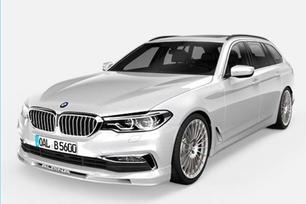
The BMW Alpina B5 Bi-Turbo is not actually a BMW. Not according to the German Federal Motor Transport Authority, at least.
Nope, the modifications applied by tuning house Alpina to the 5 Series are deemed so significant that if you open the bonnet and look inside the engine bay, you'll see that the BMW VIN has been struck through twice and an Alpina vehicle number stamped underneath it.
The B5 is not the first model to be recognised in this way, either; the German government has recognised Alpina as a seperate car manufacturer since 1983.
The B5 has other ‘B' siblings, too. There's the B3 S Bi-Turbo, which is based on the BMW 3 Series, the B4 S Bi-Turbo (the BMW 4 Series) and the B7 Bi-Turbo (I don't need to tell you what this is based on, right?) which I've reviewed, too.
So just what has Alpina done to this unsuspecting BMW 5 Series? Is it really worth the extra money? How does the B5 compare to an M5? Could it actually be superior? And did they really take the speed limiter off to let it warp-speed to beyond 300km/h?
Subaru's Liberty is probably one of the most recognised badges in the country. Talk to anyone outside of Australia, though, and unless they know their cars, they haven't the faintest idea what you're talking about. It's a mark of Subaru's respect of the Australian market - the company renamed it from Legacy for local consumption - and the power of a brand that's approaching 30 years old.
Just about every Australian reading these words has been in a Liberty of one age or another. Some even remember it for Colin McRae's heroics at the wheel of the blue-and-yellow machine in the early '90s before the switch to another famous Subaru, the Impreza.
The Liberty is now well into its sixth iteration which means time for a mid-life nip and tuck. Subaru has worked above and below the skin to breathe a bit of life into its mainstay sedan.
The Alpina B5 is a special car – more special than most people will ever give you credit for if you own one. Those that do know what an Alpina is will let you know; people will cross dangerously busy streets to talk to you about your car. Insanely fast, almost incomprehensibly comfortable and effortlessly powerful to drive.
The Liberty has a lot going for it - a great reputation for reliability, it isn't terribly priced (although servicing is a little steep) and has that signature all-wheel drive. While I've complained about the ride and handling, apart from STi and RS-badged versions, that has never been the Liberty's strong suit.
While it might be a shrinking part of the market - and Subaru is a founding architect of the modern SUV cult - Subaru and its competitors still care. The Liberty, like Forester and Outback, remains a stand-out in the sector with a boxer 2.5 and all-wheel drive. Sometimes that kind of individuality is enough.
Interesting is the right word for it, because while it might be questionable that Alpina's changes to the exterior are aesthetic pleasing, they are definitely intriguing to those who aren't familiar with the brand.
First, there are those 20-spoke wheels. Alpinas have worn this style of wheel forever and they've become the most famous outward sign that this is not just another BMW. So don't under any circumstances take them off and replace them with anything else. You'd be run out of town by the Alpina mafia.
Yes, they're more painful to clean than a cheese grater (trust me, I know. And if you look closely at these images you can see the dirty bits I've missed), but if you really don't like them then perhaps it's a sign this car isn't for you.
Then there's the boot-lid spoiler. It's square and 1980s'-looking, it also appears a bit like it's been bought online and installed by a teenager, but again, this is another Alpina tradition and it suits the car's character perfectly.
All right, those pinstripes; they're known as the Deco-Set and are a hat-tip to the Alpina racecars of the 1970s and '80s. Again, don't take these off, your Alpina will drop through the centre of the Earth in value. These are also part-and-parcel of owning one of these cars. I'm not a massive fan of them.
But I'm all about that front spoiler, with the floating Alpina lettering that you can option in silver, high-gloss black or gold.
Inside, there are fewer Alpina additions, but they're nonetheless unmissable. There's the Alpina-badged steering wheel, and a new virtual instrument cluster, embossed headrests and illuminated door sills.
There's also the little numbered plaque on the centre console which proves its authenticity, ours was number 49. Out of how many? I don't know. But I do know Alpina produces only about 1700 cars globally a year. Rolls Royce does about 4000. So, you can rest assured your B5 is exclusive.
At almost 5m long, 1.9m wide and 1.5m tall, the B5 is a large saloon, but having recently reviewed the Alpina B7 it feels small in comparison. How does it drive? We're getting there.
Here's a thing - this week I regularly parked my car in the same street as a fourth-generation Liberty. I kept heading for it at the end of each day because that design feels a lot more contemporary than the current car.
I came to my senses every time before trying to get in, but it does tell you that today's machine is a little on the dowdy side. While not the horror of the lines-everywhere-slab-sided fifth-generation model, I don't think the styling has escaped unscathed from the mess of the car it replaced.
This one won't scare small children or start pub arguments, though, and is a more cohesive, gracefully-ageing design. The LED daytime running lights and, in the case of the Premium, LED headlights, give it a modern feel and its less imposing headlight design is rather more pleasing.
Little has happened as part of the refresh, with just the requisite number of visual tweaks. The front and rear bumpers (now with subtle diffuser) are a bit sharper and new wing mirrors and grille all add a little extra - but not much - to the 2014 original.
Inside is pretty much the same as before. The touchscreen has a flat, glare-prone screen but the rest of the cabin is well thought through, if entirely conventional. The flashy alloy pedals are a fun touch, though, and the materials choices are solid if uninspiring.
Practicality is not really a BMW strong point no matter which model you pick. See, BMW mostly makes the car equivalent of uber-stylish and skin-tight active wear which looks good and performs brilliantly, but sometimes you just want pockets and a bit of room for your… um… bits and pieces.
So while there are two cup holders up front and two in the back, the bottle holders in the doors aren't huge, the centre console bin is on the small side, there's a hidy-hole in front of the shifter, the glove box is just a box for little more than gloves and there's no other great cabin storage options.
Legroom in the rear is good but not great, too - I'm 191cm tall and have about 30mm between my knees and the seat back in my driving position. Middle-seat passengers will also have to straddle the drive shaft hump in the floor. Headroom is restricted in the back, too (you could blame the sunroof) with my hair just skimming the headlining (I do have big hair).
Under that power tailgate, the B5's boot capacity is 530 litres which is 15L more than its big sister, the B7. There are two plastic storage areas either side of the luggage space for wet things. While there is one USB outlet in the front there aren't any in the rear.
The Liberty has a terrifically spacious interior. Rear seat passengers have a huge amount of legroom, with a ton of room behind my driving position (I'm 178cm) for long-legged teenagers. There's also plenty of legroom and even air vents.
The cabin has four cupholders in total and four USB ports, two up front and two in the back.
If you found a way to fill the boot with water you'd get 493 litres aboard and you can drop the 60/40 split fold seats for yet more space.
The BMW Alpina B5 lists for $210,000, making it only $10K more the BMW M5 which comes with almost identical features apart from the Alpina engineering to the engine and chassis.
Arriving standard is leather upholstery, four-zone climate control, nav, the Alpina embossed-headrests, a 10.25-inch display, digital radio, Alpina door sills, sunroof, proximity key, power front seats, 12-speaker Harman Kardon stereo, head-up display, Alpina virtual instrument cluster, heated front and rear seats, and the 20-inch Alpina wheels.
The test car I drove had been optioned with a limited-slip differential ($5923), steering-wheel heating ($449); soft-close function for doors ($1150); sunblinds ($1059); TV function ($2065) ambient air package ($575), and front-seat ventilation ($1454).
The Liberty's sixth-generation has arrived at middle age and Subaru took the opportunity to tweak the specification as well as the looks. Second in the three car range is the 2.5i Premium, which sits between the 2.5i entry-level and the 3.6R, and carries a $36,640 price tag.
Standard on the Premium are 18-inch alloys, a six speaker stereo with Bluetooth and USB, dual-zone climate control, keyless entry and start, active cruise control, powered and heated front seats, sat nav, auto high beam, active LED headlights, a very impressive safety package, partial leather seats, leather steering wheel, power everything, sunroof and a full-size spare.
The 7.0-inch touchscreen now not only features sat nav and a half-decent media system but also has Apple CarPlay and Android Auto, which is still a rarity in this class. Also a rarity is the standard all-wheel drive system (good) and the CVT auto (maybe not so good).
The Alpina B5 uses the same 4.4-litre V8 engine found in the BMW M5 (and also the B7). But, and it's a big but, the M5 makes 441kW and 750Nm, while the B5 outdoes it with 447kW and 800Nm. Admittedly, the B5's torque arrives at the 3000rpm mark, while the M5's is all there from 1800rpm.
How does the B5 beat it? Alpina installed its specially developed twin turbochargers and intercoolers, a high-performance cooling system, a reconfigured air intake set up and a different exhaust system.
The B5, though, is a tenth of a second slower to 100km/h compared to the M5 with a time of 3.5 seconds, but it will blast on to a top speed of 330km/h while the M5 is limited to 250km/h in regular form and 305km/h with the optional M Driver's package.
Both uses the same ZF eight-speed automatic transmission with identical gear ratios, and both are all-wheel drive.
Like the overall specification, the drivetrain has received some attention. While power outputs are the same as before - 129kW/235Nm - the CVT auto with which Subaru's 2.5-litre boxer engine is paired is slightly improved. Even in the quiet of the cabin you hear that 'flat' four-cylinder's trademark gravelly growl.
Being a Subaru, all four wheels receive their share of power. The Liberty's published towing capacity is 1500kg for braked trailers and 750kg unbraked. If you need a bit more, the six-cylinder 3.6R can handle another 300kg.
The Alpina B5 needs petrol. By that, I mean it needs quite a lot of it if you want to enjoy it properly. What type of mileage does it get? Officially, it should use 11.1L/100km after a combination of urban and open roads, where as the M5 is set to 10.5L/100km.
That makes sense, the B5 produces more power and torque, and it's 85kg heavier than the M5 at 2015kg.
Our test car's trip computer was reporting 13.2L/100km after flying low over country roads and slow city piloting. The more time spent in the urban warfare that is the daily peak hour commute, the more that figure crept and hovered around the 15L/100km mark.
Subaru says the combined cycle fuel figure is 7.3L/100km and I got 9.3L/100km with a mix of suburban and 80km/h running.
The fuel tank is a generous 61 litres.
Ok, stay with me here. For this next bit you'll need a fresh egg, a lounge chair, and it might be a good idea to have some plastic bags and carpet cleaner on hand.
First, in front of the lounge chair flatten out the plastic bag and place the egg on it. Next, sit down on the chair and very carefully rest the ball of your foot on the egg with as little pressure as humanly possible.
This is exactly how little force you need to apply to the go-pedal of the B5 to accelerate from a standstill to 60km/h in about five seconds.
If anything sums up the driving experience of the B5, it's that sense of effortlessness.
Stomp on that accelerator, and you'll be shot to 100km/h in 3.5 seconds, without a hint of broken traction thanks to the all-wheel-drive system.
The ride should have been terrible on 20-inch wheels shod in low-profile rubber (Pirelli P Zero 255/35 front, and 295/30 rear), but the Alpina-tuned air suspension is close to miraculous in the way it cushioned and censored the potholes out of Sydney's worst roads. Yes, it can be a touch floaty, particularly in the Comfort Plus setting, but this is benchmark-setting stuff for a comfortable ride.
Don't expect this beast to roar. Unlike the M5, the B5 gets its work done without deafening everybody around it. Sure, the B5's V8 sounds amazing when you push it, but it's not brash, not loud and not lairy. Buy an M5 or Mercedes-AMG E63s if you want to be heard half a block before you get home, but you won't get that with the B5 and its exhaust system.
The B5 also handles well, but I have to say the engagement factor is low. I piloted it effortlessly through the twists and turns of my country test circuit and roads which normally have me grinning like a maniac behind the wheel had me feeling a bit disconnected in the B5. That air suspension, the numb steering and pedal actions make it difficult to ‘feel' the road.
It's highways where the B5 is a king, but even at 110km/h there's the sense that this car is still fast asleep and won't get out of bed for anything less than 150km/h - making it perfect for Germany's autobahns, but maybe not for here in Australia.
Subaru says the Liberty has undergone some changes to improve the driving experience. To my backside, that hasn't worked out perhaps as intended. At least I hope so, because the results aren't terrific. The ride is particularly odd - in the corners there is noticeable body roll but it bangs and crashes over bumps, the rear passengers suffering worse than those up front.
In the cruise it's perfectly reasonable and the car is very quiet, indeed it's pleasant at speed. At lower speeds, there is a lack of feel contributing to the feeling that the wheel lacks accuracy. Nothing dramatic, but I felt like I was constantly correcting it the way Parisians correct my high school Francais.
Cheeringly, what I expected to be my least favourite part of the car was quite good. I am monotonously on record dissing CVTs because generally, they're pretty terrible. After six months with one in the Forester, I was never comfortable with it.
Here in the Liberty, it seems better integrated with the engine, with much better control of the trademark flaring and it's only when you really get the accelerator up against the firewall that you're reminded you're driving a rubber band. When you switch from I (Intelligent) to S (Sport) mode, it also responds accordingly, but there's never going to be fireworks.
The brake pedal is a bit on the mushy side, too, but its stopping ability was never in doubt. I guess the final verdict is that some parts of the experience are dreamily isolating while others are not as good as you might expect.
The Alpina B5 is based on the BMW 5 Series which had a five-star ANCAP rating awarded to it in 2017.
Along with the comprehensive suite of airbags, traction and stability control, there's an impressive array of advanced safety equipment. Coming standard is AEB (front and rear), evasive steering, front and rear cross-traffic warning, blind-spot alert and lane-keep assist. The Alpina B5 also comes with BMW's emergency call function.
For child seats you'll find two ISOFIX mounts and three top tether points across the rear row.
safety
If you're unfortunate enough to get a flat tyre, there's a puncture repair kit in the boot which works provided the hole isn't giant, as I've experience in the past with these systems.
The Liberty ships with seven airbags (including driver's knee), lane-keep assist, adaptive cruise with brake light recognition, ABS, traction and stability controls, reversing camera, forward and side view cameras, reverse cross traffic alert and blind spot monitoring.
Bafflingly, there are no parking sensors at all on any Liberty. I know that sounds churlish, but I don't park watching a camera and like the beepers so I can watch somewhere else. Give me a beeper and a dipping left-hand mirror any day.
On top of all that, the 'EyeSight' system is also fitted. EyeSight is a pair of cameras pointing forward that not only powers the lane keep assist, but lets you know if you're drifting or approaching an obstacle too quickly. It also detects pedestrians and in this latest iteration will work up to 50km/h rather than 30km/h as before.
As you might expect, the Liberty scored five ANCAP stars in December 2014.
The Alpina B5 is covered by BMW's three-year/unlimited kilometre warranty. Servicing is recommended every 12 months or 15,000km.
At three years/unlimited kilometres, the Subaru warranty is now starting to look a bit thin compared to, say, Korean rivals. Over the three years of the capped-price servicing you'll wear $2281.66 for up to 75,000km of servicing.
Subaru expects to see you every six months or 12,500km, so that averages out to $380 per service.
Hyundai's Sonata will cost you just $795 over the same period (for fewer visits), a Mazda6 will only hit you for between $308 and $336 per service, and a Camry will cost just over half what Subaru charges every year.