What's the difference?
Close your eyes for me and try to picture a two-door vehicle with a thumping V8 engine, 575kW and a whopping 1000Nm on tap, a 0-100km/h burst of 3.2 seconds and a top speed of 335km/h. Does it look like a Ferrari in your head? Something else Italian, or German perhaps?
Well, what if I tell you it also weighs 2.5 tonnes. Are you imagining a luxe SUV with the rear doors removed, perhaps? Think again, because what we’re discussing here is arguably the very best of Britain (albeit German-owned), the all new and highly impressive Bentley Continental GT Speed.
Gone is the famous and fabulous W12 engine, never to return (Bentley was long the world’s biggest maker of 12-cylinder engines, henceforth it will make exactly none), to be replaced by the one and only power plant the company will now offer, in various tunes, in all of its ICE cars (yes, a Bentley EV is coming, of course).
All that torque isn’t just from the big 4.0-litre V8, it’s also an 'Ultra Performance Hybrid', which will allow you to drive up to 81km in fully silent electric mode, should you be so boring.
We flew to a posh and very private members-only race track in Japan to find it out if this really is, as Bentley suggests, the everyday supercar.
The Land Rover Defender 130 is the big dog of the Defender line-up. It’s bulky and long, roomy inside (with three rows of seats) and offers plenty in terms of onboard features and optional extras.
The latest generation has managed to retain the old beloved Landie spirit and combine it with contemporary styling.
But that’s not worth noting. What is worth noting right at the get-go is the fact that the last of the V8s on offer in the range – the 5.0-litre supercharged V8 pumping out 368kW/610Nm – is in our test vehicle, the Land Rover Defender 130 P500.
Also worth noting, the V8 has the option of 'Captain Chairs'. This second-row seating choice comprises two individual seats, with winged headrests and arm rests, separated by an aisle for walk-through access to the third row.
So, while the short-wheelbase Defender 90 is likely the best choice for the more adventurous off-roaders among us, is the Defender 130, as large and in charge as it is, the better choice for a family?
Read on.
Any fears Bentley was heading in the wrong direction by abandoning 12 cylinders for hybridisation (not that it had a lot of choice) should be totally salved by the Continental GT Speed. It is a hugely capable, fabulously luxurious and beautiful to behold grand tourer that deserves extra points for not being an SUV. It might just be the supercar you could drive every day, with no complaints.
Note: CarsGuide attended this event as a guest of the manufacturer, with travel, accommodation and meals provided.
The Land Rover Defender 130 P500 V8 is big, roomy and great to drive. It’s supremely plush without sacrificing practicality and if you’re in the market for a spacious, comfortable and refined package and aren’t afraid to open your wallet, then this long Landie is well worth your consideration.
Do you need the V8? Of course you don’t – and the diesel variants make a lot more sense anyway in terms of day-to-day fuel efficiency – but, geez, it's a lot of fun to drive.
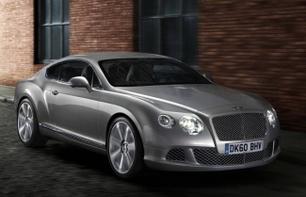
I don’t think I’ve ever heard so much interesting waffle about the design of any car, ever, but before we get to the wild, and wildlife, justifications for how it looks, just feast your eyes on it.
Now, not everyone might love it, but it’s hard to imagine a huge, super coupe looking any better than this thing does. It’s no Ferrari, sure, but realistically it doesn’t have to compete with that, because it’s a cruiser as well as a bruiser, a supercar you can be quiet and comfortable in. A Rolls-Royce with rocket engines, even.
The most obvious change, of course, is that Bentleys have had four headlights, or four eyes if you like, for so long that seeing this new one with two is a major shock, a big shift, but somehow it works.
The proportions, the elegance, the bold 'be big and bold and give no damns what anyone thinks', it’s just impressive, and the interior reflects that same, luxury ethos.
Apparently the new-look Continental is built on three design principles, the first of which is, amusingly, 'Resting Beast'. This is supposed to reflect how the Bentley looks from side on; like a tiger, stalking its prey, or perhaps resting and thinking about its prey. It’s all muscles and strength and power, but also elegance. And who doesn’t imagine tigers walking red carpets in ball gowns?
Principle two is 'Upright Elegance', and here you’re supposed to see, in the car, the strong vertical line one finds in the chest of a thoroughbred horse when it’s standing in particularly powerful way. Great. Love it.
And finally, there is the 'Endless Bonnet', which is a horizontal line that goes from the front of the car - via the bonnet obviously - and all the way to there rear, via cat-like haunches, providing an impression of “speed, even when standing still”.
Those are the bold strokes, but it’s all the little details that make it sing, like the beautiful jewellery-like look of the headlights, which are meant to resemble a tiger’s eyes. So many cats, is it any wonder I started thinking of the Bentley as a very, very flashy Jaguar?
It’s important to note that while it looks very new - and 68 per cent of the Continental’s parts are new - the body panels are carried over, while the front and rear are all new. This is one very effective mid-life facelift, with a heart transplant, then.
The Defender 130 measures 1970mm high, 5358mm long (including rear-mounted spare wheel; 5099mm without), and 2105mm wide (with the wing mirrors out). It has a 3022mm wheelbase and a listed kerb weight of 2745kg (unladen).
It is big, but really it’s no more intimidating to drive than a Toyota LandCruiser 300 Series or Nissan Patrol.
Upper large SUVs have a Federal Chamber of Automotive Industries-defined footprint bigger than 9801mm – think 300 Series LandCruiser (close to 5.0m long), Hyundai Palisade (almost 5.0m long) and Nissan Patrol (almost 5.2m long).
In terms of styling, the 130 strikes an effective balance between the distinctive shape and spirit of the old-school Defender with the new-generation’s pomp and presence – and the striking Carpathian Grey paint on this variant complements that blend.
The current-generation Defender is no city-soft shadow of its former adventure-tackling self that Landie lovers everywhere feared it might be. But it’s modern and sleek enough to put the minds of urban dwellers/weekend warriors at ease.
So a two-door, '2+2' grand tourer isn’t entirely built with the term 'practicality' in mind and it could be argued the existence of this Bentley Continental, the fourth generation, is something of a surprise, when you consider most people just buy SUVs and Bentley has done quite well with its Bentayga (which will, in future, share the same engine used here).
But for what it is, a two-seat car with occasional seating in the rear for emergencies, or very small children, it feels entirely fit for purpose.
An actual human can sit in the back, but it does feel a bit claustrophobic, and you’d be so jealous of how comfortable the people are in the front.
The 20-way adjustable front pews feel like grand armchairs for grand touring, fabulously comfortable - although you can slide across them a bit when driving on a race track, not a common problem - and plush to the touch.
They now come with a 'Wellness Facility' that brings postural, massage and climate functions to help with fatigue on long journeys - and epic blasts across multiple European countries is clearly what this thing is designed for.
In general, the cabin is just lovely, Bentley claims it does the best car interiors in the world and while Rolls might argue, it’s a pretty fair statement.
The spinning central 12.3-inch display remains the highlight, offering you a modern touchscreen, which can disappear to reveal either three classic analogue dials or a plain piece of dashboard, if you prefer a 'digital detox'.
The Defender 130 is well-suited to people-carrying duties thanks to its three-row seating.
And don’t forget this test vehicle has (optional) Captain Chairs in the second row.
The cabin has a distinctive premium look and feel about it, without sacrificing anything in terms of just how practical it all is. It’s a pleasant mix of durable materials – carpet mats and soft-touch surfaces – and stylish touches, such as a metal Defender-stamped section in front of the front passenger.
Layout is user-friendly and this is an easy cabin in which to swiftly become comfortable as all controls easy to locate and operate even when busy negotiating with your teenagers who gets what song next.
Storage spaces include a deep centre console, glove box, twin cupholders between driver and passenger, sunglass storage, door pockets and shallow spaces positioned about the cabin for your everyday carry gear.
Charge points include USB-Cs up front and a wireless device charging tray.
The driver and front passenger get ample room and plenty of amenities and those behind them also fare well with adequate room for everyone – even those in the third row.
All seats are comfortable and the front seats are 14-way power-adjustable with heating, cooling and memory.
The second row – two outboard Captain Chairs in this test vehicle – have a headrest and armrests for both passengers.
The third-row seats are heated and configured in a 40/20/40 pattern.
The rear cargo area is small in this seven-seater, although it offers a listed 389 litres with all three rows up and in use. That area has a sliding cover (which conceals your valuables from the prying eyes of nefarious types), cargo-restraint points, power sockets and a shallow underfloor storage space.
With the third row folded down, there is a listed 1232 litres of space. The maximum loadspace volume behind the front row is a listed 2231 litres.
There is a lot more to admire inside this Defender’s cabin for those who love the interiors of plush SUVs, but rather than spending my time stroking leather accents, going ‘ohhhh-ahhhh’ over a sunroof or reflecting on the butt-warming benefits of a heated seat, I like to actually drive.
So I did. A lot.
As always, value becomes a nebulous term once the price of a car surges into the multiple hundreds of thousands. The Bentley Continental GT Speed will set Australian buyers back a whopping $581,900, before on-road costs.
Yes, you really can buy Ferraris and Lamborghinis for that kind of money, but Bentley assures us its buyers have already owned such fearsome machines, grown tired of their compromises and want something that’s just as fast, but 1000 times more comfortable, and easier to drive every day, and everywhere.
So that’s where the value proposition sits, basically. You’re buying a supercar that’s also a kind of Rolls-Royce adjacent luxury cruiser. Two cars for one price. Bargain. Kind of. It also weight 2.5 tonnes, if you’d like to think of it in dollars per kilogram.
Oh, and it’s hand made, too, and genuinely feels like it.
For that money you get an incredibly posh and plush cabin, excellent seats, and everything you touch, and smell, seems expensive and refined.
The newly facelifted, and butt-lifted, Continental also looks simply stunning, from every angle, outside. Particularly in its new 'Tourmaline Green' paint (there are 18 standard colours to choose from, or you can have bespoke paint made for you on request). And 15 standard leather hide colours as well.
It comes with all the apps and connectivity you could wish for, including a Bentley App Studio.
The 2025 Land Rover Defender 130 P500 V8 has a manufacturer’s suggested retail price of $216,197 (excluding on-road costs). But because our test vehicle has a raft of options onboard – matte protective film ($6840), 'Carpathian' exterior pack ($2400), second row heated and cooled a pair of Captain Chairs with winged headrests as the second row ($1930), Carpathian grey premium metallic paint ($1040), and a rubber load space mat ($320) – it has a price as tested of $228,727 (excluding on-road costs).
The Land Rover Defender 130 P500 V8's standard features include an 11.4-inch multimedia touchscreen (with Apple CarPlay and Android Auto), wireless device charging, a head-up display, interactive driver display, as well as 22-inch satin dark grey wheels, quad outboard-mounted exhaust pipes, 'Terrain Response 2' with 'Dynamic Program', privacy glass, a heated steering wheel and an electrically-adjustable steering column.
Also included are bright metal pedals, configurable cabin lighting, a load space cover, satin chrome gearshift paddles, illuminated metal tread plates (with V8 branding), four-zone climate control, 'Ebony Windsor' leather and Kvadrat (wool blend textile) seats, Meridian audio, 'Online Pack' (with data plan), a head-up display, a 12V power socket in the boot and the 'Pivi Pro' multimedia system.
Paint choices on the Land Rover Defender 130 P500 V8 include 'Fuji White' (solid) or 'Santorini Black' (metallic with body-coloured roof) – or you can opt for 'Carpathian Grey' (premium metallic with black contrast roof), which is a $1040 option (price correct time of writing).
This Defender is available with the 'Extended Black Exterior Pack' ($1707) or the 'Carpathian Exterior Pack' ($2396).
There is some sadness that the world’s biggest producer and promoter of 12-cylinder engines has cut production of them altogether - the epic W12 is no more - and this does feel, on a smaller scale, like Porsche ditching flat-six engines forever.
Previous hybrid efforts from Bentley, including a V6-based one that the company now admits was a bit limp wristed, might cause some concern when you hear that Bentley will, henceforth, make just one engine for all its cars, and that it is a hybrid, albeit one attached to a 4.0-litre twin-turbo V8.
But then they point out the version in this Continental GT Speed’s is “the most powerful Bentley engine ever” and that sounds pretty good.
The engine alone makes 441kW and 800Nm, which almost sounds ample, but the addition of the electric E-motor is good for another 140kW and 450Nm, with the aid of a 29.5kWh battery, which somehow adds up to a combined output of 575kW and a nice, round, and impressive 1000Nm of torque.
All that power does have to move 2.5 tonnes of precious metal, which sounds like an ask, but is effortless in practice - hurling the Speed to 100km/h in a properly supercar-like 3.2 seconds on its way to a top speed of 335km/h.
Yes, vitally, it sounds pretty damn impressive when all the power sources are going at once, it even barks and pops on the overrun, a bit like the Porsche Panamera with which it shares the hybrid set-up, only a bit bossier, and perhaps classier.
The point of the hybrid feels like it’s mostly about performance and excitement, but it has a practical side, too, because in EV-only mode this giant Bentley can drive for up to 81km in pure, and slightly inappropriate-feeling, silence (at speeds of up to 140km/h).
Handy if you live in global cities with zero-emission zones, or if you want your neighbours to think you care about the climate.
One brilliant thing about this plug-in hybrid is it’s set up to use the engine to regen the battery, hard, in 'Sport' mode, so the more fun you have, the quicker the battery charges. So much so that, realistically, you might never need to plug it in at all (Bentley recently ran the car at a race track for two weeks and never needed to top it up via cable once).
It is an impressive, sonorous and enjoyable power plant, and you’d expect nothing less from Porsche, although Bentley says it’s done lots of work on the donor engine to make it uniquely more wonderful.
The Land Rover Defender 130 P500 V8 has a 5.0-litre supercharged V8 petrol engine (producing 368kW at 6000-6500rpm and 610Nm at 2500-5000rpm), an eight-speed automatic transmission and all-wheel drive system.
This is a very effective and fun combination of gutsy V8 and clever auto.
The Defender has permanent all-wheel drive and a dual-range transfer case with high- and low-range 4WD.
It also has Terrain Response 2, an off-road-focussed driver-assist system, which will make any off-roading newbie look and, more importantly, feel like a dirt-track driving champion.
The system includes switchable modes - 'Grass/Gravel/Snow', 'Sand', 'Mud and Ruts' and 'Rock Crawl'.
This tech optimises throttle response, engine outputs, transmission shifts and diff control to best suit the terrain. It also has centre and rear diff locks.
While the top-line figures for performance hybrids like this always sound impressive, it’s hard to believe anyone will ever get near them in the real world, because the temptation to drive a car like this hard and fast, as its makers clearly intended, will mean chewing fuel in a very non-efficient way indeed.
On paper, though, where it matters in terms of being allowed to sell your giant luxury grand tourer in Europe, the Bentley Continental GT Speed produces just 29 grams of CO2 per kilometre.
Fuel economy is a claimed 10.3 litres per 100km, which is optimistic, but still a lot lower than the equally unlikely 14L/100km figure for the old (12-cylinders and no hybrid) car. As in, neither car would ever achieve the theoretical figure, but at least the new one is clearly a lot better.
Fuel consumption is listed as 12.7L/100km and that's on a combined (urban/extra-urban) cycle. On this test I recorded 14.9L/100km.
The Land Rover Defender 130 P500 V8 has an 90-litre fuel tank so, going by my on-test fuel figure, you could reasonably expect a driving range of about 604km from a full tank.
Fuel requirement is 95 RON premium unleaded.
In an ideal world, one would take the Bentley Continental GT Speed for an appropriate drive from the top of Germany to the bottom of Italy or France, but instead we were asked to drive the big beast around a tight and slightly terrifying private members race track outside Tokyo called the Magarigawa Club.
Members here pay US$1 million a year for access to this circuit, carved out of several mountain tops, which features two long and fun straights attached to what feels like a hill climb circuit with a bit of Laguna Seca’s Corkscrew and a touch of Mt Panorama’s undulations.
This track, with its daunting lack of run-off, should have been an intimidating and possibly inappropriate place to try the Continental GT Speed, but it is a credit to the car’s “everyday supercar” personality that it soaked up the pressure, and pace with ease.
On our first lap we were encouraged to drive in EV mode, which was predictably a bit dull, quiet and not-quite boring, because if you went past 75 per cent of throttle, or 140km/h, the engine would kick in and things would instantly get interesting.
It was a good chance to note just how lushly comfortable the cabin and seats are, however, and just how supple the suspension can be.
The Bentley’s “secret weapon”, according to its engineers, is a new twin-valve damper the allows the chassis to behave like a sports car when you want it to - probably about 3.0 per cent of the time for actual owners - and an absolute luxury pleasure palace for cruising around the rest of the time.
The split personality thing really is on offer with this car, as we found out once we engaged the Sport setting.
The Speed’s all-wheel drive, all-wheel steering, torque vectoring and electronic LSD were all on display over the later laps, in which we were allowed to blast past 200km/h and find out just how good the brakes are at pulling up 2.5 tonnes of high-speed luxo-barge.
You do your steering via a lovely wheel with a leather front and Alcantara wheel, and it feels effortless, even in full track attack mode. A bit more feedback might be nice, but I guess Bentley owners have other cars for that kind of thing.
Aside from the rushing, roaring speed, what is most impressive is how little body roll there is from the Continental. It feels planted, poised, happy to change direction and is rarely upset or flustered, despite some squeals of complaints from the tyres.
Getting too wide on to the ripple strips caused a shudder and a skip sideways now and then, but perhaps I shouldn’t have been so far off the racing line.
Overall, the Continental GT delivers on its name, with Speed, and lots of it, all delivered in a properly swanky environment.
What's it like to drive? It’s bloody great.
This is a big vehicle – have I mentioned that already? – but powered by this V8 the Defender 130 punches along with nary a care in the world.
Throttle response is crisp, and the 5.0-litre supercharged petrol’s 368kW and 610Nm are always readily available for a snap-punch standing-start, or to smoothly and safely overtake other vehicles on the open road.
This Defender has an official 0-100km/h sprint time of 5.7 seconds and a listed maximum speed of 240km/h!
By the way, it doesn’t hurt that the V8’s growl is piped through quad outboard mounted exhausts.
The eight-speed automatic transmission is supremely clever but the shifter’s stubby size and awkward location (under the multimedia system’s touchscreen) is annoying.
Otherwise, this V8 130 is smooth and refined, with tremendous road-holding abilities despite a Landie legacy of past-generation Defenders being about as composed as dodgy tractors.
What’s more, comfort levels are exceptional in a vehicle model once considered a form of punishment in which to travel.
Steering has a well-weighted driver-friendly feel to it and this upper large SUV never feels too cumbersome to navigate through even busy city streets, even though it has a turning circle of 12.8m.
Some body roll creeps in every now and again – especially when you become energetic throwing this giant around corners, etc – but otherwise this big bulky vehicle is well controlled and comfortable.
The air suspension negates the majority of thumps and bumps you might be expecting to get from a vehicle riding on 22-inch wheels and low-profile tyres over irregular road surfaces.
Our test vehicle was on 22-inch rims and 275/45 R22 Continental CrossContact RX “SUV performance” tyres, which are fine for driving on sealed surfaces, but if you’re looking to do any off-roading in this Defender get a set of more appropriate all-terrains.
I wasn’t driving the 130 to test its 4WDing prowess this time, but it’s still worth noting the Defender’s off-road measurements include 293mm of ground clearance (with air suspension), a wading depth of 900mm, and approach, departure and ramp-over angles of 37.5, 25.8 and 27.9 degrees, respectively.
This Defender 130 has a gross vehicle mass (GVM) of 3380kg and a gross combined mass (GCM) of 6380kg.
It has an unbraked towing capacity of 750kg, and braked towing capacity of 3000kg (with maximum 300kg on the towball), which is somewhat of a disappointment and sub-par for the upper large SUV segment.
All the money and you only get four airbags; front and side for driver and passenger. And none in the back, so don't sit there. Bentley also has its own 'Safeguard' suite of technologies including 'Advanced Emergency Braking', 'Swerve Assist' and 'Turn Assist'.
Other tech includes 'Predictive Adaptive Cruise Assist with Lane Guidance', 'Lane Departure Warning', 'Emergency Assist', 'Remote Park Assist' and '3D Surround View'.
The Defender 130 does not have an ANCAP safety rating but it does have plenty of safety gear as standard including a plethora of airbags (driver, front passenger, and first, second and third row (head) and side for first row passengers).
Driver-assist tech includes AEB, adaptive cruise control, driver condition monitor, blind-spot assist, lane keep assist, a 3D surround camera, 360-degree parking aid, traffic sign recognition and adaptive speed limiter and more.
It has other tech, such as ‘transparent’ bonnet view, wade sensing, a tyre pressure monitoring system and tow hitch assist, which comes in handy for on- and off-road tourers.
It also has child-seat top tether anchorage points on the backs of both second-row seats and all three third-row seats. And there are ISOFIX anchors on the second and third row outer seat positions.
The Bentley Continental GT Speed comes with a five-year, all-inclusive servicing plan as standard.
That sounds good, but stunningly, Bentley still only offers a three-year manufacturer warranty, albeit one with no mileage limitations. That's way below industry standard these days.
The battery that forms part of the hybrid system is, however, warrantied for eight years, or 160,000km.
The Defender has a five year/unlimited km warranty with five years of roadside assistance included.
The vehicle will let you know when it needs to be serviced – isn’t it bloody clever? – and prepaid service plans are set for five years/130,000km (maximum km) at a total cost of $3750.