What's the difference?
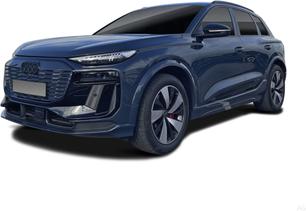
Sharing the same Volkswagen Group PPE platform as its main rival, the Porsche Macan 4S, the newly launched Audi SQ6 e-tron has promised both efficiency and performance.
Is it a combination that can be achieved in real life? My family of three have been testing it out this week to find out for you.
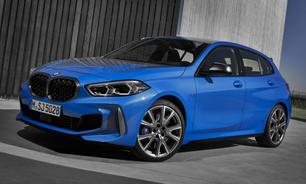
Can you believe the 1 Series is already in its fourth generation? It might not look incredibly like it, because this new car looks a little like the third.
But it’s been more than half a decade since the F40 1 Series debuted, so BMW decided it was already time for a new kid on the block. Meet the F70.
It’s just landed in Australia and it promises new-gen tech and features compared with its predecessor. We checked out BMW’s new baby at its Australian launch to find out if it delivers.
When it comes to a performance electric SUV, the Audi SQ6 e-tron is a fine example and showcases a masterclass in design. It drives and handles beautifully, even if it’s not as fun as I expected.
The technology looks amazing and I'm sure the little bumps we experienced will be ironed out with a software update.
The SQ6 will suit a smaller family best but the decent driving range and fast charging capabilities means regional families might like it too.
A brief dalliance with the 1 Series has left me impressed, if wanting to spend more time with it to get a better assessment of the day-to-day liveability of BMW’s entry-level model.
It’s a compelling offering if you’re after a premium small car, and even without the performance of the M135, the 118 is feature-packed.
Keeping pricing competitive should help the 1 Series buck the trend of buyers opting for small SUVs, but ultimately it’s just refreshing to see BMW putting effort into keeping a hatchback relevant (and up-to-date).
Note: CarsGuide attended this event as a guest of the manufacturer, with meals provided.
The SQ6 has a distinct look compared to the other mid-size SUVs in Audi’s stable with panelling that lacks some of the severe pleating of its cousins, instead incorporating swoopy lines and a more pronounced moulding around the base of the car.
The sporty S styling is seen in the large 21-inch alloy wheels and red calipers but the customisable light designs inside and out really make this stand out.
The interior is sumptuously styled with Nappa leather and suede upholstery and trims, and sports front seats, while the use of displays in the dashboard makes the SQ6 feel like a spaceship.
However, the main panel curves towards the driver and it still feels accessible and intimate for a cockpit. The cabin looks as expensive as what you’d want it to look like at this price point.
The 1 Series has worn many faces over the generations and, like a lot of BMW designs that depart from tradition, this one might need to grow on some people.
That’s not to say there’s not a lot to like about the F70, but as BMW evolves its design language some changes might ruffle feathers - a lack of the iconic ‘angel eye’ headlight style being one.
But there’s still a kidney grille up front, with new design elements, plus those headlights that have a new vertical light signature are now sleeker than before, giving the new 1 a different ‘character’.
But from the rear, there are baby 3 Series Touring vibes, and it’s hard to find anything that might upset purists - there’s even the 'Hoffmeister kink' at the c-pillar. That’s the way the window angles back towards the front at the bottom.
Inside, the 1 Series has some proper sporty elements, even in the 118, that reference the M development that went into it.
There’s M-coloured stitching up over the dash fabric, for example, and illuminated aluminium panels with M-coloured lighting.
The steering wheel, wrapped in leather, is also an M feature, plus sporty seats are even present in the 118.
The interior is an overall cleaner look, in part thanks to the proliferation of features accessible by touchscreen, but BMW is refraining from going full ‘Tesla’ and removing all the buttons from the cabin.
The cabin's primary objective seems to be one of passenger comfort. Everything you touch feels soft under hand and while seat padding is on the firmer side, all but the rear middle seat is comfy on a longer journey because of their extra functions.
The rear-row back rest has two recline positions and the seat beds offer long under-thigh support. The middle seat bulges up, and coupled with the compromised legroom, it won't be a nice seat for an adult.
The front row offers the best legroom and there is enough space in the rear for my six foot three brother to squeeze into (somehow) but I wouldn't want to be in the rear for a longer journey if you're super tall.
Access is good for each row with wide door apertures and seats that aren't positioned too high. There will be no groans getting in and out of the SQ6.
Up front the glovebox and middle console shoulder most of the storage burden but there is a handy flip-down drawer at the driver's knee for a wallet and a centre console with the charging stuff but it is an awkward space that could have been better utilised. Things tend to move around in there if not secured.
In the rear there are a couple of net map pockets, storage bins and a total of four drink holders but that's about it. The other amenities back there soften the lack of storage options as you get directional air vents, climate control, heated outboard seats and a couple of USB-C ports.
The technology on a whole looks amazing and the touchscreen multimedia display is responsive and logically laid out. You'll be able to figure it out quickly and I like that important functions, like climate control, and shortcuts are pinned to the screen as it makes it easier to access them when on the go. The Audi voice assistant can be activated by 'Hey Audi' if you don't want to fiddle with screens on the road.
The wireless Apple CarPlay was simple to set up but at the beginning of the week it did tend to get booted whenever the climate or massage functions were activated. This was annoying as you'd have to reselect CarPlay and jump back into whatever app you were in and when you're using the Map app, it feels disjointed. However, this sorted itself out by the end of my week.
On the whole, all the screens and their functions are user friendly but there were a couple of gremlins that needed a car restart to fix. Randomly, my volume became useless and the touchpad/buttons on the steering wheel stopped working.
I do like a normal button over touchpad controls as I find them more responsive but the touchpad controls on the driver's door were really easy to use and I like the family-friendly option of being able to individually apply the child-lock to the rear doors.
Rounding out the cabin is the large 526L boot which offers a level loading space and the ability to adjust the height via the adaptive S air-suspension from buttons in the rear.
The rear row has a 40/20/40 split, which opens up storage options again and there is a deep under-floor storage pocket that houses the tyre repair kit. A handsfree-powered tailgate comes standard, which I always appreciate and the massive frunk (64L) takes care of all of the cable storage.
Yes, a brand like BMW would probably find it hard to do away with buttons for things like drive modes and things like volume controls or car settings.
Even though a lot of them are shortcuts to a touchscreen menu, it means not needing to scroll or hunt for important driving-based features and options on the 10.25-inch screen.
Even the climate controls are permanently available on the screen so that there’s minimal distraction.
For most non-essential features, however, BMW’s Operating System 9 is a far cry from the easy-to-use iDrive system of just a few years ago, the media control wheel that fell easily to hand and navigated a simple multimedia system of only a few sub-menus.
Fortunately, the screen and everything in the cabin is within reach of the driver, so there’s no awkward leaning or stretching to do anything mid-drive.
The cabin’s physical space is otherwise nicely laid-out, the phone charger pad is out of the way, cupholders fit most receptacles nicely and the door card can hold two regular water bottles plus other small items.
There’s even a small storage ‘shelf’ under the central vents, and near the wireless charger are two USB-C ports and a 12-volt plug.
The ergonomics of the driving position and steering wheel are well-sorted, and seat adjustment and height feels good for both engaged or relaxed driving positions.
Behind that, the second row could be more spacious, even though I managed to fit my 178cm frame behind my own seating position just fine.
There’s not a lot of room to move or stretch out, so most adults will probably find the back seat suitable for short trips only.
Behind that, there’s 380 litres of boot space, or 1200L with the seats folded down.
The launch of the flagship SQ6 e-tron brings the Q6 line up to three before a high-performance RS hits our shores sometime in the future. However, this new variant is priced at $151,400 before on-road costs and that's a hike of $28,900 over the mid-spec Q6 e-tron quattro.
Is it worth the jump? Mostly because this model has almost every feature that is found as an at-cost extra or pack for the other variants but it does miss out on a ventilation function for the front seats and at this stage Audi is saying it's not available to add, which is odd for a top model grade.
With the motor outputs and performance tweaks, the SQ6 competes in the world of the Porsche Macan 4S as they are mechanically related but you can pick up the 4S for $149,300 MSRP and the SQ6 can't match it's torque output of 820Nm.
The most exciting thing about the Q6 range in general is the technology and the SQ6 is no different. The dashboard is a visual feast for the eyes with a 14.5-inch multimedia display, an 11.9-inch digital instrument cluster, and a 10.9-inch touchscreen for the front passenger.
There is wired/wireless Apple CarPlay and Android Auto, built-in satellite navigation and because the system is run by Android Automotive there are a whole bunch of downloadable apps like Spotify, YouTube and Amazon Alexa voice assistant on top of the connected Audi App. These apps are accessible from the passenger display, which means they can scroll the news or watch a video on a longer trip.
There is also the upgraded 3D Bang & Olufsen surround sound system, a colour augmented reality head-up display (the screen is basically a dynamic 3D setup) and three-zone climate control.
Charging is taken care of with four USB-C ports (2/2), a 12-volt socket that moonlights as an actual cigarette lighter (complete with an nearby ashtray) and a wireless charging pad with its own 'arm' that secures your phone.
The LED lights at the rear can be customised with different light signatures which are downright cool and the front LED lights also have animated individual pixels that do a little light show when you turn on the car (to the delight of my child).
Other highlights include front sports seats with heat and massage functions, wine-red Nappa leather upholstery and black suede trims, a heated steering wheel, panoramic sunroof, heated rear outboard seats, and a handsfree powered tailgate.
Audi also includes three charging cables and a one-year subscription for Chargefox public charging stations for free, as well as installing an at-home 7kW charger, which is a nice way of making a new owner feel valued.
The 1 Series isn’t much more expensive than before, despite a decent uptick in kit.
At $56,500 before on-roads for the entry grade 118, it’s less than $2000 pricier than its predecessor. It’s about the price of a VW Golf GTI or Subaru WRX, but trades engine power for badge power, as well as a series of features you’d expect from a premium small car.
A 10.25-inch multimedia touchscreen and 10.7-inch driver display are standard, with wireless phone charging, electric heated seats in Veganza synthetic leather, adaptive suspension and plenty of sporty styling thanks to the M Sport pack.
There’s a few more helpful features for keen drivers, even in the 118. Adaptive LED headlights with high beam assist, a head-up display, BMW’s 'Parking Assist Plus' function, speed limit recognition and tyre pressure monitoring.
The 1 Series also has keyless entry and start, an automatic tailgate, plus some standard stuff like a 40/60 split-fold rear seat and (unfortunately) a tyre repair kit under the boot floor rather than a spare tyre.
Then there’s the M135 xDrive, the hot hatch of the pair.
It starts at $82,500 and comes with extras like a massage seat for the driver, a heated steering wheel, a Harman/Kardon sound system, racier styling and a black roof, plus performance goodies like a bigger engine.
The M135 is a bit more expensive than before though, by almost $6000, and comparable rivals like the Audi S3 remain in the mid-$70K range.
Two options packs are available, with the 118's $5000 Enhancement Pack adding Metallic paint, 19-inch M alloys, a heated steering wheel, a sunroof, massaging front seats, a Harman/Kardon sound system and Driving Assistant Professional.
There's also an M Sport Package Pro able to be added to either variant, which adds sportier M styling, a black roof for the 118, and M Sports seats for the front row. This pack costs $2462 for the 118 or $2700 for the M135 xDrive.
Two options packs are available, with the 118's $5000 Enhancement Pack adding Metallic paint, 19-inch M alloys, a heated steering wheel, a sunroof, massaging front seats, a Harman/Kardon sound system and Driving Assistant Professional.There's also an M Sport Package Pro able to be added to either variant, which adds sportier M styling, a black roof for the 118, and M Sports seats for the front row. This pack costs $2462 for the 118 or $2700 for the M135 xDrive.
The SQ6 is a fully electric all-wheel drive and has two motors, one located on each axle. Together they produce up to 380kW of power and 580Nm of torque, which means this can do a 0-100km/h sprint in just 4.3 seconds when the launch control is activated.
There are three regenerative braking levels and a one-pedal mode which can be selected by sliding the gear-selector into 'B' otherwise the other two modes can be selected via the paddles on the steering wheel. You'll get the best efficiency when B is selected but it does take a beat to get used to and if you time your stops right, it can function as a proper one-pedal action.
The two 1 Series variants have rather different running gear.
The 118 comes with a 1.5-litre three-cylinder turbo petrol engine that drives the front wheels via a seven-speed dual-clutch transmission (DCT).
It makes 115kW and 230Nm, and BMW says it’ll hit 100km/h in 8.5 seconds.
That’s in comparison to the beefier 2.0-litre four-cylinder unit in the M135, also turbocharged, but driving all four wheels via a similar seven-speed DCT.
It makes 233kW and 400Nm, and it’ll crack 100km/h in 4.9 seconds according to the Bavarian brand.
The SQ6 has a lithium-ion battery with a large 100kW capacity and can accept up to 270kW on DC power, which is excellent. There are two Type 2 charging ports (on either side of the car) and one has a CCS enhancement which means you can charge this from 10 to 80 per cent capacity in as little as 21 minutes on a 270kW ultra-rapid DC charger.
It is more common to see a 50kW DC charger though and that charge time sits closer to an hour and 20 minutes.
On a home 7.4kW charger, you'll get the same percentage after 15 hours, perfect for an overnight recharge.
With a claimed WLTP driving range of up to 568km and energy consumption between 17.5 and 18.6kWh/100km, the daily commute and odd family road trip is more than covered with this model.
My average consumption popped out at 18.1kWh based on the trip computer and that’s a good result for how hard I’ve pushed it over country roads, in the city and on the highway.
BMW says the 118 will sip 6.4 litres of recommended 95 RON fuel for every 100km covered, with its 49-litre tank the same as the M135’s.
In that variant, fuel use increases to 7.8L/100km, as does recommended fuel quality to 98 RON.
We didn’t get a chance to test fuel consumption properly on the launch, so keep an eye on a future review for that, but given the relatively high claim even for the 118, we’d expect the 1 Series isn’t the most frugal drinker.
Outside of the initial acceleration thrill, I have to say that the SQ6 sort of drives like a lot of the other Audi SUVs I’ve sampled. Which is fine because it’s dynamic and handles beautifully on the highway or city but it’s just not as fun as what I was hoping it would be. The power will satisfy everyone though.
The different driving profiles and adaptive S air suspension really personalises the on-road experience when you want it and my favourite profile is Dynamic as the suspension and steering feels more performance focused, which I prefer.
Ride comfort is up there with the best and you won’t really be bothered by the bumps in the road, even with the stiffer suspension, but road noise does creep in at higher speeds.
The visibility all round is good despite thicker pillars but the rear visibility is narrow even before a car seat or passengers are back there. A digital rearview mirror would have been handy here.
Just something interesting to note is that when you accelerate from a full stop, there can be a small lurch as if it’s rolled backwards or the brakes have held a tad too long. It’s so quick when it happens that it’s not annoying but it is noticeable in stop/start traffic.
The SQ6 is really simple to park and navigating small car parks feels like a dream. The dimensions are forgiving and the 360-degree camera system is top notch.
The launch drive for the 1 Series included some outer-suburban Melbourne traffic, a stint of highway driving down towards the Mornington Peninsula, and a semi-rural road loop for each variant before the return journey.
So, noting that we didn’t quite get the chance to really work out what it might be like to live with the 1 Series day-to-day, first impressions showed good signs.
Both variants still drive much like you’d expect from even a front-drive BMW, let alone the AWD M135, but the chassis and suspension seem like they’d be good counterparts on a daily drive.
In the M135, communication and compliance seemed well-balanced with each other for even some particularly rough surfaces, and after torrential rain there were some potholes that would properly upset most cars that didn’t faze the 1 Series too much.
The 118 seemed to let a little more road noise into the cabin, but that might have been a symptom of different road surfaces.
The steering is accurate, but the feel in both is a little heavier than needed, especially with the thick-rimmed BMW steering wheel that you’ll know about if you’ve driven anything from Munich in recent years.
It’s a very easy car to drive fast, especially with the combination of 233kW, 400Nm, and all-wheel drive at the M135’s disposal.
The chassis and tyres work quite well together to not only hold a corner at impressive speed, but also keep the car stable so that traction isn’t an issue when launching out.
There’s also the joy of hearing a turbo spool and flutter under load, which is hard to deny as a draw for petrolheads.
The SQ6 is covered by a maximum five-star ANCAP safety rating from testing done in 2024, and features nine airbags which includes side chest airbags for the second row but it’s more common to see those just on the first row so it's nice to see on a family car.
There’s a host of safety equipment included but standouts are the emergency call capability, and safe exit assist which will delay your door from opening if it detects a car or cyclist which is a handy feature if you have a kid that throws open their door like mine.
Other equipment includes driver attention warning and alert, blind-spot monitoring, tyre-pressure monitoring, intelligent seatbelt warning, adaptive cruise control with stop/go function, lane departure warning, lane keeping assist, emergency lane keeping, park assist, front/rear parking sensors, 360-degree camera system, rear cross-traffic alert, and traffic sign recognition.
There is auto emergency braking (AEB) with forward collision warning, car, pedestrian, cyclist and junction turning assist which is operational from to five to 250km/h.
There are ISOFIX child seat mounts on the rear outboard seats and three top-tether anchor points but two seats will fit best. Front passenger space might get cosy when a rearward facing child seat is installed but I had no issue fitting my big booster seat this week.
There’s plenty of active safety in the new 1 Series, new kit includes an updated 'Driving Assistant Plus', BMW calls it.
It features all the driving assist functions like lane departure warnings and rear cross-traffic alert, but the M135 gets a higher-spec version with extras like front cross-traffic alert, side collision prevention, and evasion assist.
This can be added to the 118 for $5000 in the Enhancement Package, but it seems a bit stiff to put safety features behind a paywall alongside items like a sunroof and a high-end audio system.
Mercifully, the 1 Series’ active safety systems are all pretty unobtrusive. There are very few ‘bings and bongs’ as we’ve come to call them, and any warnings are generally subtle.
There’s a quick way to turn most of them off via a physical button near the gear selector, and its adaptive cruise control is well tuned for urban, highway and rural driving.
Otherwise, the third-gen 1 Series scored five stars with ANCAP in 2019, so we will wait and see if its successor maintains that score.
It’s also got six airbags including front and side, as well as curtain airbags covering both rows.
The SQ6 is covered by Audi’s five-year/unlimited kilometre warranty and the battery is covered by an eight-year or up to 160,000km warranty, which are all standard terms for the class.
Audi also offers six years of complimentary roadside assistance and a servicing program for six years that costs $2080, which is competitive, and servicing intervals are at every two years or 30,000km.
Audi includes the installation of a 7.4kW AC home charger, three charging cables and a one-year Chargefox public charging subscription with this model.
BMW’s got a fairly standard five-year/unlimited kilometre warranty.
The brand also uses a condition-based servicing system, which uses the multimedia to alert the owner when maintenance is required.
There are servicing packages which remove some of that uncertainty, in the 1 Series’ case a five-year, 80,000km pack costs $2210.