What's the difference?
Big sedans are not in vogue at the moment and huge luxury sedans were on the way down before the humble Commodore and Falcon departed the upper end of the sales charts. The Germans, who have always done a spectacular job of these flagship sedans, cheerfully persist with these cars.
Absolutely loaded with fascinating technology that bleeds its way down to the more mainstream models, they represent the zenith of the brand's innovation and style. The A8 is certainly that.
What it isn't, is particularly sporty, but after two years since its launch, V8 power has reached the fourth-generation super-sedan to deliver the latest iteration of the iconic S8.
The humble station wagon has fallen by the wayside in favour of the ever-popular SUV, however, it was once more common for a very good reason.
It offers the space many families crave without having to upsize into a vehicle that can feel big and bulky.
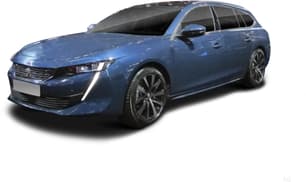
A lot of drivers enjoy the sportier on-road feel and the good-looking styling that often accompanies a wagon. Enter the Peugeot 508 Sportswagon. A model that proves wagons can be hot.
I’m family-testing the top GT plug-in hybrid model this week but there’s not a lot to compare it to because of the interesting engine specs.
So, we’re being a bit cheeky and doing an ‘apples with oranges’ comparo instead.
Being on the premium end, the 508 Sportswagon faces competition from the Audi A4 Allroad 45 TFSI, Genesis G70 Shooting Brake and Volvo V60 Cross Country Ultimate.
It certainly has the looks to turn heads but we’re sussing out whether it’s a practical alternative for families, too.
The S8's existence is a source of joy for me because it's not a huge SUV. Yes, it's a huge sedan but it's a reminder that the technological flagship is alive and well, at least in Germany. And the important thing about these cars is the way the toys filter down through the rest of the range. That used to take years but we're seeing this cool stuff a lot more quickly, right down to the A1.
The S8 punches, and punches hard in this rarefied part of an already shrunken section of the market - the twin-turbo V8 matches its German rivals, it's lighter and it's as well-stacked as any of the three. What it doesn't do, however, is shout about itself the way the other two do. It's the incognito choice.
The Peugeot 508 Sportswagon GT PHEV proves wagons can be extremely stylish but looks aren’t everything and it is an expensive option compared to its luxury rivals. It earns its place with the premium interior but the safety could be improved on and the tech is more confusing than it needs to be. But this wagon offers an alternative for families who are sick of being in an SUV yet still need a little extra space.
My son didn’t go nuts over this and complained about his view.
The sheetmetal is obviously very restrained given it's an Audi first, and secondly, it's just not done to go wild in this part of the market.
It's an A6 that's joined a gym, but didn't join that weird gym with men that can't run after you when you insult them (don't ask how I know this). Rolling on 21-inch wheels as standard, you can go up to massive 22s if you so choose.
The A8 created a subtle redirection of Audi's passenger car look, with the updated A4 and A6 both picking up on the horizontal bar between the rear lights and the huge grille framed by family lights with signature DRL patterns. The S8 builds on that with subtle S cues but nothing even vaguely shouty.
The interior acreage - or 'cabin', if you will - is very comfortable, but you already knew that. The multi-screen layout was first seen in the A8 and has now found its way into A7, Q8 and Q7 and is, as ever, brilliant to look at and use.
The MMI updates that have found their way into other cars are present and correct. Like the exterior, it's very restrained but not to the point of sparse minimalism, despite the lack of switches and buttons.
I really don't like the steering wheel, though, and I can't put my finger on why. It certainly isn't especially sporty-looking but I wonder if the standard flat-bottomed S wheel just looked stupid.
The materials are beautiful and everything fits together perfectly.
The design of this wagon is what wins it the most points. It is a damn fine specimen with the sleek lines in the body panelling and the sexy rear that looks well-proportioned for its 4790mm length.
Dark, narrow windows, 18-inch alloy wheels and a minimalist-looking nose, with fang-like daytime-running lights, all enhance its sporty look.
The rear lights have Peugeot’s signature ‘claw’ design and there’s something suggestively fun about seeing a twin-exhaust on a wagon!
On the interior, the multimedia system takes centre stage and the dashboard looks quite sleek, despite all of the deep cutaways.
The steering wheel is in the compact style that Peugeot is known for but it makes the cockpit feel driver orientated.
The quilted Nappa leather trims and shiny piano-black accents (with the piano-key controls) make for a refined cabin space.
The cabin is clearly built with rear seat passengers in mind, with rear leg and headroom configured for those continent-crossing drives.
The S8 has plenty of comfort for two rear seat passengers and a few amusing options to while away the hours in traffic or on the autobahn.
That doesn't mean the front seat passengers are in purgatory, with huge but supportive seats adjustable in all conceivable directions.
Front and rear rows score a pair of cupholders and bottle holders while the boot is a handy, if not awe-inspiring, 505 litres.
The front row gets the most space and you’ll be able to get into a comfortable position even if you’re tall.
However, it is a low car with its 142mm ground clearance and there may be a few grunts as you get in and out (or is it just me?).
My seven-year old loves how easy it is to climb in, though he didn’t have the best view out of the windows because the sills sit high.
The footwell lip also sits quite high, which isn’t an issue until you can’t open your door very wide and then it’s clumsy in a tight parking space.
The electric front seats are very comfortable and the extendable under-thigh support helps to minimise leg fatigue on a longer journey.
Surprisingly, for my 168cm (5'6") height, I have to sit much further back than I ordinarily would to get a comfy driving position.
In the back, you have plenty of headroom but behind my driving position, the legroom could be better.
An adult would still find it fairly comfortable on a longer journey so long as they aren’t behind someone tall. The seats themselves are well-cushioned and you sit in, rather than on top of them.
Individual storage options are good for this class with a dual-opening middle console, glove box and a great utility cubby next to the transmission shifter.
There is also a shelf underneath the centre console that houses the wireless charging pad and two USB-A ports but it’s a tad awkward to use and even see the ports when you're seated.
The amenities are good in the rear but for a top-spec model it’s lacking the luxury items you might expect, like heated seats and climate control but you’ll enjoy map pockets, reading lights, two USB-A ports and directional air vents.
It also has a fold-down armrest with two shallow cupholders, that in a quick turn, might spill their cups!
The boot is a great size at 530L with all seats in use and you can bump it to 1780L with the rear seats folded.
You get a level loading space and a 60/40 split with a ski-port in the back seat, which opens up your storage options.
There is a tyre repair kit rather than a physical spare but the tailgate is powered, which I always like.
The technology is a mixed bag. It looks sharp and the touchscreen multimedia system is responsive but isn’t as easy to use as others I’ve sampled.
It doesn’t have a lot of accessible information or customisations available but it is easy to connect to the wired Apple CarPlay. There is also wired Android Auto for those users and built-in satellite navigation.
The 12.3-inch digital instrument panel is the prettiest piece of tech in the car and there is more customisation available to make it feel yours.
Considering its price point and top-model status, it's more obvious that you miss out on premium items like three-zone climate control, faster USB-C connections and a head-up display.
For $260,000 there is a lot to get through, as there is on the less sporty A8. Start with huge 21-inch alloys, 17-speaker Bang & Olufsen stereo, panoramic sunroof, matrix LED headlights with laser lights, soft-close doors, acoustic glazing, leather trim, S front seats, extra leather over the A8, Alcantara headlining, carbon inlays, four-zone climate control, heated and cooled front seats, 'Virtual Cockpit' with S mode, and a tyre repair kit.
You also get active suspension, a sport version of the 'quattro' all-wheel drive system (with a sport differential), and a walloping great twin-turbo V8 to get you moving.
A massive touchscreen on the centre stack (familiar in Q8, A7 and Q7) hosts Audi's 'MMI plus' system, which is very good and does away with the console-mounted rotary controller. It also has wireless Apple CarPlay to go with the console-bin wireless charging pad. Android Auto is still USB. 'Audi Connect plus', now in full-featured glory, is also along for the ride.
Another technical highlight is the active noise cancelling which is meant to reduce the noise in the cabin the same way noise cancelling headphones do.
There's a clever rear seat remote control, which is a little detachable tablet to allow those who are being chauffered to faff around with various settings.
Our car had the $13,900 'Sensory Package', which adds a 1820-watt B&O 3D sound system with 23 speakers, electrically adjustable outer rear seats along with heating, cooling and massage function, and full leather.
Keeping things simple, there are only two variants for the 508 Sportswagon and our test vehicle is the top GT plug-in hybrid model that will cost $82,915 before on road costs.
That’s a $1000 price hike from last year and sets it well above its rivals with the Audi A4 coming closest at $78,169 (MSRP).
Given its rivals are well known for their luxury, the 508 has a fair bit to live up to but its styling and use of premium materials, like the quilted Nappa-leather trims, help it earn its position within the ranks.
The interior gets some other lovely big-ticket items with the eight-way electric front seats and a two-way memory position function on the driver’s seat.
Both front seats feature a heat function, adjustable lumbar support and a fabulous massage function. The ‘Cat Paw’ option is particularly nice!
However, the back seat misses out on these ‘top-end’ creature comforts.
There is a sunroof optioned on our test vehicle which adds $2500 to the price tag but creates an airy cabin in what would ordinarily be a bat-cave-esque space with that black headliner.
Only one colour is included in the price and our ‘Pearl White’ costs an extra $1050.
Technology has been revitalised with a new 10-inch touchscreen multimedia system and a 12.3-inch digital instrument cluster.
Dual-zone climate control, push-button start, keyless entry and a powered tailgate all add some practicality to every day life, too.
Phone mirroring tech like wired Apple CarPlay and Android Auto are easy to connect to and there are a bunch of charging options available throughout the car, including a wireless charging pad up front.
All-in-all, though, the features list isn’t as long as the price point might suggest.
Under that long bonnet is a 4.0-litre twin-turbo V8 pumping out 420kW and a diesel-like 800Nm of torque.
That's a lot, even for this big bruiser. Obviously, being an Audi S-car, it has quattro all-wheel drive, which is fed by an eight-speed ZF automatic. Which is in everything now. Well, just about.
That huge torque figure is available between 2000rpm and 4500rpm while peak power arrives at 6000rpm. The 0-100km/h sprint is despatched in - gulp - 3.8 seconds.
As it's riding on the MLB platform, the mild hybrid system is a 48-volt set-up. A lithium-ion battery in the boot takes charge from the belt alternator/starter, which means the S8 can coast at higher speeds with the engine off and also cut out at 22km/h and under in traffic.
The system can also add up to 60Nm of torque in the right conditions for up to six seconds, and if it happened for me, I didn't notice it.
The GT plug-in hybrid model has a 1.6-litre, four-cylinder turbo-petrol engine, as well as an electric motor that sits on the front axle. It has an eight-speed automatic transmission that produces smooth gear changing driving the front wheels.
The combined outputs are 165kW and 360Nm which means you have a good amount of power for this sized car but it’s not a performance wagon as its 0-100km/h sprint time is 8.3 seconds.
The lithium-ion battery has a small 11.8kWh capacity and will get from 0-100 per cent in three and a half hours on an 11kW system. On my standard house plug, it took closer to six and a half hours.
The 10.5L/100km official figure is, shall we say, optimistic. The launch drive was mostly highway so there's no real information to be gleaned from that, so we'll have to wait for real world fuel figures.
I'd say 12-13L/100km is achievable if you don't like having fun, in which case, the lesser A8 is probably for you.
Audi says the MHEV system saves 0.8L/100km with an early cut-out for the stop-start and the ability to coast on the highway for over half a minute at a time.
Peugeot says you can travel up to 55km on pure electric function, however my morning (return) school run is 38.4km and the electric range was spent by the time I parked in my garage after starting on a full charge.
Under optimal conditions, where you’re utilising both the engine and motor, the GT PHEV has an official fuel cycle consumption of 1.5L/100km.
After charging it three times, travelling 444km on a mix of open/urban roads and using 33 litres of fuel, my real-world usage came to 7.4L/100km.
You absolutely get the best economy when you regularly charge it but sometimes you just don’t get the time to!
You'll need 43 litres of premium 95 RON unleaded fuel to fill the tank which, using our real-world average consumption figure, translates to a driving range of around 580km.
Driving any of the cars in this segment is a rare treat, whether it's the 'entry level' diesel or this top of the heap sports sedan. My day with the S8 was filled with the usual surprise and delight that only these tech-packed cars can deliver.
Heading out of the Sydney CBD in 'Comfort' mode, the car scans the road ahead and adjusts the active suspension accordingly. You already know it has active suspension because when you pull the door handle, the car lifts by 50mm to make it a bit easier to get in.
The suspension's party trick is flat-topped speed bumps - drive at one, brake a little and sense the way the body feels like it stays exactly where it is in the air but the suspension almost completely flattens the speed hump.
It's uncanny and almost unnatural, with just the tiniest change in altitude and no noise from the suspension.
It also manages the terrible narrow lanes of CBD thoroughfares with ease, the lane keep system letting you know if you're straying.
On to the motorway and you get a feel for its crushing performance. You won't hear much, though - the stereo's noise-cancelling system shuts out almost all tyre noise and consistent wind noise is largely banished, too.
I'm going to admit I gasped when I found some corners. Active suspension bodes well for the tricky stuff, as does the all-wheel steering. Both are exceptionally clever systems for making the car feel a lot smaller in town and in car parks but they're also really good if you want some fun.
But the way the rear-wheel steer adds agility to such a big car is hilarious and clever. While you can't quite chuck it around - and really, you're not buying an A8-sized car for that kind of nonsense - brisk progress is far from intimidating.
Now, obviously, a Ford Fiesta would drive away from the S8 in the really tight stuff but it would take some time to properly shake it. The colossal torque from the V8 hurls even this two-tonne-plus limo out of the corners in a most satisfactory manner.
It's surprisingly agile for a machine more than five metres long and two metres wide. If your passengers are corner enthusiasts, you'll all be having fun in near silence. It's oddly engaging to be moving at pace in such a hushed cabin.
The 508 Sportswagon is an odd car to drive. Around the city, the steering makes it feel like you’re in a go-kart and you may over-correct until you get used to it.
On the open-road, it feels like it gets into its groove but the power reserves feel a tad too shallow as the engine can complain with only a light load.
The suspension is well padded and you won’t notice too many bumps but you do get a fair bit of wind and road feedback at higher speeds.
Because of the narrow windows, I am surprised by how great the visibility is but you feel tiny when you sit next to a big SUV in traffic!
That said, it corners beautifully and taking this on a winding coastal road is super fun.
The brakes are very responsive, which is great in stop-start city traffic but can make it feel a little jerky while navigating a car park.
And on that note, because of the funky steering feel, it takes a moment to calibrate your senses with what the car is doing.
Once you get used to it, it’s simple to park but the quality of the 180-degree camera system is pretty rubbish for where this car sits in the market.
The S8's considerable safety equipment list includes nine airbags, ABS, stability and traction controls, forward AEB (up to 250km/h), reverse cross-traffic alert, lane departure warning, various collision mitigation and protection systems, exit warning, lane keep assist, active cruise control and on, and on, and on.
The rear seat's centre airbag is terribly clever, popping up between passengers to stop you knocking heads. Another clever trick is the way the car detects a side impact is about to happen, boosting the height of the side about to cop it to try and get the sills to take more of the impact, rather than the door.
Given the relatively niche status of the A8, let alone the S8, there is no ANCAP crash test or safety rating. One imagines given the ton of safety gear a five star rating is all but assured. Even the US IIHS gave the A8 a miss.
The 508 has most but not all of the safety features you expect to see in a family car.
The active bonnet is a great feature as it lifts up in a collision to help minimise pedestrian injuries.
However, in the modern market and this being a top-spec model, I am surprised it's lacking a few safety features, namely rear cross-traffic alert.
Other standard safety equipment includes blind-spot monitoring, LED daytime running lights, forward collision warning, lane keeping aid, lane departure warning, intelligent seat belt reminders, front and rear parking sensors, a 180-degree view reversing camera, traffic sign recognition, a driver attention monitor, and adaptive cruise control with stop and go functionality.
The 508 has a maximum five-star ANCAP safety rating from testing done way back in 2018 and it only sports six airbags, which is low for a family vehicle.
The 508 has autonomous emergency braking with car, pedestrian and cyclist detection and is operational from 10.0– 80km/h (5.0 – 140km/h for car).
There are ISOFIX child seat mounts on the outboard rear seat positions and three top tethers in the second row but two child seats will fit best. Front passenger comfort may be compromised when a 0-4 rearward facing child seat is installed.
On the 508 you’ll enjoy a five-year/unlimited km warranty and the battery is covered by an eight-year or up to 160,000km warranty, which is great.
You can pre-purchase either a three- or five-year servicing plan and the five-year plan costs a flat $2100 or an average of $420 per service which is very reasonable for this class.
Servicing intervals are at every 12months or 20,000km, whichever occurs first.