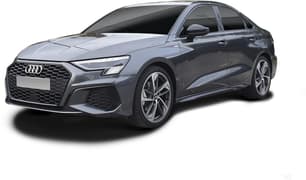
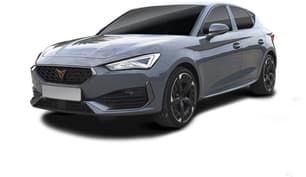
What's the difference?
The moment Audi slaps an 'S' badge on any of its cars, you know you could well be looking at something a bit special. That single S has usually inferred a big jump in performance and an overall much sportier flavour than the Audi 'A' car on it's based on.
And now there’s an all-new Audi A3 coming to showrooms about now, the chance to take a deep dive into the equally new S3 was a no-brainer.
Describing the S3 as an A3 with more of everything sounds a bit trite, but it’s also accurate. And this is not new; Audi is as good as any other carmaker (and better than most) at taking a volume seller, piling on the good gear and letting it loose to appeal to a cashed-up buyer profile.
Available in both Audi’s usual Sedan and Sportback (that’s Audi-speak for a five-door hatch) the new S3 boasts more of everything from engine output, to handling, to luxury and connectivity. No surprises there, it’s pretty rare to hear of a car going backwards in any of those departments. But compared with the A3 – and this is the important bit – the S3 offers more of the attributes that appeal to buyers with more cash to splash.
While much of the car might be new, Audi fans will recognise the 2.0-litre turbocharged engine. It’s been tweaked this time around for more power and, significantly, Australia gets the full-fat, Euro-spec engine, rather than the slightly detuned 'hot-weather' specification we’ve seen in this model in the past.
Other changes over the new A3 include the usual S touches including lower, firmer suspension, bigger wheels and tyres and a more industrial braking package.
Inside, there’s more connectivity and multimedia potential than ever before, and safety has been given a leg-up with the latest driver aids.
The other significant thing about the S3, of course, is that until the even hotter RS3 turns up in showrooms sometime later this year, this car will represent peak A3-platform performance.
Behold the beautiful Cupra Leon VZe.
Like its name and multimedia screen, this enigmatic hatchback needs some decoding to make sense to Australians.
Essentially, the Leon VZe is a variation of today's eighth-generation Volkswagen Golf. Except it's built in Spain by VW Group subsidiary SEAT (remember them?), offering sleeker styling, and – in VZe guise – a plug-in hybrid electric vehicle (PHEV) powertrain.
In other words, this is similar to the intriguing Golf GTE grade not offered in Australia, but with more than a splash of Balenciaga about the way it looks, feels and drives – and with pricing to match (from $59,990, before on-road costs).
So, does the Leon VZe combine the sportiness of a hot hatch and torquey zing of an EV with the parsimony of a hybrid? Could this be the most complete small car on sale in Australia today?
Let's spill the tea to find out.
There are plenty of historical instances where a particular model within a broader range manages to hit the absolute sweet spot even though it’s not the fastest or most expensive variant. Porsche’s GTS specification across various models is a great example of this.
And at the risk of being proven wrong when the all-new RS3 comes along later this year, this car, the S3, might just pull off that feat.
Yes, the new RS3 will be more powerful and will offer even more grip and sporty flavour, but it will also be more expensive. And we defy anybody to drive the S3 and say that it lacks dynamism in any single area.
It’s also a magnificently balanced car with the right amount of attention paid to every aspect of its trim and performance. That, in essence, is where that `balanced’ label originates and even though it’s felt most in the actual driving experience, it permeates throughout the entire vehicle.
Note: CarsGuide attended this event as a guest of the manufacturer, with travel, accommodation and meals provided.
The Cupra Leon VZe demands you give it an appropriate amount of time to get to know.
Because, as an unknown challenger brand, as a hatch in an SUV world, as a PHEV wearing an EV price tag, it is up against it. And it's too interesting a car to be summarily dismissed.
But as long as you're not expecting a pure hot-hatch-cum-ultra-economical eco warrior, the VZe is a close-enough approximation of both for it to be an intriguing and enjoyable multi-faceted small car, while also possessing a fair degree of space as well as styling flair.
If you can forgive the screwy multimedia and cope with the high pricing, there's a lot to love here.
Perhaps the most striking thing about the styling of the new Audi is just how similar it looks to the old model. Okay, this is not a new thing with Audi which has made a point of not throwing a handsome design into the dumpster in pursuit of new for new’s sake.
As such, the exterior lines are taut and typically Audi clean and, with the latest LED headlights and a refinement of the Audi trapezoidal grille, the look is fresh and crisp without being a novelty act.
Inside, the virtual dash display and large, relatively flat centre console almost amount to anti-styling. Or it would if the rest of the deal wasn’t so sharply angled towards a philosophy of less is more.
Again, this is classic modern-era Audi where the game is to make a complex layout look as simple as possible. The face-level air vents also seem to have borrowed a little Lamborghini (part of the Audi family) DNA.
I particularly like the new shift-by-wire gear selector which is a nifty looking switch but works just as intuitively as a conventional shift lever. New tech meets old muscle memory, I’m calling it.
It's worth mentioning (again) just how good Audi’s customisable dashboard display is. With sharp, clear graphics and the ability for the driver to prioritise the information on display at the time, the S3’s display is still about the best in the business.
Overall, ergonomics have always been a long-suit of this brand and there’s been a clear intention to follow that tradition this time around.
One reason why you might want a Leon over, say, one of the more common PHEV SUVs like the Mitsubishi Eclipse Cross PHEV, or even Cupra's own Formentor PHEV, is because of its pleasing, conventional five-door hatchback size and shape.
Sleek and chiselled, it is quite a looker, especially from the rear three-quarter view. And the wheels are equally pretty.
Only from front-on does the Leon seem anonymous and somewhat dated in appearance. But at least it avoids the droopy fussiness of the 308.
While SUV owners are often quick to tell you that they bought their car for its interior space, the truth is sometimes different. And without the huge wheel-wells and suspension towers of a high-riding SUV, the conventional hatch or sedan often has an advantage.
Certainly, there’s no lack of room in the S3 and the hatchback version has a wide hatch opening to make loading easier. The sedan, however, is a full 150mm longer than the hatch and that extra is all behind the rear seat.
So the boot is actually very useable with a capacity of 325 litres. Audi claims the same 325 litres for the Sportback, but that figure jumps to 1145 litres with the rear seat folded flat.
The rear seat in either variant is handily split 40/20/40 and there are storage nets on the back of each front seat, luggage nets in the cargo area and 12-volt outlets in both the centre-rear and luggage compartment. Even floor mats are standard.
Once standard setters, VW interiors have copped flak lately, losing the lead they once enjoyed in terms of perceived quality and functionality. A big backward step.
Within this context, the Leon's cabin is as aesthetically appealing as the exterior's, with lots of interesting angles and textures set within a broadly familiar VW-corporate multi-level dashboard design and presentation.
Most of the basics are largely fine, too. From the superbly enveloping front bucket seats and commanding driving position, to excellent ventilation and plenty of storage, there's much to commend.
The same goes for the moody, techy ambience, though it's closer to ‘chilled Audi' than ‘zesty Latin' in flavour.
Directly ahead of the driver is a 10.25-inch instrument cluster, offering several combinations of vehicle speed/operation and multimedia views.
Some of it looks good, some suffers from info-overload, but at least it's all configurable. Pick your favourite. And build quality seems up to scratch, too.
Like the Golf, there's also above-average space for longer legs and outstretched arms, while – after having to duck down a bit to get in – head and shoulder room are sufficient.
Selecting gears is a matter of manipulating a charmless stubby toggle. It works well enough, but remember when VW Group owners could interact with a Tiptronic-style lever and feel more immersed in the driving process? Memories.
That's replaced by paddle shifters, a divisive substitute that's of debatable merit in an electrified vehicle such as this, since they would serve better as regenerative braking controls.
But that's only the beginning of the confusion that ensues in the Cupra.
Reach for the 12-inch touchscreen to scroll through your many and varied media options, try and figure out the trip computer or search for an odometer reading, and any goodwill earned will be severely curtailed by just how needlessly complicated these and other once-simple tasks have become.
Plus, frustratingly, our particular car's multimedia system would just switch off mid-operation. This is not good.
We're certain time and familiarity will help make sense of working out where everything is and how to access vehicle functions located within layers of that touchscreen's myriad menus, but it is distracting and complicated.
And how is it that we could not find how to switch on nighttime illumination for the climate controls? In a week we failed to find that answer. And who ever green-lit fiddly slide controls over good old buttons? It's maddeningly frustrating.
Moving to the back seat, the Leon makes up some ground.
Two larger adults should settle into the outboard positions comfortably and snugly, aided by a pair of rear-facing air vents accompanied by a climate-control panel, two USB-C ports, a folding centre armrest with cupholders, ski-port access to the boot and useful storage via door bins and map pockets. There's even enough space for a third, smaller passenger to squeeze in between.
Further back, while the boot floor is long and flat and with a large tailgate opening to aid loading stuff in and out, the actual cargo capacity is just 270 litres, or nearly one-third down on the regular petrol Leon grades' 380L offering. This is due to the battery pack and related EV gubbins.
Speaking of which, if you need to carry charging cables there's nowhere to properly store them other than in the main boot area. And don't forget, there's no spare wheel.
At least there's a sturdy parcel shelf to keep prying eyes from seeing what you're carting around.
The VZe's interior, then, is spacious and broadly sensibly executed, but is let down – and mostly unnecessarily so – by some of the details. We strongly recommend trying before buying.
There’s only one trim level across the S3 range, so it doesn’t matter whether you choose the sedan or hatch, the level of standard kit remains the same. And extensive.
As with many performance variants of a platform, what you’re paying for in the S3 is the hardware that allows it to be a more aggressive, more involving drive. So, compared with the A3, the S3 gets much more engine performance, bigger brakes and improved suspension.
Inside, the S3 runs to S-specific trim and presentation (instrument display, steering wheel) standard heated, powered, four-way lumbar-adjustable sports seats, a black headliner and the 15-speaker Bang & Olufsen stereo that’s a $1500 option on some variants of the A3.
The interior is also home to a 10.1-inch info screen, dual-zone climate-control, an auto-dimming mirror, keyless entry and push-button start, wireless phone charging, rain-sensing wipers, park-assistance and acts as a Wi-Fi hotspot. Connectivity runs to Android Auto, Apple CarPlay and sat-nav.
Helping the image match the performance, the S3 also gets dark aluminium accents, alloy pedals, ambient lighting and gloss-red brake calipers to give it the visual punch the price-tag suggests.
Speaking of price, the new S3 represents a fair hike over the outgoing S3, and a sticker of $70,700 for the Sportback and $73,200 for the sedan means the new model will be tickling the $80,000-mark as a drive-away proposition.
Compared with the old model, those prices represent a leap of around $6000, not to mention a spike of around $23,000 or $24,000 over the entry-level versions of the new A3 on which it’s based.
But perhaps a more meaningful comparison is with the 40 TFSI variants of the new A3 which also feature Audi’s famous Quattro all-wheel drive system.
In that case, the price difference between the A3 and S3 is closer to $17,000; closer, but still a big tweak to the monthly lease repayment.
Given you’re starting with a premium-priced product to begin with in the A3, the extra performance and dynamics offered up by the S3 seems to be reasonably priced given the scope of their influence.
Again, you need to see it through the prism of high-end motoring, but when you do, you can see where the money has gone.
And if you have even more to outlay, there’s always the 'Premium Plus' package for the S3. That gets you a panoramic glass sunroof, head-up instrument display, 360-degree cameras, a memory function for the driver’s seat (which should be standard at this end of the market) and a memory function for the exterior mirrors. Yours for an extra $3990, which, given some makers charge that just for the sunroof, seems a pretty reasonably proposition.
There's lots to unpack here.
SEAT started in 1950 as a venture between Fiat, the Spanish government and some private banks, until VW took over in 1986 and turned it into a youth-baiting value brand. Think pre-current Kia positioning.
Meanwhile, Cupra – a portmanteau of Cup Racing – had began as SEAT's competition arm earlier that decade. And there's been a Leon (referencing both ‘lion' and a city in Spain) based on every Golf since the latter's Mk4 iteration, making this generation numero cuatro.
Halve that figure and you end up with the number of small-car PHEVs left in Australia – Cupra's and another big-cat evoking Euro, the Peugeot 308 GT Sport PHEV, costing a few grand more than the VZe from $64,990, before on-road costs.
These high prices are clearly hurdles for Australian small-car buyers. Even Mercedes-Benz recently axed the slow-selling A250e due to a lack of buyer interest. Kia dropped the Niro PHEV. And Hyundai canned the Ioniq PHEV.
So, why are these types of cars so expensive, then?
The Leon and 308 feature a turbo-petrol engine, backed up by a small motor and a battery pack that's large enough to provide a claimed 67km of electric-only range in the Cupra's case. On paper at least.
That's more than the cheaper non-plug-in hybrid alternatives like the wildly-popular Toyota Corolla and superb Honda Civic e:HEV can manage.
So, besides exclusivity and two powertrains, what does the Leon VZe give you for your circa-$65K drive-away ask?
On the safety front, you'll find the now-usual driver-assist items like autonomous emergency braking (AEB), lane-support systems and adaptive cruise control, as well as 10 airbags including a nifty front-centre item. More on this in the safety section below.
Buyers also score LED headlights, auto high beams, fog lights with cornering function, adaptive dampers, tyre-pressure monitors, a reverse camera, electronic instrumentation, three-zone climate control, variable-ratio steering, keyless entry/start, satellite navigation, wireless phone charging as well as wireless Apple CarPlay/Android Auto.
There's also rear privacy glass, four USB-C ports, sports front seats, a heated steering wheel, paddle shifters, ambient lighting, powered/heated exterior mirrors as well as 19-inch alloy wheels and a tyre repair kit. No spare wheel is offered.
The pricier 308 PHEV has most of these plus Matrix LED lighting, Nappa leather upholstery, panoramic opening sunroof, heated/massaging front seats, 360-degree surround-view vision and a digital radio, but has smaller (18-inch) alloys and no adaptive dampers.
Our test car was fitted with the 'Leather Package' that adds $2050 to the price, ushering in leather upholstery, heated front seats with driver's side power and memory, premium audio and dash-top stitching, while the sunroof costs $1800 more.
These take the VZe north of $65,000 drive-away. That's pure-EV territory. Little wonder buyers baulk at PHEV small cars in Australia.
Here’s where a lot of the extra currency demanded for the S3 goes. Forget the 1.5-litre engine in the base-model A3, and instead move to the two-litre four-cylinder as seen in the A4 40 TFSI. Then, add extra turbo-boost (up to 1.8 bar thanks to an efficient intercooler) different variable valve timing protocols, and a direct fuel-injection system with a specific calibration and the potential to create injector pressures of up to 350 bar, and you have the S3’s powerplant.
Maximum power is 228kW at anywhere from 5450 to 6500rpm, and maximum torque of 400Nm produced in a broad range between 2000 and 5450rpm.
Transmission is a seven-speed dual-clutch unit driving through all four wheels as per Audi’s Quattro mantra, although it’s important to note this version of Quattro is the simpler, arguably less pure, on-demand system where the car behaves as a front-drive platform until the all-wheel-drive system is required to step in.
That said, with 228kW under its wheels, that’s a fair bit of the time. And compared with previous systems, this one takes more notice of driver inputs and wheel-speed to be less reactive and more active.
Under the Leon VZe's bonnet is a variation of the German parent brand's familiar 1395cc 1.4-litre direct-injection four-cylinder turbo-petrol engine, driving the front wheels via a six-speed dual-clutch transmission.
This Euro 6-rated unit produces 110kW of power between 5000-6000rpm and 250Nm of torque from 1550-3500rpm.
Meanwhile, the 85kW/330Nm electric motor also nestled under there is fed by a 12.8kWh Lithium-ion battery pack slung out back. The system outputs combined produce 180kW and 400Nm.
Weighing in at 1634kg (tare), the VZe's power-to-weight ratio is an impressive 110kW per tonne, explaining this portly small car's feisty 6.7 second dash in the 0-100km/h sprint. However, once the battery is depleted, that drops to a much-more mundane 67.3kW/tonne.
Based on VW's 'MQB Evo' modular transverse engine architecture, the Leon features a sports-tuned MacPherson-style strut set-up up front and a multi-link rear end, while adaptive dampers and variable-ratio electric power steering are also fitted.
Audi quotes an official combined cycle fuel consumption figure of 7.4L/100km for the A3 Sportback and 7.3 litres for the sedan.
That difference is a bit of a mystery given the sedan is heavier (by just five kilograms) until you consider that the combined figure includes freeway running, at which point the sedan’s extra 150mm of length and different rear diffuser may be the aerodynamic deal-breaker.
The Sportback emits 170 grams of CO2 per kilometre (166 for the sedan) and with the 55-litre tank fitted, both variants should have a range of around 750km between fill-ups.
Cupra says the combined cycle average fuel consumption figure is a startling 1.8 litres per 100km, equating to just 40 grams per kilometre of carbon-dioxide emissions. The electricity consumption claim is 11.2kWh/100km.
Out in the real world, we averaged 5.9L/100km pump-to-pump, while the car's trip computer read 5.5L. This is a disappointment.
It must be all those extra kilos the VZe has to carry around, as most of our driving was inner-urban or casual freeway cruising. The stop/start system was working overtime once that battery depleted.
We managed fewer than 40km of pure-electric driving, against a WLTP rating of 52km (or 67km using the more-lenient NEDC number Cupra quotes), with the trip computer telling us we were averaging 5.9kWh/100km – a figure likely achieved in hybrid mode with the petrol engine chiming in.
Charging times vary, with the 12.8kWh battery needing between six and eight hours plugged in at home, or about four hours using a 7.0kW AC charger via the Type 2 connector. No DC rapid charging ability is available.
Filling up the 40L fuel tank with the required 95 RON premium unleaded petrol and giving the VZe the benefit of the doubt by using the official fuel consumption average of 1.8L/100km to find out its PHEV range, you could theoretically achieve 2220km between refills.
Or about one-third of that by our real-world experience.
Some cars take a few minutes at the wheel before they start to get chatty. Not so the S3. From the moment you grab the lovely leather tiller, haul it into gear and give the perky little turbo-motor a squeeze on the throttle, the Audi is making all the right noises and giving clear, precise feedback on its every move.
Sometimes, cars with lots of tyre, lots of all-wheel drive grip and the sort of sharp steering fitted here, can start to feed back so many responses that it becomes difficult to know which one to respond to.
Not the S3, which seems tuned to a keener driver’s priorities (as it should be, of course). As a result, the steering feedback is distinct from what the rest of the front end is doing and everything else going on is clear, quantifiable and designed to improve the experience.
That even extends to the soundtrack which, Audi told us does not use any electronics to improve it beyond amplifying the engine-bay harmonics which use the windscreen and scuttle as their 'speaker.'
Combined with the active exhaust system, this car honestly sounds like a five-cylinder engine (I opened the bonnet to count the spark plugs to make sure it wasn’t. It isn’t.)
If you’ve ever driven a five-cylinder Audi or a V10-powered R8 (two in-line fives, really) the tune will be a familiar one. Lovely, and – again - such amazing attention to detail.
The 2.0-litre engine runs fairly high boost levels, but that doesn’t seem to have affected the way it storms off the mark. Neither does the dual-clutch transmission contribute any delay, provided you haven’t managed to stand on the brake and throttle at the same time (as many left-foot brakers might).
At that point, the driveline goes into sulk mode and will force you to wait a heartbeat or two before full power is restored. This can be an issue when trying to dart across a busy intersection or merge into a traffic flow.
It’s not a new thing to Audis, but remains an annoyance to those of us who equate having two pedals with having two feet.
The driver-selectable drive modes fitted to the S3 are interesting inasmuch as they actually make a meaningful difference to the way the car operates. They alter the transmission shift points, the throttle sensitivity, steering weight and damper settings.
'Comfort' mode will be the default for most owners, and while 'Dynamic' does sharpen up the dampers ever-so-slightly beyond an acceptable day-to-day level of firmness, it also adds weight to the steering feedback.
Frankly, I don’t think it needs it and simply adding resistance feels like a token gesture. And since the steering has a (non-negotiable) variable rate in the first place, bigger inputs equal a bigger proportionate change of direction anyway.
The damping control is now the more sophisticated magnetic-hydraulic type where hydraulic pressure varies the valving rather than the simpler, previous system of energising an electro-magnet to alter the viscosity of the damping fluid.
This more finite control system has allowed more 'bandwidth' as Audi puts it, between Comfort and Dynamic damper settings.
While the auto mode is almost prescient, it’s not actually pre-emptive but rather takes into account suspension deflection, wheel-speed and driver inputs to come up with a combination of settings to make the most of the situation.
And if you really want to fiddle, you can choose 'Individual' and create an overall setting that combines bits of Comfort and Dynamic with a smattering of 'Efficiency' thrown in.
Toggle down to Dynamic and throw the S3 at some bends and it soon emerges as a pretty gripped-up piece of equipment. The front-drive bias is not really noticeable, but then neither is the transition where the computer begins to engage the rear multi-plate clutch to turn the rear axle into an active participant.
There’s certainly no lack of grip at any stage of a typical corner, and even the odd unexpected damp patch poses no awkward questions. Perhaps the biggest grumble would be the tyre roar at highway speeds, but that’s often the price of performance rubber.
There aren't many PHEVs out there, and that may remain the case, for Australians at least.
But the Leon VZe is definitely one of the more enjoyable of the breed to drive and ride in, with a sporty bias that lives up to its sleek and sexy styling.
With a fully-charged battery, off-the-line acceleration is brisk, and remains rapid as the revs and speed rise. It's smooth and slick in the best VW Group manner, and is accompanied by an appropriately stirring exhaust note. Especially in racy 'Cupra' mode.
The extra torque provided by the electric motor is also felt at low speeds, with little hesitation or delay from the throttle and DCT if the driver wants to instantly plug gaps in traffic.
Expertly tuned, the Cupra ought to be commended for how well-modulated everything feels and responds.
Find a fast, curvy ribbon of road and the Leon's steering comes alive, providing plenty of feel and control, backed up by a taut and agile chassis tune. Whether in 'Comfort' or 'Sport' modes, this is an athletic little hatch.
What the VZe isn't is a hot hatch.
When pushed, even in Sport or Cupra mode, it feels far heavier and less zippy than, say, a Golf GTI, lacking the latter's lithe spirit and dynamic dexterity.
That's not to say the Cupra isn't an involving, capable and secure handler or road-holder, because in isolation this is a terrific little car to hammer along. But it doesn't excite or thrill like the best of them. For more clarity on this, please drive a Civic Type R.
The driver can switch between electric, hybrid and turbo-engine-only modes to help preserve electricity, but once the battery is spent, there isn't the same level of punchy torque available.
Better, then, to instead select Comfort mode and let the adaptive dampers isolate you from those irritating bumps; while not plush, the ride is compliant enough for the VZe to make a very good impression of a grand tourer. Road noise intrusion, too, is pleasingly muted.
We're also grateful Cupra allows the driver to mix-and-match the drive modes, so you can choose a spicy engine tune with cushy suspension if you wish.
Note, however, that our Leon insisted on defaulting to Sport mode after every start-up. Using the flummoxing touchscreen to figure out how to change that to Comfort or Normal was a challenge.
Otherwise, there's much to enjoy from behind the wheel of the VZe. Probably the most fun PHEV we've ever punted around.
No surprises for guessing that Audi has this angle absolutely covered.
Some driver-assistance technologies have now filtered down from larger more expensive Audi models, and are standard fitment on the S3. Those include collision-avoidance assistance, lane-departure warning, rear cross-traffic assistance and parking assistance programs.
There’s also adaptive cruise-control, hands-on detection, traffic-jam assist, exit warning, a rear-view camera and a tyre-pressure monitoring system.
You also get the usual six air-bags including side-front bags and curtain air-bags at head height for rear-seat passengers. The S3 also gets a centre-front air-bag; a move that is likely to become a lot more widespread in the not-too-distant future and is designed to avoid head clashes between the front-seat passengers in a side impact.
Autonomous emergency braking is fitted and can also detect pedestrians and cyclists; a first for the S3.
The S3 scored a maximum five stars for safety in ANCAP testing.
Tested in 2021, the Leon range achieved an ANCAP crash-test rating of five stars.
The VZe is fitted with 10 airbags – dual front, side chest, side head, driver knee and a front centre item; the latter is there to help reduce occupant-collision injury in lateral impacts.
On the driver assist tech side of things, the AEB includes pedestrian, cyclist and reversing detection, and there's 'Lane Assist', park assist, blind-spot monitor, rear cross-traffic alert with exit warning, a driver-fatigue monitor, emergency assist and tyre pressure monitors.
The AEB is operational between 5.0km/h and 250km/h. Likewise, the lane-support systems kick in between 65-250km/h.
The VZe is also fitted with electronic stability control, traction control, anti-lock brakes with brake assist and electronic brake-force distribution, adaptive cruise control, an alarm, auto on/off LED headlights with auto high beam, cornering driving lights, front and rear parking sensors, rain-sensing wipers and a rear-view camera.
Plus, the outboard rear seats include ISOFIX child restraint anchors as well as three top tethers for top straps.
Audi has finally had to cave in and extend its warranty to match its competition. So, any new Audi sold after January 1 this year moves up to a five-year/unlimited kilometre factory warranty; a big step up from the previous three years of cover.
S3 buyers can also opt for Audi’s five-year service plan which costs $2580. Servicing is set down for every 15,000km or 12 months.
The Cupra comes with a five-year/unlimited kilometre warranty, which is standard fare nowadays, as well as five years of roadside assistance.
Service intervals are at 12 months or 15,000km.
The VZe is offered with a three-year or five-year service pack in place of capped-priced servicing. The price for three years is $990 (until December 31, 2023).