What's the difference?
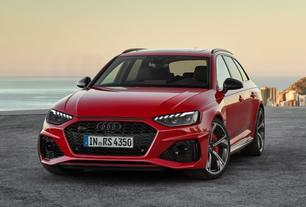
It's the end of the line for that Audi A4 as we know it. In saying goodbye to the ‘B9’ generation A4 that launched in 2015, we welcome the Audi RS4 Competition Plus.
It is the most hardcore example of the breed yet, sitting lower to the floor with hard-edged gear changes, lightweight wheels and snuggly bucket seats. You can also get it in swoopy RS5 Sportback guise.
Audi is only bringing 75 units of each down under as a swan song for the B9 generation RS4 and RS5 before the even-numbered model moves into its all-electric future.
As we’ll go on to discover, these two special models see the A4 and A5 bow out in style.
Kia expects its all-new Tasman to be a key player in Australia’s highly competitive ute segment. And to its credit, the Korean manufacturer has created its contender from scratch, rather than taking the easier platform-sharing route favoured by some rivals.
However, judging by feedback from numerous locals during our test, the jury is out on whether Aussies will warm 'en masse' to its bold styling and confronting appearance, which tends to distract from the capable vehicle beneath.
So, given our tradie focus, we recently spent a week in the lowest-priced entry point for Tasman dual-cab ute ownership, to see how it measures up as a tool-of-trade for tradies, farmers or fleets wanting a back-to-basics workhorse.
What a way to send off this generation of Audi RS4 and RS5. The extra focus courtesy of those trick coil overs and drama from the exhaust plus the sharper gear changes deliver the best Audi has done with these RS products.
There are some compromises, with the suspension favouring outright control over low-speed comfort. It’s also true that the current BMW’s M3 and M4 are more impressive, but when the products are nearly seven years fresher than Audi’s, what do you expect?
Plus, those looking for a more restrained and polite fast executive sedan (or wagon) will gel with the Audi’s sophistication. There aren’t many of these Competition Plus RS4 and RS5s coming to Australia and they are impressive visually and from behind the wheel. It’s a fitting way to send off the current generations.
Note: CarsGuide attended this event as a guest of the manufacturer, with accommodation and meals provided.
Ute buyers prepared to look beyond the Tasman’s polarising appearance will discover a competent all-rounder. It has its faults like any ute but boasts high standards of engineering, build quality, interior design and performance that make it a worthy new competitor in this space.
The RS4 Avant’s 'Progressive Red' metallic helps the black milled 20-inch alloy wheels pop. Its stance is hugely purposeful with wheels tucked right up in the blistered arches courtesy of the lowered ride height — it's how the Avant would have looked in a design sketch.
The visual bulk of the long-roofed RS4 gives it the sort of proportions motoring journalists love to wax lyrical about, even if plenty of buyers still prefer coupes or lifted SUVs.
The RS5's more flowing, elegant lines match well with the Navarra Blue paint work, silver-accented wheels and conventional leather-appointed seats within.
Both cars have effectively identical front cabins reflecting Audi’s classy and sleek design language. The integration of technology is pretty good and the RS4’s additional red styling pack really makes it feel sporty within.
The Tasman is claimed to have more Australian input than any previous Kia model and it certainly has a distinctive ‘Australianised’ competence in the way it performs (see Driving).
It also follows a reassuringly conventional engineering path with its turbo-diesel drivetrain, body-on-ladder-frame-chassis, twin wishbone/coil-spring front suspension, leaf-spring live rear axle, four-wheel disc brakes and electric power-assisted rack and pinion steering.
The Tasman is no shrimp either, as it shares the same 3270mm wheelbase as the market-leading Ford Ranger and is slightly longer and wider.
Work-focused light commercials are often armoured with unpainted plastic in areas prone to bumps and scrapes. The Tasman S 4x2 follows convention here too with dark grey plastic prominent at the front, rear and along the sides, where unusual ‘eyebrows’ are positioned above the wheel-arches which every onlooker we spoke to said looked better in body colour.
The S 4x2 shares the same 206mm ground clearance, 800mm wading depth and approach/ramp breakover/departure angles as its S, SX and SX+ 4x4 siblings. However, they also share a shallow approach angle of only 20 degrees, which is considerably less than its previously-mentioned rival 4x2 models.
The lower ‘spoiler’ section of the front bumper seems largely responsible for this, as it looks too close to the ground and vulnerable to damage from a farmer’s rocky creek-bed crossing or a tradie’s rugged worksite.
The black and grey interior is a functional and spacious design (see Practicality) which looks and feels more upmarket than typical base-model offerings. It has the coolest doorhandles we’ve seen in a ute, which although made of a composite material look like machined steel, complete with a lathe-like knurled finish on the finger-pulls.
There’s also soft-touch surfaces on the door armrests to optimise elbow comfort plus contrasting hard-surface finishes including honeycomb and diagonal patterns, two-tone fabric seat trim with exposed stitching and neat embossed grooves across the seat-facings.
The RS4's cabin is excellent, with a good mix of physical buttons and responsive touchscreens for control. There’s enough storage space for this kind of vehicle, with good door bins and well-sized cupholders in the centre as well as USB-C and -A charge points.
Audi’s multimedia system is friendly though the large touch targets and dark background aren’t as crisp as those fitted to the latest rivals. The screen isn't as big, either, measuring 10.1 inches for the multimedia item. The RS4 supports wireless Apple CarPlay and Android Auto.
That said, Audi’s 12.3-inch digital driver’s display with bright and poppy mapping software and generous customisation remains right at the head of the pack.
There is a panel of switches below the touchscreen for climate control, physical selection of the five-or-so drive modes and a collection of helpful buttons on the perfectly-shaped and sized leather-appointed steering wheel.
It lacks F1 or DTM wow-factor compared to the C63 and M3 with their easy-access driver mode buttons and toggles on the steering wheel but the RS4's restrained looks will resonate with those that prefer a bit more elegance inside.
Neither the RS4 nor RS5's back seats are designed for those over about 175cm. The RS4’s roof is a little higher so it is good enough for most adults but the RS5’s sloping profile compromises things. It has two individual buckets compared to the RS4’s three-wide bench.
Rear seat passengers get air vents, an individual climate zone, bottle holders in the doors, USB charge points and ISOFIX attachments for the outboard seats, with matching top tethers in the seat backs.
The Audi RS4’s boot is a generous 505L with under floor storage and a netted area on the driver’s side. Folding the 40/20/40 split-fold bench increases space to 1495L. That said, the RS5’s 465L is still very good, though it is not quite as practical in the real world.
Being fitted with roof rails makes for sleek integration of roof racks for the RS4 to slip roof pods, bike racks or whatever else you might choose to take on a trip away.
With its 2126kg kerb weight and 3250kg GVM, our test vehicle has a mighty 1124kg payload rating which is the largest available in the Tasman fleet. And up to 100kg of that can be carried on the roof.
Like its 4x4 siblings, the 4x2 model is rated to tow up to 3500kg of braked trailer but with its 6200kg GCM (or how much it can legally carry and tow at the same time) the payload would need to be capped at 574kg (a reduction of 550kg) to avoid exceeding the GCM.
Although few (if any) owners would need to tow 3500kg, it’s important to be aware of these numbers if you did to avoid overloading. Even so, almost 600kg of payload would still allow for a crew of five and their gear when towing the maximum trailer weight, so this is a useful set of numbers for many working roles.
Internally the load tub is 1573mm long, 1600mm wide and 543mm deep with a load volume exceeding 1.3 cubic metres. And with 1186mm between the rear wheel-housings, it can carry either Aussie or Euro pallets.
The tailgate can be opened remotely and its hinges provide opening/closing assistance. There’s no standard tub-liner but it comes with four load-anchorage points positioned at around mid-height.
There’s ample cabin space for the driver and front passenger plus storage including a bottle-holder and bin in each door, a single glovebox and a centre console with a large open tray at the front with USB-C ports, two cupholders in the centre and a large box at the back with an internal 12v socket and padded lid which doubles as a comfy elbow rest.
Rear cabin access is enhanced by doors that open to almost 90 degrees and Kia claims the rear bench seat offers best-in-class legroom, headroom and shoulder-room. Even so, it would still be a shoulder squeeze for three big Aussies (like all dual cabs short of a full-size US pick-up) so a limit of two would be preferable for long trips.
Rear storage includes a bottle holder and bin in each door plus pockets on the front seat backrests and a slender pocket on the rear of the console ideal for storing phones. A couple of USB ports would be handy here too, but we are talking base-grade.
There’s also no fold-down centre armrest at this level but the bench seat's 60:40-split base cushions can swing up and be stored vertically if more internal cargo space is required, or to access a full-width bin that can store heaps of stuff away from prying eyes.
You'd expect the RS5 to be more popular given how uncool wagons are these days but Audi's whole thing is wagons — or Avants, for the initiated — so it makes sense that the RS4 Avant outsells the RS5 Sportback about two-to-one.
For the RS4 Avant’s basic asking price of $165,015, before on-road costs, you get luxury features such as LED headlights, an RS design package, Nappa leather upholstery, power-adjust seats, a Bang & Olufsen 19-speaker sound system and metallic paint on top of the significant changes to the RS4’s chassis and zingy 331kW V6.
The RS5 is a little dearer, reflecting the addition of Matrix LED headlights that aren’t available on the wagon.
But we have the 'Competition Plus Pack', which is a $13,990 indulgence that swaps adaptive dampers for Audi’s 'RS Sport Suspension' coil over package with manual rebound and compression adjustment and height adjustment.
The cars sit 10mm lower than a normal RS4 but you can go to a dealer to move the ride height up or down from there.
That’s not it, though. You also get a louder exhaust system with matte black pipes, fixed-ratio steering system, a retuned eight-speed automatic with more aggressive shifts, different rear differential programming, black exterior badging, 2.0kg lighter 20-inch Audi Sport wheels (in silver or black), special LED entrance lights and your speed limiter raised to 290km/h.
The 'Navarra Blue' RS5 pictured is a ‘basic’ Competition Plus. You can go further, as done with the RS4 Avant with its manual-adjust bucket seats ($1300), 'Interior Design Pack' in red ($3400), matte carbon exterior pack ($6300) and carbon trim, bringing its total cost to $191,405, before on-road costs.
That makes the RS4 and RS5 the most affordable in their competitor set, below a BMW M3 Competition xDrive Touring ($183,500) and Mercedes-AMG C63 S E Performance hybrid, which is $187,900, before on-road costs.
The Kia Tasman range offers a choice of cab-chassis and ute body styles and five model grades comprising S, SX, SX+, X-Line and premium X-Pro.
Our S 4x2 test vehicle represents the bottom rung of the model ladder, for those not needing the all-terrain capabilities of its S 4x4 sibling and other Tasman models. However, it does share the same 2.2-litre four-cylinder turbo-diesel and eight-speed automatic transmission, for a list price of $42,990.
That's more than competitive with equivalent dual-cab ute rivals like the Ford Ranger XL Hi-Rider 2.0L auto 4x2 ($43,530), Toyota HiLux Workmate Hi-Rider 2.4L auto 4x2 ($44,820) and Isuzu D-Max SX High-Ride 2.2L auto 4x2 ($44,200). Our example is also finished in 'Steel Gray' which is a premium paint option that adds $700 to this price.
The S 4x2 comes standard with 17-inch black steel wheels and 265/65 R17 tyres with a full-size spare, automatic LED headlights/daytime running lights/tailgate-mounted rear stop-lights, front/rear parking sensors, rear bumper corner-steps, body-coloured/heated door mirrors, body-coloured doorhandles with pocket lights (front doors only) and more.
Accessing the cabin using the smart key reveals a premium steering wheel and gear knob, remote start, six-way manually adjustable driver’s seat, dual-zone climate control, 12v socket and USB-C ports, tyre pressure monitoring, integrated trailer brake controller, reversing camera and more.
There’s also a six-speaker audio system and what Kia calls the ‘Integrated Panoramic Display’ which in one expansive digital screen combines a configurable 12.3-inch driver’s instrument display, 5.0-inch climate control display and 12.3-inch multimedia touchscreen display.
Audi’s 2.9-litre twin-turbo petrol V6 has seen plenty of use across performance products from Audi and Porsche, including the Macan S and Audi S6.
In the RS4 and RS5 Competition Plus, it develops the same 331kW (at 5700-6700rpm) and 600Nm (at 1900-5000rpm) as the regular car. This makes it an extremely flexible engine that delivers predictable punch anywhere in the power band.
That said, it lacks the explosive character of BMW’s twin-turbo inline six — the figures are only 15kW and 50Nm higher on paper yet the M3’s response is that much more ferocious.
Audi’s RS division has tried to capture a bit more emotion, retuning the eight-speed torque converter automatic transmission for crisper shifts. This also benefits the RS4’s 0-100km/h sprint time, which falls two tenths to 3.9 seconds in Competition Plus guise.
The V6 breathes a little easier, too, with a different exhaust. Audi says the extra sound is down to 8.0kg less sound deadening in the car.
There’s more resonance at idle that does feel tiring sitting in traffic idling but the trade-off is a brawny mid-range baritone that develops into a shrill bark approaching the redline.
All Tasmans share the same 2.2-litre four-cylinder turbo-diesel that produces 154kW of power at 3800rpm and 440Nm of torque across a 1000rpm-wide band between 1750-2750rpm, which showcases flexibility that's well suited to hauling and/or towing heavy loads.
This engine is paired with an eight-speed torque converter automatic offering the choice of sequential manual-shifting and five selectable drive modes comprising Normal (default), Eco, Sport, Tow and MyDrive with the latter allowing custom settings.
The Audi RS4 wagon is rated to use 9.5L/100km in ADR combined cycle (urban/extra-urban) consumption testing while the slipperier RS5 returns 9.4L/100km in the same test.
We weren’t able to run accurate or particularly relevant fuel figures on the event but the trip computers showed around 12L/100km in both RS4 and RS5.
While these numbers are high compared to your average passenger car, the Audi is more efficient than BMW's rivals, and gets remarkably close to the hybrid C63 in the real world.
The fuel tank is quite small for this kind of vehicle at 58 litres. That limits the RS4’s theoretical driving range to 611km.
Unsurprisingly, the Audi RS4 and RS5 require 98 RON premium unleaded petrol.
Kia claims combined average consumption of 7.4L/100km and the dash display was showing 8.3 when we stopped to refuel at the completion of our 591km test, which included suburban, city, highway and backroad driving of which about 120km was hauling its near-maximum payload.
Our own figure, calculated from fuel bowser and tripmeter readings, came in higher again at 9.6 which is still within the usual 2-3L/100km discrepancy between lab-based official figures and real-world numbers. That's also excellent sub-10L economy for a vehicle weighing more than two tonnes operating mostly in urban settings.
So, based on our own consumption figure, you could expect a realistic driving range of more than 800km from its 80-litre diesel tank.
The time allocated to driving the RS4 Avant Competition Plus was fairly limited and we were sadly unable to sample how the highly adjustable coil over suspension performed where it makes most sense — on the racetrack.
Still, winding country roads between Sydney and the Southern Highlands served up some challenges, demonstrating how the Competition Plus pack changes the character of the RS4 and RS5.
The only real negative is comfort, specifically over those horrible plastic speed bumps that litter shopping centre car parks. With adaptive dampers, carmakers can set programs for these kinds of obstacles to soften and stiffen the clever shocks at just the right time. Not so the Competition Plus pack cars, which ride these bumps harshly.
That about does it, though, and everything thing else is a net benefit. The steering system addresses some criticism of the earlier RS4s. Further than a retune, the Competition Plus gets a new rack, that is non-progressive with a fixed ratio of 15:1 (instead of 13.3:1) and 2.4 turns lock-to-lock. The reactions to each input feel a hint more faithful.
When above 40km/h the coil overs come into their own. Even though the RS4 rides firmly it doesn’t constantly jiggle over small bumps. Over sharp-edged hits, the suspension rounds the hits off so, while you feel them, there’s a sense of control and sophistication.
Having speed limits to contend with means it is essentially impossible to find the limits of grip of the 275/30R20 Continental SportContact 6 tyres on the road and there isn’t much body roll, either.
The RS4 is still rewarding, though, getting up on its toes just enough through a series of bends to feel engaging. It gives an impression of being quite light and at 1820kg it is now considered featherweight next to rivals.
The RS4's Quattro all-wheel drive system favours the rear wheels when driving normally (60 per cent rear) and can send up to 85 per cent of the drive to the back axle.
The tweaked electronically-controlled rear limited-slip differential amplifies the throttle steer-ability of the RS4, giving you the confidence to squeeze the gas on exit.
It helps that the Competition Plus bucket seats are a little thinner and set closer to the floor giving you more feedback. This is the key differentiator between the RS4 and RS5 we drove — the buckets make the car feel alive.
Strong brakes are made up of 375mm front rotors clamped by six-piston calipers. Optional carbon ceramic brakes with larger 400mm front rotors help save 6.5kg and, if you plan to use the RS4 on track, are a smart buy along with a set of Pirelli P Zero Corsa semi slick tyres ($850).
Really, though, neither the RS4 nor RS5 are the perfect car for the track. They are plenty capable and fast on the road with just enough fun, reward and character thrown in to keep you coming back for more.
There’s no cabin side-steps but large handles on the A and B pillars assist climbing aboard. People of most shapes and sizes can find a comfortable driving position given its supportive seating, large left footrest and height/reach-adjustable steering wheel featuring a flat top to optimise forward vision and a flat base to provide ample torso room.
It exudes solidity in its engineering and build quality along with excellent steering feel, handling and braking. It also has energetic acceleration and all-round performance.
We trialled the sequential manual-shifting and selectable drive modes but spent most of our test in the ‘Normal’ default setting as it provides the best compromise. It’s also a low-stressed highway cruiser requiring only 1600rpm to maintain 100km/h and little more for 110km/h.
The unladen ride quality is firm, as you’d expect given its big payload rating, but it’s more supple than some other 4x2 one-tonners we’ve tested without loads.
To test its GVM rating we forklifted 890kg into the load tub, which combined with our crew of two equalled a total payload of 1070kg which was only about 50kg below its legal limit.
Under this weight, the large bump-stop rubbers fitted to the rear leaf-springs engaged with the chassis rails above them very early in compression, which eliminated the hard thuds experienced with traditional designs that ‘bottom-out’ over large bumps and through dips.
The Tasman proved to be a competent heavy load-hauler in ‘Normal’ drive mode, maintaining its hearty performance and sure-footed handling with more than one tonne on board.
It also made light work of our 13 per cent gradient, 2.0km-long set climb at 60km/h, self-shifting down to third gear to easily haul this load to the summit.
Engine-braking on the way down, in a manually selected second gear, was equally strong until the engine reached 4000rpm on overrun (no redline is displayed) and promptly shifted up a gear.
These engine-protection protocols are increasingly common in light-commercial vehicles (both utes and vans) but can spring a surprise when you’re ‘leaning’ on the engine to restrain its payload during steep descents and it suddenly shifts up a gear and starts running away from you. Even so, the Tasman’s four disc brakes easily maintained the posted 60km/h speed limit for the remainder of the descent.
Overall, we struggled to find fault in the driving experience apart from one baffling oversight in cabin design, given the steering wheel’s rim blocks the driver’s view of the climate control screen located between the instrument and multimedia screens.
This is distracting for drivers, given climate control settings are among the most-adjusted cabin functions. Hopefully this will be corrected in future upgrades.
The Audi A4 range was rated a maximum five stars in ANCAP safety testing in 2021, with the rating now considered expired. The stamp also only applied to four-cylinder models — so not the RS4 we drove.
It has lots of safety equipment, including eight airbags (dual frontal, side chest, front and rear side head curtains), autonomous emergency braking (AEB) functional up to 250km/h with pedestrian detection, front and rear cross-traffic alert, lane-keep assist, blind-spot monitoring, safe exist warning and tyre pressure monitoring.
Adaptive cruise control with lane-trace assist makes it an easy car to use on the motorway. The systems are well integrated and easy to switch on and off as you like.
The Tasman S 4x2 and X-Line/X-Pro 4x4 models are yet to be ANCAP-rated, but other grades earned the maximum five stars when tested this year.
There’s a full suite of airbags, auto emergency braking (AEB) with multiple object detections, blind-spot monitoring, rear cross-traffic alert, trailer stability assist, driver attention alert, smart cruise control, lane-keeping and lots more.
Junior tradies get ISOFIX and top-tether child-restraint anchorages on the two outer rear seating positions.
Audi covers the RS4 and RS5 with a five-year/unlimited kilometre warranty which is now the expected norm across the premium part of the market.
A five-year service plan can be pre-purchased, costing $3630 for both models with maintenance due annually or every 15,000km.
After the five-year warranty period, owners can choose to extend the service packaging and warranty for two extra years at a cost of $4260. This can be done twice, extending the warranty up to nine years.
It comes with Kia’s excellent seven-year/unlimited km warranty, plus 12 months complimentary roadside assistance which is renewed each year for up to eight years if serviced by an authorised Kia dealer.
Scheduled servicing is every 12 months/15,000km whichever occurs first. Capped-pricing applies to the first seven scheduled services up to seven years/105,000km totalling $3971, or a pay-as-you-go average of $567 annually. Alternatively, Kia offers pre-paid servicing packages with cost savings for three, five or seven-year terms.
There are currently more than 160 Kia dealerships across Australia, which also provide vehicle servicing.