What's the difference?
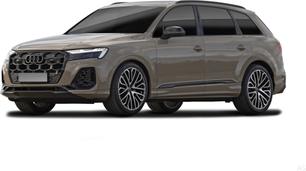
The updated Audi Q7 is a bit of a game of ‘spot the difference’ - but even though it’s far from a new generation, the update is more than just some shiny new bits.
While the brand’s first SUV is still in its second generation, a bit of modernised design and some tech tweaks are aimed at keeping it in line with rivals, even as it nears a decade on sale.
As well as the new features, there’s also a new variant bound for Aussie showrooms. So, is it still up to the task?
The sixth-generation of Subaru’s Forester has landed and while the new hybrid versions constitute the biggest news of this batch, the petrol-only variants should not be ignored.
The five-seat mid-size SUV has a 2.5-litre four-cylinder 'boxer' engine, Subaru’s well-regarded 'symmetrical all-wheel drive' system and some new changes inside and out.
So, does the top-spec Touring offer the best value-for-money in the petrol Forester line-up?
Read on.
Overall, changes to the Q7 aren’t quite revolutionary, but that’s okay because it was already a fantastic large SUV.
The fact Audi has kept the price around the same mark and introduced a cheaper entry-grade should be welcome news for prospective buyers.
But even the existing variants are capable and impressive family haulers… and now they’re just that little bit better.
Note: CarsGuide attended this event as a guest of the manufacturer, with travel, accommodation and meals provided.
The MY26 Subaru Forester packs plenty of punch in terms of standard features, a roomy and functional interior and overall driveability. Sure, it’s not the most exciting vehicle to drive on- or off-road but to get stuck on that is to miss the point entirely. This is a decent all-rounder with a solid background and an AWD system that long ago set the gold standard for vehicles of this type.
In a tough mid-size SUV market segment aimed more at those intent on driving through car parks rather than adventuring through national parks, the Forester offers greater versatility than most and should not be ignored.
The phrase ‘evolution not revolution’ is applicable here, cliche as it is, with the Q7 having been given a Botox-style lift at the front end.
The standard matrix LED headlights have a higher lighting signature than before, with the lighting elements leading into the lines down the shoulder of the SUV.
The grille now features a hexagonal honeycomb insert, the vertical line styling is now a thing of the past and the functional side vents are a little more aggro.
Overall, it’s a sharper look that brings the Q7 up to date with Audi’s current design language, down to the more angular wheel choices.
At the rear, the new tail-lights are ‘joined’ via a chrome strip spanning the rear, and the lower bumper (with real exhaust exits) has had a refresh.
Audi’s new CI badging (or ‘corporate identity’, pretty sexy stuff) is also present, which includes a new typeface for the ‘Q7’ badge at the rear, which is no longer italicised and is separate from the red ‘S line’ rhombus.
The four rings badge is also flatter and is white with black outlines, rather than a three-dimensional chrome badge.
Inside, the changes are more than skin-deep. In fact, the skin is the same, you’d be hard pressed to notice anything different about the Q7’s interior between pre- and post-facelift without diving into the electronics.
This Forester is 4655mm long (with a 2670mm wheelbase), 1830mm wide and 1730mm high.
The new generation retains more than enough of the previous Forester – blocky profile included – to remain clearly recognisable.
Traditionalists may chafe at the slicker, more citified appearance of this Forester over previous generations but the overall package is inoffensive enough to not elicit any howls of outrage from passers-by on the street.
The Forester’s interior maintains a similar cabin look and feel as before but with a 11.6-inch portrait-oriented multimedia touchscreen dominating up front, a mix of physical and on-screen buttons, as well as soft-touch surfaces and durable plastics.
Audi has changed the layout and added new apps in the main 10.1-inch multimedia touchscreen, though fortunately it still has shortcuts to all the Big Dogs in terms of functions: media, navigation, phone, etc.
On top of that, everything is still in big, easy-to-see (and press) blocky buttons on the main screen.
The 8.6-inch screen below also still has climate controls readily available, and there are still physical buttons for a bunch of functions including drive modes.
The wide 12.3-inch driver display also remains familiar, though now has a higher resolution and more functionality in terms of on-road help and safety - which we’ll come to later in this review.
Aside from the tech, ‘spacious’ is an understatement when it comes to the big Audi’s cabin. In the front seats especially, the Q7’s central tunnel and dashboard are easy to reach without feeling like an enclosure as they wrap around the front passengers.
However, if I had to level one criticism at the usefulness of the Q7’s front row, it would be that despite there being physically plenty of room, storage is at a premium.
For something this big, there aren’t many places to put items that aren’t your phone or a drink.
There are door card holders for bigger bottles, some space for small items, and the cupholders of course, but the space under the central armrest including the phone charger is stingy.
Fortunately, the second row is not lacking space and is modular in its adjustability. Occupants can move seats, adjust their angle, and even sort out the middle seat separately.
Depending on how high up the variant chain you go, separate climate controls for the middle row and the panoramic sunroof help create a comfortable and roomy feeling.
The second row can also be tucked up behind the front row for easier access to the third row, which (if the second row is slid forward a tad) is just spacious enough for an average adult to be relatively comfortable for a short trip.
The third row seats are able to be folded or raised with switches that are accessible from the side doors or the (electric) tailgate, where there’s also a switch to lower or raise the rear suspension by 55mm to aid loading.
On that, the Q7 has a claimed luggage capacity of roughly 295L with all seats up, 780L with the third row folded down and 1908L with the second row lowered.
The Forester is quite roomy for a mid-size SUV and this is the top-spec variant so there’s leather everywhere.
The interior layout is neat and tidy and lands firmly on the correct side of being practical and familiar, with all controls easy to locate and operate.
The touchscreen offers mostly simple intuitive functionality with infrequent need to cycle through numerous menus and sub-menus to access what you want.
The aforementioned mix of physical and on-screen buttons, as well as soft-touch surfaces and durable plastic are welcome here because, you know... real life.
The front seats offer ample support and the driver is able to dial-in their preferred position via power controls on the eight-way power-adjustable seat (with dual memory). The front passenger has an eight-way power-adjustable seat. Both seats are heated and ventilated.
The 60/40 split folding second-row seats aren’t too shabby either, in terms of comfort and amenities, with a fold-down arm-rest with cupholders and directional air vents etc.
Cargo volume is 496 litres (with rear seat in use) and 1174 litres (with the rear seat down, 1667 litres to ceiling.
The tailgate is powered and hands-free with a kick sensor (apparently). But I never tried that, instead opting for the tailgate-mounted button to open and close it.
Four variants are available in the Audi Q7 line-up, excluding the performance-bent SQ7. Well, at the time of the launch event, one of those four is yet to arrive, that being the new entry-grade Q7 45 TFSI which starts from $108,815, before on-road costs. TFSI being ‘Turbo Fuel Stratified Injection’ or Audi-speak for ‘turbo-petrol’.
It’s joined by a diesel-powered 45 TDI which starts from $117,284, before on-roads. But ‘entry-grade’ for the Q7 doesn’t mean skint on goodies, both coming in with standard gear like leather-appointed upholstery with heated electrically adjustable front seats, an electric folding third row, wireless phone charging, screens and tech galore, matrix LED headlights, 20-inch wheels, adaptive air suspension, and a slew of safety features including some new stuff, but we’ll get to that later.
The matrix LEDs are one of the main new bits of kit, though a daytime drive route meant not getting to put those to use. They’re pretty, though…
The 45 grades can be upgraded with the $3900 'Premium Package' to add 21-inch alloys, four-zone climate control, black exterior styling and coloured interior ambient lighting.
Stepping up from the 45s are the 50 TDI S line and 55 TFSI S line, which together at $136,815 each form the next rung up from entry.
They’ve got 21-inch wheels and an S line exterior pack along with tinted privacy glass to tell them apart from the entry 45s from the outside, but inside there’s four-zone climate control, ambient lighting, a Bang & Olufsen sound system, a head-up display and proper leather upholstery for the seats.
Australian 50 TDIs and 55 TFSIs come standard with an S line interior pack that includes sports seats, leather steering wheel and shifter, aluminium inlays and door trim, plus black headlining and floor mats with contrast stitching.
There are two option packs at this level: the $4200 'Luxury Seat Package' adds S sports seats that feature an integrated headrest, Valcona leather with diamond stitching, ventilation for the front seats and heating for the second row’s outboard seats.
Then there’s a 'Premium Plus Package' for $5500 which brings 22-inch alloys, sport-tuned adaptive air suspension, dynamic all-wheel steering, a black exterior styling pack and power-assisted closing doors.
Given the update is all up relatively minor, prospective buyers will be pleased to know the same can be said for the pricing changes - even a year ago, the prices for the Q7 variants that were on sale at the time were within a couple of thousand dollars of where they are now.
The Forester AWD Touring (petrol) is priced at $50,990 MLP while its hybrid sibling is $55,990.
Standard features include an 11.6-inch multimedia touchscreen (with wireless Android Auto and Apple CarPlay), 18-inch alloy wheels, auto LED headlights, dual-zone climate, heated front seats and electric folding rear seats as well as a wireless phone charger.
Top-grade additions include a sunroof, low-profile roof rails, a digital driver display, leather-accented seats, a leather auto-shifter, ventilated front seats and a 10-speaker Harman Kardon audio system.
It also has power-adjustable front seats, sat-nav, auto-dipping and folding door mirrors and a hands-free tailgate.
Exterior paint choices include 'Crystal White Pearl', 'Ice Silver Metallic', 'Magnetite Grey Metallic', 'Crystal Black Silica', 'Crimson Red Pearl', 'Brilliant Bronze Metallic', 'Daybreak Blue Pearl', 'Sapphire Blue Pearl', 'Cashmere Gold Opal', 'Autumn Green Metallic' and 'River Rock Pearl'.
The four drivetrain options for the Q7 line-up are split between the two ‘grades’, with the 45 TFSI and TDI powering the 'entry-level' cars and the 50 TDI and 55 TFSI as the feature-packed variants.
The most affordable option is the 45 TFSI, which runs a 2.0-litre, four-cylinder, turbo-petrol engine making 185kW and 370Nm.
Like all variants in the Q7 range, the 45 TFSI engine powers all four wheels via an eight-speed automatic transmission. Audi claims the 45 TFSI will hit 100km/h in 7.3 seconds, if that’s your thing when it comes to three-row SUVs.
The rest of the line-up is powered by different versions of the brand’s 3.0-litre V6, all turbocharged, and all with 48-volt ‘mild hybrid’ (MHEV) tech aiming to increase efficiency.
The 45 TDI is, of course, a turbo-diesel 3.0-litre V6 that makes 170kW and 500Nm, also sending power and torque to all four wheels via the same style transmission. Audi says this one knocks over 100km/h in 7.1 seconds.
Similarly, but with more power and torque, the 50 TDI is also powered by a turbo-diesel unit as the name suggests. This one puts out 210kW and 600Nm, making it likely the best choice for towing and such even though all V6 variants boast a 3500kg braked towing capacity. The 50 TDI’s figure to hit 100km/h is a claimed 5.9 seconds.
Finally, the 55 TFSI makes 250kW and 500Nm, and boasts a 5.9-second claimed 0-100km/h time.
The Forester has the line-up’s 2.5-litre four-cylinder naturally aspirated boxer engine (producing 136kW at 5800rpm and 247Nm at 3700rpm) matched to a constantly variable transmission (CVT), which some people detest, and some people couldn’t give a rat’s whether it’s there or not.
Also onboard is Subaru’s all-wheel drive system, driving modes (including 'Normal', 'Deep snow/Mud', and 'Snow/Dirt') and 'X-Mode' “that constantly monitors the traction available to each wheel and centralises the control of key components including the engine, transmission, drivetrain and brakes to help manage slippery conditions”, according to Subaru.
As you might expect, diesel versions of the Audi Q7 are claimed to use less fuel than their petrol counterparts, so let’s start with those.
The 45 TDI boasts a claimed 7.0L/100km consumption figure, while the 50 TDI is a little higher at 7.1 litres. Both have 75-litre fuel tanks, and should therefore theoretically get more than 1000km out of a fill.
On to the petrol models, the four-cylinder TFSI 45 has a claimed 9.3L/100km efficiency figure and the V6 TFSI 55's number is 9.0L/100km.
Given the nature of the driving and groups sharing cars during the launch event, we’ll wait until we’re next in a Q7 for a longer time before doing our own efficiency test.
Official fuel consumption on the combined (urban/extra-urban) cycle for the Forester is 7.9L/100km and it uses 91RON 'standard' unleaded petrol at a minimum.
On this test, I recorded 8.1L/100km. But fuel consumption was as low as a dash-indicated 1.7L/100km while driving the Forester with adaptive cruise control engaged.
The Forester has a 63-litre fuel tank, so, going by our on-test fuel-use figures you could reasonably expect a driving range of almost 780km from a full tank. However, as with any vehicle, once you’ve loaded the Forester with any real-world burdens (e.g kids, dogs, camping gear, etc) you’ll soon see the fuel consumption increase.
Aside from the mild-hybrid now standard on the Q7’s V6 models, there’s not a whole lot to report on in terms of new tricks or surprises from behind the wheel.
But that’s okay, because it means the Q7 remains a supremely comfortable and capable large SUV.
Our test route consisted of plenty of rural driving, with a combination of surfaces that would in some family haulers see the suspension and maybe even steering show cracks in their ability - but the Q7 remains composed.
Given its weight and size, it can feel a little hefty around sharper corners, but the Q7 in these variants (i.e, not its performance-focused SQ7 sibling) isn’t built to be hustled like that.
It feels like the kind of air-suspended loungeroom-on-wheels that would be at home barreling down the autobahn at 180km/h and being completely undramatic about it.
Still, this model shares some moving parts underneath with the likes of the extremely capable Porsche Cayenne, and while the Q7 isn’t quite a giant hot hatch, the sound foundations shine through dynamically.
Of course, when it comes to powertrains, there isn’t really a wrong answer, each engine fits a purpose.
If you’ll ever need to tow (and you can at up to 3500kg braked), the low-down steady urge of the 50 TDI is probably your best bet, but even the 45 TDI is a solid choice for long-range motoring.
The petrol models will better suit those in city situations, and while they never feel truly urgent, the 55 TFSI isn’t without some impressive push for something of this size.
The Forester feels comfortable and composed on sealed surfaces and offers some degree of dynamism to the driving experience – so in line with previous generations.
It feels more refined, sharper to steer and more responsive than before. There’s ample visibility to the front but a substantial B pillar obscures the driver’s vision back over their right shoulder.
The Boxer engine and CVT work well together, power and torque outputs are more than adequate in this package, and that much-maligned transmission is not intrusive if the Forester is driven with care and common sense.
However, acceleration from a full stop is sluggish.
The suspension set-up – MacPherson struts up front and double wishbones at the rear – yields a firm but not jarring sense of ride and handling.
The 1662kg Forester proved nimble to manoeuvre around the Big Smoke, the suburbs and in the bush (more about that soon) with a neat 10.8m turning circle.
All-wheel drive vehicles are capable of tackling off-road adventures in their own right but, for safety’s sake, AWD drivers should avoid anything beyond well-maintained dirt tracks in dry weather. AWD cars are designed for use on bitumen roads with some dirt or light-duty off-road use.
And so it was with our test of this Forester. On-test off-road terrain equalled firm-packed sand and gravel/dirt bush tracks in dry weather, although we did drive through one shin-deep mudhole with no trouble.
The Forester has a listed 220mm of ground clearance, the suspension held up well over a brief stint on mild corrugations and Subaru AWD proved more than up to the task when things became a little trickier, providing improved grip and traction in slippery conditions that demanded to be driven at very low speeds.
If push comes to shove, it’s capable of more than light off-roading, but the Forester’s ground clearance and off-road angles ultimately limit its off-road capabilities.
The Forester’s 'all season' tyres – Falken Ziex Z001A A/S (225/55 R18 98V) – are fine for light to moderate off-roading but anything more difficult than that and you’ll need to get a set of more aggressive all-terrain tyres. It does have a full-sized spare onboard.
It has maximum towing capacities of 750kg (unbraked trailer), 1800kg (braked) and a maximum towball download of 180kg. GVM is 2223kg; GCM is 4023kg.
Some niggles: The driver awareness system is annoyingly over-reactive.
The Q7 is a maximum five-star car according to ANCAP, but the list of safety features is dozens long.
The highlights include adaptive cruise assist, lane assist and side assist, surround view cameras and new traffic sign recognition plus warnings for approaching cyclists and the like.
In fact, Audi claims there are more than 30 active safety features, and almost all of them are standard across the range. The only one that isn’t is 'Parking Assist' with 'Park System Plus', as Audi calls it - the base 45 TFSI is only equipped with Park System Plus and not Park Assist.
Basically, the 45 TFSI can’t take over the task of parking itself, while the others can.
It’s all handled through radars, cameras, and sensors and when you’re on the road functionality is relatively unobtrusive which is a plus!
For reference, the Q7 has eight airbags including dual-frontal, side-chest airbags for front and second row outboard passengers, plus side head-protecting or curtain airbags for both rows.
On top of that, there are ISOFIX points not only in the second row, but also in the third, totalling five spots all up.
The Forester has the maximum five-star ANCAP safety rating from testing in 2024.
It has nine airbags (dual front, dual front side, dual curtain, driver’s knee, far side and front passenger seat cushion), adaptive cruise control, emergency lane-keep and centring (with departure warnings), pre-collision braking, auto emergency steering, a 360-degree view monitor system, and a driver monitoring system which includes a ‘safe stop’ feature that – if the vehicle detects that the driver is non-responsive – will bring the vehicle to a gradual, you guessed it, safe stop.
Audi’s five-year/unlimited kilometre warranty is pretty standard for a premium brand, but five years of free roadside assist and the ability to add a package to extend the warranty both add a little extra to the deal.
For the Q7, a five-year servicing plan is $3820, while the $4370 'Audi Advantage' plan adds two years to the warranty, two more services, and two more years' roadside assist.
The MY26 Subaru range is covered by a five-year/unlimited kilometre warranty, five-year/75,000km capped price servicing, and 12 months roadside assistance.
A service is required every 12 months or 15,000km, whichever occurs soonest. After your free “1 Month Health Check and Chat”, cost per service is $347.95 (at the 15,000km/12 month mark), $520.45 (30,000km or 24 months), $393.10 (45,000km or 36 months), $679.30 (60,000km or 48 months) and $358.20 (75,000km or 60 months). Average over the five years is $459.80.
Subaru Australia has more than 140 dealerships across the country with a decent spread over metro and regional areas. Foresters may be serviced at those dealers or by approved mechanics.