What's the difference?
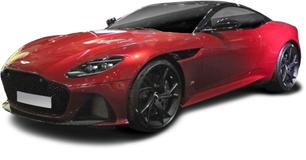
In mid-2018, to coincide with its global launch, CarsGuide was invited to a hush-hush, behind-closed-doors preview of the Aston Martin DBS Superleggera.
Hidden within a maze of black velvet drapes at a low-key, inner-city Sydney location sat the famous British brand’s new flagship, a stunning 2+2 GT with the performance, dynamics and luxurious quality to match its exotic looks and $500K+ price tag.
On that day, for whatever reason, I never thought the opportunity to steer it would come my way. But two years later, almost to the day, the key to this ‘Sabiro Blue’ beauty was mine.
The DBS Superleggera sits at the top performance coupe table, mixing it with Bentley, Ferrari, and Porsche’s finest. But maybe you already have one (or more) of those. Which begs the question, does this imposing V12 machine do enough to qualify for an extra space in your garage?
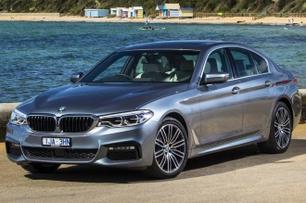
Andrew Chesterton road tests and reviews the new BMW 5 Series 520d, 530i, 530d and 540i sedans with specs, fuel consumption and verdict at its Australian launch in Victoria.
When we're all living under the cruel rule of our robot overlords, the few remaining human historians will track the genesis of our downfall to the technology explosion that occurred in 2017's new-car market.
Never before have car companies focused so hard on producing cars that can't just be driven, but that can drive themselves, negotiating corners, unexpected obstacles and changing traffic conditions without ever needing to consult the human actually sitting behind the steering wheel.
And BMW's all-new 5 Series sedan takes yet another a step forward, eliminating the need for said human to even be sitting in the car. Owners can instead move their 5 Series in and out of tight parking spaces simply by pressing a button on their key.
The Active Key function is admittedly a $1,600 cost option, but it proves the techno-focus applied to the seventh-generation of BMW's executive express, which will land in Australian dealerships this month. Every car is also fitted with what the German brand calls its personal co-pilot; a series of nifty cameras and radars that allow the car to be driven completely autonomously for spells of 30 seconds.
But the question is, has all this new technology come at the cost of regular, old-school driver enjoyment?
The Aston Martin DBS Superleggera is an instant classic, likely heading over a high-end auction block in years to come with a final price far higher than the 2020 ask. But don’t buy it as a collector's item, although it is a beautiful object. Buy it to enjoy. Stunningly fast, thoroughly engineered, and beautifully made, it’s a phenomenal car.
Sleek and attractive in the city, engaging on a country back road and with plenty of clever technology, the 5 Series sedan ticks all the right boxes as an executive express. If you can stomach the price hike, the six-cylinder 540i is our pick of the bunch.
The term Superleggera (Italian for Superlight) is normally associated with Italian automotive coachbuilder Carrozzeria Touring, which has historically applied its fine eye and hand-crafted aluminium body technique to a host of local brands, including Alfa Romeo, Ferrari, Lamborghini, Lancia, and Maserati.
As well as some American, German, and British liaisons, the latter covering classic Aston Martin and Lagonda models through the 1950s and ‘60s (your Silver Birch DB5 is ready for you 007).
But rather than hand-beaten aluminium, here the body panel material is carbon-fibre, and the look and feel of this DBS is the product of Aston Martin’s head of design, Marek Reichman (his name might sound German, but he’s a Brit through-and-through), and his team at the brand’s Gaydon HQ.
Based on the DB11 platform the DBS is a fraction over 4.7m long, just under 2.0m wide, and less than 1.3m tall. But it’s only when you’re close to the Superleggera that its intimidating muscularity comes into focus.
A giant, black honeycomb grille defines the car’s face, and the single-piece forward-hinging ‘clamshell’ bonnet includes a raised central section defined by longitudinal strakes either side, with deep vents above the front axle line to aid the exhaust of hot air from the engine bay below.
Broad ‘shoulders’ around the front wheel arches are balanced by powerful rear haunches to give the car a beautifully proportioned and imposing stance. But there’s scientific function behind this purposeful form, too.
The Aston vehicle dynamics team went all out with wind tunnel testing, Computational Fluid Dynamics (CFD) modelling, aerothermal and performance simulations, as well as real-world track testing to refine this car’s aero efficiency.
The DBS Superleggera’s overall drag coefficient (Cd) is 0.38, which is commendably slippery for a brawny 2+2 GT. But it’s the fact that in parallel with that number it’s able to generate a humongous 180kg of downforce (at 340km/h VMax) that’s remarkable.
The aero trickery includes a front splitter and airdam working in unison to accelerate airflow under the front of the car, delivering downforce and cooling air to the front brakes.
From there the ‘open stirrup and curlicue’ device at the top of the front wheel wells vents air to reduce lift, and create vortices which reattach the aero wake from the front wheels to the side of the car.
The ‘C-Duct’ starts with an aperture behind the rear side glass funneling air through the underside of bootlid to a subtle ‘Aeroblade II’ spoiler at the rear of the car. A close to flat underside also feeds air to an F1-inspired double diffuser under the rear end.
No gaudy wings or giant spoilers, just a subtly effective and thoroughly engineered aero profile.
Slim but distinctively Aston Martin LED tail-lights combine with a series of horizontal character lines across the rear to enhance the car’s visual width, and giant 21-inch dark rims fit the car’s proportions perfectly.
Slipping behind the wheel is the full hand-in-leather glove experience. The broad dashtop is split by a vaguely teardrop shaped centre stack with the classic ‘PRND’ transmission buttons and an illuminated push-button starter in the centre.
The compact instrument binnacle, housing a configurable digital display, imparts a quiet sense of purpose, and the Mercedes-AMG sourced media system, complete with rotary control dial, feels familiar. Overall, simple, subtle, yet hugely impressive.
Hardly a revolution, the 5 Series has instead undergone a few nips and tucks. But if it ain't broke and all that. It might not be the most head-turning offering, but the 5 Series sedan remains sleek, powerful and understated, and it is undeniably handsome on the road.
Its 8mm wider, 28mm longer and 2mm taller than the car it replaces, but it's also around 95kg lighter, thanks to its aluminium doors and boot and a clever magnesium frame for the instrument panel that saved another two kilograms. There's some other clever design elements, too. The kidney grille has active air flaps that open when extra cooling is required, closing when it isn't, reducing drag and helping accleration.
Inside, the 5 Series offers a beautifully crafted yet joyously understated cabin, with quality materials joining modern technology in a seamless way.
The notion of practicality doesn’t naturally align with a 2+2 GT, but a wheelbase measuring 2805mm means there’s enough space between the axles to provide generous accommodation for front seat occupants at least.
And the usual compromises presented by long coupe doors are reduced by the DBS’s swinging slightly up as they open, and down as they close. A genuinely useful touch.
The driver and front seat passenger are snug but not cramped, which feels right in this context, and they’re provided with a lidded central box, which doubles as an armrest between the seats.
Flick the switch and its power-operated top slides back in stages to reveal two cupholders and a general storage space with a 12V power outlet, two USB-A ports, and an SD card input at the rear.
There’s a small coin tray in front of the multimedia dial in the centre console and long door pockets, but bottles will be a struggle unless you’re happy to lay them on their side.
The ‘+2’ seats scalloped out of the rear bulkhead, look super cool (especially with our car’s Triaxial quilt trim) but for anyone in the vicinity of average adult height they’ll feel distinctly inadequate.
Legs or a head aren’t viable options so this space is best reserved for the kids. And there are two 12V sockets in the rear to help keep their devices charged, and them calm.
Boot volume is a useful 368 litres, and the aperture curves forward at the top which helps with loading larger cases, but remember the rear seats don’t fold.
There are small lockers hidden in the back wall, one containing a flat tyre repair kit, so don’t bother looking for a spare of any description.
This is a full-size sedan, and every seat feels spacious and airy. The sloping, slightly coupe-style roofline does cut into headroom in the back, but human-sized people will have little trouble, even sitting behind a tall driver.
Each trim offers two cupholders in the front, with another two housed in a pull-down divider that seperates the rear seat. And there's two ISOFIX attachment points, one in each window seat in the back.
The 5 Series' boot opens to rival a surprisingly sizeable storage space, offering 530 litres with the 40:20:40 rear seats in place.
The DBS Superleggera is like a finely tailored suit. Impressive, but not flashy, while the finish is impeccable, the materials used are top-shelf, and attention to detail is remarkable. And like anything that’s been carefully crafted and largely hand made, the price is substantial.
Before on-road costs like registration, dealer delivery charges, and compulsory insurance, this Aston will set you back $536,900.
The $500K ballpark contains some heavy-hitting competition, the most closely aligned being Bentley’s 6.0-litre W12-engined Continental GT Speed ($452,670), the 6.3-litre V12-powered Ferrari GTC4 Lusso ($578,000), and Porsche’s 3.8-litre twin-turbo flat-six 911 Turbo S ($473,900). All 2+2s, all insanely fast, and bristling with luxury features.
So, aside from the safety and dynamic tech detailed later in this review, what does this special DBS deliver in terms of standard equipment?
First, there’s the Aston Martin, nine-speaker premium audio system (including 400W amp and digital radio, but no Android Auto or Apple CarPlay), a multimedia system managed via an 8.0-inch LCD screen and console touchpad/dial controller system (sourced from Mercedes-AMG), satellite navigation, a Wi-Fi hub, and a 360-degree camera with ‘Parking Distance Display’ and ‘Park Assist.'
Standard upholstery across the seats, dash, and doors is ‘Caithness’ leather (Aston says a dry-drumming process gives it a particularly soft feel) combined with Alcantara (synthetic suede) and ‘Obsidian Black’ leather on the faceted (think square-ish) sports steering wheel, finished off with the DBS logo embroidered into the headrests.
The ‘Sports Plus’ performance seats (with memory) are 10-way electrically-adjustable (including lumbar) and heated, the steering wheel adjusts electrically, ‘interior jewellery’ (trim elements) are ‘Dark Chrome’, and cabin inlays are ‘Piano Black.’
Also included are a configurable digital instrument display, dual-zone climate control, keyless entry and start, rain-sensing wipers, cruise control (not adaptive), auto LED (high and low beam) headlights and DRLs, as well as LED tail-lights and dynamic indicators.
The ‘Exterior Body Pack’ consists of gloss-finish carbon-fibre across the rear bumper, bootlid flap spoiler. rear diffuser, and front splitter, and the standard rims are 21inch forged ‘Y spoke’ alloys, with (big) dark anodised brake calipers behind them.
All up, a subtle and exclusive approach to an equipment package that’s as much about the overall quality of the car’s design, engineering, and execution as it is about individual features.
But on the subject of features, ‘our’ car was kitted out with a series of special options, namely: Bang & Olufsen audio - $15,270, ‘Leather colour option special’ ‘Copper Tan’ (metallic) - $9720, contrast stitching - $4240, vented front seats - $2780, power seat bolsters - $1390, Triaxial quilting - $1390, headrest embroidery (Aston Martin wings) - $830.
That’s $35,620 worth, and there were still other boxes ticked, like a colour keyed steering wheel, smoked rear lamps, plain leather headlining, ‘Shadow Chrome’ rims, even an umbrella in the boot... but you get the idea.
And if you really want to personalise the car, ‘Q by Aston Martin’ offers a collection of “unique enhancements beyond the scope of the core option range.” Then ‘Q Commission’ opens up a bespoke, atelier-style collaboration with the Aston Martin design team. Possibly an entirely custom car, or just machine guns behind the headlights.
BMW's venerable 5 Series is now 45 years old, and this all-new model arrives in four distinct flavours, with a fifth - an incoming M5 performance sedan - still some way off.
For now, though, the range kicks off with the 520d, before stepping up what BMW hopes to be the big seller of the range, the 530i (replacing the outgoing 528i). Next up is biggest diesel, the 530d (replacing the the 535d), before the current range tops out with the petrol-powered 540i (replacing the old 535i).
Be warned though, there's been some pretty serious price increases right across the line up, ranging from $9,145 to a whopping $19,245. In fact, only the 530d has seen its price come down, now $3,755 cheaper than the outgoing 535d. BMW justifies the hikes by pointing to an increase in standard inclusions across the range.
It might not be the most head-turning offering, but the 5 Series sedan remains sleek, powerful and understated.
The 520d kicks off from $93,900, and arrives predictably well equipped for your money. Expect 18-inch alloys, leather trim, dual-zone climate control and a 12-speaker stereo. You'll also get a technology overhaul, with a bigger and upgraded Head Up display (it can now read street signs and beam that info onto the screen), a 10.25-inch touchscreen and a wireless (insert link to chi charger story) charging pad.
Step up to the 530i ($108,900) or 530d ($119,900) and you'll add 19-inch alloys, adaptive dampers with dynamic mode (that reads both driver input and navigation data and tweak suspension, gear and steering settings automatically) a 16-speaker Harman Kardon stereo and a crystal-clear 12.3 high-resolution digital display in the driver's binnacle. You'll also find heated front seats, a powered boot and sports seats in the front.
Finally, spring for the 540i ($136,900) and you'll get 20-inch alloys, a sunroof and electric blinds for the rear windows. You'll also find better Nappa leather on the seats, which now also offer a cooling function. Under the skin, you'll get an active anti-roll bar at each axle designed to keep the car from rolling side-to-side on the twisty stuff.
One quirk, however, is the fact that BMW's very cool wireless Apple CarPlay is a cost option on every trim level, and one that will set you back $479.
The DBS Superleggera is powered by an all-alloy, 5.2-litre twin-turbo V12, featuring dual-variable camshaft timing and direct-injection to produce 533kW (715hp) at 6500rpm and 900Nm from 1800-5000rpm.
In line with the personal nature of this car’s build, a brushed metal plaque sits on top of the engine, proudly stating ‘Hand built in England’, and noting that a final inspection was carried out (in our case) by Alison Beck.
Drive goes to the rear wheels via an alloy torque tube and carbon propshaft to a (ZF-sourced) eight-speed automatic transaxle, incorporating a mechanical limited-slip differential, with manual shifts available via wheel-mounted paddles.
The hunt for efficiency sees all but the most expensive 5 Series models equipped with four-cylinder engines, including the entry-level 520d, which is fitted with a 2.0-litre diesel unit that will produce 140kW at 4,000rpm and 400Nm from 1,750rpm. That's enough to push the cheapest 5 Series to 100km/h in a not particularly inspiring 7.5 seconds, topping out at 235km/h.
The cheapest petrol, the 530i, arrives with a turbocharged 2.0-litre engine good for 185kW at 5,200rpm and 350Nm from 1,450rpm. That will see you clip 100km/h in 6.2 seconds and push on to a limited top speed of 250km/h.
The turbocharged six-cylinder feels right at home in a car this size, with acceleration effortless and freeway overtaking manoeuvres an absolute breeze.
The 530d introduces the first six-cylinder engine, a 3.0-litre unit that will produce 195kW at 4,000rpm and an impressive 620Nm from 2,000rpm. That's enough to knock off the sprint in in 5.7 seconds and offers a top speed limited to 250km/h.
Finally, the top-spec petrol, the 540i, will produce 250kW at 5,500rpm and 450Nm from 1,380rpm from its 3.0-litre turbocharged straight-six engine. Those are healthy numbers, and enough to welcome 100km/h in a sprightly 5.1 seconds before topping out a limited 250km/h.
Every model is paired with an eight-speed torque converter automatic transmission.
Claimed fuel economy for the combined (ADR 81/02 - urban, extra-urban) cycle is 12.3L/100km, the DBS emitting 285g/km of CO2 in the process.
In just under 150km with the car, covering city, suburban and freeway running (as well as a sneaky B-road session) we recorded an average of 17.0L/100km, which is a sizeable number, but kind of expected for a roughly 1.7-tonne, V12-powered meteor on wheels.
Stop-start is standard, minimum fuel requirement is 95 RON premium unleaded, and you’ll need 78 litres of it to fill the tank (which translates to a real world range of approximately 460km).
BMW quotes a combined 4.3 litres per hundred kilometres from the 520d, which will also spit out 114g per kilometre of C02. The 530d lifts that number to 4.7 litres per hundred kilometres (which seems a small price to pay for all that extra torque), with C02 pegged at 124g per kilometre. Both diesels get a slightly smaller tank, at 66 litres.
The 530i will sip a claimed/combined 5.8 litres per hundred kilometres, with C02 emissions a claimed 132g per kilometre, while the big 540i requires 6.7 litres per hundred kilometres, with C02 pegged at 154g per kilometre. Both petrol models get a 68-litre tank and require 95RON fuel.
Once you dip under three and half seconds for the sprint from 0-100km/h strange things happen to your field of vision. Faced with that kind of acceleration, it instantly narrows, your brain instinctively focusing attention on the road ahead because it senses something borderline unnatural is going on.
Claiming just 3.4sec for the DBS Superleggera to hit triple figures (and 0-160km/h in 6.4sec!) we felt obliged to validate the number, and sure enough peripheral vision blurred into nothingness as this brutal machine delivered its shock and awe performance.
And the aural accompaniment is suitably intense, thanks to the electronically-controlled (stainless steel) exhaust, with active valves and quad tail pipes, orchestrating the brilliantly guttural and raucous ‘sound character.’
Pure pulling power is immense with all 900Nm of maximum torque available from just 1800rpm all the way to 5000rpm. Mid-range urge is prodigious, and Aston claims the DBS Superleggera will blast from 80-160km/h (in fourth gear) in 4.2 seconds. That’s a number I didn’t verify, but I’m not going to doubt it.
It might share essentially the same bonded aluminium chassis, but thanks to its carbon-rich bodywork the DBS Superleggera is 72kg lighter than the DB11, with a ‘dry’ weight (no fluids) of 1693kg. The engine is also set low and far back in the chassis, to the point where it’s actually a front-mid location, delivering a 51/49 front/rear weight distribution.
Suspension is double (forged alloy) wishbone front, multi-link rear, with adaptive damping standard, and there are three set-up stages available via the flick of a switch on the left-hand side of the steering wheel.
On the opposite side of the wheel a similar mode control allows you to cycle through ‘GT’, ‘Sport’, and ‘Sport Plus’ settings, tuning various functions including the throttle map, exhaust valves, steering, traction control, and shift response. Steering is speed-dependent electrically-assisted.
Brakes are professional grade vented carbon ceramics, with thumping 410mm rotors at the front clamped by six-piston calipers, and 360mm discs at the rear sporting four piston calipers.
Managing this car’s phenomenal thrust as it morphs into lateral g-force, is a surprising experience. Of course, it grips like a Trump handshake, with a specific ‘A7’ version of Pirelli’s ultra-high performance P Zero tyre on a 21-inch forged alloy rim at each corner.
The 265/35s at the front are big, and monstrous 305/30s at the rear deliver a strong mechanical connection with the road. But it’s the car’s steering and overall agility that’s unexpected.
It doesn’t feel like a beefy 2+2 GT. And while it’s not in the 911’s league when it comes to response and dynamic feedback, it’s a long way down that road.
I found Sport and the middle suspension setting to be the backroad sweet spot, and with the seven-speed auto in manual mode the lightweight DBS simply lights up.
Shifts on the way up the ratios via proper alloy paddles in manual mode are rapid and precise, and the car remains stable and balanced, yet entertainingly athletic in enthusiastic cornering.
When squeezed hard on initial application carbon ceramic brakes don’t ‘bite’ in the same way steel discs do, but the system’s ability to rapidly wash off speed, while the car remains in a steady state, is exceptional.
At the same time, shifts down through the gears are accompanied by a variety of aggressive pops and bangs (a feature of Sport and Sport Plus modes) and the DBS points accurately yet progressively into a bend.
Road feel is excellent, the sports front seat is grippy and comfortable, and the car’s ‘Dynamic Torque Vectoring’ (via braking) system chips in to ensure understeer is kept in check.
In a more sedate mode, thanks largely to the active dampers, the Superleggera is surprisingly comfortable around town, despite the big rims and low-profile rubber.
Under the heading of ‘random thoughts’, the simple interior layout (including the spot-on digital instrument cluster) is great, the auto stop-start is a little jerky on restart, and including the front air dam, ground clearance under the nose is only 90mm, so be mega-careful in and out of driveways, or prepare yourself for the sound of scraping carbon (happily avoided this time around).
BMW's pre-drive briefing was so technology focused we half expected the black turtle neck and dad jean-wearing ghost of Steve Jobs to emerge from behind a curtain clutching an iPad. Only a minuscule portion was dedicated to the cars' drivetrains, with BMW instead hammering home autonomy functions, technology upgrades and the fact that its car was a preview to "the future".
But once we'd slipped behind the wheel of the all-new 5 Series, it all started to make more sense. Having briefly sampled three models (the 530i, 530d and 540i), we can safely report there's nothing particularly revolutionary about their on-road behaviour. That's not necessarily a bad thing - they do everything you could ask of a car in this bracket. They're mostly smooth and always quiet, the new chassis has done nothing to dampen engagement when you start to ask a little more of it, and it's generally a luxurious experience. But then so was the old car.
But what's new is the technology poured into the 5 Series. Every car gets what BMW is calling its personal co-pilot, for example, which is a set of tricky systems (there's six cameras, five radar sensors and 12 ultrasonic sensors scattered around the car) that work with the active cruise control and allow the car to be driven completely autonomous for 30-second intervals. Now, it's not quite as advanced as some of its competitor's systems - it can't change lanes for example - but if you're out on a country road or on a highway, it will stay within its lane, turn around corners and keep up with the traffic, even if they stop in front of you.
This is a full-size sedan, and every seat feels spacious and airy.
While the cheapest diesel model has historically been the best seller, BMW is hoping the new 530i will prove the most popular this time around. And while you couldn't describe it as fast, the power from its four-cylinder engine is ample for all that will likely be asked of it, and it feels sorted and composed on more challenging roads. It's a smooth and comfortable ride, too, even with the optional 20-inch alloys fitted, though that's undoubtedly thanks to the adaptive dampers and ever-changing dynamic ride function, both of which are fitted as standard. In fact, we're yet to drive a car without those options fitted, so we're forced to reserve judgement on the as-standard ride quality of the cheaper models.
Be warned though, none in the 5 Series range offer the disconnected and perfectly smooth conveyance you might find in some true luxury offerings, and you'll still know when you're diving into deep pockmarks in the road. But the trade off is a an engaging ride and steering set up that always feels planted, with enough feedback to ensure you feel connected to what's happening beneath the tyres. And that's a trade we're more than willing to make.
Step up to the 540i and things take a much sportier turn. The turbocharged six-cylinder feels right at home in a car this size, with acceleration effortless and freeway overtaking manoeuvres an absolute breeze. And while we didn't find roads quite brutal enough to really test the active anti-roll bars housed at each axle, there's a wonderful and stable flatness to the way the biggest petrol handles corners.
It's not cheap, but thanks to the bigger engine and sorted dynamics, the 540i feels most like a 5 Series probably should.
The Aston Martin DBS hasn’t been assessed by ANCAP or Euro NCAP, but the ‘expected’ array of active safety tech is in place including ABS, EBD, and BA, as well as traction and stability controls.
There’s also blind spot monitoring, a tyre pressure monitoring system, a 360-degree camera with ‘Parking Distance Display’ and ‘Park Assist.’
But more recent crash-avoidance tech like active cruise control, lane-departure warning, rear cross-traffic alert, and most notably, AEB, are missing in action.
If an impact is unavoidable there are eight airbags to help protect you - dual-stage driver and front passenger, front side (pelvis and thorax), front knee, as well as two-row curtain.
Both rear-seat positions offer top tethers and ISOFIX anchors for secure baby-capsule or child-seat location.
Expect plenty of clever safety gear, with every 5 Series sedan arriving with six airbags (dual front and full-length side airbags, along with head protection bags for front passengers). You'll also find a surround-view reversing camera and parking sensors.
But the high-tech stuff arrives courtesy of active cruise control, cross-traffic alert, lane keep assist and cross-road alerts.
In Australia, Aston Martin offers a three-year/unlimited km warranty, with 24-hour roadside assistance included for the duration.
Servicing is recommended every 12 months or 16,000km, whichever comes first.
Aston also offers extended service contract options, renewable after 12 months, including features like transfers and accommodation in the event of a breakdown, and coverage while the car is being used at official Aston Martin events.
There’s also a collection and delivery service (or courtesy car) to sweeten the servicing deal.
The BMW 5 Series is covered by a three year, unlimited-kilometre warranty, and requires condition-based servicing (rather than a pre-defined service interval).
You can also prepay your maintenance costs for five years/80,000kms, with prices ranging from $1,640 for the basic package, and climbing to $4,600 for the all-inclusive option.