What's the difference?
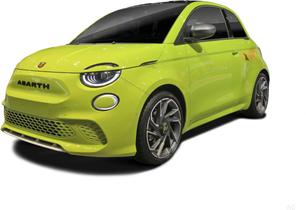
Meet the Abarth 500e, the mad-hatter sibling to the very good and all-electric Fiat 500e, and the Italian brand's first attempt at a bonafide EV hot hatch.
It's tiny, tough and – despite the lack of engine and exhaust – it burbles manically when you fire it up.
So does this mean Italy’s pint-sized, petrol-powered icon has a future in the all-electric era? Let’s go find out.
There are really only four things you need to know about the all-new Hyundai Inster. It's small outside, yet surprisingly big inside. It's all electric. It's cute as a button. And it's as practical as a Swiss army knife.
Actually, there's one more thing. It's cheap for an EV. But it's still not that cheap, given the wave of cut-price Chinese product now on our shores.
So, can the Hyundai Inster carve itself a slice of the entry-level EV market?
It’s not perfect, but it’s everything a hot hatch should be in the electric era — engaging, exciting, and, above all, fun.
The target market for the Inster isn't huge, and Hyundai knows it won't be a runaway best-seller for the brand. But those in the market for a bite-sized EV will find the Inster feels bigger, and drives better, than they might expect.
I’m just going to come right out and say it — I love the look of the Abarth 500e, even if the colour of our test car should be renamed Acid Trip, rather than Acid Green.
I love its perfectly proportioned, hunkered-down hot-hatch styling, the new ABARTH lettering on the body, and the new scorpion logo pasted to the side.
Basically, if you can look at the Abarth and not smile, then you need to find more fun in your life.
Inside, it’s a predictably cramped-feeling space, but it’s all nicely laid out, and the more I use them, the more I like the horizontal drive controllers that don’t eat up the little space you have with a traditional shifter. The materials are a bit hit and miss, though.
The words small but perfectly formed appear here, with Hyundai’s insistence on not having a traditional range-wide design identity allowing them the freedom to create something unique and pretty funky here — though I do see some shades of Suzuki Ignis in the side profile.
It does look fun though, right? With the selfie ring-light-style headlights, Tetris-style rear lights, those swollen guards and the funky alloys.
And you can dial up further with the Cross variant, which gets a tougher, more squared-off look front and back - even if you’re more chance of meeting a bunyip than an Inster on your favourite off-road track.
Inside, the cuteness continues, though some of the scratchy cabin materials definitely point to the entry-level nature of the Inster.
Still, the seat materials, both the cloth and the leather, are lovely and thoughtfully coloured, and the twin screen setup is nice, too. I love the inclusion of a host of physical buttons that control the climate, stereo and the nav.
While I like the addition of the central screen, it’s surprisingly annoying to use — I found myself jabbing at the buttons again and again before it reacts. You need a Stephen Hawking-level intellect to figure it all out.
I was trying to turn off the Abarth Sound Generator, which I'm reliably informed is possible, but after about five minutes digging through sub-menus, I abandoned all hope.
Normally I’d spend a bit of time exploring the back seat, but frankly, once in there I didn't really feel like spending excess time back there.
The Abarth 500e is only around 3.6m long, 1.7m wide and 1.5m tall, and suffice it to say, the space is tight, and you’ll only be using the two seats in the back in an emergency, or for the smallest of kids.
The boot is pretty tiny, too, starting at 185 litres (VDA) with the rear seats up, but growing to 550L (VDA) with the split-fold rear seat lowered.
So, not much to write home about. But criticising the tiny Abarth for a lack of practicality is like criticising a horse because it can’t swim – it’s not really in its job description.
The Inster stretches 3825mm long, 1610mm wide and 1575mm tall, but it rides on a 2580mm wheelbase – the later being bigger than the Hyundai Venue, and almost as big as the Kona.
It has allowed Hyundai to stretch the legroom options in the backseat, which actually gives you more space than the two bigger SUVs mentioned above, helped massively by the fact the Inster's rear pew is on rails, allowing you to slide it right back, and that it reclines a fair way, too.
I'm 175cm and I found I had more than enough leg and headroom, and with the backseat in full La-Z-Boy mode, I could sit back and relax, even on a longer journey.
It's a good thing it's four seats only, though. While the Inster feels longer than it is, it doesn't feel any wider, and even in the front seat you can feel like you're in economy class when you have a passenger on board, with both of you rubbing elbows on the central armrest.
Clever storage abounds though, with hidey-holes, handbag hooks and more dotted throughout the cabin. Opt for the roof box – and wear the efficiency penalty – and you can pop another 75kg worth of gear on the roof.
Also cool is the fact the backseats fold completely flat in the entry-level Inster, upping the storage possibilities. And in the top-spec Cross, the front seats fold down, too, allowing for fairly long items to be stowed. Though why you would need the driver's seat to fold flat is a bit of a mystery, unless you're looking to turn your Inster into an immovable storage container.
Apparently in Korea you can option a mattress that slides over all four seats, but I can't see that taking off here.
The official storage numbers are 280L and 1059L, and the small boot is helped along a little by underfloor storage where you can pop your charging stuff.
Ok, so bonkers thing number one: This Abarth 500e might look like it could fit in your pocket, but it is priced like a much bigger vehicle, starting at $58,900 plus on-road costs for the Turismo variant, increasing to $60,500 for the limited-edition Scorpionissima.
Outside, either trim gets 18-inch diamond-cut alloys, LED lighting all around, a fixed glass roof, the new e-latch front doors (meaning you can just push a button to open the door) from the 500e, along with some performance-focused add-ons, like a front splitter, greyed-out mirror caps, rear disc brakes and new front and rear bumper treatments.
Inside, there’s a leather-and-Alcantara steering wheel, sports seats, aluminium pedals and climate control, while on the tech front, a central 10.25-inch central screen pairs with a wireless charger and wireless phone mirroring, while a second 7.0-inch Driver Display Screen gives you all your driving data.
Oh, and there’s what the brand calls an Abarth Sound Generator, which is all kinds of crazy, but we’ll touch on that in a moment.
The difference between the Scorpionissima and the Turismo, by the way, is style led, with Abarth decals down the sides, and a certificate of authenticity confirming yours is one of 1949 vehicles sold around the world.
The Inster is available as an entry-level model, which comes as a Standard Range for $39,000 before on-road costs, or an Extended Range for $42,500. It then steps up to the Inster Cross, which is $45,000.
For perspective, the Geely EX5 is considerably bigger, and will travel further on a charge, for $40,990 before on-road costs. Then there's the Chery E5, which is now $39,990 plus on-road costs.
Anyway, the Inster nabs 15-inch wheels, dual 10.25-inch screens (one for the multimedia, another for driving info), a six-speaker stereo, Apple CarPlay and Android Auto, cloth seats, two V2L connectors, a wireless charging pad and rain-sensing wipers. The equipment list for the Extended Range is the same, but it rides on 17-inch alloys.
Stepping up to the Inster Cross scores you a unique and off-road-inspired look, but also leather trim inside, a unique design for its 17-inch alloys, heating and ventilation for the front seats and heating for the steering wheel, some extra safety kit and practicality perks, and the option of a sunroof or an exterior roof storage box, the latter of which seriously eats into the driving range.
There’s a single front-mounted electric motor providing the go here, with a total 113.7kW and 235Nm on offer fed through the single-speed gearbox, which is enough to push the 500e from 0-100km/h in 7.0 seconds.
Happily, the way that power is delivered makes it feel faster, and that Sound Generator does a pretty good impersonation of a petrol-powered hot hatch, rising and falling with your inputs.
The Hyundai Inster Standard Range kicks off power proceedings, with a single front-mounted electric motor producing 71kW and 147Nm.
Next is the Extended Range, which shares its outputs with the Inster Cross. Here, the front-mounted motor’s outputs have been ticked up slightly, now producing 84kW and 147Nm.
Those aren’t big numbers, but then neither does either Inster feel particularly slow or underpowered.
Right, there’s one obvious downside to the Abarth experience, and that is that it is fitted with a 42kWh battery that delivers a claimed 253km of driving range.
It’s worth noting that there are three Drive Modes — Turismo, Scorpion Street and Scorpion Track — and that only the first one will deliver the maximum range, because it limits inputs to 100kW and 220Nm.
Engage the other two — I’ve had it locked in Scorpion Track, for example, which gives you all of the power and deactivates one-pedal driving — and you can expect those numbers to drop.
When it comes time to charge, the Abarth 500e is set up for 85kW DC fast charging, which should take you from flat to 80 percent charged in around 35 minutes, as well as a maximum 11kW AC charging, which takes just over four hours to get to fully charged. Or you can plug it into a regular socket, which means more like 15 hours to recharge.
One last caveat: I actually wasn't able to get it to charge, which curtailed my adventures a little bit. I tried three chargers, all of which conjured an error message on the screen, and after a quick call to the folks at Abarth it transpired that a quick software update is required.
Standard Range cars get a 42kWh lithium-ion battery, producing a driving range of 327km. The Extended Range and the Cross get a bigger 49kWh battery, increasing the range to 360kms. Now, that roof box. It does look cool, but you’re going to really need to carry stuff to choose that option, given it increases energy consumption by 25 per cent, reducing the Cross’s range to just 293km.
When it comes to charging, the Inster is set up for 120kW DC fast charging, or 10.5kW AC charging - provided you have that much power available at home, as most wall boxes are more like 7.1kW.
Remember what I said about how just looking at the Abarth should put a smile on your face? Well, driving it paints on an even bigger grin, and it starts as soon as you fire it up.
While most EVs start silently, leaving you wondering if they're on at all, the Abarth takes a different approach, instead leaning on its sound generator, modelled on the exhaust note of the 695, to give you a throaty rumble when you fire it up. It even revs! And yes, you can turn it off (apparently), but why would you?
On the road, electric drive has actually improved the Abarth experience, I reckon, because all the harshness of the drivetrain has been ironed out, instead just leaving this smooth, potent flow of power every time you plant your right foot, with no gear changes or harsh vibrations to get in the way.
The steering is predictably direct, too, and the whole vehicle feels nimble and quick to react to your inputs.
It’s honestly the kind of car that’s fun driving anywhere, be it suburban streets or twisty backroads, and despite having a couple of options parked at my house, I found myself pulled to the Abarth for all of my trips.
Downsides? The ride is firm but comfortable on most roads, but downright uncomfortable when you clang over bumps or road imperfections. You’ll have to decide if that’s a price to high to pay, but I can live with it for the trade off. And while the cabin tech looks nice, but is fiddly and annoying to use.
Finally, the range relegates the Abarth to a second car, or for those who rarely leave the city. Which is a big ask at the price point.
Honestly, the impact electrification has had on vehicles in this class is staggering.
It wasn't so long ago that these micro cars were fitted with underwhelming petrol engines, four- or five-speed gearboxes and all the noise-deadening technology of a tin of beans.
As a result, they were cute, but painful. It always felt like you had to wring their neck to get the most out of them, and when you did, they were loud, buzzy and annoying.
But the Inster is none of those things. While not ludicrously powerful, the electric propulsion offered, and the nature of the way it's produced, feels ample in the little Hyundai, with the acceleration smooth, silent and easy,
It's also just generally quiet. Hyundai says it has double-sealed the doors, used thicker glass and fitted full underbody coverings to reduce the NVH - or noise, vibration, harshness - levels, and all of that, combined with the peace and quiet of an electric motor, have created a mostly blissful cabin experience.
The ride and handling hasn't been through the full Hyundai Australia ride and handling calibration of old. Instead, it's undergone the brand's more modern approach, which is to take the best componentry from what's available overseas and then build the Aussie-spec cars from there.
Either way, it all works pretty well here. Only really big bumps clang into the cabin, with the Inster otherwise riding well over all of the road surfaces we encountered.
The point, I guess, is that it's a drive experience stuffed full of happy surprises. The ride, the acceleration and the refinement are all well up on what you might expect from a city car.
The Abarth 500e is fitted with six airbags, and decent suite of active safety stuff, like AEB, Lane Keep Assist, Traffic Sign Recognition, Blind Spot Warning, auto high beam and and an attention monitor. It’s all pretty subtle, though, and it didn't bing or bong at me once, which was wonderful.
It scored four stars when tested by Euro NCAP.
The Hyundai Inster is yet to be crash tested, but does arrive with a solid safety offering including seven airbags, as well as active equipment like a auto emergency braking (AEB), rear cross-traffic avoidance, lane keep assist, and active cruise control.
The Cross ups the equipment a little more, including a surround-view monitor, blind-spot monitoring and front parking sensors.
It’s an interesting ownership proposition, because the car is covered for three years or 150,000km, which is underwhelming and then some compared to the warranty offerings of its competition, but there is capped-price servicing, at $300 per visit, required every 12 months or 15,000km, which lasts 10 years.
The battery is covered for eight years or 160,000km.
The Inster delivers super long service intervals, requiring a trip to the service centre every two years or 30,000kms, but each service is priced at $655. A Toyota Yaris Cross, for perspective, will see you visit the service centre twice as often, but each visit will only cost you $255, or $510 every two years.
The Hyundai warranty is five years/unlimited kilometres, while the high-voltage battery is covered for eight years.