What's the difference?
Sedans have long been supplanted by SUVs as the family favourite but they still have their charms for those drivers who like something that feels more dynamic on the road.
Enter the limited edition Volvo S60 Recharge Black Edition which sees the return of a plug-in hybrid powertrain for Volvo’s only sedan.
I’ve been family-testing the PHEV variant to see just how practical a sedan is for the modern family, and whether it's rivals, the Audi A4, BMW 3 Series and Mercedes-Benz C200 have anything to worry about.
The Lexus RX holds broad appeal. Families with a bit of money that don’t need a third seating row, older people who love the brand and want a bit of space, and people stepping up into the premium marque from a mainstream brand are all potential buyers.
The fifth-generation version that launched in early 2023 proved to be a significant step up over the previous RX.
Lexus made it more dynamically capable, and there’s been a sharpened focus on refinement, value-for-money and safety credentials.
We spent three weeks getting to know the most affordable RX - the entry-grade Lexus RX350h Luxury two-wheel drive - to see whether it’s worth putting it at the top of your premium family SUV shopping list.
The Volvo S60 Recharge Black Edition proves sedans can still be sexy and an excellent family car, providing your family is on the smaller side. I only have one kid, so it's perfect for our activities and gear. It’s wonderful to drive and has a great features list but it's not without its quirks.
My son thinks it looks cool, and we enjoyed bellowing out a few renditions of the original Batman theme song this week. He has had a lot of comfort in the back seat, too.
It’s hard to look past the value equation of the RX350h Luxury 2WD when comparing it to almost all its competitors. The pricing is on point, but there are some features missing.
However, there are very few (if any) rivals with a true hybrid powertrain (sorry, mild hybrids do not count), so the RX will capture buyers looking for environmental credentials and efficiency without going full EV.
The drive experience is much better than before and it’s all wrapped up in a very stylish package. The Lexus RX should not be ignored.
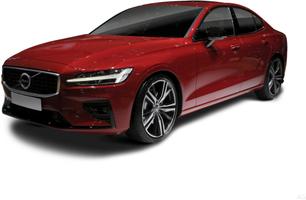
The S60 Black Edition nails it on design. It sports a handsome and sleek shape that manages to look sporty and elegant. It's exactly what you expect a luxury sedan to look like.
My seven-year old dubbed this the Batmobile, and for good reason, every accent is black!
The grille, badge and 19-inch five-spoke alloys look aggressive against the 'Hammer of Thor' LED headlights and make this design look hot.
You better like black paintwork, though, as that is the only choice for this variant.
The interior hasn’t seen any changes for the 2025 model and it seems Volvo is streamlining most of its interiors to look the same.
You could find this dashboard in most of its cars, which is fine because it’s a good-looking treatment full of soft-touchpoints and high-quality materials. But there’s also nothing that sets the Black Edition apart from its stablemates. It would be nice to see a point of difference.
The dashboard is headlined by the 9.0-inch touchscreen multimedia system and a 12-inch digital instrument cluster. You have some other nice focal points in the large sunroof and massive air-vents, which add some interest to the dash.
Overall, it’s a pleasant interior but maybe not as fun as some of its rivals.
Across its five generations, the RX has held significant visual appeal - especially the still-handsome second-gen version that was the first RX sold Down Under. The first-gen model skipped Australia.
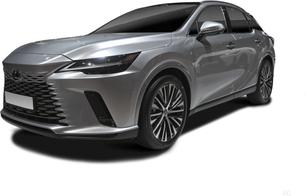
The new model that launched in 2023 is a clear evolution of the car that came before, but it’s been softened and sharpened in the right areas, giving it one of the most appealing designs in its segment.
The proportions and design elements like the squat stance, unique C-pillar treatment, slimline headlights and nicely sloping roofline give it a sporty look.
In fact, I reckon it might be the best looking Lexus available today - not including the jaw-droppingly beautiful LC coupe and convertible, of course.
The interior is modern and feels like an evolution of Lexus’ previous cabin design - but elevated. The gloss black section of the dash helps here.
Levels built into the dash break up the bulk, but the interior is very grey. It could do with a dash of colour.
The synthetic leather seat trim doesn’t look premium. If you want a more expensive feeling RX, you need to pay more for a higher grade.
The cabin of the S60 is fairly practical with the front row feeling spacious for my 168cm height. It’s a low car, so if your knees squeak you might find it annoying to get in and out of!
The comfort of the front seats cannot be understated. They feature a two-position memory function, lumbar- and side-bolster adjustments and under-thigh extenders. Plus, with the heat and ventilation functions, you’ll look forward to a long journey.
Because of the sloping roofline, it’s a bit awkward to get in and out of the back seat but once you’re in there is a stack of room (behind my driving position) and the outboard seats hug you into position, so you don’t move around in corners.
Seats are comfy for long journeys and outboarders enjoy heat functionality, too. The pillar-mounted directional air vents are super practical and the hardened kickplates are a godsend for parents with wildlings like my son, who seem to want to put their feet on everything.
The transmission tunnel is massive, though, so keep the middle seat reserved for kids only.
Up front, individual storage isn’t as great as you might hope for with the glove box being the largest cubby on offer. The middle console is literally a tray and it doesn't fit my iPhone 15 Pro Max (I have a thin case, as well!).
There's no centre console storage aside from the two cupholders, and this variant misses out on a wireless charging pad, so my phone and 'bits' have been shoved into the cupholders or on the passenger seat, which is a tad annoying. The storage bins in each door feature a small drink bottle holder but are, again, shallow.
Individual storage is a bit better in the rear with two net map pockets, two large cupholders in the fold-down arm rest, as well as a drink bottle holder in each storage bin.
Technology is well-rounded and the multimedia system (powered by Android Automotive) is easy to use, but curiously you don’t get Android Auto in this model!
You do get a bunch of built-in apps like Google Maps and Spotify. There's wired Apple CarPlay and satellite navigation, too.
You get a head-up display and the digital instrument cluster looks high-end with its graphics and shows your sat nav directions, which is always handy.
Charging options throughout are good with two USB-C ports in each row, while the front also gets a 12-volt socket.
The boot is slightly smaller compared to its rivals at 427L thanks to the electric components but it is still well-sized for my grocery run and it’s not too difficult to grab things that slide to the back.
You get a 'tyre mobility kit' (rather than a physical spare) underneath the floor and I like the way you can hang the home charging cable bag out of the way.
The Black Edition has a hands-free tailgate which is operated by a kick-function. But you don’t have an electric button on the lid and the kick-function didn’t always work to close it! That said, the lid isn’t heavy, so it’s nothing to split hairs over.
The RX is a five-seat only proposition in this generation - the previous model had a seven-seat option - so if you need a third row you can look at the Lexus LM people mover or massive LX 4x4 SUV, or at any number of other three-row lux SUVs like the Volvo XC90 or new Mazda CX-90.
That doesn’t mean the cabin isn’t practical.
Up front the seats offer excellent comfort levels and ample upper body support, but not a lot of hip support.
Lexus has changed up the door handles for the new RX and it can be complicated - initially.
The interior handles bamboozled every new person that got in my press car over the three week loan. But once you realise it’s a simple push of the thumb on the handle’s thumbpad and a gentle push, it all makes sense.
Lexus calls the electrically activated door handles an ‘e-latch’. Is it tech for tech’s sake? Probably.
I recently reviewed the Lexus LM and commented on how much I like Lexus steering wheels and that’s true of the RX, too.
It has clearly identifiable controls and feels nice in your hands. Thankfully, the cruise control buttons are housed on the wheel too, so no annoying stalk on the wheel.
There’s plenty of space across the front row so you should avoid the awkward driver-passenger elbow bump on the centre armrest.
Under the armrest is a huge central bin that opens on the driver and passenger side. There’s also a big covered storage nook forward of the shifter and another ledge above that, as well as a sizeable glove box.
The doors have ample storage room for bottles, but the space is almost too wide. My bottle slid around when driving so I had to lay it down.
The centre console houses two big cupholders with adjustable depth in one of them. Clever touches like this and the central bin add to the appeal.
As with the Lexus LM, I am a fan of the new Lexus multimedia set-up. It has an easy-to-navigate menu along the side, easy wireless Apple CarPlay connection, and visually appealing graphics.
It’s a world away from Lexus’ previous system. That frustrating touchpad is, thankfully, in the bin.
I quite like the gear shifter with its unusual gate and even the indicator feels and sounds premium.
Small rear windows make for a rear three quarter blind spot, but visibility is otherwise good.
On a side note, the RX has very strong air conditioning - perfect for an Australian summer.
Jumping into the second row, there’s plenty of space all around and no shortage of head, leg, knee and shoulder room. Although foot room under the front seats is tight.
As with the front seats, the rear row offers comfortable seating. Kids should be happy back there.
There’s only a small transmission tunnel so middle-seat legroom is good. And in great news for passengers, the rear backrests recline.
Lowering the 40/20/40 split-fold rear seats for more cargo space is done via a lever on the side of the outboard seats, or by a button in the boot area. There are ISOFIX clips on the two outboard seats.
Other amenities in the second row include map pockets, two USB-C ports, knee-level air vents, climate control, and a pull-down armrest with pop-open cupholders.
Open the power tailgate and you’ll find cargo space of 612 litres with all seats in place, or 1678L with the second row stowed.
That’s a decent amount of space but not class leading. The Mercedes-Benz GLE has 630L and the VW Touareg can swallow 810L.
There’s no under-floor storage because that’s where some hybrid hardware is housed. You will find audio speakers, nice carpet, a cargo blind, two 4.0kg hooks and three top tethers. No spare, only a tyre repair kit.
There are two variants for the S60, the mild-hybrid Ultimate or the plug-in-hybrid Recharge Black Edition, the latter being our test model.
The Recharge Black Edition is priced from $88,990, before on road costs, which positions it towards the lower end of the market, with the Audi A4 Avant 45 TFSI Quattro S Line MHEV being the most affordable at $85,700 MSRP.
Next up is the Mercedes-Benz C200 MHEV at $89,900 MSRP and then the BMW 330e M Sport PHEV at $98,700 MSRP.
The interesting thing, though, is you don’t pay extra for any packs on this model, which is rare for a luxury brand. It’s pretty well-specified already.
Luxury features include powered front seats that have adjustable side-bolsters, lumbar support and two-position memory function, as well as heat and ventilation functions.
Other items include heated rear outboard seats, a heated steering wheel, a panoramic sunroof and beautiful Nappa leather upholstery throughout.
Practical features include dual-zone climate control, handsfree boot opening and double locking, which is when you lock the car from the outside and if there is forced entry via a smashed window, for example, the doors still can't be opened, even from the inside.
Technology is robust with a 9.0-inch touchscreen multimedia system including in-built Google Apps (Google Play and Maps, YouTube, and Spotify).
Other items include wired Apple CarPlay, the 'Volvo Car Services App' with a four-year subscription and over-the-air updates, 12-inch digital instrument cluster, Bluetooth connectivity, digital radio and a 15-speaker Bowers & Wilkins 'High Fidelity' audio system.
Unfortunately on this variant, you miss out on Android Auto capability and a wireless charging pad.
The range-opening RX350h Luxury 2WD petrol-electric hybrid starts at $86,904, before on-road costs, and for that amount, the standard specification list is healthy. But it doesn’t include everything.
As well as a long list of standard safety gear (see section below), the RX350h comes with three-zone climate control, heated and eight-way adjustable power front seats, electric steering wheel adjust, rain-sensing wipers, a 14-inch multimedia set-up with wired Android Auto and wireless Apple CarPlay, digital radio, sat nav, a 12-speaker audio system, five USB-C (and one USB-A) ports and more.
It is missing a few items, however, that should be standard, such as a head-up display and wireless device charging. Those features are available as part of an options pack - or 'Enhancement Pack' in Lexus speak.
For $5000 more you get those two things and a panoramic sunroof, ventilated seats, a more digital instrument cluster and other goodies.
You can opt for an all-wheel drive version of the 350h and that adds just over $3500 to the price. If you want the same powertrain but more gear then you’ll need to step up to the $110,575 Sports Luxury.
There’s also the petrol-only RX350 in F Sport and Sports Luxury guise, as well as the flagship RX500h F Sport Performance hybrid that tops out at $124,675.
Looking at the opening price of some of its rivals, Lexus has most of them beat.
The Mercedes-Benz GLE300d starts from $144,900, the BMW X5 xDrive30d is $134,900, Porsche Cayenne starts at $138,700 and the Volvo XC90 B5 Ultimate Bright kicks off from $100,990.
Only the Volkswagen Touareg 170TDI ($89,240) and Jaguar F-Pace P250 R-Dynamic ($83,700) are close on price.
The S60 Recharge Black Edition’s plug-in hybrid powertrain features a 2.0-litre, turbo-petrol, four-cylinder engine and an electric motor that combine to produce 340kW of power and 709Nm of torque.
It has serious kick and can do a 0-100km/h sprint time of just 4.5-seconds. The eight-speed auto transmission is smooth as silk and creates a refined on-road driving experience.
Powering the RX350h is a series parallel hybrid system consisting of a naturally aspirated 2.5-litre four-cylinder petrol engine, a front-mounted motor and a nickel-metal hydride battery.
Lexus doesn’t provide combined torque outputs for the hybrid, but total power for the system is pegged at 184kW.
This drives the front wheels only via a continuously variable transmission (CVT).
The official combined cycle fuel consumption figure is an extremely low 1.4L/100km and I did two economy tests this week covering a healthy mix of open-road and urban driving.
Charging it every day for four days, gave me a real-world usage of 3.8L/100km and charging it once in three days gave me a trip readout of 5.6L/100km.
The PHEV powertrain has proven itself economical whether you dedicate yourself to the charging or not, so that’s pretty good.
The Black Edition features a Type 2 port for AC charging, but it can’t be hooked up to a DC fast charger.
This doesn't worry me because even on a standard domestic house socket you can charge the 19kWh battery from 0-100 per cent in just five hours, which is pretty fast for a PHEV.
You also get up to 90km of WLTP-rated pure electric driving range in this, which is good for a plug-in.
The official combined cycle fuel consumption figure for the RX350h 2WD is 5.0 litres per 100 kilometres, with CO2 emissions of 114g/km. You won’t get figures like that in a petrol or diesel competitor.
Over three weeks of mixed city, country, urban and freeway driving, I recorded 6.8L/100km which is not too bad given some of my spirited driving. The trip computer said 7.0L which is close to my figure.
The RX350h takes premium unleaded petrol and has a 65-litre fuel tank, so expect a range of around 950km based on our real-world consumption number.
A lot of people think driving a Volvo means it’s stately or boring. Get in the Black Edition and it will change your mind.
The power it has is awesome and the pick-up will blow your hair back. Power delivery feels effortless.
The firm suspension and steering provide great road feedback and dynamic handling. While the suspension is firm, the comfort in the cabin is high and you don’t wince going over a pothole. The cabin is very quiet which makes it feel refined, too, even at higher speeds.
You do feel a bit low when you’re sitting next to a big SUV at lights but visibility is pretty good with the wide windows and pillars that don’t get in the way.
I've been precious about going over speed bumps or exiting a ramp, because it's easy to scrape underneath the nose as the S60 sits quite low. But on a whole it's pretty easy to park.
The 360-degree view camera system is clear and has a birds-eye and reversing view but I'd like to see both feeds pop up at the same time. It's easy enough to flit between the views when needed.
The old RX was competent and even nice to drive but not a patch on the likes of the BMW X5. The new-gen RX improves on that in a big way.
It offers solid acceleration from a standing start. Lexus says 8.1sec from 0-100km/h - without giving you chills. The sportiest RX is the 500h Performance hybrid and that covers the same distance in 6.2sec.
The transition from electric power to petrol propulsion is more evident in this model than it was in the LM350h people mover I tested recently - the RX is a little noisier. The CVT doesn’t help this, offering up an uninspiring engine note.
It is, however, a much more fun car to push into tight bends than the previous RX. It remains reasonably flat in corners, and pulls out of tem with ease, but can’t compare to the dynamics of the dearly departed IS sedan.
The 19-inch tyres have large sidewalls and as a result soak up harsh bumps on the road. The non-adaptive suspension is tuned for better dynamism, meaning the ride quality is on the firm side.
The front-wheel drive RX lost traction for a second on a sweeping uphill section of my drive route, but the electronic traction systems otherwise kept the big SUV in check.
But around town in urban areas, there is very little to complain about behind the wheel of the RX350h.
The S60 Recharge Black Edition has just been launched, so it’s not covered by its siblings’ maximum five-star ANCAP safety rating from 2018 but it features all of the goodies you’d expect from a Volvo.
Standard features include blind-spot monitoring, rear collision warning, forward collision warning, rear cross-traffic alert, lane departure alert, lane keeping aid, traffic sign recognition, an intelligent seatbelt warning, a head-up display, adaptive cruise control, 'Pilot Assist', a tyre mobility kit and a 360-degree view camera system, as well as front, side and rear parking sensors.
The S60 Black Edition also features Volvo designed safety items like the 'Side Impact Protection System' (SIPS) that reinforces the car's steel framework at the sides and disperses energy in a side collision.
It also features a 'Whiplash Injury Protection System' (WHIPS), which if hit from behind, the headrests move with the occupants to limit injuries.
One of the highlights is the programmable spare key where you can limit audible levels and speed limits. Which is perfect if you have a teenager who borrows your car. And the spare key is bright orange, so there's no sneaky 'whoops, I grabbed the wrong key' moments!
The rear row features two ISOFIX child seat mounts and three top-tethers. You'd be doing very well to fit three child seats in, so two will fit best.
The RX comes packed with standard safety gear and the SUV was awarded a maximum five-star crash safety rating from ANCAP in 2022.
Just some of the inclusions are auto emergency braking with pedestrian (day/night), cyclist (day/night) and motorcyclist (day) detection, intersection assist, emergency steering assist, driver monitoring, lane keeping aid and lane departure warning, adaptive cruise control, front and rear parking sensors, blind spot monitor (including stationary) with rear cross-traffic alert and safe exit assist to avoid 'dooring' incidents.
I must say, Lexus’ (and parent company Toyota’s) driver assistance tech has come a long way.
In the early days of the pandemic during a rare non-lockdown period in Melbourne, I drove from Melbourne to Sydney in the previous-generation Lexus RX200 Sports Luxury.
The lane keeping system and adaptive cruise control were shockingly underdone. The cruise control would simply stop working when you encountered even a slight downhill section.
Not anymore. The new, smoother lane keeping set-up uses subtle wheel adjustments, unlike the ping pong effect of the previous RX, and the cruise system is now very much in control of the speed.
The Lexus safety suite now operates without too much intervention and is hard to beat among its key rivals.
The S60 comes with a five-year/unlimited km warranty, which is a normal term for the class.
You can pre-purchase either a three- or five-year servicing plan and the three-year plan costs $1750, while the five-year plan costs a flat $3000 or an average of $600 per service, which is reasonable.
Servicing intervals sit at every 12 months or 15,000km, whichever occurs first.
The RX350h is covered by a five-year, unlimited-kilometre warranty, and the servicing schedule is every 12 months or 15,000km.
There’s a capped-price servicing plan lasting five years and it will cost $695 per service. That's significantly less than some rivals like the Mercedes GLE.
The RX is covered by the 'Lexus Encore' loyalty program and includes complimentary service loan cars, fuel offers as well as discounts and other offers with Lexus partners.