What's the difference?
You might call it six degrees of Kombi separation. Somewhere, somehow just about all of us have a VW bus lurking in our family and friends' back story. And this is the latest version of that familiar box on wheels to hit the Aussie market.
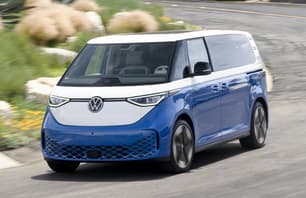
It’s the premium, sportier, AWD GTX version of the pure-electric Volkswagen ID.Buzz.
This one-box wonder hits the retro-futurist ball out of the park and we attended its local launch to explore whether what’s under the skin supports the promise of its stunning exterior.
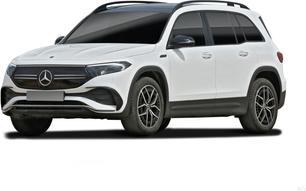
Iconic/gangster G-Class Geländewagen aside, is there a cooler-looking Mercedes-Benz SUV than the GLB and so – by association – its electrically-powered EQB twin?
And while we're asking questions, does the electric connection make the EV version even more so?
Let’s take a deeper dive into the new EQB – a striking SUV that Mercedes reckons will be its bestselling EV for the foreseeable future. Because there's much more to this Benz than meets the eye.
The only way to make this car cooler would be to add a split fold-out windscreen and a tube steel luggage rack on the roof.
It’s fast, super practical, comfortable and guaranteed to put a smile on the face of premium family buyers ready to go for something different. And that smile will extend to just about everyone who lays eyes on it. I love it.
Note: CarsGuide attended this event as a guest of the manufacturer, with travel, accommodation and meals provided.
The EQB is a likeable yet complicated machine.
On one hand, the high pricing is a real hurdle, even in the base 250, while the 350 4Matic costing the wrong side of $110K driveaway can’t even be had with seven seats. What is the point of it?
On the other, though, the EQB is roomier than its appearance suggests, way lovelier inside than anticipated, and – especially after allowed to really be driven hard and fast – a whole lot more Mercedes-Benz in the way the 350 4Matic moves, steers, grips, rides and stops.
As a result, we’d skip the capable but bland 250 and try to haggle hard on the price of the altogether too-expensive yet compelling 350 4Matic instead. It’s the EQB to be in.
The ID.Buzz GTX is characterised by a unique front bumper with new integrated daytime running lights near its outer edges and a narrower black honeycomb grille.
GTX badging and the exterior mirror housings are finished in high-gloss black, and 21-inch alloy wheels are standard.
The rich ‘Cherry Red’ solid paint finish of the launch test car is exclusive to the GTX and it’s a fair bet many buyers will stump up the extra $4K required for a two-tone treatment, in this case with ‘Mono Silver’ as the highlight colour.
The interior is familiar ID.Buzz territory, with the long, broad dashtop pushing the windscreen and small front windows beside it into a quintessentially Kombi ‘bay window’-style design.
A 12-inch central multimedia screen sits proud of the multi-layered dash, and a slick 5.3-inch LCD instrument and car data display is fixed in front of the driver.
A black headliner dials up the sporty feel, the electric front seats are a GTX-specific design and the synthetic diamond pattern microfleece trim is highlighted by red contrast stitching and piping.
The red cross-stitching extends to the steering wheel and smile-inducing stainless steel ‘play’ and ‘pause’ symbols on the accelerator and brake pedals are retained.
The sub-zero cool exterior design manages to merge with a more restrained and practical interior perfectly. VW has solid retro form with the ‘New Beetle’ from the 1990s and this primo ID.Buzz looks amazing. It drew an instant crowd of curious onlookers every time we stopped.
The EQB does not employ a dedicated EV architecture – sometimes referred to as a ‘skateboard’ platform – like the Tesla Model Y, or for that matter the brilliant Hyundai Ioniq 5, Kia EV6 and Genesis GV60 at around the Benz’s price points.
By this, we mean that it was originally designed as an internal combustion engine (ICE) vehicle. In this case, what lies beneath is the MFA2 platform, first seen in the redesigned A-Class hatch back in 2018, and applied to all transverse-engined Mercedes models since.
The upshot here is that there are some compromises as a result compared to the aforementioned EV-only alternatives, namely concerning packaging as well as weight distribution in some cases.
Like we said earlier, the EQB’s design is eye-catching and quite handsome. It is clear that the success of the GLB that spawned it is partly attributed to the chunky, almost function-over-form tall-boy utilitarian styling. That ‘W’ shaped window-line kink is an interesting visual feature too.
The changes from GLB to EQB do give the EV definite points of difference, from the front-end’s black flat panel and fibre optic light that connects the (blue-highlight) headlights, to the curved strip LED tail-lights and bumper-sited numberplate mount.
We reckon the 20-inch AMG turbine wheels really do enhance the EQB aesthetically as well, but of course they’re an option on the 250. Though probably not in Gold Rose.
The ID.Buzz GTX is offered in shorter wheelbase variants with five- and six-seat configurations for other markets, but here it’s seven seats and long-wheelbase only.
At close to five metres long and just under two metres wide, it’s road-trip ready with heaps of breathing room for all seven occupants.
Placement of the gearshift on the right-hand side of the steering column frees up extra space in the front and there’s heaps of storage including a moveable (and removable) centre console unit between the front seats with pull-out drawers at either end, two trays in each door (the lower one offering room for multiple large bottles), a decent glove box and a fold-out dual cupholder unit.
There’s also an oddments shelf in front of the passenger, a wireless device charging slot in the dash and adjustable fold-down armrests on both sides of the front seats.
Pull the handle on the power-opening sliding side doors and the second row opens up with three seating positions offering hectares of room in all directions.
This row can be moved 200mm longitudinally if a turf war erupts with those in the third row. And storage is great with two pockets and a fold out table on each front seatback as well as huge door bins with waste baskets included. There are also adjustable vents with temperature control in the roof.
There’s enough head and legroom for adults in the third row although the backrest is relatively upright. Even access is straightforward and there are numerous storage trays, cupholders, air vents and storage slots back there.
Power across the cabin runs to two USB-C ports in the dash, another in the front passenger area and four USB-C charging sockets in the rear.
Boot space increases from a handy 306 litres with all seats up to 1340 litres with the 50/50 split-folding third row down, and 2469L with it and the 60/40 split second row lowered. That’s plenty.
And that 1.6-tonne braked trailer towing capacity means a jet ski, even a mid-size camper trailer, is within hauling range.
The power tailgate is welcome and the rear of the boot’s load platform sits above two storage boxes. But you won’t find a spare of any description back there; a repair-inflator kit is your only option. So beware, a flat could really suck the air out of this mobile family room.
As with the popular GLB that spawned it, there’s more to the EQB than meets the eye.
Photos mask the German electric vehicle’s considerable length and height as well as the substantial space offered inside, giving the Mercedes a handy advantage compared to premium alternatives like the Volvo XC40 Recharge, the Genesis GV60 and BMW’s recently announced (and quite handsome in the flesh) iX1 due early next year.
In fact, the EQB’s lengthy 2829mm wheelbase accommodates the batteries as well as impressive cabin packaging flexibility. Its 4684mm body is actually 26mm longer and 37mm higher than the larger, current-shape (X253) GLC, though width is identical to the EQA, making this a long, tall but quite narrow SUV proportionally speaking.
That expansive feeling is boosted by deep side windows offering reassuring all-round vision, boosted by an excellent driving position. All launch vehicles had the AMG sports seats (optional on the EQB 250, so we can’t speak for the base model), but as tested, they provided hours and hours of comfort and support. Loads of adjustability also help.
The EQB’s dash design is attractive and contemporary, though it can also seem daunting at first, requiring time to learn and understand where all the switchgear and controls are. The ‘Hey, Mercedes’ voice command mostly works well, too, and can provide additional tuition. The multimedia screen can be swiped like a tablet/iPad, or controlled via a fiddly touchpad on one of the steering wheel spokes.
Once mastered, the layout is logical and operation clear… with the exception of the drive selector on the right-hand side, which can be confused for an indicator and so knocked out of ‘gear’ and into Neutral on a regular basis. This has been a two-decade-long criticism of Mercedes models.
As with most MFA2 vehicles, the interior design and quality are a big step forward compared to earlier efforts. Multi-configurable digital instrumentation (including an elegant uncluttered mode), gorgeous turbine-look vents, a row of classy toggle switches for the main buttons and a great steering wheel are highlights to behold. Storage seems endless, reinforcing the practical nature of this cabin.
Speaking of which, stepping into the rear (second row) seats further underlines the EQB’s spaciousness. Entry/egress is easy due to wide-opening doors, taller folk should find ample room for knees, legs and (especially) heads, and the (slightly reclinable) backrest does its job. Comfy if firm cushions also slide forward (by up to 140mm) when required.
That’s to aid third-row access (where applicable). To that end, the second-row seats also tilt to allow people to squeeze past. Note, though that this is really a kids-only area, rated for occupants no taller than 1.65 metres. Surprisingly cosy, both chairs are OK for short trips, but longer ones would be a stretch too far except for the smallest passengers.
Keep in mind that all outboard middle and rear seats where fitted have ISOFIX latches for child seats.
Luggage space is another EQB bonus, offering 130 litres with all seven seats up, or 495L with the third-row folded. Drop the middle row and there’s 1710L (or 1620L in seven-seater versions). These figures are between 20L to 60L down compared to the GLB.
Note, too, there is no spare wheel fitted. Just a tyre-repair kit.
The new ID.Buzz GTX 4Motion is priced at $109,990, before on-road costs, which puts it in the same price zone as a diverse range of large, primo people haulers.
On price, it competes with three-row EVs like the Kia EV9, LDV Mifa 9, and if you stretch the price equation a little further, the Zeekr 009. But in terms of style and personality, this machine lives in a world of its own.
Maybe its VW California Beach sibling comes closest, however that van’s traditional turbo-diesel powertrain stands in stark contrast to the ID.Buzz’s pure-electric vibe.
Once you’ve crested the $100K mark, it’s fair to expect a healthy list of included features and the ID.Buzz GTX doesn’t disappoint.
Aside from the performance and safety tech we’ll get to shortly, the highlights include adaptive cruise control, auto LED matrix headlights, 13-speaker (plus sub-woofer) Harman Kardon audio with digital radio, wireless Android Auto and Apple CarPlay, three-zone climate control, a panoramic (dimmable) glass roof, 30-colour ambient lighting, power-adjustable heated front seats, heated (outer) rear seats and 21-inch alloy rims.
There’s also a head-up display, a heated steering wheel, rain-sensing wipers, microfleece seat trim, keyless entry and start, electric side doors and tailgate (the latter with hands-free functionality), ‘Ask IDA’ voice control and dark tinted windows.
That’s a strong, class-competitive value equation. Metallic or pearl effect paint will set you back $1890, the two-tone treatment is $4090 and black 21-inch alloys add $380.
Tricky one, this.
Kicking off from $87,800 (all prices are before on-road costs), the EQB 250 front-wheel drive is nearly $24,000 more expensive than the 1.3-litre turbo petrol-powered GLB 200 FWD equivalent.
From a numerical power-output point of view, however, the GLB 250 4Matic (which adds a 2.0-litre turbo petrol engine and all-wheel drive) only costs $10,265 less, which evens things out a bit more.
But wait. To match the GLB 250 4Matic spec, you’ll need to tick the $2900 third-row seats option box in the EQB 250, while AWD is unavailable, even as an option.
An electrified future comes neither cheap nor without compromise, no matter how much you frame it.
At least that $87,800 (which sits neatly between the EQA and EQC EV SUVs) does bring some interesting technology, starting with a 140kW electric motor mounted up front, as well as a sizeable 66.5kWh battery with a rated range of up to 371km (WLTP).
For more power and AWD, you’ll need the EQB 350 4Matic priced from $106,700, adding a second, rear-mounted electric motor for all-wheel-drive traction, upping the power output ante to 215kW, though range drops slightly to 360km.
But the latter is not available in seven-seat form as in some overseas markets, due to weight-related packaging safeguards. Sorry. It’s 250 or nothing if you need a third row.
On the safety front, you’ll find Mercedes’ Driver Assistance Package that includes autonomous emergency braking, blind-spot monitoring, lane-keep assist and adaptive cruise control, as well as evasive steering and a ‘Parking Package’ featuring front and rear parking sensors and a surround-view camera.
Both models also boast LED headlights with high-beam assist, keyless entry/go, a Nappa-sheathed leather wheel, two 10.25-inch digital screens (for instrumentation and multimedia touchscreen), artificial leather upholstery, electric and heated front seats, dual-zone climate control, ambient lighting, ‘Hey, Mercedes’ voice control, a 10-speaker audio system, digital radio, wired Apple CarPlay/Android Auto, a wireless smartphone charger, a sensor-activated powered tailgate and alloy wheels (19-inch on 250 and 20-inch on 350 4Matic).
Keep in mind too that adaptive dampers are standard across the range.
Along with that second motor and AWD, the EQB 350 4Matic also adds a panoramic sunroof, sports seats, microfibre trim inserts, a flat-bottom steering wheel, illuminated door sills, a top-stitched dash and an AMG body kit.
For its first year on sale, the Edition 1 ($9100 extra on 250 and $3900 more on 350 4Matic) ushers in the AMG body kit on 250, Gold Rose 20-inch alloys, a Night Package with darkened highlights, illuminated sills, unique colour leather trim and vents, a different key, AMG mats and backlit interior elements.
Buyers of the EQB 250 can also choose other packs including an AMG Line Sports Package for $4300 and a $3000 Vision Package brandishing a Burmester audio upgrade and sunroof, while both models can be had with a $2500 MBUX Innovation pack offering a head-up display, MBUX Interior Assist that ‘senses’ hand gestures for the touchscreen and other functions, as well as MBUX Augmented reality for the standard navigation system.
At these prices, we'd argue they ought to be standard on every EQB...
There’s also a Mercedes-endorsed Wallbox option from $1710 if your home/work residence qualifies, bringing a Type 2 AC Charger, 22kW, single-phase and three-phase charging. A free Chargefox subscription is also expected to be announced shortly.
Direct, all-electric EQB rivals are very thin on the ground. Those optional third-row seats on the 250 are unique in the sub-$100K EV SUV field, with only the larger and more-expensive Tesla Model X offering the same. For now.
The EQB 350 4Matic, meanwhile, might offer a surprising amount of space and practicality, but at its six-figure starting price, it seems expensive for what you get.
The GTX is a twin-motor AWD, the front unit generating 80kW/134Nm and the rear 210kW/560Nm. Total output is 250kW/590Nm which boosts towing capacity from 1.0-tonne in the single-motor ID.Buzz to 1600kg.
A single-speed transmission sends drive primarily to the rear wheels to maximise efficiency, the dual-motor set-up able to direct power to the front axle as required during acceleration or to manage available traction.
As with the related EQA, the EQB uses an asynchronous motor and a single-speed reduction gear transmission under the bonnet to drive the front axle. In the 250, it makes 140kW of power and 385Nm of torque.
Moving on to the 350 4Matic, it delivers 215kW and 520Nm, since a second permanently excited synchronous motor is fitted on the rear axle. This slashes the 0-100km/h acceleration time from 8.9 seconds to 6.2s, though both offer a 160km/h top speed.
This is despite a heavier kerb weight (2153kg, up from 2059kg). Power to weight ratio for the 250 is 68kW per tonne, compared to the 350 4Matic’s 99.9kW/tonne. That second motor sure makes a difference!
Both models use a 66.5kWh lithium-ion battery pack fitted between the axles, with a maximum 11kW AC and 100kW DC charging capability.
As with most electrified MFA2 models, front suspension is via MacPherson-style struts while the rear brings a multi-link arrangement. Steering is by electrically assisted rack-and-pinion.
The ID.Buzz GTX’s 86kWh lithium-ion battery delivers a claimed (WLTP) range of 473km and the car uses a CCS Type 3 socket. VW includes a Mode 2 and Mode 3 cable as standard.
The claimed 10-80 per cent 200kW DC fast charge time is 26 minutes, while the same top-up takes nine hours at a maximum 11.0kW AC capacity.
Claimed energy consumption on the combined (urban/extra-urban) cycle is 20.2kWh/100km (WLTP) and over several hundred kilometres of mainly B-road and freeway running on the launch we saw an average of 24.5kWh/100km, which isn’t out of order given the type of driving involved.
Using WLTP figures, the EQB 250 has a combined consumption rating of 20.4kWh per 100km, down from the EQB 350 4Matic’s 21kWh/100km.
Maximum range is rated at 371km and 360km respectively. Note that due to challenging flood-water and torrential rain weather conditions, on-road real-world figures were not available during the launch drive.
The EQB offers varying levels of energy recuperation to help recharge the battery pack. In ‘D Auto’ it figures out the level of resistance automatically, but drivers can also choose to do this manually via ‘D+’ that provides coasting, ‘D’ that brings mild regeneration off-throttle, and ‘D—’ that activates maximising regen for close to single-pedal driving. These are paddle activated.
Cables for home charging with three-prong outlets are included – an eight metre long one plus a five metre public charging cable.
Mercedes says that using a 100kW DC charger will take an EQB from 10-80 per cent charged in 30 minutes, while an 11kW AC public outlet needs 4.1 hours and at home using a regular 3kW 10-amp socket requires at least 25 hours.
Despite the fact that it weighs in at around 2.8 tonnes (2780kg), Volkswagen Australia says this dual-motor ID.Buzz accelerates from 0-100km/h in 6.4 seconds and on to a 160km/h maximum velocity, if you dare.
And there is always some serious oomph lurking under your right foot. Trundle along at 65km/h, pin the accelerator, and in roughly two blinks of an eye you’re doing 95km/h.
Proportionally, this car is like a loaf of bread on wheels - about as high as it is wide. And on the windy launch drive we were buffeted a bit, the car moving sideways slightly when hit with a gust. But overall, it remains stable despite its proportions. That said, some wind noise comes over the bluff nose on the freeway, but never to an alarming degree.
The ID. Buzz rides on VW’s Modular Electric Drive (MEB) platform and there’s been past criticism of the short-wheelbase versions' ride quality, but there are no such issues here.
Suspension is by struts at the front and semi-trailing arms at the rear and this GTX has had a suspension retune with particular attention paid to key components, including the dampers.
On rural roads that have seen better days, dotted with potholes, bumps and thumps, a combination of that suspension retune and the longer wheelbase helped the GTX handle it well.
There are five drive modes with Comfort the default. Eco smooths out acceleration, tapers the climate control and reduces overall power, while Sport dials up the powertrain, suspension and steering. Traction optimises the AWD system for loose or slippery surfaces and Individual allows you to cherry pick various attributes for a custom set-up.
Steering is progressive rate and you can feel it loading up nicely as you head into a corner. Not the last word in terms of road feel, but the car points accurately and turn-in is nice and progressive.
At the same time you’ve got the electric motors constantly shuffling drive between the front and rear axles, helping you out if you decide to explore the car’s sporty nature and have a crack in the corners.
Tyres are Hankook Ventus S1 Evo3 EV specials (235/45 fr - 265/40 rr) and in long, sweeping bends, taken at pretty decent speed, they grip hard. Even on coarse-chip B-road surfaces there’s a bit of rumble but it’s far from a roar.
Braking is by large (358mm) ventilated discs in the front and, believe it or not, drums at the back. A well-designed, modern drum brake can work effectively and the regenerative braking in an EV like this is a big factor in terms of washing off speed.
In terms of lower speed manoeuvres, you’ve got a 360-degree camera view as well as a reversing camera and front and rear parking sensors. If you really need some help, Park Assist Plus will get the job done for you.
In terms of ergonomics, we spent hours behind the wheel and the front seats remained comfortable and supportive in terms of lateral grip.
Speaking of grip, the steering wheel is nice to hold. And the cool little 5.3-inch instrument and car data display is clear as a bell, and the large 12-inch media screen is easy to use and working through the different screens is largely intuitive.
The most remarkable thing about driving the EQB is how similar the 250 and 350 4Matic seem initially, until when push comes to shove.
Around town, both rise up to meet brand expectations. Easy and smooth off the line, acceleration is sufficiently brisk in the 250 and noticeably stronger driving the 350, as you’d expect in a two-motor EV. Progress is spirited, smooth and refined.
We're also grateful that the engineers seem to have cheekily dialled in connected and agile steering, imbuing the EQB with a likeable athletic attitude that’s just right for weaving in and out of tight traffic spots. Which is quite a feat really, given this car’s substantial size and mass.
Perhaps more surprising is how settled the ride is, no doubt aided by the sheer weight of these two-tonne-plus SUVs, as well as the standard-fitment adaptive dampers. Most bumps are quietly and effectively absorbed.
Out on the open road, the 250 remains sufficiently powerful, offering decent throttle response and quite a relaxed cruising gate. However, if you’re expecting Tesla-matching neck-snapping mid-range thrust, look elsewhere. Same applies to the other model. Though undeniably stronger throughout, not even the twin-motor 350 4Matic can be classed as especially quick.
However, while both EQBs display beautifully balanced steering that go exactly where you need them to be, only the 350 4Matic has the muscle to really explore the lofty dynamic capabilities available at higher speeds.
Across water-logged and desolate rural Victoria, the EQB behaved with exceptional athleticism given its role in life, providing outstanding steering precision, matched by brilliantly reassuring control. We’re talking planted confidence, as the 350 4Matic has the ability to really come together and move with the ebb and flow of a fast country road with outstanding aplomb. Despite teeming rain at times, the Mercedes behaved like you’d hope a swift, safe and sound grand tourer would. Who'd have figured?
Back on the highway, there was plenty of road noise intrusion coming up through the tyres, but otherwise, it seems obvious to us that though you pay more, you do get more with the twin-motor AWD version.
The current ID. Buzz range hasn’t been assessed by ANCAP although its sister organisation, Euro NCAP, awarded it a maximum five-star rating in 2022.
As you’d expect, a full suite of driver-assistance tech is onboard including highway-speed AEB with pedestrian and cyclist monitoring, adaptive cruise, lane-keeping assist, lane-change assist, blind-spot monitoring, rear cross-traffic alert, driver fatigue monitoring and tyre pressure monitoring.
There’s also a 360-degree view and reversing camera, plus Park Distance Control incorporating front and rear proximity sensors.
The airbag count runs to seven - front, front side, curtains covering the second and third rows, as well as a front centre bag. And multi-collision brake minimises the chances of subsequent impacts after an initial crash
There are five top tethers for child restraints; three across the second row and two in the back row, with four ISOFIX anchors across both rows.
Tested way back in 2019, an EQB 250 in Europe scored a five-star crash-test rating with EuroNCAP, and that result is accepted by ANCAP.
Safety features include Mercedes’ Driver Assistance Package that includes autonomous emergency braking, blind-spot monitoring with an exit warning that alerts the driver of approaching cyclists or vehicles if the door begins to open into their path, lane-keep assist and adaptive cruise control, as well as evasive steering and a ‘Parking Package’ featuring front and rear parking sensors and a surround-view camera.
The AEB with forward collision warning works between 7km/h and 200km/h, and offers pedestrian and cyclist protection day or night. The Active Lane Assist tech operates between 60km/h and 200km/h.
The EQB has nine airbags, made up of front, pelvis side and window bags for driver and front passenger, side airbags for rear occupants and a knee airbag for the driver, while the side curtains cover third-row occupants where relevant.
Along with a trio of child-seat tether anchorages, the EQB’s rear seat base is fitted with two ISOFIX attachments, and another two if the optional third-row chairs are present. That’s pretty rare, even in people movers.
Finally, the EQB makes a sound for pedestrians and other warns other road users that’s audible at speeds below 20km/h, plus a reversing tone.
The ID.Buzz GTX is covered by Volkswagen Australia’s five-year/unlimited-km warranty with two years’ roadside assistance included. On top of that, there’s an eight-year/160,000km warranty on the drive battery.
That general warranty is in line with the mainstream market, although it’s worth noting an increasing number are stepping up to longer terms, including 10 years.
There’s a 12-year corrosion perforation warranty and keep servicing with an authorised VW dealer and that roadside assistance support will be rolled over for another two years each time.
The recommended maintenance interval is two years/30,000km. Standard scheduled service pricing is $687 for each of the first five workshop visits, while pre-paid plans covering six, eight or 10 years represent savings of between 30 and 35 per cent on that figure, which is pretty handy.
Mercedes-Benz offers a five-year/unlimited kilometre warranty. The battery pack warranty is also industry-standard, valid for the usual eight years/160,000km.
Service intervals are every year or 25,000km. The EQB Service Plan starts at $1625 for the first three years, $2225 for four years and $2650 for five years.