What's the difference?
The venerable VW Caddy was launched in 1979 and after five generations and more than four decades of service, it remains one of the world’s most popular range of small vans.
In Australia’s light-commercial vehicle market, the Caddy’s work-focused Cargo model competes in the small van (under 2.5-tonne GVM) segment against the Renault Kangoo and Peugeot Partner.
The VW range offers Cargo (SWB), Cargo Maxi (LWB) and Crewvan (LWB) models with a unique choice of petrol/diesel engines and manual/auto transmissions.
We recently revisited this German workhorse to find out why it remains such a strong seller in Australia from a business perspective.
BMW added a new iX3 base model in September last year as a crafty way to navigate the government's increased luxury car tax (LCT) threshold for fuel-efficient vehicles.
The Bavarian carmaker now has six electric cars under the $91,387 threshold with major benefits for those looking to purchase a car on a novated lease program – not to mention less strain on the hip pocket for others.
This particular iX3 M Sport being made in China helps the pricing equation, but it remains a complete specification with plenty of gadgets, features and luxury touches.
A new X3 is due in 2025 but an electric replacement for the iX3 isn't expected until 2026 when it will sit on the Neue Klasse platform and be a very different beast.
That means if you're after an electric mid-sizer from a German brand, this iX3 is what BMW has to offer. With that in mind, it's time to take a look at BMW's most affordable mid-size electric SUV to see if it's a good deal.
It’s not hard to see why the Caddy Cargo maintains its enduring favouritism in the small van class. It has outstanding workhorse capabilities, unmatched five-star safety and drivetrain choice, combined with a spirited car-like driving experience, be it unladen or with a heavy payload. It’s not perfect, but it's also hard to fault in a workhorse role.
The BMW iX3 is a rarity in the market, a premium-feeling electric model that's not a whole lot dearer than petrol alternatives.
For those happy to trade some of the Tesla Model 3 and Kia EV6 GT's all-paw performance for a luxurious cabin, slick drive and badge cachet, the iX3 M Sport is a very attractive package. Until Audi's Q4 and Q6 e-tron arrive, the iX3 remains basically peerless in this part of the market.
No wonder, then, that BMW is Australia's third most popular electric car brand after Tesla and BYD. The vehicles capture everything the brand promises at a price that looks good on paper and better in the real world.
Our test vehicle rides on a 2755mm wheelbase with 4500mm overall length, yet its 11.4-metre turning circle is slightly larger than a Toyota HiAce mid-sized van, which highlights the restrictions in steering lock shared by front-wheel-drive vehicles like the Caddy and its French rivals.
Underneath you’ll find robust MacPherson strut front suspension, a coil-spring beam rear axle with Panhard rod, four-wheel disc brakes and electric power-assisted steering.
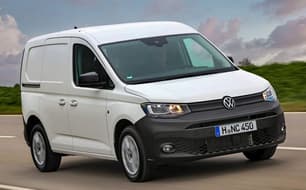
It comes well armoured for work duties with unpainted dark grey plastic used in areas where bumps, scrapes and wear usually occur like the front/rear bumpers (including the rear pillars from top to bottom), door-handles and door mirror-shells. The bright silver alloy-look plastic wheel-covers can also be easily replaced if damaged by kerbs to keep this van looking sharp on the job.
Its purposeful external appearance is matched by a neat and practical cabin design with wipe-clean rubber flooring and fabric-trimmed bucket seats for driver and passenger. Hard surfaces abound in contrasting shades of grey with splashes of satin chrome.
The minimalist dash design is achieved by corralling most functions into the comparatively small (by today's standards) central touchscreen including often-used climate control, engine auto start-stop etc., which can be fiddly and distracting when driving. Thankfully, at least physical dials for audio volume and tuning remain.
Now that we've seen the new X3, the current model is already dated. Not that it was a cutting-edge design at launch but there is precious little offensive about this mid-size SUV.
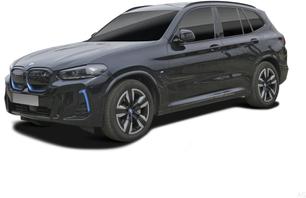
Fussy wheel designs, strange closed in grilles and clashing blue accents aside the iX3 M Sport remains a plenty handsome option as you approach.
Inside the cabin's shapes feel positively conservative next to BMW's latest efforts like the X2 and 7 Series but, in a way, this is no bad thing.
It's also nice that you can tailor this car's appearance to your liking without spending extra, the combination here rocks a nice blue paint with tasteful brown upholstery for a classy look.
You can have Oyster white leather or simple black and the paint colour palette is refined without being restrictive.
The Caddy’s 1508kg tare weight and 2250kg GVM results in a 742kg payload rating, of which up to 100kg can be legally carried on the roof where external anchorage points are provided for roof racks or rails.
It’s also rated to tow up to 1500kg of braked trailer, although its relatively low 75kg tow-ball download (TBD) limit could present a challenge, given that TBD is typically about 10 per cent of trailer weight. So, a 150kg TBD rating would be better.
Volkswagen also does not publish a GCM (Gross Combination Mass) rating, so we don’t know how much it can legally carry and tow at the same time.
The cargo bay, which offers up to 3.1 cubic metres of load volume, is accessed through a kerbside sliding door or asymmetric rear barn-doors.
Its 1797mm length and 1614mm width with 1230mm between the rear wheel-housings provides good versatility, given it can carry an 1165mm-square Aussie pallet or 1000 x 1200mm Euro 3 pallet, two 800mm x 1200mm Euro pallets, or two 720 x 830mm bread-roll containers.
However, with the sliding side-door’s 695mm opening, all of these would need to be loaded through the rear barn-doors which offer 180-degree opening for easy forklift or loading dock access. The load floor is protected by a thick moulded-rubber liner and there are six load-anchorage points.
The cargo bay walls and doors are lined to mid-height and there are two bright LED roof lights and a handy 12-volt socket.
Driver and passenger have ample cabin storage with large-bottle holders and bins in each front door, a handy pull-out compartment to the right of the steering column, numerous bins embedded in the dash-pad, full-width overhead shelf, a large glovebox and a centre console with dual small-bottle/cup holders and numerous storage nooks.
The BMW X3 was developed with family buyers in mind and that has paid dividends because it has an extremely practical cabin with lots of thoughtful storage.
Each of the four doors has a bottle holder and generously-sized pocked for extra storage. There are two cup-holders in the centre with a wireless charging pad, secure spot for the key fob and USB port in easy reach. You can slide a roller cover down to hide valuables.
Key driving controls are smartly grouped together around the iX3's unconventional gear selector. Here, you'll find the start/stop button along with hard switches for drive mode selection, stability control and exterior cameras.
Right next door is where the rotary 'iDrive' controller lives with yet more physical shortcut buttons. Including the extra option to easily interact with the multimedia system on the move is a refreshing delight that you don't see in so many touchscreen-heavy EVs. There's also a physical stack for HVAC and seat heating controls.
The 12.3-inch touchscreen is responsive and bright with BMW's slightly older system having a more conventional appearance than the latest software in the iX2. Apple CarPlay and Android Auto are wireless and still work flawlessly.
If there are some negatives, they would be some build-quality niggles. On the whole the materials are high quality and the car is well screwed together but the indicator stalks feel decidedly flimsy compared to BMWs of old and I noticed a rattle from the parcel shelf on the road.
The eight-way power adjust seats with tilt and under-leg extension are classic BMW, being sporty enough to hold you in but with enough padding to stay comfy. Though we will knock this car down for lacking power lumbar adjust.
Those in the back will be plenty comfortable even if they're taller than 180cm with ample head, leg and toe-room. There doesn't appear to be a major compromise to the floor height despite BMW stacking 10 lithium-ion modules beneath.
Vision out is excellent with an expansive glasshouse and full-length sunroof.
Amenities include two USB-C charge points, a third climate zone, fold-out armrest with pop-up cup holders and generous storage in the doors.
Fitting child seats should be pretty simple with doors that open wide, two sets of ISOFIX ports (that you can't lose the covers of) and three prominent top tether anchors in the recline-adjustable backrest.
The boot is large with 510L of space at a minimum that expands to 1560L if you fold the 40/20/40 split backrest flat. There's a sense of solidity in that process, too, with sturdy levers and components.
So sturdy that the retractable luggage cover is quite difficult to remove, especially for shorter owners. Other niceties include a single shopping bag hook, LED lighting and 12-volt socket in the back.
No BMW X3 comes with a spare tyre so that should come as no surprise. The iX3 instead has a tyre repair kit. There is underfloor storage in the iX3, though, which is the perfect place to store both charging cables — Mode 2 and 3 — that are included.
Our test vehicle in standard Candy White is the Cargo SWB, which at entry-level is available with a 1.5-litre turbo petrol engine with six-speed manual or seven-speed auto. Or you can step-up to a 2.0-litre turbo-diesel with either a six-speed manual or (like our example) a seven-speed auto for a price of $45,990 plus on-road costs.
That’s higher than its two small van competitors, given the Renault Kangoo SWB petrol auto lists at $42,990 and Peugeot’s Partner Pro Short petrol auto is $39,990, but the Cargo is unique in offering five-star safety and its drivetrain choices.
The work-focused standard equipment list includes 16-inch steel wheels with plastic covers, 205/60R16 tyres and a full-size spare. There’s also an electronic handbrake, separate cargo bay locking system, a reversing camera, rear parking sensors, heated door mirrors, daytime running lights, two USB-C ports and two 12-volt sockets.
A moulded composite bulkhead with window separates the cabin from the cargo bay. The driver also gets a leather-trimmed flat-bottom steering wheel with multi-function controls, plus adjustable lumbar support for both driver and passenger seats.
The four-speaker multimedia system is controlled by an 8.25-inch colour touchscreen with Apple CarPlay, Android Auto and MirrorLink connectivity and FM radio, but no DAB or (sorry, talkback fans) AM band.
Volkswagen also offers numerous paint colour options and four option packs, plus there’s a genuine accessories range containing useful workhorse items like all-weather floor mats, roof racks, cargo barriers, dashcams and more.
The iX3 M Sport may be expensive compared to a rear-drive Tesla Model Y but next to premium-badged rivals, it cuts rather attractive shapes at BMW's $89,100 before on-road costs asking price.
Outside, there are 19-inch alloy wheels, adaptive LED headlights, no-cost choice of six metallic paints (Phytonic blue is what you see here), illuminated door sills and a power tailgate.
The impressive list continues inside with 'Vernasca' leather-appointed seats available in three colours and 'Sensatec' artificial leather on the dash and high-traffic touchpoints.
The front seats are heated and power adjustable and the ambient lighting is customisable. The iX3 also has tri-zone climate control, tyre pressure monitoring, free-of-charge open poor wood trim, adaptive dampers, a heat pump and even a full-length opening sunroof.
Paying the best part of $12,000 extra for the M Sport Pro doesn't change the single 210kW motor, 74kWh (usable) lithium-ion NCM battery and 461km of WLTP driving range.
Instead, you get bigger 20-inch alloy wheels, black grille surrounds, acoustic glass with tinted rear windows, lumbar adjust, gesture control, head-up display and a Harman Kardon sound system.
There are also BMW's 'Iconic Sounds' in the Pro and the more expensive model includes five years from Chargefox public charging.
Mercedes-Benz no longer sells the EQC so the iX3's natural three-pointed star rival becomes the EQE300 SUV, which retails at $134,900. Audi's Q6 e-tron is not yet here so cross-shoppers will need to look at the smaller Q4 from $88,300.
The iX3's only direct premium rival is the Genesis GV70 Electrified, starting from $125,858 in the sole Performance AWD guise.
Even higher trims of mainstream rivals such as the Kia EV6 GT-Line RWD ($79,590) and Mustang Mach-E Premium RWD ($79,990, all prices before on-road costs) sit in close proximity to the BMW.
Our test vehicle’s premium 2.0-litre four-cylinder turbo-diesel engine, dubbed TDI320, meets Euro6 emission standards using AdBlue, and produces 90kW at 4250rpm and 320Nm between 1500-2500rpm.
The seven-speed dual-clutch automatic offers three drive modes comprising (default) Drive, Sport or sequential manual-shifting using steering wheel-mounted paddles. There’s also an electronically-controlled automatic locking diff.
In this case there isn't much under the bonnet except for electric gubbins. The single electric motor – that uses no rare earth materials – resides at the back and generates 210kW/400Nm.
Those outputs are fairly close to a petrol X3 30i, though of course this model is rear-drive only.
Thanks to the rapid response of electric motors, the iX3 M Sport can sprint from 0-100km/h in 6.8 seconds (claimed).
BMW has chosen to give the iX3 a long-travel progressive throttle pedal that makes grunt easy to meter out. However, the regenerative braking could do with a little more refinement.
There are two settings, 'D' — just like letting off the throttle in a combustion car — and 'B' which is quite strong. The blending between regenerative and physical caliper-on-rotor braking is vague, though, which can make low-speed moves a bit jerky.
The official combined average fuel consumption is a hybrid-like 4.9L/100km and the dash display was showing 5.6L after our 355km test, of which about one third of that distance was hauling a near-maximum payload.
That wasn’t far south of our own fuel-sipping figure of 6.5L/100km, based on actual tripmeter and fuel bowser readings. Therefore, you could expect an excellent real-world driving range of up to 770km from its 50-litre tank.
The iX3 M Sport's WLTP rating is a respectable but not groundbreaking 461km on the combined cycle. The reality is a little bleaker, our test car displaying 316km on its digital instruments at 100 per cent charge.
Going against what you might expect for an electric car, the iX3 was not very efficient in town, we initially saw 24kWh/100km on the read-out which is quite high.
It is better suited to a longer, steady-state run. Our regular 200km country and suburban test loop dropped the consumption to 18kWh/100km for a real-world driving range of 411km.
When it's time to bring the charge levels back up the iX3 will take on AC electricity at 11kW, for flat to full in seven and a half hours.
Public fast-charging caps out at 150kW (DC) though averages to 104kW over a 10-80 per cent session. This should take 21 minutes, says BMW.
We only observed a maximum of 101kW on a DC charger though the pylon did not appear to be performing at full energy with other vehicles having similar issues.
Its compact external dimensions are deceptive, as the cabin has ample headroom and it’s not hard for even tallish drivers (I’m 186cm) to find a comfortable position, even though the close-fitting bulkhead restricts backrest recline adjustment and the base cushion rake is fixed.
Small vans are the closest you’ll get to a car-like driving experience in light commercials and, given the Cargo’s unique turbo-diesel powertrain, it has unmatched torque output that provides energetic performance.
The shift calibrations of its seven-speed dual-clutch automatic ensure vigorous response in city and suburban driving, given that for most of the time they keep the engine operating between 1500-2500rpm, where its 320Nm of torque is served at full strength.
Combined with nicely weighted steering and four-coil suspension that provides an ideal balance of responsive handling and supple bump absorption, it’s an enjoyable and engaging vehicle to drive. The Sport drive mode and sequential manual-shifting options raise the fun level.
The gearing also ensures low-stressed highway driving with only 1600rpm required to maintain 110km/h, at which speeds the solid bulkhead minimises cargo bay noise that mostly emanates from the rear tyres. However, tyre noise can still be intrusive on certain grades of coarse bitumen.
To test its payload rating, we forklifted 650kg into the cargo bay through the rear barn-doors, which with driver equalled a total payload just shy of its 742kg payload limit. The rear suspension compressed almost 60mm under this weight, with long jounce rubbers positioned inside the rear coil springs providing additional load support and, in effect, a second stage of springing.
The Caddy took this heavy load haul in its stride on city and suburban roads, gliding over bumps without a hint of bottoming-out. The payload’s effect on engine, steering and braking performance was minimal and its handling composure was maintained regardless of speed or road conditions.
It also made light work of our 13 per cent gradient, 2.0km-long set climb at 60km/h, and although engine braking on the way down required some assistance from the quartet of disc brakes to keep speeds in check, they handled this task with ease.
Our only criticism of the driving experience is that, given the substantial blind-spot over the driver’s left shoulder caused by the cargo bay’s solid walls, a Cargo buyer must pay extra to get blind-spot monitoring and rear cross-traffic alert as part of an options pack. We reckon these active features are crucial to safe van operation (any solid-walled van that is) and should be standard.
Despite no saucy straight-six, V8 or twin-cam four-cylinder there is an inherent 'BMW-ness' in the iX3 M Sport. The way it steers, accelerates and rides all match the brand's DNA.
It is not a plush SUV, with some firmness to the suspension even in Comfort mode on the adaptive dampers — this may have something to do with BMW's 40PSI front and 45PSI rear tyre pressure recommendations — but without ever being crashy.
Build up a little more speed, beyond 60km/h for example, and the body settles nicely with a solid, assured stance.
There's no evidence of suspension noise and road noise is very well insulated as well, even without the up-spec M Sport Pro's acoustically insulated glass.
The steering is light in Comfort mode which makes it ideal for urban driving. It also has three turns lock-to-lock which is a lot for a sporty-ish BMW, however that is largely down to the improved steering angle. Without an engine or AWD system, the iX3 has a great turning circle of just 12.1 metres.
Moving things up a notch into Sport adds extra weight to the steering which helps judge the grip on good roads, which is pretty decent from the 245/45R19 Yokohama Advan Sport V107 tyres.
When you approach the limit, the iX3 is very secure but significant mid-corner bumps can unsettle the car, bringing its 2180kg tare weight (a 325kg penalty over the xDrive20i) sharply into focus. Pull it back a touch, though, and the iX3 M Sport is plenty rewarding on a country road.
Mostly, the iX3 is a refreshingly natural electric car out on the road. You could put anyone in the driver's seat and they'd be smooth just like in a combustion car.
Unmatched by its small van rivals is a five-star ANCAP rating (tested 2021, expires 2027) which applies to all Cargo variants built from July 2022.
It’s equipped with seven airbags, AEB with pedestrian and cyclist monitoring, a reversing camera, rear parking sensors, daytime running lights, non-adaptive cruise control, driver fatigue alert system and more, but you must pay extra for extra safety.
The BMW X3 was awarded a five-star ANCAP rating in November 2017 which expired last December as part of ANCAP's push to stay more relevant.
Electric, petrol and diesel models carried the five-star score but, strangely, the 30e plug-in hybrid model did not.
The iX3 has seven airbags (dual frontal, side chest, side head-protecting curtain and driver knee airbags are standard), autonomous emergency braking with pedestrian detection, lane-departure warning, blind-spot monitoring and lane-keep assist.
BMW has one of the better programmed adaptive cruise and lane-trace assist systems. The lane-trace assist worked well on test without being too intrusive.
The Caddy comes with a five-year/unlimited-kilometre warranty and 12 months roadside assist.
Scheduled servicing is every 15,000km or 12 months, whichever occurs first.
An optional five-year pre-paid service package is available for the price of a three-year package ($2000), so that’s two free services and savings of up to $1439 compared to pay-as-you-go capped-price servicing. In other words, an average annual servicing cost of $400.
The iX3 M Sport is now covered by a five-year/unlimited kilometre warranty in Australia.
Servicing is due on a conditional basis with the multimedia system prompting the owner when to visit a dealer.
BMW offers serviced packages for electric vehicles that last six years/unlimited kilometres, with the iX3's pack costing a reasonable $2325 over that time.