What's the difference?
We are approaching a decade and a half since Toyota dipped into its vault and pulled out an iconic pair of digits, 86, and stuck ‘em on the back of a new car it co-developed with Subaru.
Named for, and loosely inspired by, the rear-drive AE86 Corolla of the mid-1980s which was cemented in the pop culture pantheon by the anime Initial D, the Toyota 86 is in its second generation and wears a ‘GR86’ badge to incorporate the name of Toyota’s sports car division.
The 86 was, when launched, extremely affordable but has since become more expensive, and getting into a top-spec version of the GR86 is a task that’ll sap $20,000 more from your wallet than the original 86 base model.
To find out if it’s worthwhile, we’ve snagged a 2026 Toyota GR86 GTS with optional Dynamic Performance Pack (DPP) to see if Toyota’s accessible sports car still hits the same sweet spot between genuine performance and decent value.
Remember when electric vehicles were the next big thing? Well they still are, it's just that hybrids are making a huge comeback and have entered a new era of the super hybrid. These are plug-in hybrids with enormous driving ranges and Chery’s just arrived Tiggo 9 Super Hybrid is one of these.
The Tiggo 9 is a large seven-seater SUV that competes with the likes of plug-in versions of the Hyundai Palisade and GWM Tank 500, only for less money.
The value is excellent, but how does the Tiggo 9 score in other areas such as the way it drives, its practicality and safety, or its styling and interior feel?
We found out in this first Australian drive.
You’ve reached the end of this review and might be looking at the final score thinking it seems low. If you’re a keen driver and considering a GR86, all you need to know is this: the GT will provide plenty of fun for the money.
But if you’re more serious about your two-door rear-driver, and thinking about track days, the GTS with Dynamic Performance Pack might be worth it. It’s not an obscene amount more, and in a few years the extra cash might not even register.
Plus, there might not be much longer to be able to pick up cars like this new, anyway.
The Chery Tiggo 9 Super Hybrid is outstanding in many ways, especially value and the way it drives. I can only stress the importance of charging this vehicle frequently, however, otherwise it will go from super hybrid to super fuel consumer.
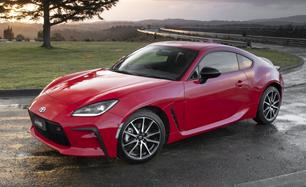
The 86 was already an attractive sports car, with a traditional shape and just enough aggressive detailing to be appealing without looking too fussy.
Luckily, the GR86 remains restrained enough and changes are light enough that the lineage is clear. The car now looks a little more aquatic thanks to some rounding at the front, and its tail-lights are even more clearly from the Subaru side of the partnership.
While being less aggressive overall, the GR86 retains the essence of its first-gen forebear.
The interior is also clearly tweaked rather than entirely refurbished. Aside from the red carpeting and highlights in the example we’re driving it’s not massively exciting visually. But function beats form in this case.
Speaking of form and function, the red Brembo brake calipers are for more than show, with twice as many pistons helping stopping power. But given the number of comments from non-enthusiast friends, they’re also doing the job looks-wise.
Oh, and as mentioned, the White Liquid premium paint comes in at $575. 'Spark Red' is the only no-cost colour.
Chery has crafted a superb-looking SUV here. Sure, the design isn’t ground-breaking or unique, but styling is beautiful from the large grille and multi-spoke wheels to the chrome framed windows and smooth lines of the tailgate.
Our car was painted in 'Aurora Green', which looks stunning in the sunlight. There’s also 'Cosmic Black', 'Star White' and 'Technical Grey'.
The cabin is super modern and luxurious looking, with only a few physical buttons for the hybrid system and climate control. The leather seats are a lovely high-end touch, and while the level of refinement is not up there with the likes of Audi and Lexus flagships the build quality appears to be good.
The Tiggo 9 stretches 4800mm end to end and is 1930mm wide. That classifies it as a large SUV, albeit not an enormous one. A fairly short wheelbase of 2750mm means the cabin space isn’t as voluminous as you might have thought.
For what it is, the GR86 provides enough to make par when it comes to interior convenience, but there are drawbacks to buying a compact four-seater, two-door sports car.
If you’re tall, getting in and out can be a struggle. Even at 180cm you might feel like getting out after a long drive is a bit of work.
The fact there are seats behind the front seats means you’re relatively snug even as far back as they’ll go, but the driver-focused feeling of the cabin is worth it.
The physical switches and buttons are welcome, and the fact the 8.0-inch multimedia touchscreen is only for audio, settings, or nav (if you have phone mirroring plugged in) is a win for minimising distractions.
The materials feel relatively rudimentary aside from the seating upholstery, and the cabin doesn’t escape the cost-cutting presence of plastic, but the layout is functional.
Cupholders can be hidden under a cover just behind where the driver’s elbow might rest, which can be annoying to reach even if its purpose is to be out of the way.
Behind the main seats, there’s room for kids for a decent trip or, if you’re not hugely fond of them, adults for a while. Again, I’m a fairly average height and I don’t feel like I could spend longer than a 15-minute trip there before getting antsy.
It’s good they’re there, because having bad seats is better than no seats in a pinch, but don’t seriously think of this as a car for getting more than two people around.
The 237 litres in the boot is decent for a sports car, enough to get luggage or groceries in, but a limited opening space means stowing bulky stuff is trickier.
The Chery Tiggo 9 is not overly large and with a relatively short wheelbase the cabin room is adequate but not outstanding. I’m tall at 189cm, but there is still room for me to sit behind my driving position and headroom is good, too. That said, the cabin floor is high which raises the knee height for second row passengers.
The third row is really just for children and for those occasional but unpredictable times when as a parent you’re suddenly thrown into having to transport more kids home or to parties.
Cabin storage is good with door pockets and cupholders front and back, while a large storage area under the centre console is great for loose items or even a handbag or small backpack.
The wireless charger is perfectly situated on top of the console and features a grippy soft surface.
I would have liked more physical dials and buttons for climate and the stereo, which are accessed through the central screen.
Boot space, according to Chery, is larger than it looks, with the manufacturer saying with the third row up there is 143 litres of cargo capacity and with five seats in place it's 819 litres.
While inexpensive on the scale of sports cars, the Toyota GR86 GTS with the 'Dynamic Performance Pack' option ticked is relatively pricey for the badge.
The GTS’s starting price of $46,090, before on-road costs (regardless of automatic or manual transmission), is joined by a $2200 bump from the Performance Pack, then in this example’s case there’s a $575 charge for the 'White Liquid' premium paint.
Toyota’s website suggests $53,924, drive-away, for a GR86 specified to match our test car. It’s not a huge ask in today’s world, but a Toyota 86 used to start for less than $30,000, before on-roads (we’re talking more than a decade ago), and the car wasn’t dramatically different.
Compare the top-spec Mazda MX-5 GT RS, the GR86 GTS’s (with the Performance Pack) natural rival, at $51,790, before on-roads, or even the GR86’s Subaru BRZ twin in tS spec at $49,190, before on-roads, and the GR86 looks like decent value.
Other options for little sporty things like the Mini Cooper or Hyundai i30 N start in the low $50,000 range, while $41,990 before on-roads snags you a slightly smaller VW Polo GTI.
For the money, the GR86 GTS packs in enough features to feel decently premium for such a small space. Having said that, the 8.0-inch multimedia touchscreen and 7.0-inch digital driver display are nothing to write home about, nor are the six-speaker sound system or wired Apple CarPlay and Android Auto.
The GTS’s combination synthetic suede and leather (heated) front seats and its sportier trim (sports pedals, door scuff plates and door lamp) are notable however, as is the addition of extra safety kit over the base model. Really, though, rear cross-traffic alert and rear blind-spot monitors should be standard.
There is only one grade in the Chery Tiggo 9 Super Hybrid line-up - the Ultimate - and it lists for $59,990. It’s remarkably affordable compared to many rivals and the value is outstanding.
As you might imagine the Ultimate is fully loaded with features.
There are leather seats - powered adjustable, massaging, heated and ventilated in the front, while the second row outboard seats are heated and ventilated, too.
There are big screens - a 15.6-inch media display and a 10.25-inch digital instrument cluster as well as a head-up display. There’s Apple CarPlay and Android Auto, sat nav, a 12-speaker Sony sound system and digital radio.
There are LED headlights and tail-lights, 20-inch alloy wheels, a panoramic glass roof, privacy glass and a power tailgate.
The GR86’s 2.4-litre flat-four petrol engine remains naturally aspirated (rare for a modern sports car) and drives the rear wheels via either a six-speed automatic transmission or a six-speed manual gearbox - the latter also increasingly rare.
Outputs are 174kW at a lofty 7000rpm and 250Nm at 3700rpm regardless of transmission.
A 50-litre fuel tank provides minimum 98RON petrol to the engine at a rate of 9.5L/100km according to Toyota, that’s here in the manual. The claim for an auto is 8.8L.
On test, we saw 11.0L/100km, which included a spirited mountain drive, a long highway stint and some rather stop-start inner-city commuting.
It’s not a bad figure for a sports car, but you’d be disappointed to see it from just about any other small Toyota.
With that in mind, realistically you’re looking at around 500L to a tank if you’re not pushing things too hard.
The Tiggo 9 Super Hybrid is a plug-in hybrid. There’s a fuel tank for petrol (95 RON minimum) and a charging flap for you to fill up the 34kWh battery.
Super hybrids are so-called because of their relatively big batteries and longer ranges. Chery says on a full 70-litre tank and charged battery the Tiggo 9 Super Hybrid has a range of 1250km (NEDC). The WLPT range isn’t given but while it will still be impressive it would be less than the NEDC. The same goes for the electric-only range of 170km (NEDC).
If you keep the battery charged, fuel consumption is outstanding. In our short time with the car the trip computer was reporting an average 1.4L/100km, which is exactly the manufacturer's claim.
I noticed that once battery charge fell below 20 per cent the fuel economy worsened to 7.1L/100km.
The battery has a 71kW DC charging capacity however and will fill up fast. But you will have to top up frequently to get the good fuel economy.
This is where the biggest question lies regarding the GTS’s value proposition. Is it worth paying several thousand dollars more for a GTS with the Dynamic Performance Pack when a GT might be all you need?
The GR86 sticks to the basic formula that made the previous 86 a gem, and just slightly improves areas where there was ‘feedback’ from buyers.
The biggest one is the torque dip that used to plague the middle of the 86’s rev range. If you looked at a dyno chart (which the 86 had built in, funnily enough) you could see the little drop where the torque fell away, so driving in either a lower of higher gear was sometimes necessary to dodge it.
No more with the bigger 2.4-litre engine. It’s more powerful, if thirstier, but still feels like a tool rather than something to really enjoy. It’s not the most characterful of things, and its fake engine sound through the cabin can feel a infantile.
The gearbox is also not at the forefront. The shift feel is decent but there could be a little more clutch feel, getting into it after driving an old manual might see you stall and embarrass yourself once or twice.
The steering and handling, though, is sublime. The steering feel is sharp and tactile, you know what’s happening at the front tyres and you’re given the right information to make adjustments accurately. It’s well-weighted, and doesn’t have a big numb spot on-centre.
If you were so inclined, at a track, this is a relatively easy car to slide and let the tail hang just a smidge.
If you find yourself making a mistake, the traction control is very good at catching errors before they become problems, but without stopping the fun while also letting you feel where it went wrong.
When it comes to the tweaked brakes and suspension included in the DPP, the GR86 is never going to be truly comfortable and unless you're tracking the car it’s not heavy enough to overwhelm the brakes on a public road.
The suspension on bumpy inner-city roads, even with the Sachs sports dampers which Toyota says “improve both on-road ride comfort and handling in dynamic situations”, don’t soak up the rough stuff particularly well. But they do stop it from feeling properly crashy.
Spoiler alert. Aside from the upgraded interior features, the GT’s $43,940, before on-road costs, price tag is some of the best-value motoring around, even if it’s much more expensive than the 86 was a decade ago.
The GTS’s asking price with the DPP at $48,290 isn’t atrocious, but it’s probably worth asking yourself whether the extra few thousand dollars is necessary, especially when the Sachs sports dampers don’t exactly make the car magically comfortable.
You’re going to have fun with this car in any form, so spending the extra on the GTS is optional, and the DPP is something you’ll probably get the most out of on a track.
The Chery Tiggo 9 Super Hybrid drives silently and smoothly with strong acceleration just like an electric car for the most part while in the city at lower speeds.
Hills and higher speeds call on the engine to help but even then the transition is almost imperceptible.
A comfortable ride with well set up suspension, light and accurate steering make for an impressive and effortless driving experience.
There are downsides, like the brake pedal feel. As in many hybrids there’s a ‘wooden’ sensation and I felt I needed to depress the brake pedal harder and longer to pull up at times. This is a heavy vehicle at 2200kg and brake response could be better.
The active safety tech is also intrusive, as is the case with so many cars these days, but the alerts and warnings can be turned off.
The car we tested, despite costing the most it possibly could, still lacked some safety kit.
There are two ways to miss out on some safety features in the GR86 - buy the GT, or buy a manual.
If you opt for the GT, you don’t get rear cross-traffic alert or blind-spot monitoring. If you have a manual, you forgo a parking support brake and rear parking sensors.
There’s also no ANCAP rating for the GR86 though we aren’t marking it down for this. Toyota and ANCAP seem to think buyers of small sports cars are aware there might be safety drawbacks and understand what they’re getting into.
The GR86 has seven airbags, a seat-belt warning, auto high-beam, AEB in all variants, lane departure warning, and hill-assist. Nothing intrusive and a lack of annoying beeps and chimes which is welcome in a car focused on letting the driver be in charge.
If you're determined to fit a child seat (or two!) in the back there are top tether points and ISOFIX anchors for both positions.
The Chery Tiggo 9 Super Hybrid hasn’t been assessed by ANCAP yet, but the safety tech is in abundance with everything from AEB, front and rear cross-traffic alerts with braking, lane keeping assistance and blind-spot warning.
For child seats there are three top tether anchor points and two ISOFIX points in the second row only.
There are also 10 airbags onboard.
I’ve mentioned the intrusive safety alerts in the driving section, and while they can be turned off, they can also be life saving.
Toyota offers a five-year, unlimited kilometre warranty, which increases to seven years if you keep your servicing within Toyota’s network.
It’s a step-up from what has been the standard mainstream warranty for some time, but other brands are pulling ahead with eight- or even 10-year warranties.
There’s also a capped-price servicing plan for five years and the first five services are limited to $335 at the time of writing.
Finding somewhere for that should be a breeze, Toyota has so many dealerships it simply lists ‘over 275 locations’ as its latest count.
The Chery Tiggo 9 Super Hybrid is covered by a seven-year, unlimited-kilometre warranty, while the battery has an eight-year unlimited-kilometre warranty.
There’s also roadside assistance and capped price servicing for seven years at $3174, or an average of $453 per year.
Chery's national dealer network consists of 86 sites, including 21 in Melbourne, 20 in Sydney and 12 in Brisbane.