What's the difference?
There’s something immensely appealing about a car that can play two roles.
An off-roader for the weekend and a school pick-up chariot Monday to Friday? How about a race car/grocery-getter combo?
The latter is what the Toyota GR Corolla wants to be, a slightly bigger and more day-to-day alternative to the first GR hot hatch, the Yaris.
Both of these cars have now been updated and are arriving in Australia now, and Toyota hopes the Corolla becomes an even better car to rival the likes of the Volkswagen Golf R.
But can it do it?
We tested Toyota’s hotted-up Corolla on road and track to see if it’s up to the task.
Some people just want to save money.
They might know they could spend a little extra to get a brand that has a different reputation, or something that has been reviewed more favourably. Just think about the last time you thought about going to a restaurant for the first time - did you check its reviews? See what people thought? Roll the dice and head there anyway?
That’s the sort of equation you might be considering if you’re thinking about a Great Wall Steed. There are better utes from bigger brands that are available, but none come as cheap as this one if you just want something brand new and with lots of features.
The question is - should you consider it? Should you roll the dice? We’ll have to leave that call to you.
The GR Corolla had a lot to live up to before, given the likes of the GR Yaris and GR86 fit their briefs so well.
Now, with a little more daily useability and a little more performance, the GR Corolla is even better at both sides of its Jekyl and Hyde personality.
Note: CarsGuide attended this event as a guest of the manufacturer, with accommodation and meals provided.
If you simply want a new ute at a low price, the Great Wall Steed could offer a bit of appeal - it’s not terrible, but it’s also far from great…
My advice would be to see what sort of second-hand HiLux or Triton you could get for similar money.
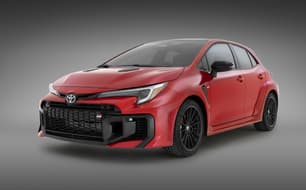
The Corolla already looks more sporting than most hatchbacks even before the GR treatment, but a few tweaks up front, some wider wheel arches and a third exhaust exit at the back have this thing looking almost ready for a rallycross.
The only downside to that is the changes are relatively minor from some angles. If you weren’t aware of the GR version, you'd need to see the GR Corolla from the front or spot that exhaust to know something was up.
The update has, however, ushered in a change at the front bumper, where the air intakes have been adjusted for improved airflow “to the radiator, intercooler, brake ducts, sub radiator and automatic transmission fluid cooler”
In part, this was necessary to help cool the new automatic gearbox, though it does generally help with overall cooling.
While the GR Corolla looks the part, there’s more function to it. The air that passes in through the side intakes at the front is vented to a duct in the wheel arch that also cools the brakes.
It’s the same as the GR Yaris sibling in terms of the philosophy behind aerodynamics and cooling in many ways, though much of the Yaris is bespoke, where on the Corolla, parts have been attached to the standard body.
Like the outside, the inside of the GR Corolla is mostly the same bones as its non-hot-hatch relatives, but the aforementioned sports seats, leather trim and aluminium pedals are all fairly strong hints this isn’t quite ‘hire car spec’.
The Great Wall’s exterior styling is reasonably contemporary, even if the proportions are somewhat ungainly. Consider this - the Steed is one of the longest, lowest utes out there.
The dimensions are 5345mm long on a huge 3200mm wheelbase, with a width of 1800mm and a height of 1760mm. There’s just 171mm of ground clearance for this one, which is the 4x2 model.
The wheelbase looks enormous, and the back doors are quite small considering the length of the vehicle (plus the door handles are huge!). The B-pillars are set back further than they should be, and that makes it hard to get into and out of the second row seats.
The interior design is pretty smart, though — compared with some of the other older utes out there, the Steed has reasonable ergonomics and the controls and materials are of a passable quality, too.
But our car - which had just a couple of thousand kilometres on the clock - had a missing piece of exterior trim, along with a few loose bits and pieces inside. The quality is better than the first-gen Great Wall utes, but we hope the next-generation global ute from the brand will be better again. It’ll need to be.
As far as hatchbacks to build a daily-useable hot hatch upon go, the Corolla is a relatively solid starting point in terms of ergonomics.
Physical buttons and controls for things like climate are within reach for most functions of the car, though the multimedia touchscreen itself isn’t the most up-to-date.
The seats are comfortable but hold you firmly in place, and the steering wheel, pedals, and shifter are all in the correct positions for engaging driving - particularly important in the manual version.
The storage space is where the GR Corolla disappoints a little. There’s door card space for a water bottle, cupholders, the wireless device charger, but not really anywhere for larger items.
Behind the front row, adults will find themselves a little cramped in terms of kneeroom, while dark interior materials make the second row feel poorly lit.
Further back in the Corolla is the 213-litre boot, which is pretty small even for a hatchback, although Toyota lists a maximum 503 litres with the seats folded down.
Under the boot floor is a tyre repair kit, rather than a spare tyre. Keep that in mind if undertaking a road trip.
As mentioned above, the interior of the Steed is acceptable for a budget ute, but that’s as faint praise as saying “you look fine” to the reflection of yourself in the mirror after a big night out.
The cabin has a few elements to it that are decent - the dashboard design is decent, and the controls are pretty logically placed. If you’re stepping up from a first-gen Great Wall ute, you’ll be blown away.
Things like the big media screen and leather-lined steering wheel, as well as electric front seat adjustment and leather seat trim that feels more like cowhide than repurposed garbage bags this time around will all count toward some positive first impressions.
That said, the screen is one of the most confusing ones I’ve encountered - you have to pair your phone by hitting the icon that looks like a PC tower linked to a phone. Why? Also, the load times on the screen are terrible, and when you put it in reverse the screen simply goes black. There is no reversing camera as standard, which is poor form. You can option it if you want, likewise the sat nav is optional - and it looks a lot like a UBD or Melways. Plus the volume levelling is very inconsistent.
As mentioned above the ingress and egress for rear seat occupants is poor - anyone who has feet bigger than a size six will struggle to get in and out without getting tangled. Once you’re back there, the knee room is tight, but head room is fine.
There is reasonable storage throughout - there are cup holders between the front seats, door pockets with bottle holders and a few loose item cubbies up front, too. In the rear there are map pockets but no other storage options unless you fold the rear seat backrest down.
The 2025 Toyota GR Corolla comes in just one grade now, the highly-speced GTS, which starts from $67,990 plus on-road costs for the six-speed manual, but it's now available with an eight-speed automatic for $70,490.
Sounds like a lot for a Corolla, and it’s a little more than the $64,190 asking price the GTS manual wore before, but compare it to the highly-regarded Honda Civic Type R ($74,100) or the do-it-all VW Golf R ($70,590) and it lines up.
While the GTS has plenty of features for the price, they’re not all focused on the comfort of the interior.
For example, the synthetic leather and suede sports seats are manually adjustable, even though they are heated.
The 8.0-inch multimedia touchscreen is similar to that in the standard Corolla, too, plus dual-zone climate, USB-C ports, the wireless phone charger and JBL Audio system are all expected features of a hatchback at more than $60,000.
The GR Corolla does however gain heating for the leather-wrapped sports steering wheel, plus leather trim for the parking brake and shifter too. It also scores aluminium pedals.
There’s a lot more under the skin when it comes to the GR, some of which is visible via controls in the cabin, but we’ll come to that.
The Great Wall’s biggest redeeming feature is its price and specs.
You can get a base model single-cab-chassis version for less than twenty grand drive-away. This model is the 4x2 dual cab, which has a list price of $24,990 plus on-road costs, but it’s almost always on special at $22,990 driveaway. Need a 4x4? Pay an extra two grand and you’ll get it.
The Steed offers an extensive standard features list, including auto headlights, auto wipers, LED daytime running lights, front and rear fog lights, 16-inch alloy wheels, cruise control, single-zone climate control, heated front seats, leather trim, a leather-lined steering wheel, a six-speaker stereo system with USB and Bluetooth connectivity and the aforementioned optional camera and GPS navigation. You get carpet on the floors rather than vinyl, too.
The exterior is packed with features tradies will love - there’s a big step bumper to allow easy access to the tray, which has a tub liner as standard as well as a sports bar. Accessing the cabin will be easy for shorties as there are side steps fitted as standard.
The GR Corolla’s 1.6-litre three-cylinder turbocharged petrol engine is now a little torquier than before, with outputs now 221kW (at 6500rpm) and 400Nm (between 3250 and 4600rpm) thanks to an extra 30Nm.
The G16E-GTS engine can now drive the Corolla’s four wheels through a choice of gearboxes, either the existing six-speed manual or an eight-speed torque converter automatic.
As well as the usual drive modes, Eco, Normal and Sport, the Corolla’s GR-Four all-wheel-drive system can split the torque to the front or rear wheels via its limited-slip diffs.
Normal, Track and Gravel modes can distribute drive either 60:40 front/rear in Normal, 53:47 in Gravel, or variably depending on conditions and need for acceleration in Track.
Toyota hasn't provided a 0-100km/h time for the 2025 GR Corolla in either variant, but the auto should knock it over in under five seconds, with the manual taking a little longer.
Great Wall uses a 2.0-litre turbo-diesel four-cylinder with 110kW of power (at 4000rpm) and 310Nm of torque (from 1800-2800rpm), which is only available with a six-speed manual transmission. There is no automatic transmission available. But you can get a petrol engine if you prefer, which is becoming rarer in the ute segment.
The payload capacity for the Great Wall Steed 4x2 is decent for a dual cab pickup at 1022kg, and it has a gross vehicle mass of 2820kg. The Steed has the standard 750kg un-braked towing capacity, but a meagre 2000kg braked towing rating.
Toyota’s claimed fuel consumption for the GR Corolla with a manual gearbox hasn't changed from the previous 8.4L/100km, which isn’t bad for a sports car.
With the auto, Toyota says it burns through the fuel faster at a rate of 9.5L/100km.
In either case, the Corolla’s 50-litre fuel tank needs to be filled with premium 98 RON petrol, and theoretically could provide more than 500km of driving if conditions and your driving style are both perfect for efficiency.
Chances are, however, you’ll feel the need to put your right foot down a little harder than they did during WLTP testing, if for no other reason than to hear the turbo flutter when you lift off.
The Great Wall has a claimed fuel use of 9.0 litres per 100 kilometres in the spec we tested, and across our testing regimen - which included on-road driving laden and empty for a few hundred kilometres, it managed 11.1L/100km. Okay, but not great.
The fuel tank capacity of the Great Wall is 58 litres, which is small for the class, and there’s no long range fuel tank option.
The GR Corolla isn’t as engaging to drive as the GR Yaris, it’s not as honed as one particular rival, the Honda Civic Type R, and it’s not as ‘nice’ as the Golf R.
But the GR Corolla is still an excellent car to drive, and it’s better for its update. In fact, the two major gripes I had with the pre-facelift car have been addressed.
I was in a unique position to be able to compare the old and new versions of the GR Corolla as I drove a MY 2024 version a week prior to the media launch for the 2025 model.
The first and probably biggest issue I had was that the Corolla’s suspension seemed like it must have been rather stiff and the body bracing quite rigid for a car riding on 19-inch wheels to let that much road noise and that many harsh bumps into the cabin.
Though it wasn’t mentioned before the on-road drive loop, the car felt more compliant without sacrificing ability and seemed much more suited to daily duties.
Toyota’s product team confirmed there had been tweaks made to the rear suspension geometry and that I wasn’t just imagining it.
The second issue is more for the sake of passengers who may be less agreeable to the three-pot thrum resonating along the exhaust underfloor.
Toyota has solved this by putting a slight mute on the pipes in the Eco drive mode, so the car is now just ‘a bit’ lairy rather than full boy racer.
Generally, it’s hard not to compare the GR Corolla to the smaller (but original) GR hatch, the Yaris. Especially having driven them back-to-back at the media launch.
Without leaning too much on that, I will say that while the Yaris feels like a rally car that's been modified to be road-legal, the Corolla feels more like a road car that was tweaked for rallying.
The Corolla stops just short of being too ‘raw’ for everyday use in most aspects, but it’s still very capable when it comes to driving fast.
Like its suspension, the steering feel is dialled in for feedback without being too rough, and allows you to corner accurately without feeling like you need to second-guess or adjust inputs.
When it comes to handling, it doesn’t feel like the Corolla is entirely leaning on the Yokohama Advan tyres for grip, as it feels tied-down and doesn’t pitch and roll through corners.
The duality of the GR Corolla is helped by its drive mode and differential settings and even on track can help you lean into your own driving style.
While the rear-biased 30:70 setting previously made for a slightly tail-happy hot hatch, the new variable Track setting does a fabulous job of keeping the drive where it needs to be, though it turns out it’s also rather handy for sliding the Corolla around a wet skid pan.
Another neat trick is the GR’s handbrake, same as the Yaris, which can disconnect the rear diff when engaged so you don’t need to dip the clutch pedal in the manual version when indulging in handbrake turns.
It will set you back to 2WD mode when the drivetrain overheats, however, or at least when its sensors suspect the drivetrain has overheated - something that only happened after a lot of handbrake turning and spinning wheels as the hatchback slid sideways.
The Corolla’s brakes are ventilated 356mm front and 297mm rear discs, and doesn't lose stopping power even after plenty of tight, twisting road driving where the brakes and the sticky Yokohama Advan tyres copped a workout.
The new auto transmission is also a delight. It's calm during normal driving but snappy with shifts in Sport mode and set to manual gear selection. It won’t really cooperate on a rapid drive of its own accord.
The only criticism of the auto gearbox (aside from being less engaging than the manual, but that’s your own choice) is that the shift paddles behind the wheel feel a little plasticky, but I’m nitpicking at this point.
A lot of utes these days are aiming to be dual purpose vehicles, with passenger-amenable ride, handling, steering and powertrain combinations that mean you can use them for work and play.
The Great Wall? Well, it’s more work-oriented. That’s a nice way of saying you won’t want to subject your family to this truck, but your workmates? Too bad for them.
The ride is harsh without weight in the back, bucking over bumpy sections of road and jolting after a sharp edge.
The steering is light but requires a lot of turns lock to lock, and the turning circle is large. You need to keep that in mind when you’re parking, plus the vision from the driver’s seat isn’t as good as it could be.
The engine enjoys using every gear but first, but the manual shift action isn’t enjoyable and the torque on offer doesn’t come on smoothly.
I will say this - with 750 kilograms in the back, the rear suspension didn’t sag very much at all. The Steed offers a big payload, and the chassis can cope with it.
What can’t cope with the weight is the engine - we had 750kg in the tray and four adults on board, and it was worse than sluggish. I struggled to get it moving from a standstill, revving harder than I usually would in a diesel-engined ute. There’s a lot of lag to contend with, and the engine simply doesn’t like low-speed moves at all.
But at higher speed it got into a groove, and the ride was actually really well sorted with mass over the rear axle. Plus the fact it has four-wheel disc brakes - unlike many of its newer, more high-tech rivals - means the braking performance was pretty promising, too.
The Corolla’s not lacking in safety kit, with a healthy list of passive and active features as well as a series of seven airbags and three ISOFIX points along the rear seats.
ANCAP tested the non-GR Corolla in 2018 and awarded it five stars, though that score is now outdated. It’s not clear if the car’s updated tech would manage five stars again, though the car is clearly structurally sound.
Aside from the usual expectations like auto emergency braking (AEB), a blind spot monitor, parking sensors front and rear plus a decent reversing camera, the GR Corolla also has rear cross-traffic alert and Toyota’s ‘Safety Sense’ suite of active kit.
That includes a pre-collision safety system with pedestrian detection and cyclist detection in daylight, active cruise, intersection assist, emergency steering assist, lane departure and lane-trace assist, road sign detection for speed limits and auto high beam.
There isn’t a lot of happy reading here.
The Great Wall Steed scored an abysmal two-star ANCAP crash test safety score when it was tested in 2016, though under the disclaimer that score applies to ‘4x2 petrol dual cab variants only’. That’s nasty, especially considering it has dual front, front side and curtain airbags as standard in dual cab form.
There is tyre pressure monitoring and rear parking sensors as standard, but a camera isn’t fitted as standard. There is no auto emergency braking (AEB) or any other advanced safety tech, either.
But it has ABS anti-lock brakes, electronic brake distribution, stability control, hill descent control and hill hold control. There are three-point seatbelt for all seating positions, and if you dare, there are dual ISOFIX child seat anchor points and three top tether points in both models.
Toyota offers a five-year/unlimited kilometre warranty plus an extra two-year warranty on the GR Corolla’s engine and driveline.
There’s also a capped price on the first three years of servicing for the GR Corolla at $310 per service.
The downside to the servicing arrangement is that intervals are six months or 10,000km, whichever comes first. That's more regular than a usual schedule and it means potentially pricier servicing for the seventh visit onwards.
Great Wall introduced a five-year/150,000km warranty in April this year, which is good for a challenger brand but doesn't push the boundaries for the ute segment. There is three years of roadside assist cover as well.
There is no capped price servicing plan, but the Steed requires maintenance every 12 months or 15,000km (following an initial six-month checkup).
Concerned about problems, issues, faults, common complaints, transmission or engine reliability? Check out our Great Wall problems page.