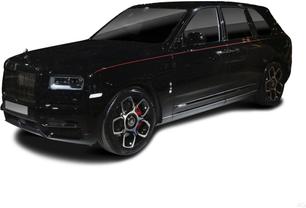
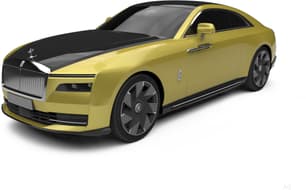
What's the difference?
The truly great thing about great wealth - I mean like, drop $1 million on a new Rolls-Royce with a casual yawn and a mouse click wealth - would be how great it is not having to do anything for yourself.
Personally, I would hire a chef, so I’d never have to cook again, and a pilot to fly my private jet, so I’d never have to catch pneumonia while flying 34 hours to Ibiza with strangers to do my weird job (oh, and if I was rich I wouldn’t have to work anyway), and in theory I might even hire a chauffeur for those odd times when I didn’t want to drive myself in one of my fleet of beautiful cars.
All right, so I can’t even imagine that last one, but the most interesting fact I gleaned while in Spain, tirelessly testing the new Rolls-Royce Cullinan Series II, is that even the ridiculously rich are falling out of love with not driving these days.
Perhaps, being tech-savvy types, they can see the end of driving and the rise of autonomy coming and they want to make the most of it while they still can. But according to Rolls, the percentage of its buyers who sit in the back rather than in the driver’s seat has flipped entirely over the past 15 years.
Back in the day, 80 per cent of Rolls owners were back-seat passengers, blowing cigar smoke at the back of a chauffeur’s head, while 20 per cent actually drove their expensive motors.
Today, the number who drive themselves has soared to 80 per cent, and apparently that’s not just because it would feel weird being chauffeured around in what is now the most popular Rolls-Royce by far - the Cullinan SUV.
The other big change, apparently, is that the average age of a Rolls-Royce buyer has also dropped, from 56 to the low 40s. And that means more buyers with kids, and gold-plated prams and other associated dross, which means they need bigger Rolls-Royces, family-sized SUV ones, which again helps to explain why the Cullinan now makes up as much as half of all the brand’s sales in some markets.
And why the arrival of this, the facelifted, tweaked and twirled Series II version of a car that was greeted cynically by many in the media when it arrived (“one group was not sceptical, and that was our clients,” as a Rolls spokeswoman delightedly pointed out) is such a big deal.
Ask any opinionated car enthusiast why it is that they hate electric cars, and you’re going to hear the same word revving them up - “noise”.
Sure, EVs might be fast, and even the most old-world-loving petrol head (are we going to have to come up with a new term, soon? Power crazed? Amp-head? Copper top?) will grant you that they can be fun to drive, but the argument is that you just can’t love a car as much if it doesn’t make shouty sounds.
But there is one bunch of well-heeled car lovers who will demur on this topic, and for whom the idea of switching a big, stupidly powerful V12 engine for whispering electric motors seems to be no issue at all - Rolls-Royce fans.
They have, allegedly, been knocking down the doors at Goodwood, demanding that Rolls build them an EV, and finally it has arrived, in the stunning shape of the Spectre, and the orders are pouring in.
We flew to the Napa Valley in California to try it out.
The Cullinan might not be the most beautiful or traditional Rolls-Royce, and it’s a shame modern success means providing an SUV option to everyone, but it’s still a remarkable machine, either to drive or just to sit in. It remains not just a marvel of engineering, but a marvellous of engineering. Hats doffed, old bean.
Note: CarsGuide attended this event as a guest of the manufacturer, with travel, accommodation and meals provided.
Personally, I was very much taken with the looks, and the feels, of the new Rolls-Royce Spectre, which delivers everything you’d expect from this brand, and seems to have lost nothing by switching to electric propulsion. The trick, it seems, in turning your brand into an EV one is to have made your cars silent in the first place.
But the real verdict comes from the people hurling their Spectre orders at the company, which has received so many of them it’s being forced to ramp up production. And 40 per cent of pre-orders are from new customers. Honestly, it’s as if they were all just waiting for an EV to drop a million on.
It is something of an achievement when a team of designers manage to make a facelifted version of a vehicle less ugly, daunting and disappointing than the original.
I thought the first Cullinan, launched five years ago, looked like a London black cab that had been mounted and inseminated by a double-decker bus. Big? Sure? Impressive? Yes. Beautiful? Only if you think Boris Johnson is sexy.
There was a lot of chat at the launch about the changes made for Series II, but in summary they tried to make it look more… like a boat, according to Exterior Design Lead Henry Clarke.
“We don’t look for speedy, overcomplicated lines, we take our inspiration from the luxury world, and it’s often from yachts, it’s that same sense of scale and grandeur, that’s the key to the timelessness of a Rolls-Royce,” he explained.
“We’re not focused on the world of automotive design, and if you look at the Cullinan it has that ethos you think of with a yacht, that strong, vital bow and then everything rearwards, the back of a yacht, has an elegance and grace to it.”
Fair enough, but what I appreciated was that they’ve squared the front end off a bit more, by outlining the grille, adding some gills beneath it and putting in some natty DRLs, and then rounded off the rear a little as well, so that it looks less… awful.
Indeed, after a couple of days of staring at it (and particularly admiring how good it looks in your rear-view mirror when behind you), I did come around to its looks. Certainly a lot more than last time.
And strangers driving past seemed to really like it, because they keep smiling and clapping at me.
Making a vehicle as enormous as the Spectre look good is no mean feat, but Rolls has done a hell of a job, from most angles. The massive Pantheon Grille is something to behold in the metal, and because it doesn’t need to let air into an engine bay, it’s been designed for airflow, as has so much else. Rolls achieved a drag coefficient of 0.25, which is good for extending EV range, and they even spent more than 800 hours in a wind tunnel working on making the Spirt of Ecstasy hood ornament as aerodynamic as possible (she’s had her wings clipped, apparently).
The modern take on the classic grille combined with a chesty bonnet and very cool DRLs give the Spectre a look of classic modernity from the front, while the proportions over all give it a great side profile.
Apparently the design brief was based on some majestic cliffs, the Seven Sisters of Sussex, and the car definitely has that level of grandiosity.
The only weak point is the rear, which had to be sheer for aero reasons - and features the narrowest legally possible rear lights, which are supposed to look like “islands in a lake”, apparently. To me, driving behind one, the rear view is just a little dull.
The luscious interior is meant to be an example of “Automotive Haute Couture”, meaning hand made and stupidly expensive, and Rolls also humbly refers to it as a “cosseting art lounge”. It all sounds a bit over the top until you sit in it, and discover that it really does feel beyond special.
In terms of being a vehicle you might actually use - and keeping in mind that if you can afford one of these you’ve also got at least a half dozen other choices - every day, the Cullinan is the pick of the Rolls-Royce enclosure.
From the big boot space - 600 litres with the seats up, 1930 litres with them down - and its lovely little Viewing Suite, through the spacious rear relaxing zone to the absurdly comfortable and plush front seats, there’s a sense of grandeur about the whole Cullinan experience.
You can opt for a champagne fridge between those rear seats, if you like, or you can just lie back and stare at the blinking pins of light in your 'Starlight Headliner' and imagine that each one of them represents one of your millions, smiling down at you.
It’s a lovely place to be, in short, and with its super-thick double glazed glass, coated with an acoustic layer on top of that, and carpets thick enough to keep out road noise on their own, it’s also a very pleasantly quiet one.
If you’re looking for the modern EV style interior, you can forget it, because Rolls says it didn’t want “any of that funky stuff” in the Spectre, so no giant screens in here. Indeed, I switched into a Rolls-Royce Ghost at one stage to be driven somewhere and the interior was almost exactly the same, although the new car gets a more modern fully digital dash.
There’s plenty of room for water bottles and oddment storage and the sense of space for the driver and front passenger is suitably grand, but the rear seats are really for spoilt teenagers rather than Rolls owners. They’re not uncomfortable, at all, but they just feel a bit squeezed, you wouldn’t ask to be chauffeured in a Spectre, clearly it’s a Rolls you’d choose to drive yourself.
The boot is wide, deep and long with a volume of 380 litres.
Value? Price? What are these things you speak of, little plebeian person? Such is the disdain for such things at Rolls-Royce that they wouldn’t even tell us what the Series II is going to cost when it lands in Australia later this year.
The people who can afford one don’t much care, of course, but for the rest of us, who like to shake our heads and make low, whistling noises, you can bet the price will rise just a little from where it was with the original Cullinan - and that was $705,000 for the basic car, or closer to $795,000 for the sportier, and blacker, Black Badge variant.
In terms of value, it’s hard to grasp that any car could cost that much, but for a Rolls buyer the equation is very different. They don’t need a Rolls, no-one does, but it makes a nice change from buying art works, gold or small countries.
In terms of features, it has almost too many to mention, but let’s pause on the marvellous massage seats, the bespoke sound system, entirely unique to this case and built by Rolls itself, with incredible levels of detail, the Rolls umbrellas tucked into each door and the very lovely 'Viewing Suite'.
This consists of two pop-up seats in the rear, with a little champagne and canapés table in between, where “you can watch your children play football”.
Try that in Australia, at the rugby league, and you’ll be covered in half-time oranges and abuse spittle in no time. Stick to the polo, perhaps.
Australian pricing for the Rolls-Royce Spectre starts from $770,000 before on-road costs, and on the point of whether that represents value, well not to me, but certainly the huge number of orders Rolls claims to have been hit by suggests otherwise.
You do get a lot of car for your money, because the Spectre is vast and weighs almost three tonnes, and there’s no doubt that the interior is nicer than most people’s houses, or even the nicest hotel you’ve ever seen, and that the top-notch umbrellas hidden in each door are a nice touch.
One of the nifty and unexpected features the Spectre offers is a “Rolls-Royce Sound”, which you can toggle on and off. With the fake noise off, the car is freakishly quiet - apparently during testing they achieved a level of EV silence so incredible that people found it “disturbing” and had to engineer some sound back in - but with it on you get just the most subtle of guttural sounds. Every other company so far has gotten fake noise wrong, but Rolls has nailed it with the Spectre; it’s just loud enough, but suitably restrained as well.
You also get the wondrous Starlight Headliner, which uses optic fibre cables to paint the night sky on the roof, complete with shooting stars, and in the Spectre you can now have the stars fitted to the inside of its massive coach doors as well.
Rolls-Royce has committed to being a fully EV brand by 2030, so it’s a safe bet this Series II Cullinan will be the last one offered with its storming, staunch V12 engine.
Indeed, Rolls hinted the only reason it hung around in this version is that this is only a mid-life face-lift for the Cullinan, and the car that replaces it will arrive on an entirely new, all-electric platform.
As good as the EV Roller, the Spectre undeniably is, driving this old-school Cullinan with its 6.75-litre twin-turbocharged V12 making the kind of thumping, torque-thick, nothing-is-too-much-trouble acceleration is a hoot.
It’s not loud, but it’s just loud enough that you can enjoy its deep, brassy tones, and it’s got plenty of power in reserve to hurl even this 2.75-tonne machine past lesser vehicles with ease.
There are two Cullinans to choose from, of course, with the base model providing a very pleasant 420kW and 850Nm or the sportier Black Badge version (Rolls calls it the brand’s “alter ego”) with 441kW and 900Nm.
For the first time ever, this Rolls-Royce has no magnificent engine, no throbbing 12 cylinders, no, it has two separately excited synchronous motors, one on each axle for seamless all-wheel drive. The front motor makes 190kW and 365Nm while they’ve sensibly sent more grunt to the rear, which gets 360kW and 710Nm. Either motor on its own would be enough to power a normal car. The total figures are 430kW and 900Nm, which is supercar like.
The battery is made up 804 cells, weighs 700kg and has a net capacity of 102kWh, and the designers used it as a sound-deadening agent for road noise, because it’s so massive.
The Spectre can hit 100km/h in 4.5 seconds, which feels very fast indeed when you’re piloting something that weighs 2890kg and is 5.5m long.
Rolls-Royce claims the Cullinan will provide you with between 16 litres per 100km and 16.8L/100km, but I believe you’d have to drive it quite steadily to achieve even that quite appalling figure.
Twelve cylinders, 2.75 tonnes, you do the math, but it's interesting to note that with a nearly full tank - and we’re talking 100 litres of fuel - my distance to empty was looking like barely more than 500km - that’s an EV-like number.
The Spectre is rated at 520km on the WLTP scale, but Rolls claims it can do a lot better (like 600km). Efficiency is claimed to be 21.5kWh per 100km.
We drove 210km and had 300km of indicated range left at the end, which is pretty close to the claim.
The Spectre can be charged at up to 200kW on a DC fast charger, on which it will take 35 minutes to go from 10 to 80 per cent charge.
On an 11kWh home system it will take 10 hours and 45 minutes to go from zero to 90 per cent charge.
The first word that comes to mind when describing the experience of driving a Rolls-Royce the size of a small housing estate is 'intimidating', because it's one of those cars where you take a few deep breaths before setting off (while muttering “please don’t crash it”) and then some sharp intakes of breath the first few times you find cars coming towards you on a narrow road, of which there are many on Ibiza where we were summoned to drive it.
I followed a panicked young man from India who had never driven a Rolls, nor a left-hand-drive car before, and boy, he sure looked intimidated, even if he didn’t ever get above 30km/h.
The incredible thing about the Cullinan, however, is how quickly it relaxes you and how astonishingly light and easy it is to drive. The steering feels almost absurdly light at first, you really can drive it with just one finger, two if you’re feeling cautious, but once you get used to it it just feels very Rolls-Royce.
The whole brand lives on the idea of effortlessness, wafting over the world, and the much-touted 'Magic Carpet Ride', and it really does deliver that sense of ease. You’re almost as relaxed at the wheel as you are in the rear seat (and the massage functions only make you feel more so).
Speed humps do upset the Cullinan, but only a very little, and you’re aware when the car finds broken surfaces, but only distantly so. It feels like someone is dealing with bumps and imperfections in a far-off-place, perhaps the car’s basement, and it shouldn’t worry you too much.
When traffic annoys you, you can just make it disappear by engaging your whumping V12 engine and making the world go briefly blurry.
Attempt to throw the Cullinan through sharp bends at speed, however, and it reacts in much the same way you’d expect the cruise ship it somewhat resembles to.
There’s a bit of body roll, but it’s all quite polite and a sense that if you need to drive like that, perhaps you should go and get one of your other cars.
The Black Badge version does feel just a trifle sportier than the base Cullinan but we’re splitting very grey and expensively coiffed hairs here.
The overall experience is one of grand relaxation, imperiousness and a certain touch of superior glee.
The short answer to this question is that the Spectre drives just like a Rolls-Royce, but that answer is deceptively simple, because, for an electric vehicle, that’s actually a hell of an achievement.
Most EVs do not feel like cars to drive - the electric Hyundai Kona is not much like a petrol one at all - but what Rolls set out to do with its first EV was to make a vehicle that feels, handles and accelerates just like one of its famous and fabulously over-powered combustion-engined Ghosts, Phantoms or Wraiths.
This meant it had to be “Silent”, which it nails with ease - and the important thing to remember here is that even its V12 cars were always incredibly quiet, unless you really misbehaved. And it had to be “Effortless”, another brand pillar. Again, nailed it, because a Roller has never bothered with things like shift paddles, Sports modes or even the option to do anything but stick it in D for Drive and go.
The sensation Rolls owners demand is endless, otiose acceleration, particularly off the line, and the Spectre delivers this in a typical EV fashion, but also one that’s very familiar to anyone who’s driven a Ghost, for example. It’s just a sense of overwhelming, prole-crushing progress, and it’s magnificent.
The third and final brand pillar is “Waftability” and despite all the weight that it’s carrying (imagine how far over three tonnes this thing would have gone if they didn’t build their cars out of aluminium), the Spectre rides with a kind of hovercraft air of being just above, or barely in touch with, the ground. Bumps are no longer your concern, sir.
As mentioned, Rolls could have chosen a limousine-style vehicle as its first EV, but it has made a driver’s car instead - no CEO will sit in the back of a coupe like the Spectre. So it had to deliver when it comes to being fun, or at least a little frisky at times, when driven.
Again, quite incredibly, despite its mass and weight, it does reward enthusiastic driving and can carve up even relatively narrow winding roads with aplomb, displaying very little body roll or pitching. The steering is almost absurdly light - because it must be “effortless” - but there’s still enough feedback to keep you interested.
Most of the time, of course, the essentially laid back aura of being in a Rolls-Royce will seep into your body and brain and you will simply cruise along, patting yourself on the back for being so rich and clever.
And now, with an EV option finally available, you can tell yourself you’re saving the planet as well (as long as you don’t think about the 28 other cars in your garage).
The Rolls-Royce Cullinan SUV has not been ANCAP tested, but it feels safe because it’s bigger than a tank. It has eight airbags - driver, front passenger, two curtains, driver side, front passenger side, two rear passenger side), and a full-suite of active-safety tech including Forward Collision Warning and Automatic Emergency Braking.
The Spectre has not been crash tested for ANCAP. Its safety offerings include adaptive cruise control, lane-change assist, lane departure with active steer, a reversing assistant - "to support with parking and long reverses, eg country lanes or driveways, Spectre will reverse the previous 200m driven" - and collision warning with active braking.
Rolls tell us the Spectre has "Four airbags (does not need more)". So that's good news.
Questions about service intervals and warranties seem to confuse the people at Rolls, as if none of their customers have ever bothered to ask.
Yes, you would think servicing would be free when you’re pushing a $1 million price tag, and that the warranty would be for life, particularly considering the low mileage on these things, but it is, in fact, just a four-year servicing and warranty offer for Australian customers of this vehicle. So that means an unlimited-mileage warranty, including all services, for the first four years (at which point you obviously buy a new one). "Rolls-Royce Motor Cars will offer a service inclusive package but no pricing available yet and this will not be required until the fifth year of ownership."
Now, I would assume you'd get a lifetime warranty at Rolls prices, but apparently you get only four years, but it is unlimited mileage.
The Spectre's battery is covered by a 10-year warranty.
An extended service and warranty package is "TBC".
Rolls also offers 24/7 roadside assistance, and if your battery goes flat the company will take your Spectre to the nearest charging station.
A "regional flying doctor" is on standby 24/7 in extreme cases if Spectre “fails to proceed”.