What's the difference?
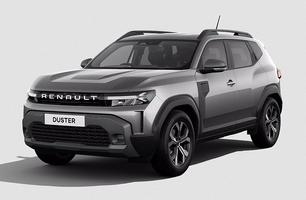
The Dacia Duster, a well-liked small SUV in Europe, has been available in overseas markets for about 15 years and it’s now here, albeit rebadged as the Renault Duster.
At a time when people increasingly want to escape the modern-day rat race, vehicles such as the Duster offer a family- and budget-friendly way of achieving just that.
A new small 4x4 that actually might be somewhat capable off-road and with a manual gearbox? How refreshing.
But is the Duster a legitimate rival for something like the Suzuki Jimny?
Read on.
Hybrid campers tread the line between caravan comfort and camper trailer-manoeuvrability and are touted as somewhat of a new thing; almost an evolution of comfort as more people look for a perfect camping experience.
But camper-trailers like the Cub Longreach LE prove that the concept has been around for decades.
It hasn't always been called the Longreach, but this high-walled, super-sized, off-road camper-trailer was one of the first to offer caravan-like comfort and space in a product that'll go anywhere off-road*. (* In terms of reasonable use and having obviously scrutinised your camper's warranty conditions before setting off to make sure you're covered for that sort of usage.)
The 2019 LE takes the comfort levels even further, so we grabbed one for a night to check it out.
The Renault Duster 4x4 Evolution (manual) is a driver’s car. Lots of fun for day-to-day duties and a real visceral experience if you like to have a few laughs on loose-dirt and gravel tracks. And it’s adequately capable for off-roading adventures. It also has more than its fair share of cheeky charm.
Obviously it’s not anywhere near the most capable off-road vehicle available. That’s not what it’s intended to be. But it’s one of the most fun to drive on- and off-road.
And for $36,490 (excluding on-road costs), you’ll still have cash enough for a set of all-terrain tyres and some accessories.
This isn’t the camper for everyone – my guess is that plenty of people look at this and find it too sparse, too basic. I kinda get it.
But there are very few campers which offer the same amount of open, internal space, or that are as easy to set up.
That the Longreach, albeit with a few different names, has lasted so long on the Cub Campers' product roster is a testament to its versatility and ability to accommodate a small family on off-road camper trips.
It's arguably one of the forerunners of the hybrid camper scene, and it's now starting to evolve with campers' desires for more comfort.
The interior in Evolution trim matches the Duster’s no-nonsense adventure-focussed approach. It’s spartan but user-friendly.
The front seats are manually adjustable and the cloth upholstery looks like it’s hard-wearing and likely able to cope with the utter messiness of life.
I had trouble getting my phone to work via the 10.1-inch multimedia unit, but otherwise I have few complaints about the system as it’s easy enough to operate. There’s a wireless-charging pad below the screen. There are also two USB-C charging ports up front and two for rear-seat passengers, as well as two 12-volt sockets one in the front and another in the rear cargo area.
There is a mix of physical buttons and on-screen controls to operate various in-cabin functions, such as air-con.
For storage there is a glove box, a deep centre console, two cupholders, and a small shelf for your pocket clutter.
The second-row seats are roomy enough for two adults or three teens across the row and while passengers there have access to two USB-C charging ports and air vents, there’s no fold-down centre armrest.
The rear cargo area is accessed via a manual tailgate and is claimed to offer 358 litres of cargo volume when the rear seat is in use and 1424 litres when the second-row seat is stowed away.
Payload in the Duster Evolution 4x4 is listed as 503kg. The cargo area has a light, cargo hooks and a 12V socket. This Duster has a 215/70 R16 spare stored underfloor.
For a rear-fold camper-trailer, the space inside couldn't be more practical. The long body and high sides mean that when the camper is open and set up, it has a lot more space than most. Behind the bed, for instance, there is enough space for Cub to have fit a small dinette.
The dinette has cushioned benches for two and a swivel table that can also become a counter over the rear floor area.
The camper's length also means that the rear floor area is massive. It is easily big enough to lie a couple of kids on, or if your nest is empty, to set up some camp chairs and a table to enjoy a covered living area.
It is still a rear-fold camper-trailer, though so, despite the fact it has nearly twice the space of other hybrid-style campers, it's very sparsely furnished. There's no internal kitchenette or anything like that.
My kids are learning to drive in a manual because I reckon being able to drive a manual vehicle remains an important skill to have. I only own manual cars at this point in time and it’s nice to see new cars with manual gearboxes haven’t been done away with just yet.
This all-wheel drive adventure machine is light at 1422kg and punchy, working through a turbocharged 1.2-litre mild-hybrid three-cylinder engine (producing 96kW at 4500rpm and 230Nm at 2250rpm) and a six-speed manual gearbox.
It’s sporty, with precise steering, crisp throttle response and nicely controlled ride and handling. And it’s a whole lot of fun to drive on sealed surfaces.
Throwing it around corners at (legal) speed is a barrel of laughs and driving on fast loose-dirt tracks is damn good for rally-style hilarity, all with the gruff backing track of this little AWD’s tractable petrol engine. Driving the 4345mm long, 2069mm wide and 1650mm high Duster feels like you’re punching a go-kart around a track, in a good way.
The Duster’s suspension deserves a mention here because this package, including an independent multi-link set-up at the rear, yields a firm but well-balanced overall feel.
Its tight turning circle makes it supremely easy to accomplish quick manoeuvres without fuss and it’s also a cinch to park.
Visibility from the driver’s seat is somewhat reduced through different angles to the rear and back along the vehicle’s side, but you get used to that. It doesn’t help that the camera view is muddy looking on the screen.
Those niggles aside, did I mention it’s fun to drive?
It’s not too shabby in low-speed off-road scenarios, either. The Duster is similar to Subaru’s Crosstrek and XV or the Jimny, in that this Renault’s intended use is not as a hardcore rock-crawling beast, it’s not engineered for that sort of thing.
The Duster's all-wheel drive system is well calibrated and quietly effective at detecting wheel-slip and delivering a smooth response. Driven with care, this AWD SUV is capable of off-roading at a level that will surprise some.
It has a 4x4 terrain control system with five modes – 'Auto', 'Eco', 'Mud & sand', 'Snow' and 'Off-road' – as well as a hill descent control system. None of these are engineered to turn the Duster into an off-highway mongrel but they ensure it's able to cope with mild to less-mild off-roading.
The Duster’s ground clearance (212mm) and off-road angles (31-degree approach and 36-degree departure) make it better suited to tackling off-road terrain of the light-to-moderate variety rather than door-sill deep mud holes and the like.
For reference, the Suzuki Jimny has 210mm of ground clearance and approach and departure angles of 37 and 49 degrees. The Crosstrek has 220mm of ground clearance, and approach and departure angles in the off-road-focussed Wilderness of 23.5 and 25.5 degrees.
But it’s still very capable if driven with consideration and well within the limits of its physical dimensions and off-road traction control.
Light off-roading (well-maintained gravel roads and dirt tracks in dry conditions) is fine because that’s well within the Duster’s capabilities and it results in little to no wear and tear on the vehicle.
While the Duster can handle short bursts on firm-packed sand (which I test here), sand-driving puts extra stress on any vehicle, and AWDs don’t have a lot of ground clearance, so they’re prone to bellying out on tall crests in between deeper wheel ruts on a beach.
My advice? Avoid anything beyond a well-maintained dirt track in dry weather and don’t take on any ‘4WD/ high ground clearance only' tracks, prolonged sand-driving or rock-crawling. Anything more rigorous than that and you risk damage to the vehicle’s underbody at a minimum, and mechanical damage and personal injury at worst. You’ve been warned.
The Duster’s off-road capabilities could easily be further enhanced with a set of decent light truck all-terrain tyres but, be aware, even aggressive rubber won’t turn it into a gung-ho off-roader.
For the record, it has unbraked trailer towing capacity of 750kg and braked towing capacity of 1500kg. Maximum towball download is listed as 75kg.
A bonus for Duster owners is that it can be kitted out for adventure via either Renault’s range of accessories – including all-weather floor mats, roof box, roof racks etc – or through Australia’s aftermarket industry.
Cub Campers are famously good to tow, and even the largest of them lives up to the reputation.
As big as it is, the Longreach LE is quite light thanks to the effort Cub puts into engineering. As a result, it's not a strain, even for older dual-cabs like the D22 Navara.
And because it isn't any higher or wider than a modern SUV, there was very little wind-drag or buffeting as we cruised along the highway.
Cub developed the camper's Australian-made and -designed independent, coil-spring suspension and the set-up yields excellent ride in any conditions.
For the LE, Cub has added an extra shock-absorber each side to improve its performance even on the most corrugated roads.
An AL-KO off-road ball hitch is standard but can be upgraded to the Click-Lock version if you'd prefer that or need a more low-profile hitch.
In reverse, the long drawbar makes it an easy camper to manoeuvre around a campsite, plus it has enough size that the tow-vehicle driver never really loses sight of it while positioning it.