What's the difference?
Australia hasn't had what you'd call a love affair with the Porsche Panamera. Especially compared to the on-going romance with its iconic sibling, the 911 and even its SUV stablemates.
The Panamera straddles the fence between high-performance sports car and family sedan and it's a position rivals like the BMW 740i, Maserati Quattroporte and Mercedes-Benz S450 have sometimes found difficult to balance.
This new-generation 'base' Panamera model is on test to see if this sedan's 2025 redesign will launch an arrow from Cupid's bow for Australian families?
STOP! Don’t buy the performance SUV you were looking at! There’s a better way.
It’s the car we’re looking at for this review, Audi’s latest RS6 Performance. Freshly updated for the 2024 model year, this is the ultimate wagon, and possibly, the ultimate car which many overlook.
Is there a catch? And what has Audi changed for the 2024 model year? Read on to find out.
The Panamera is the ‘have your Porsche and drive it too’ model.
It encompasses the fun of the 911 while still being a comfortable daily driver that can easily fit a family of four. The cabin is sumptuously styled and not hurting for features, either.
Could the ownership costs and storage be better? Probably, but if you’re looking at this model, those items will probably be lower priorities for you.
For my little family of three, the base model Panamera is a win.
To me at least, the RS6 is pretty much the ultimate fast and practical car. One which is just as comfortable plodding around town as it is tearing it up on the track. Keep in mind, too, this may be one of your last chances to have a car which looks like this, equipped with a V8 engine. So, have I convinced you? Would you consider one of these over a performance SUV? Tell us what you think in the comments below.
Note: CarsGuide attended this event as a guest of the manufacturer, with travel, accommodation and meals provided.
This is more than just a new Panamera - it’s a new generation Panamera.
The outgoing model was sort of a mix between the 911 and Macan but didn’t really hit the mark with any of its borrowed elements.
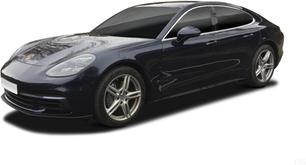
Beauty is in the eye of the beholder but the redesign sees this model get an outward appearance that looks far more aggressive with a distinct profile that now sets it apart for all of the right reasons.
On the outside, the biggest changes include larger matrix LED headlights and a new front fascia that sits a bit higher with more pronounced curving in the bonnet.
The front gets extra air intakes but there are also larger 'air blade' vents behind the front wheel arches which help smooth the air flow around the wheels and add some extra sculpted sportiness to the car's sides.
The rear has been reshaped to look more like the 911 and isn't as pillowy as the outgoing model. There is a new long LED strip light running the width of the rear and an extra brake light for added dazzlement at night. The rear window now spreads to the width of the liftback lid which makes it appear frameless.
The optioned 21-inch alloy wheels look gorgeous in their painted bronze (or Neodyme) glory and feature the Porsche crest in full colour for added pizzazz. The bronze accent is also carried across to the quad exhausts.
All these factors make the exterior design look more cohesive than the previous model.
The interior has been reworked, too, and the dashboard now sports upgraded tech panels that makes the cabin feel cinematic. The optioned passenger display screen only adds to this effect.
Purists will pout, but like the new 911 the analogue cluster and turn-key operation have died a quiet death. You now get a 12.3-inch digital instrument panel and push-button starter. Plus, the gearshift has been repositioned from the centre console to the dash.
The optioned Sports Chrono and Neodyme accent packages of our test model means the dashboard gets a race clock (superfluous for every day driving but fun to look at) and the door handles, steering wheel and dashboard feature the same bronze highlights.
The only elements that don't look the part are the shiny piano black panels mainly found in the centre console. They're too easily scratched/marked for a car at this price point.
The cabin may not be as flashy as its competitors but it's still sumptuous.
At a distance the RS6 is just an unassuming station wagon, but the closer you get, the more apparent it becomes how mean it is. It’s wide, it’s chiselled, it’s not just good looking, it’s iconically Audi.
The stance is so wide, its ride height so low, and its wheels are so massive that any keen eye will be able to spot where the difference is between this and any old family hauler.
Wagons may not be trendy, but there’s something undeniably cool about having the hauling capacity of an SUV at the ride height of a sedan.
Of course, if you want to look even more svelte and don’t need the boot space, the RS7 is always lurking around at a slight price premium.
Inside, the RS6 has all the modern amenities of the Audi range. Expect the usual sharp screens, lovely sports seats, and a tasteful application of textures throughout.
There’s a blend of carbon-look finishes, chrome, leather and gloss black. Perhaps a little too much gloss black to keep clean, but the aesthetic is suitably upmarket.
You can go to town on customisation, and the car we primarily tested had stitching and colour in the carbon patterns to match its 'Ascari Blue' exterior, but you can pick whatever shade or combination of colours your budget allows.
Audi’s software is pretty good these days, with an attractive theme and fast hardware to back it, and the brand’s ‘Virtual Cockpit’ is still one of the most aesthetically pleasing and customisable digital instrument systems on the market, despite being one of the first.
The cabin feels spacious in both rows and the rear row can comfortably fit those who are above six foot (182cm) with a caveat.
Despite being optioned with the '4+1' seating, don't be fooled; the middle rear seat is nothing more than extra room for the out-boarders as the rear centre console takes up all legroom a middle seater might need. Not even a kid will be happy in the middle for long.
Amenities in both rows are good. The heating/cooling and massage functions on the front seats are great and the four-zone climate control means everyone can get comfortable.
Access to both rows is surprisingly good with doors that open widely but the rear footwell lip is high and the well narrow. So, if you have clunky boots on you may feel clumsy getting into position.
My seven-year old found the doors heavy to open and it took him a while to realise he didn’t have to slam the doors shut thanks to the soft-close feature.
Individual storage is better than you usually get in a sports car but all cubbies still fall on the shallower side. There are four cupholders, four drink bottle holders, a glove box, a middle console and two small net map pockets. There is also a dedicated phone cubby housing the wireless charging pad.
The boot aperture is wide and it’s super easy to reach things in the back thanks to the liftback lid but that sloping roofline means you lose out on height for larger items.
Stack bigger things right behind the back seat if you want to fit them. Capacity is below average compared to its rivals at 460L.
The rear row has a 40/20/40 split to open up storage options and there is a very deep cubby underneath the floor with the tyre compressor/repair kit.
Device charging options are great with a total of four USB-C ports, a wireless charging pad and three 12-volt sockets to choose from.
The upgraded multimedia system looks fantastic and is user-friendly. The built-in satellite navigation is simple to use and the multimedia system, head-up display and instrument cluster can be highly customised.
The base Panamera model now comes standard with wireless Apple CarPlay and Android Auto. Connecting to the CarPlay is easy and the connection remains seamless.
The optional passenger display panel allows the front passenger to control their climate and seat comfort, see a duplicate of the instrument panel or just watch a movie on a long trip.
The screen has a privacy filter, which means the driver can’t see what’s on it and is thus not a distraction. However, no one in my family bothered to use it.
Okay, I promised a car with the practicality of an equivalent SUV, but it’s not quite there. The trade-off is still worth it, I promise, but there are a few areas where the RS6 isn’t as practical as you think it’s going to be, particularly for front occupants.
Yes, it’s a big wide car, with large but supportive seats and plenty of headroom, but the issue for those travelling in the front two seats is the surprisingly limited amount of storage.
Yes, there are two bottle holders in the centre console with a folding tray lid to hide them away, but they aren’t huge. Bigger bottles would have to go in the door bins, but even then they’re a bit height-constrained.
There’s a decent glove box on the passenger side, but even the centre console box is very shallow, with more than half of it taken up by a wireless phone charger.
The touch panel for the climate unit looks impressive but still can’t match having physical dials. It has clicky haptic feedback to your individual presses, and all the functions are permanently accessible instead of hidden in sub-menus, so if you’re going to make climate a touch-based interface, it doesn’t get much better than this.
Where the RS6 shines is in the back seat. Despite those big bucket front seats, I had heaps of room behind my own seating position (at 182cm tall), with lots of headroom and sufficient width in the cabin to spread out.
You sink into the rear seats, which are heavily contoured so riding in the back is a pretty good experience even on the track.
Rear passengers get four adjustable air vents in both the B pillars and in the centre, as well as their own touch panel for the rear climate zone.
USB power outlets are also available, and there are netted pockets on the front of both back seats, with a further two bottle holders in the drop-down armrest.
The centre seat is probably only good for kids, because there’s a very tall raise in the centre required for the driveshaft, eating all the legroom.
The boot is fairly large at 548 litres which is in mid-size SUV territory, although I will admit some performance SUV rivals offer closer to 600L.
Space expands to 1658L with the second row folded flat.
There are four grades of Panamera on offer for the Australian market and the model on test is the entry-grade sedan, simply titled Panamera.
It feels silly calling a car priced at $236,990, before on-road costs, a 'base' model but here we are.
Our test model has $45,810 worth of optional extras but compared to its rivals the base price positions it towards the middle of the market with the Maserati Quattroporte GT being the most affordable at $219,000, then the Mercedes-Benz S450 at $241,275 and BMW 740i at $272,900. All prices before on-road costs.
As you’d expect, the standard equipment for the Panamera is long-winded and includes matrix LED headlights, four-point DRLs, ambient lighting, four-zone climate control, a dual sunroof, upgraded 12.3-inch touchscreen multimedia system, a new 12.65-inch digital instrument panel, wireless Apple CarPlay/Android Auto and built-in satellite navigation.
Comfort items include 14-way powered front seats with heating/cooling, as well as three-position memory functions. There is also a powered tailgate, front and rear parking sensors, a 360-degree view camera system and soft-close doors with a 'door brake' function.
The latter means the door holds the position you push it out too, minimising the chance of your kids hitting the neighbouring car, which is an awesome feature in a family car!
Other technology includes a total of four USB-C ports, three 12-volt sockets, a wireless charging pad, digital radio, the Porsche app and over-the-air updates.
As for the optioned extras... there is Burmester high-end sound ($11,200), full-grade leather upholstery ($7470), dark bronze accents on the quad exhausts ($6470), 21-inch alloy wheels ($3400), the 'Sport Chrono Package' ($3340), 10.9-inch passenger display screen ($3140), wheels finished in 'Neodyme' bronze ($2500), a massage function on the front seats ($2200), a middle rear seat ($1750), an interior Neodyme accent package ($1190), a heated steering wheel ($1140), an air quality system ($890), an interior black trim package ($760) and comfort pillow accessories ($450). Phew!
Let’s start with the bad news. Most people can’t afford one of these. The RS6, in all of its muscular glory, is more expensive than ever before. Now wearing a before-on-roads price-tag of $241,500, it’s hardly your average mum and dad family hauler. But then, there’s nothing average about the RS6.
It’s so well regarded amongst enthusiasts for multiple reasons. It’s the biggest meanest wagon you can buy, and somehow Audi has managed to make this version more powerful and even faster than before.
In fact, it’s one of the few normal looking combustion cars out there which can still hold a candle to many electric cars, with its whomping V8 helping it warp from 0 to 100km/h in just 3.4 seconds.
More on those performance specs later. If you’re wondering what else you get for your near-quarter-of-a-mill it’s pretty much every spec item Audi currently offers.
There are now lighter 22-inch alloy wheels, adaptive air suspension, a high-performance braking system, an RS-specific exhaust system, matrix LED headlights with adaptive high beams, a 10.1-inch multimedia touchscreen with navigation and wireless phone mirroring and one of the best digital instrument clusters on the market.
It also features Valcona leather interior trim, sporty bucket seats with perforated trim, honeycomb stitching, as well as ventilation and heating, additional cabin trim in synthetic suede (comprised of 45 per cent recycled fibres), ambient interior lighting and a panoramic sunroof.
It’s a lot of stuff, but one thing you get a little less of is sound insulation. Audi has chosen to remove some of it this time around so you can hear the V8 better from behind the wheel.
The base Panamera doesn’t have a hybrid powertrain like its siblings and sports the 2.9L V6 twin-turbo petrol engine of the outgoing model. But it’s been retuned and now produces 260kW and 500Nm – both figures up from the previous model.
The Sport Chrono Package means the 0-100km/h sprint improves from 5.1-seconds to a tummy-sucking 4.8-seconds and my son gave a whoop of delight whenever we had to get up to speed.
The Panamera has an eight-speed, dual-clutch auto transmission and is the only RWD for the Panamera line-up. It also sports a top speed of 272km/h. So, suffice it to say, the engine has the sports cred you expect from a Porsche.
The RS6 is still packing eight cylinders in 2023, producing a massive 463kW/850Nm, somehow an increase (+22kW/50Nm) over the previous iteration.
Audi’s signature ‘Quattro’ all-wheel drive system is present alongside a limited-slip differential and four-wheel steering.
Air suspension and performance brakes and exhaust also feature, alongside an aggressive Continental SportContact 7 tyre package.
The 0-100km/h sprint time is now just 3.4 seconds, allowing you to show up even some electric cars, and the RS6 features 48-volt mild hybrid technology with a cylinder-on-demand system which can shut half the block down for more efficient coasting.
The transmission is an eight-speed torque converter unit which is smooth and effortless.
The official combined (urban/extra-urban) fuel-cycle consumption figure is 9.5L/100km, which is pretty low for a high-performance vehicle (and a big one at that) but after a lot of open road and urban driving my real-world usage came out at 10.9L/100km.
That's the result after not being skimpy with using the power, either, so it's not as thirsty as you might expect.
When it comes to times between fills, the Panamera might surprise you. Based on the official combined fuel cycle and large 90L fuel tank, expect a theoretical driving range of up to 947km (825km using our on-test figure) – which is a great driving range for a performance vehicle, let alone a family one.
The Porsche Panamera only drinks the best, so while the driving range is great you won't be able to fill 'er up with anything but premium 98 RON unleaded petrol.
Officially, the RS6 and its eight cylinders drink a combined 11.8L/100km, although even with its fancy hybrid system and cylinder deactivation, my time with the car saw 15.0L/100km. The RS6 has a 72-litre fuel tank and takes only the finest 98RON unleaded fuel.
Some people might not understand the obsession or loyalty Porsche owners have towards their cars but if you’re a fence sitter, get in the Panamera. It will make you understand because after driving one... you'll hear yourself say 'I get it'.
The base model has the goods with the engine outputs to ensure the driving experience remains fun and responsive.
The Panamera is no wild bronco, it's a cool customer. The composure for power delivery is unlike other performance sedans you may have driven. Acceleration is effortless without any twitchiness. You never feel out of control.
The air suspension means you hear the bumps more than you feel them but you still get excellent road feedback as a driver.
Passenger comfort is high, despite the cabin being quite loud with road and engine noise, because the seat and ride comfort remains well-cushioned. Fatigue and jostling are at a minimum.
The handling of the Panamera when it comes to cornering and steering feels dynamic and agile. I made a point of doing multiple mini roadies this week, simply for the joy of driving it.
While the Panamera is the most fun on a winding mountain road, it's a pleasant open-road cruiser as well.
The base Panamera has three driving modes - 'Normal', 'Sport' or 'Sport Plus' with a 20-second power booster available when you need extra oomph.
The Normal mode is sufficient for daily driving and the Sport Plus offers stiffer suspension and handling but the preference is to keep it in Sport mode.
Mainly because in this mode you get an awesome throatiness from the exhaust as well as the dynamics you expect from a sports car.
It’s a bit deceptive but the Panamera is massive and sits at 5052mm long and 2165mm wide - so, it definitely fills out a parking space!
However, the 360-degree view camera system is one of the best in the segment but you may still get choosy with where you park it.
As you might have guessed from its impressive engine and performance equipment, the RS6 is a certified weapon on road and track.
On the road you can expect a quiet, refined cabin, superbly balanced steering for low and high speeds and a gentle ride quality courtesy of the pricey air set-up.
It’s as noisy or as quiet as you want it to be, with the cylinder deactivation toning things down at low speeds, and the engine roaring to life under heavy acceleration, or when the 'Dynamic' drive mode is selected.
It can at times be alarming how much the RS6 leaps to life, as it feels so cushy in a city, its width and cabin giving the feel of a luxury car rather than a performance one.
Make no mistake, though, the RS6 is properly quick, and when you give it a kick, it’s the roaring, aggressive machine the spec sheet suggests.
The best place for this? The track, of course. The big V8 and the capability of the all-wheel drive system are truly best explored at velocities impossible to legally achieve on the road.
Once you get past the bark and snarl of this wagon’s eight-cylinders at full force, and the lightning-fast shifts of its eight-speed automatic, you’ll have a moment to appreciate the way it simply holds to the tarmac when you tilt it into the corners, providing a balance when loaded up which only air suspension can provide.
The steering is awesome, communicating the texture of the road nicely to the driver, and requiring just the right amount of force to keep the car pointing where it needs to go.
The grip level is astounding with the huge tyres and the four-wheel steer system lets this hefty wagon take corners at a tighter angle than your brain initially allows.
Thankfully, the four-wheel steer system isn’t weird, either. While it can have a strange effect on some cars, in the RS6 it only bends your mind slightly when you tip it into a hairpin. Otherwise it feels pretty normal.
When everything is warmed up, it can let its guard down slightly and allows the driver to eke out a slide at the rear here and there for extra fun-factor
Jeez. What a machine. I guess this is what a quarter of a million dollars buys. A car that can do it all. Take the kids to the school in comfort and tear it up on the track like few other passenger cars on the same day.
There’s a caveat, though. A small one which looks like it will turn into a big one for cars like this in the near future.
I had the opportunity to drive the RS e-tron GT around the same circuit and it was better. Much better.
It was faster, more accurate, more composed. It was so effortless, I didn’t realise exactly how much quicker than the RS6 it was until I drove them back-to-back.
It’s a good sign for the future, but also a reminder a V8 like this isn’t the performance pinnacle it once was.
No Porsche is rated with ANCAP and the Panamera is no exception but the base model still has an extensive safety list that includes 10 airbags, which is more than some people movers!
The standard safety kit includes AEB, forward collision warning, blind spot monitoring, driver attention alert, safe exit warning, rear occupant alert, tyre pressure monitoring, an active bonnet and a side impact protection system.
There's also rear cross-traffic alert, lane departure alert, lane keeping aid, a head-up display, adaptive cruise control, a 360-degree view camera system, front and rear parking sensors, park assist, an engine immobiliser and an alarm system with radar-based interior surveillance.
The base Panamera misses out on traffic sign recognition and rear collision warning, though.
The rear row has two ISOFIX mounts and three top tethers but only two seats will be able to fit across the row.
Like its standard cabin equipment, the RS6 has had the entire catalogue thrown at it for active safety gear. Included is freeway-speed auto emergency braking with pedestrian, cyclist, and intersection detection, lane keep assist with lane departure warning, blind-spot monitoring with rear cross-traffic alert, an exit warning system, and adaptve cruise control with traffic jam assist.
Elsewhere the RS6 gets dual front, dual side, and head curtain airbags, with ISOFIX points on the outer two rear seats as well as three top-tethers across the rear row.
The RS6 is not safety rated by ANCAP, but the rest of the A6 range was awarded a maximum five stars in 2018.
Porsche offers the Panamera with a three-year/unlimited km warranty, which is less than its competitors. It's more typical to see a five-year/unlimited km warranty in this segment.
Servicing intervals are reasonable at every 12-months or 15,000km, whichever occurs first and pricing varies per dealership.
The one I contacted (in Sydney) confirmed the first four years of servicing costs $8605 for an average of $2151.25 per workshop visit.
Worth noting the fourth year is a biggie at $4875, this major service including everything from an air-conditioning clean and transmission oil change to spark plug check/replacement and safety checks.
The Panamera is up there for service costs, even for the class but this kind of outlay comes with the territory when you're considering a car worth almost $300K.
Five years and unlimited kilometres is the warranty length, and Audi’s ownership program includes invites to events like the one we were able to experience for the launch of this car. A track-test of the RS6 and the RS e-tron GT.
If you own one, I recommend them, you’ll learn a thing or two about the car and possibly yourself while you’re at it.
Servicing is required once every 12 months or 15,000km, and a service pack covering the first five years or 75,000km can be purchased alongside the car at a cost of $4360.
It works out at $872 per year, which isn't economy car cheap, but with such a complex drivetrain, what did you expect?