What's the difference?
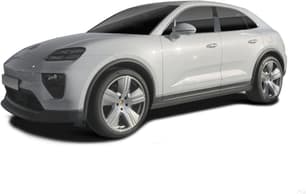
This might be the biggest gamble in Porsche's history. It's the latest version of its best-selling car, the Porsche Macan, only this one has a very big difference.
You see, this time, it’s all-electric. There is not an internal-combustion engine (ICE) in sight. And that makes climbing into an entry-level Macan significantly more expensive than ever before.
So, will this bold shift help or hinder the Macan in Australia? And is this the country’s best all-electric SUV?
There’s only one way find out.
There’s a fairly big change hiding under the metal of one of Australia’s favourite utes. The Isuzu D-Max has a new 2.2-litre engine, replacing the 1.9-litre unit, and it brings a couple of other things with it.
A bigger engine designed to be more powerful and more efficient can only be a good thing, surely, especially with Isuzu looking down the barrel of stringent emissions laws with only two models in the line-up, both diesel powered.
But is this new 2.2-litre engine any good? Isuzu’s gone to the trouble of a new gearbox and some new tech to go with it, so we check it out to see if it stacks up against the increasingly strong competition.
There is no doubting the substance of the Porsche Macan Electric. Its ride, steering and poise make it a joy to drive on twisting roads, and it ticks the practicality boxes, too.
The only lingering question is whether enough people are ready to make the all-electric switch. Only then will we know if Porsche's Macan gamble has paid off.
Note: CarsGuide attended this event as a guest of the manufacturer, with travel, accommodation and meals provided.
The new engine makes the D-Max a much more likeable ute than it already was, which is high praise.
It’s smoother and quieter and makes for a more pleasant drive. The added efficiency is a bonus both for your wallet and Isuzu’s emissions credits.
The 3.0-litre engine will probably remain the favourite, but anyone who test drives a 2.2L might even be tempted to opt for the smaller unit. Isuzu sure hopes so.
Note: CarsGuide attended this event as a guest of the manufacturer, with travel, accommodation and meals provided.
The Macan Electric looks sharp, all aerodynamic and swept-back like a range-maximising electric SUV should.
There’s functional method behind all this swoopy styling, too. The headlights look as though they’ve been chiselled into the body work, and at the grille, you’ll find active venting to help with cooling when needed.
There is also a sizeable front splitter that looks very much like the Macan is sticking its jaw out. All of which is to assist with aero and range.
It’s also a dual charging port layout with access left and right, though the latter is AC charging only, while the one on the left does both.
Step inside the Macan and you’ll find a familiar and very welcoming space. I especially like the twin-screen set-up that looks great in the way it's kind of embedded into the dash. Each is big, clear and easy to use.
I also really like the control panel that gives you quick-button access to the climate control, and the haptic feedback is next level, with the whole screen clicking in or out whenever you hit a button.
That said, in Turbo-guise you’re dropping almost $200,000, and some of the materials feel too hard and plasticky at that price point.
The look of the D-Max depends on the grade you end up with, but the 2.2-litre SX and X-Rider variants down the lower end of the model-run are still pretty standard-looking utes. Inside and out.
You get fairly rugged styling that fits in for both work and play, and the interior is functional, if getting a little outdated.
The black trim (and extra features) that comes with the LSM X-Rider as opposed to the SX is worth it if you’re keen to get a 2.2-litre-powered D-Max for the family rather than one for a fleet as it just elevates things slightly.
Inside, it also means nicer cloth, and not having the vinyl flooring looks a little less ‘farm ute’.
There is a little open-sesame magic at play with the Macan, and that starts at the frunk, where, if you lovingly caress the bonnet, it will automatically pop open for you, revealing an 84-litre storage space.
Rubbing the charging port will see it slide open, too, but just in case you’re not the kind of person who likes to fondle their car in public, you can use the key.
The Macan’s boot is a little more traditional, opening to reveal 540 litres (but just 480 litres in the 4S or Turbo) of storage with the rear seats in place, with a wide, flat and very useable area for your goodies.
The back seat of the Macan feels spacious enough, without being outstanding. There’s more than enough space for my 175cm frame, with enough knee and head room, but the way the middle console juts out will definitely eat into leg room for any middle-row passenger.
Elsewhere you get air-con controls with vents, along with bottle storage in each of the doors. There is also a pull-down divider that’s home to two extra cupholders.
The D-Max remains straight-forward inside, given nothing has changed with the update aside from the 2.2-litre engine and the addition of stop-start - there’s a button for that now.
The interior and usability of the D-Max, especially in the lower-end variants where the 2.2L engine is available, is focused on the basics.
Tech remains at a relative entry point, where the 8.0-inch screen and its software feel outdated but do everything you need. Plus of course there’s the phone mirroring workaround.
The D-Max is comfortable and spacious enough, there’s also physical buttons for everything including media and climate settings, and adjustability in terms of the seating position means not needing to reach.
In dual-cab versions, there’s enough space for an adult to sit in the second row behind another adult, so the D-Max also holds its own as a family hauler. Tick.
Importantly, Isuzu is now able to claim a 3500kg braked towing capacity across the full D-Max range thanks to the new 2.2-litre engine.
The Macan arrives with four trim levels, the entry-level Macan, the Macan 4, Macan 4S and then the flagship Macan Turbo. The latter is just a name Porsche now applies to its go-fast models — obviously there isn’t an actual turbo in action.
The new electric range opens with the Macan, which lists at $128,400, before on-road costs. A reminder here that the old entry-level Macan with an ICE powertrain would have set you back less than six figures, so this one represents quite the jump.
Now, it should be pointed out that you can still buy the previous-generation ICE Macan, at least until supply runs dry. The brand isn’t getting any more, but suggests there are enough in the country to satisfy demand until around Q2 next year.
Next is the 4, which is $134,400 and adds a second e-motor. Then comes the 4S, yours for $149,300, before the range tops out with the Turbo, which climbs to $184,400. All prices before on-road costs.
Those are big numbers, but at least Australian-delivered cars are some of the best-specified on the planet.
That starts with the Macan, which gets a 12.6-inch digital instrument cluster, and a second 10.9-inch central touchscreen with Apple CarPlay and Android Auto.
It rides on 20-inch alloys, has synthetic-leather seats that are heated up front and Australian cars get things like the clever 'Porsche Active Suspension Management' (PASM) system as standard.
Next up is the Macan 4, which adds a second electric motor, but otherwise largely mirrors the base car’s spec. Next on the list is the 4S, which rides on a different 20-inch alloy, picks up LED matrix headlights, sports a better Bose stereo, a panoramic roof and four-zone climate control.
Finally, the Turbo is the big dog of the electric Macan range, packing serious power, but also arriving with its own 20-inch alloy wheel design (with 21-inch wheels a no-cost option) — an augmented reality head-up display, and things like the 'Porsche Electric Sport Sound', the 'Sport Chrono Package' and a performance-focused 'Sport+' drive mode.
Pricing is up across the board for D-Max (and its MU-X sibling) regardless of drivetrain, but we’ll stick to the 2.2-litre variants here to stay on track.
Most of the lower-level D-Max variants are $1500 more than the previous equivalent, and with the manual gearbox dropped, the cheapest grade is the 4x2 single-cab chassis SX with a 2.2L engine at $36,200 before on-roads.
You can get the SX in crew-cab with a chassis or ute back in either 4x2 or 4x4 with a 2.2L engine, which is also available in the LSM X-Rider 4x4.
That one will set you back $59,500, which is still far from the most expensive D-Max around. That’s still the Blade, with a 3.0-litre engine and 4x4 only, but it’s now $80,900.
Back to the 2.2s, and the SX grade comes with the basics. Cloth upholstery, polyurethane steering wheel and gear selector, vinyl flooring and even halogen lights.
There’s basic air-conditioning, but it does have a HEPA filter, and rear vents for crew-cab models, plus there’s wireless Apple CarPlay and Android Auto, auto wipers, and USB-C power ports as well as a USB-A port.
The central multimedia touchscreen is 8.0 inches, but the driver display is a little 4.2-inch unit between physical dials.
Stepping up to the LSM X-Rider brings with it auto-levelling LED headlights and LED daytime running lights, black styling trim, nicer cloth trim upholstery and gloss black 17-inch alloy wheels.
The rest of the D-Max line-up is 3.0-litre-only, and remains as it was before.
The entry-level Macan is equipped with a single rear-mounted electric motor, and it will make a total 250kW (265kW with launch control activated) and 563Nm, which is enough to push the cheapest Macan to 100km/h in 5.7 seconds.
The 4 then adds a second electric motor for AWD, upping the grunt to 285kW (300kW with the launch function) and 650Nm, and drops the sprint to a brisk 5.2 seconds.
The 4S is probably the performance sweet spot, with its dual-motor set-up generating 330kW (380kW in launch) and 820Nm, and a blistering sprint of just 4.1 seconds.
But the Macan Turbo is a true monster. We’re talking 430kW (470kW with launch control), 1130Nm and a sprint to 100km/h that’s as fast as a Carrera Cup race car – just 3.3 seconds.
It’s twin-motor, all-wheel drive and offers the kind of brutal acceleration that gives you a little facelift every time you step on the accelerator.
The new 2.2-litre turbo-diesel four-cylinder comes with 120kW and 400Nm, that’s 10kW and 50Nm more than before. Isuzu also says there’s 60 per cent more torque ready from near-idle at 1000rpm.
An eight-speed auto replaces the six-speed, but the brand has also culled the manual options that remained in the line-up.
As ever, that sends power and torque to a part-time 4WD system capable of 2H, 4H and 4L with a rear diff-lock.
Every Macan is fitted with a big 100kWh lithium-ion battery, which helps deliver a solid driving range no matter which one you choose.
The entry-level Macan will cover the most distance, at a claimed 654km, while the 4, 4S and Turbo will travel 624km, 619km and 616km, respectively.
The Macan rides on an 800V architecture, and is set up for 270kW DC high-speed charging, which will take 21min to go from 10 to 80 per cent. It will also accept 11kW AC charging, which should take 10 hours to go from empty to full.
Worth noting, though, that most home wall boxes are around 7.0kW, which means a full charge would take more like 13 hours plus.
The biggest advantage for the new drivetrain from Isuzu’s perspective is that it’s more fuel efficient.
The old engine’s 6.9 litres per 100km become 6.6L/100km in the new engine, in part thanks to a new stop-start system. That system is also now on the 3.0-litre engine, where 8.0L per 100km drops to 7.1L.
With its 76L diesel tank capacity, the D-Max should theoretically be able to travel more than 1000km on a single fill, although that comes down to a lot of variables - that 6.6L figure was achieved in almost lab-like conditions.
Porsche seemed at pains to prove that, though the all-electric Macan has lost its ICE heart, it's still worthy of the badge, and still very much a Porsche.
First stop, then, was the Norwell race circuit in Queensland, to put the Macan through its paces with 0-100km/h sprints, drifting (well drift attempts... ) on a watered-down skid pan and finally some high-speed running on the circuit.
And two things immediately became very clear. The first, and most obvious, was that, like the first men on the moon, we were likely among only a handful of people that might ever take their all-electric Porsche mid-size SUV to a race track. And second, this is one seriously sorted electric car.
Happily, for the many (read: every) owners who won't be pulling out of a pit garage at their next local track day, the Macan is actually more enjoyable on the road than it is on the track.
On the latter, there's a freedom to push too hard – what with the lack of trees, guard rails or oncoming traffic – and cracks do appear, mostly from the screaming tyres struggling with the two-tonne-plus weight.
But on public roads, where a thick fog of consequence prevents you pushing too hard, the Macan is a gem.
Porsche tends to have a knack for these things, I know, but the Macan is a seriously smooth and satisfying drive.
The ride is bang-on (comfortable enough on rougher surfaces, firm and grippy enough on twisting roads) and the steering is direct and confidence-inspiring.
Body-roll has been largely banished, too, with the Macan staying flat, stable and satisfying, even on the tighter stuff.
In much the same way the ICE Macan defined what it meant to be a driver's SUV, I think this one does the same in the EV space. And the fact that it does it with five seats and a decent boot is a sizeable bonus.
But there's no denying it lacks in the emotion department. That sense of excitement, the sound track, the hard-to-define fizz – as competent its this, and as weaponised as the EV powertrain is – it does feel a little clinical, like a tool doing its job and doing it well.
One important caveat. We've driven the 4 and Turbo to date. The entry-level Macan and the mid-tier 4S are still incoming. And I suspect I wouldn't be dropping my deposit on the Turbo.
Yes, the power is ridiculous, but I don't reckon you need it. For me, the 4 is more than enough, but I suspect the real performance sweet spot will be with the 4S.
Let’s start with the most important part of the updated D-Max. The new 2.2L is smooth.
It feels so much more refined physically, but it's also quieter. Paired with the new eight speed, it makes the D-Max a much more likeable ute than it was with the rattly 1.9L.
At the launch, Isuzu had a bunch of MU-Xs to drive (keep an eye on a review coming soon), and the new drivetrain actually suits that big family SUV down to a tee.
The power and efficiency changes are second to how much it changes the characteristics of the thing.
If anything, the D-Max sits in a slightly higher gear than necessary, probably to try and eke as much out of the diesel dual-cab as possible in terms of fuel efficiency, but put your foot down and a more appropriate gear is close-by, and without much fuss.
There's also a relatively good stop-start system. It's not seamless but it's better than some. You take your foot off the brake and the engine rattles back to life, rather than waiting for you to put your foot back down.
The rest of the D-Max’s behaviour is pretty standard ute stuff, as it was before.
The steering is on the light side, but accurate enough even though it has a slightly doughy spot dead-straight. It’s not anything you wouldn’t expect from a ute.
Similarly, the brakes are a bit spongy but predictable, and once you’re used to where the ‘bite’ point is it’s easy to live with.
The suspension is a bit busy, but easy to keep on top of and doesn’t jostle you around.
The Porsche Macan Electric is yet to be assessed by ANCAP, or by Europe’s NCAP, but it doesn’t appear to be missing any key equipment from its safety list.
That includes curtain airbags that extend all the way to the boot, AEB with pedestrian detection, lane keeping assist, a surround view camera and 'Intersection Assist'.
Isuzu has done well to include pretty much the full range of safety features across all its variants, with the SX only missing out on rear parking sensors - it still has a camera though, obviously.
Key features like rear cross-traffic alert with braking and adaptive cruise control are standard, plus the D-Max achieved a five star crash safety rating from ANCAP, even though that was under slightly easier testing back in 2020.
The biggest (but only) gripe on-test with the D-Max’s safety gear was its lane-keep during adaptive cruise. There seemed to be a need for the ute to sit close to either the centre line or shoulder during cornering, which led to some discomfort on fast country roads.
The Porsche ownership experience is frankly underwhelming by modern standards, with the brand offering just a three-year/unlimited kilometre warranty, plus an eight-year/160,000km battery warranty.
The positive, though, is that servicing should only be required every two years or 30,000km. You also buy a prepaid service plan for three, four or five years, priced at $1495, $2795, $2995.
Isuzu’s six-year/150,000km warranty covers the D-Max, which could do without the limited distance, especially for a workhorse.
There’s also five years of flat-rate servicing every 12 months or 15,000km, costing $469 each time.
That’s gone up about $20 per visit since the update, with total cost over the five years at $2345.
There are 164 Isuzu dealers across the country, so finding somewhere to service shouldn’t be a challenge.