What's the difference?
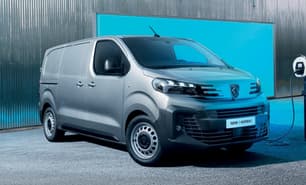
French manufacturer Peugeot is at the cutting edge of electric commercial vans in Australia, having introduced its E-Partner small van (under 2.5-tonnes GVM) in 2023 before recently adding its new E-Expert in the popular mid-size segment (2.5 to 3.5-tonne GVM).
We recently spent a working week aboard the E-Expert to see if it has what it takes to provide a genuine zero-tailpipe-emissions alternative to Toyota’s dominant diesel-only HiAce.
If one is good, two must be better, right? Or twice as good. The question is whether that simple equation adds up for BMW's upgraded 1 and 2 Series siblings – the former, a range of five-door hatches, the latter, a line-up of cabriolets and coupes, with a major addition in the shape of the full-house, performance-focused M2.
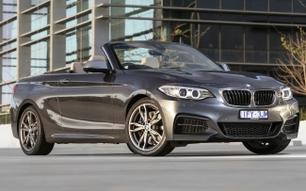
Prices are up, and changes are mostly under the skin, so you're not getting big visual bang for your extra bucks. But the new and improved 2 has plenty to offer when it comes to added spec and tech.
BMW invited us to the new car's Australian launch program along Tasmania's wet and wild west coast.
The driving comfort and competent load-carrying ability of the E-Expert in a daily short-haul working role would be well suited to both tradies and fleets, if equipped with the convenience of back-to-base overnight charging at home or depot. However, its zero-tailpipe-emissions technology comes at a high price, requiring careful cost-benefit analysis by potential buyers.
The BMW 2 Series coupes and convertibles combine understated good looks with great dynamics and top-shelf quality. Extra equipment, especially the iDrive6 multimedia system, has brought it up to speed in terms of tech and value, while the M240i sets the compact performance benchmark. And if you really want to push the envelope, the M2 is right there at the top of the under $100k performance pyramid.
Externally the E-Expert adopts the new look of the Peugeot light commercial range, featuring an elaborate grille design with the brand’s equally new emblem proudly displayed at its centre.
The three-seater cabin design has also been upgraded, with Peugeot claiming extensive revision of the driving position for greater comfort (see Practicality).
The E-Expert rides on a 3275mm wheelbase with 12.4-metre turning circle and combines MacPherson strut front suspension with semi-trailing arm/coil-spring rear suspension, rack and pinion steering with electric power-assistance and four-wheel disc brakes.
Its 1948mm height ensures it can easily access height-restricted areas like underground loading docks and multi-storey car parks.
The biggest visual clue to the revised 2 Series is the circular design bi-LED headlights, now standard on the 2 Series entry 220i, and mid-range 230i models, while hexagonal adaptive LEDs are standard on the top-shelf M240i.
But BMW couldn't leave those little light-emitting diodes alone, with LED front fog lights joining one-piece L-shaped LED tail-lights across the range.
Luxury Line-equipped cars feature a subtly revised nose treatment with larger intakes and a reshaped 'kidney' grille. There are also four new alloy wheel designs – a 17-inch alloy fitted standard to the 220i Luxury Line, and three optional M alloys for M Sport models (all no-cost options on the M240i).
The 230i M Sport features black, high-gloss bars in its kidney grille, as well as a black chrome finish for the exhaust finishers.
On the inside, there's the addition of a 'Black Panel' digital instrument cluster, which remains matt with the ignition off, and lights up with sharp graphics, configurable across conventional speed and rev readouts, as well as gear position, engine-efficiency data, vehicle settings and nav guidance.
There are also high-gloss finishes across the centre stack and front console, and even greater attention to detail around panel joins, trim stitching and switchgear.
But the hero is the latest iDrive6 multimedia system, run through an 8.8-inch colour touchscreen (6.5-inch on 220i), providing access to live content, radio and audio, navigation and maps, phone functionality, and vehicle settings through a simple and customisable app-style interface. The iPhone really as inspired car companies.
The M2 boasts M-specific instrument display content and a go-fast red needle on the tachometer.
A highlight of the E-Expert’s design is its conspicuously low published tare (unladen) weight of only 2052kg, which is considerably lighter than not only its LDV eDeliver 7 LWB Low Roof rival at 2365kg but also the segment-leading diesel HiAce (in LWB Auto Barn-Door spec) at 2245kg.
This figure is largely the result of weight-saving chassis technology, given that its diesel Expert equivalent’s tare weight is an athletic 1698kg. As a result, given the E-Expert’s 3053kg GVM, it has a substantial 1001kg payload rating, so it’s a genuine one-tonner.
It’s also rated to tow up to 1000kg of braked trailer, but given Peugeot does not publish a GCM (or how much it can legally carry and tow at the same time) we can't confirm how much payload it can carry while towing its maximum trailer weight.
The cargo bay, which with the standard bulkhead/cargo barrier has a competitive 6.1 cubic metres of load volume, is accessed through sliding doors on each side with 935mm openings or from the rear through symmetrical barn-doors with 180-degree opening to enhance forklift and loading dock access.
The cargo bay offers 2780mm of floor length and 1628mm width, which combined with 1258mm between the rear wheel-housings means it can carry two standard Aussie pallets, or up to three Euro pallets, secured with a choice of eight load-anchorage points.
The cargo bay floor length partially extends to more than 4.0 metres by opening the load-through flap at the lower left-hand side of the bulkhead and raising the outer passenger seat-base into its vertical storage position.
This allows long lengths of timber, copper/PVC pipe, carpet/lino rolls etc to slide through and be carried internally. There’s also an additional load-anchorage point in the passenger footwell. Overall, this is a practical design feature.
The bulkhead window is protected by a sturdy mesh guard, the cargo bay doors and walls are lined to mid-height and internal lighting is provided front and rear.
A tough liner to protect the load floor from scrapes and dents is not included as standard equipment, but is available as an accessory.
The cabin can seat up to three occupants with a combination of a driver’s bucket seat and two-passenger bench seat. All seats are trimmed in two-tone ‘Mica Grey' fabric and equipped with full lap-sash seatbelts.
Although this cabin design offers wide door access and good comfort for the driver and outer passenger, the centre passenger is compromised by the large central-dash protrusion that houses the gear-selection and drive-mode controls.
The only option for those seated in the middle is to position both legs on the passenger side of this protrusion, which ensures their feet intrude into the outer passenger footwell. So, trips with two passengers should only be short ones.
Another criticism is the lack of hinge detents or struts to hold the rear barn-doors open in their 180-degree positions, given that a gust of wind when loading/unloading can slam them shut with potential injury for the operator (we reckon lock-open devices should be mandatory for all vans equipped with barn-doors).
The cabin includes two tiers of storage in each front door, comprising a slender shelf at mid-height for small items and a large-bottle holder and big storage bin at the base for larger items.
On top of the dash-pad are a small-bottle/cupholder on each side and a large clamshell-lidded compartment in the centre. There’s also a glove box with another open storage compartment below, while the centre console offers a smartphone cradle.
The centre seat’s base-cushion, which is hinged at the front, can be tilted forward to reveal a deep compartment below that’s lined with insulating polystyrene foam to keep small items of food and/or drink hot or cold.
The centre seat’s backrest can also fold forward and flat to reveal a mobile office space, with a small desk that can be rotated to provide a comfortable working angle. It also has a shallow tray for holding pens etc and an elastic strap to hold documents in place.
Surprisingly, at a little over 4.4 metres long, the 2 Series (Coupe) is around 10cm longer than its 1 Series hatch stablemate (M240i +15cm), but aligns with its just under 1.8m width, and 1.4m height.
It seats four, with plenty of room up front and multiple storage options, including two cupholders in the console with an oddments tray behind, a 12-volt outlet, a lidded storage box between the seats with USB connection, a reasonably sized glove box, and segmented bins in the doors big enough for large water bottles.
While it was coupes only on the launch drive, we know the convertible has a pair of cupholders in the back, but not so in the coupe, and while headroom in the soft-top is okay (especially with the roof down) it's a squeeze in the hardtop.
More a 2+2 than a full four-seater, getting into the rear is an athletic exercise, and once installed, leg and headroom for this 183cm tester is tight. That said, kids up to teenager-size would be fine.
Boot volume is 390 litres (a 3 Series Coupe is 480 litres), with run-flat tyres on the 220i and 230i meaning there's no spare (or repair kit) under the floor, but the performance-focused M240i and M2, pack a 'BMW Mobility Kit' (compressor and tyre sealant to cover minor damage) in line with their high-performance (non-run-flat rubber).
A 60/40 split-folding rear backrest liberates extra load space, and a 'Through Loading System' with luggage compartment dividing net, and 40/20/40 split-folding rear seat is optionally available (220i & M2 Pure - $350 / 230i - $385 / M240i & M2 - $500).
And if you're keen on towing the 220i can pull 680kg of unbraked trailer, and 1500kg braked, with the minimum number stepping up to 715kg for the 230i. The M240i and M2 are no-tow zones.
Our test vehicle, to use its full name, is the E-Expert Pro Long Auto. It’s available only as a long wheelbase variant with single electric motor, 75kWh battery and single-speed automatic transmission for a list price of $79,990.
That’s $18K more than LDV’s eDeliver 7 LWB Low Roof electric rival and more than $29K dearer than both its diesel Expert equivalent and Toyota’s LWB Auto Barn-Door HiAce.
Our example is also finished in 'Titanium Grey' metallic paint ($690 option) which pushes the list price over $80K.
Standard equipment on our test vehicle includes 16-inch steel wheels with black hubcaps, 215/65 Michelin tyres and a full-size spare.
There’s also a solid bulkhead between cabin and cargo bay with load-through flap (see Practicality), front/rear parking sensors, daytime running lights, a 180-degree reversing camera, demister/wiper on each rear barn-door, a Mode 3/Type 2 charging cable in a Peugeot storage bag and more.
Inside are two USB ports and two 12-volt sockets plus an electric parking brake, dual-zone climate control, heated steering wheel with multi-function controls, heated driver’s seat and a 10-inch digital driver’s display.
There’s also a 10-inch central touchscreen to control the four-speaker multimedia system which includes voice recognition, digital radio and wireless Apple/Android connectivity.
The 2 Series coupe and convertible line-up ranges across four-cylinder, turbo-petrol models, in 220i Luxury Line, and 230i M Sport grades, with the six-cylinder M240i sitting at the top of the main line-up. Then for the more single-minded enthusiast, there's the hardcore M2; after a year on-sale it's now BMW Australia's best-selling M car (and it's easy to see why; it's fantastic).
Depending on the model, prices have risen by between $1100 and $1900 across the main range, largely because of the extra equipment, especially the tricky iDrive6 multimedia system.
At $52,990 for the coupe and $59,900 for the convertible version, the 220i Luxury Line is the entry-point to the 2 Series range. Equipment highlights include 17-inch light-alloy wheels, the previously mentioned LED headlights and fog lights, 'Driving Assistant' functionality (combines camera-based 'Lane Departure Warning and Approach' and 'Pedestrian Warning with the City Brake Activation'), digital radio, 'Navigation System Business' with 'iDrive6' accessed via a 6.5-inch display, dual-zone climate control air, reversing camera, a leather sports steering wheel, sports front seats, 'Dakota' leather upholstery, plus front and rear parking sensors.
Next rung on the 2 Series ladder is the 230i M Sport in Coupe ($63,000) and Convertible ($73,000) form, which adds M Sport suspension, aero, and brakes, 'Variable Sport Steering', 18-inch alloy rims, high-gloss 'Shadow line' exterior trim, a BMW Individual anthracite roofliner, a leather-wrapped M Sport steering wheel, cloth/Alcantara upholstery in the coupe, 'Dakota' leather and front seat heating in the convertible, electric (front) seat adjustment, plus 'Navigation System Professional' with iDrive6 and a customisable 8.8-inch touchscreen.
As its name implies, the M2 Pure ($93,300) makes spec sacrifices in the name of light weight.
Opt for the M240i as a Coupe ($76,800) or Convertible ($85,800), and you're getting more than extra performance from the 3.0-litre turbo six. On top of the lengthy equipment list detailed above, you'll also pick up 18-inch alloys in 'Bicolour Jet Black', 12-speaker, 360W harman/kardon surround sound audio, 'Adaptive M Suspension', 'Adaptive LED Headlights', the Dakota leather trim, and front-seat heating.
As its name implies, the M2 Pure ($93,300) makes spec sacrifices in the name of light weight, including manual seat adjustment and a base (yet, still seven-speaker) audio package, but one of the biggest pay-offs is a standard six-speed manual gearbox. Save the manuals!
It also features 19-inch BMW M light alloy wheels, an M rear spoiler, quad exhaust pipes in high-gloss chrome, bi-LED headlights (with variable light distribution, including cornering lights), 'Dakota' leather upholstery, carbon fibre trim finishers, an M leather multi-function steering wheel, cruise control (with braking function), 'Driving Assistant', 'Rear Park Distance Control', and a reversing camera.
The full-fat M2 Coupe ($99,900) reinstates electric seat adjustment, plugs in the 12-speaker, 360W harman/kardon sound system, and adds 'Comfort access' (keyless entry and start), 'Adaptive LED Headlights' (with variable light distribution), and 'Selective Beam with anti-glare High-Beam Assistant'.
A vast array of individual options and packages covers everything from steering-wheel heating to a smoker's kit (naughty), and (amazingly, given it's standard on the Hyundai Accent) Apple CarPlay (220i & M2 Pure - $436 / 230i - $479 / M240i & M2 - $623).
The E-Expert’s single electric motor, which drives the front wheels through a single-speed automatic transmission, produces 100kW of power and 260Nm of torque. It also offers three grades of regenerative braking/battery charge replenishment, using paddle-shifters on the steering wheel.
The 220i is powered by a 2.0-litre 'TwinScroll' turbo-petrol four, featuring 'Valvetronic' variable valve control and 'Double-VANOS' variable camshaft control, and developing 135kW at 5000rpm, and 270Nm between 1350-4600rpm.
Using a retuned version of the same engine (lower compression ratio, more turbo boost), the 230i pumps out a solid 185kW at 5200rpm, and a grunty 350Nm from just 1450-4800rpm.
The same (8HP50) eight-speed auto transmission is used across the board, pushing drive to the rear wheels only.
Then, the M240i is powered by a 3.0-litre, six-cylinder, turbo-petrol, pushing out no less than 250kW at 5500rpm, and a thumping 500Nm between 1520-4500rpm.
The same (8HP50) eight-speed auto transmission is used across the board, pushing drive to the rear wheels only, and happily, a six-speed manual gearbox is a no-cost option on the M240i.
The full-house M2's 3.0-litre turbo six produces 272kW at 6500rpm, and 465Nm from just 1400-5650rpm (500Nm from 1450-4750rpm on overboost), driving the rear wheels through a seven-speed dual-clutch auto, although a six speed-manual is a no-cost option (and standard on the M2 Pure).
Peugeot claims an official WLTP driving range of up to 330km from its 75kWh lithium-ion battery, which is mounted in a cradle beneath the load floor to maintain the same cargo bay load volume as its diesel sibling.
Our test vehicle was fully charged on collection and we drove 214km on that single charge, of which 50km was hauling a near-maximum payload on our city/suburban test route. We also switched between the three drive modes, but most driving was done in 'Normal' mode.
At the completion of our test, the dash readout was claiming average energy consumption of 25kWh/100km. So, based on these figures, a ‘real world’ driving range of up to 300km is credible, with potentially more using 'Eco' mode exclusively.
Peugeot claims the E-Expert can be charged from 0-100 per cent using a three-phase (11kW) wall-box in about 7.5 hours, or 0-80 per cent in 45 minutes using (100kW) DC quick-charge facilities.
Claimed fuel consumption for the 220i Coupe, on the combined (ADR 81/02 - urban, extra-urban) cycle, is 5.9L/100km, emitting 135g/km of C02 in the process. The 220i Convertible rates 6.1L/100km (140g/km).
The 230i Coupe is line-ball with that at 5.9L/100km (134g/km), and the the 230i Convertible at 6.2L/100km (142g/km).
The price of performance starts to bite with the M240i consuming 7.1L/100km (163g/km) in coupe form, and 7.4L/100km (169g/km) as a convertible.
Then, as you might expect, the M2 is thirstiest of all, the dual-clutch auto consuming 7.9L/100km (185g/km), while the six-speed manual version slurps 8.5L/100km (199g/km).
Auto start-stop is standard, fuel tank capacity is 52 litres across the board, and although technically these engines can run on anything from 91-98RON unleaded, BMW recommends 95RON premium as a minimum.
Thanks to adjustable lumbar support, a height/reach adjustable steering wheel with flat lower rim to allow extra torso/legroom and a decent-sized left footrest, it’s easy to find a comfortable driving position. The door mirrors, although smaller than some rivals, are adequate given their active blind-spot monitoring assistance.
The steering feel is responsive and nicely weighted, combined with sure-footed handling and supple unladen ride quality from its four-coil suspension.
It provides smooth and near-silent performance at speeds up to 80km/h, with tyre and wind noise becoming more intrusive at highway speeds. We drove most of the test in 'Normal' drive mode, which provides more than adequate city and suburban performance given the E-Expert’s relatively light kerb weight.
The energy-saving Eco mode causes a noticeable drop in response, as you’d expect. The 'Power' setting has the opposite effect, using more energy but producing improved acceleration even with a heavy load on board.
Adjustment of regenerative braking ('Low'/'Mid'/'High') using the steering wheel paddles produces noticeable differences in retardation across the three modes. In High mode, the effect is strong enough to require minimal use of the brake pedal.
To test its GVM rating we forklifted 770kg into the cargo bay, which combined with our two-man crew equalled a payload of 950kg which was only 50kg under its one-tonne limit.
Even so, the coil-spring rear suspension only compressed 40mm under this load, leaving more than 30mm of static bump-stop clearance that ensured no sharp bottoming-out over bumps.
On our congested 50km city/suburban test route, where mid-sized electric vans would typically operate, it handled this load with considerable ease in Normal mode with no requirement to use the Power setting.
The extra weight had a minimal effect on handling and braking response, with the E-Expert proving to be a competent load-hauler within its driving range.
Our only criticism is the positioning of the centre seat’s large headrest, which even when fully lowered blocks a large portion of the central mirror’s view through the bulkhead window and rear doors. As a result, we removed it and stored it away when not carrying a centre passenger.
Four 2 Series variants were offered for the launch drive program, a 230i Coupe (which BMW nominates as the most popular model in the range), M240i Coupe, M2, and M2 Pure.
Claimed 0-100km/h acceleration of 5.6sec for the 230i M Sport Coupe is quick, with the convertible stopping the clocks three tenths later.
Peak torque of 350Nm is plenty, and with that number available from 1450-4800rpm the mid-spec 2 Series is an entertaining drive.
It's M Sport (strut front, five-link rear) suspension keeps the body well buttoned down in quick going, while the beefier M brakes provide strong and progressive stopping power.
Even a firm squeeze of the throttle can't side-step some hesitation as the turbo spools up before right foot pressure translates into forward momentum, but despite the sporty tune, ride quality is good (even riding on notoriously harsh 18-inch run-flat rubber), while response and road feel from the variable-ratio steering are excellent.
The eight-speed auto is beautifully slick, with manual changes, via wheel-mounted paddles, sharp and positive.
Add the grippy leather sports wheel, snug sports front seats, and racy cloth/Alcantara trim (leather in the convertible), and you have a comfortable, nicely balanced and fun-to-drive package.
Accelerating from 0-100km/h in 4.6sec (convertible 4.7sec), the M240i effortlessly achieves 'genuinely rapid' status. Yes, it's fast, but never furious, in the sense that even under the pressure of enthusiastic peddling it remains civilised and composed.
Maximum torque of 500Nm is not to be sneezed at, and when you realise that mountainous maximum is actually a flat-top plateau stretching from only 1520rpm up to 4500rpm, satisfying urge is never far away. And the flexible 3.0-litre turbo-six is an aural treat as it howls its way towards a 7000rpm rev ceiling.
The standard 'Adaptive M Suspension' offers settings from 'Comfort' through to 'Sport+', but even in the most forgiving mode the car remains taut and communicative.
The 18-inch rims, shod with Michelin Pilot Super Sport rubber (225/40 front / 245/35 rear) don't upset the ride as much as you'd expect, although coarse-chip surfaces send rumble through to the cabin.
In terms of ergonomics and general function, the new iDrive6 system is simple and intuitive to use, the current BMW dash and console layout is a model of efficiency, but the two-stage (depress small button on stubby lever, then shift) process to select drive or reverse can be a frustratingly hit-and-miss affair if you need to get going quickly.
Then, the M2 is all business, with a properly focused feel, and the ability to accelerate from 0-100km/h in a claimed 4.5sec for the six-speed manual, and just 4.3sec for the seven-speed dual-clutch. Try not to smile as that g-force shoves you back in your seat. You won't succeed.
Although peak power arrives at a relatively high 6500rpm, maximum torque of 465Nm (500Nm for limited periods on overboost) is ready for action across a broad spread from 1400-5650rpm, so the M2 has adrenalin flowing through its veins at all times.
An electronically controlled 'Active M Differential' manages torque distribution across the rear axle to optimise power down, with the ability to send anywhere from zero to 100 percent of drive to either back wheel.
The 'M Servotronic' steering, switchable through comfort and sport modes, is feelsome and linear in its response, the mega 'M Compound Brake' package (borrowed from big-brother M4) is professional grade, and while the seven-speed dual-clutch may shift faster, snicking up and down the manual's six ratios is a rare pleasure.
Rolling on 19-inch, ultra-high-performance Michelin semi-slick rubber (255/35 front / 275/35 rear) the M2 is never going to waft like a limousine, but if you're signing on for this kind of performance and dynamic ability, some ride harshness over less than perfect surfaces goes with the territory.
No ANCAP rating but it comes standard with front, side and curtain airbags for driver and passenger plus AEB, lane-keeping, forward collision warning, blind-spot detection (but no rear cross-traffic alert), tyre pressure monitoring, traffic sign detection and more.
It also features what Peugeot calls the 'Acoustic Vehicle Alerting System' (AVAS), which generates sound that can be heard outside the vehicle when travelling at low speed, to enhance pedestrian safety.
Across the mainstream 2 Series line-up (220i to M240i) driver-assistance tech including AEB, forward-collision warning, pedestrian-detection and lane-departure warning is standard.
There are also 'Approach Control Warning', 'Attentiveness Assistant', and 'Pedestrian warning' systems, plus 'Dynamic braking lights, DSC, ABS, 'Braking Assistant', 'Cornering Brake Control' (CBC), 'Dynamic Traction Control' (DTC), cruise control with braking function, a reversing camera, 'Park Distance Control' (PDC) rear (front and rear on 120i and up), and run-flat safety tyres (including a run-flat indicator) for the 220i and 230i. Tyre pressure monitoring is standard on the M240i and M2.
There are two child restraint top tethers across the back seat, with ISOFIX anchor points in each position.
On the passive safety side, all 2 Series models feature airbags for the front, side and head, as well as 'Intelligent Emergency Call' assistance.
The current BMW 2 Series Coupe/Convertible hasn't been tested by ANCAP or EuroNCAP.
E-Expert comes with a five-year/200,000km Light Commercial Vehicle (LCV) specific warranty, plus eight-year battery warranty, 12-year corrosion warranty and three-year paint warranty.
Scheduled servicing is every 12 months/25,000km whichever occurs first, with capped-price for the first five scheduled services totalling $1846, or an annual average of $369. Pre-paid service plans up to five years offer considerable savings.
BMW uses 'condition-based' servicing, with the car effectively telling you when it's time to visit the workshop, but the 'BMW Service Inclusive' program offers distance and time options to fix maintenance costs (on a 'Basic' or 'Plus' plan) for up to 10 years/200,00km.
For example, a five year/80,000km service package for the 2 Series costs $1340 for the Basic option (oil service/top-up, annual vehicle check, microfilter, air filter, fuel filter, brake fluid, spark plugs), and $3550 for the Plus pack (adds brake pads and discs, wipers rubbers, and clutch disc and plate).
The standard BMW warranty covers three years/unlimited km.