What's the difference?
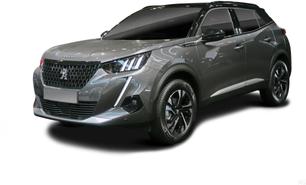
Looks are subjective but Peugeot’s updated 2008 small SUV is good looking from every angle.
The update brings a raft of design tweaks and some tech upgrades, but mechanically there isn’t anything new.
It’s not a cheap car and its diminutive size might scare off some buyers who can cross-shop cheaper and more value focused alternatives from mainstream Japanese and Korean brands.
We are driving the range-topping 2008 GT variant to find out if it’s more than just a pretty face.
Replacing the long-standing UX250h, the more powerful Lexus UX300h hybrid sits at the luxury end of the compact SUV segment, and the latest update brings a refined line-up along with tweaks to both design and technology. In this review, I’m looking at the base Luxury grade to see what it's like to live with this hybrid day-today and how it stacks up against its nearest rivals.
The Peugeot 2008 is a handsome and accomplished little SUV that’s fun to drive and has a cabin that feels a little bit special.
In reality the 2008 is too expensive and isn’t as practical as most of the mainstream compact SUVs.
This is the car you buy with your heart, not with your head.
The updated Lexus UX300h Luxury is a solid entry in the premium compact SUV segment. It doesn’t break new ground, and there are areas that could be improved, but it handles well, offers a thoughtful selection of amenities for a base-grade luxury model, and its compact size makes it easy to park almost anywhere. For buyers seeking a stylish, efficient, and practical hybrid with a luxury badge, it’s a dependable choice.
The Peugeot 2008 is a smooth operator with head-turning French flair, but the devil is in the detail.
It’s not just the 2008’s well proportioned dimensions or the healthy dollop of exterior black highlights that catch your eye, but Peugeot has added a range of design cues to symbolise the Lion on its badge.
The tail-lights have a 3D effect that make them look like cat’s claws and the daytime running lights on the front resemble a scratch mark. These pair perfectly with the lion head crest on the grille.
Look deeper and you notice the attention to detail.
The 2008's redesigned front grille's slates are colour matched to the car's body colour.
Dual exhaust pipes are finished in chrome, giving the impression of performance even if the car doesn’t deliver on it.
The GT variant gets a two-tone paint job with a black roof contrasting with the body's colour.
Inside there are plenty of high quality finishes. The centre console is festooned in gloss black and there is a lovely carbon-effect textured insert on the dash and doors.
Some hard plastics below eye-level and on touch points such as where your knee might rub are less impressive. The rear seat loses some of the lustre of the front pew with tough plastics covering the back of the front seats and most of the doors.
The updated Lexus UX is technically a compact SUV, but it feels more like a hatchback that's taken a small dose of steroids. The facelift brings a sharper look with a stylised 3D spindle grille, new air intake vents, fresh 17-inch alloy wheels, updated daytime running lights and a full-width rear light bar. The sculpted bodywork still showcases Lexus’ signature origami-like panelling and, overall, it’s a handsome little thing. That said, the heavy use of black plastic moulding around the lower edges detracts from its premium appeal.
Inside, the cabin takes a more understated approach. Up front it feels premium-enough, with synthetic leather trims, soft-touchpoints and those high-tech dual 12.3-inch displays headlining the dash. Your eye moves smoothly across the layout without lingering too long on any single element, which adds to the sense of elegance.
Not everything feels top-tier, though. Hard plastics are still scattered throughout the cabin, and they’re especially noticeable in the back seat where the doors have very little in the way of a soft surface. Yes, this is the base grade, but in a car wearing a luxury badge, it’s something you notice more than you should.
Step inside and there is no hiding the 2008’s diminutive proportions.
It’s 4300mm long, 1815mm wide and 1550mm high, which puts it closer in size to the mini Mazda CX-3 than the larger CX-30 it is more aligned with price-wise.
This all adds up to a snug fit in whichever row you sit.
There are a couple of cupholders in the centre console - a smaller one for a standard takeaway coffee and a larger one for drink bottles.
Slight storage bins in the door can hold a regular drink bottle but there isn’t much room for much else.
The wireless device charger is hidden away behind a compartment below the central screen that opens with a push and there are two USB-C ports up front and the rear seats score a USB-C and A connection.
Rear seat passengers do without a dedicated aircon vent, unfortunately.
There is an issue with Peugeot’s i-Cockpit steering wheel and digital driver display, too.
If you like to sit low the chances are the steering wheel will cut off your view of the bottom part of the display. If you prefer to have the seat jacked up, you’ll have better vision of the readouts.
There are piano key-like physical controls for simple climate functions such as the de-mister and auto climate settings. More complex functions are done via the 10-inch central multimedia screen.
The boot is a decent size at 434L and can easily handle a weekly grocery shop or a few overnight bags.
There is only a space saver spare wheel, but this car is aimed at city driving where it is easier to source a replacement tyre.
The UX is a compact SUV, so it's best not to expect a sprawling interior. The front row offers the best space and comfort, with wide door openings and a ground clearance that makes it easy to hop in without any grunts. The seats are comfortable enough on long drives, although some fatigue creeps in on the passenger side due to the lack of lumbar support. Both front seats are power-adjustable and heated, and with the steering wheel also adjusting electrically, it’s easy to dial in a good driving position.
Move to the rear seats, and space becomes noticeably tighter for adults. At 168cm, my knees press against the seat in front, and even my eight-year-old asked me to slide the passenger seat forward this week. That said, he’s been mostly comfortable thanks to the wide door openings, lightweight doors and well-padded seats.
My son did point out that the tall window sills make it hard to see out, which could be a deal breaker for younger passengers. There are three top tether anchor points, but fitting three child seats across is unrealistic.
Storage is on the slim side, but the dual-opening centre console is clever, and there are two cupholders and drink bottle holders up front. The rear row only gets a single map pocket and two cupholders. A few more cubbies for things like sunglasses or keys would be welcome, as the cabin can quickly feel cluttered if you’re not careful.
Technology is neatly integrated. The dual 12.3-inch displays look sharp with clear graphics, and the touchscreen is responsive. The updated operating system isn’t a big leap forward, but it’s easy to use and the wireless Apple CarPlay and Android Auto work seamlessly. There’s also sat nav, a wireless charging pad, four USB-C ports, a single USB-A port and a 12-volt socket for charging.
The boot looks modest at first glance, especially with the floor set in its highest position, but it still swallowed a big grocery shop with no fuss. Officially, capacity is 364 litres, which makes it the smallest compared to its nearest rivals, although the adjustable floor helps with taller items or creates a handy nook for smaller ones.
A bigger drawback is the lack of a spare tyre as you only get a repair kit. For city drivers that might be fine, but for those of us who live regionally or do longer trips, a spare tyre is a must-have. On the plus side, the powered tailgate with kick function is standard here, whereas rivals make you pay extra for it.
The 2008 range kicks off at $39,990, before on-road costs, for the base Allure grade and rises to $44,490 for the fully loaded GT variant.
That’s a lot of money for a small SUV, especially considering the Skoda Kamiq range starts at $32,990, you can get Nissan’s Qashqai from $33,890 and a Mazda CX-30 for $33,140.
There is a lot to like about the 2008’s standard equipment list, though.
Flash looking 17-inch alloy wheels are complemented by adaptive LED headlights that control individual LEDs to brighten the road without dazzling oncoming vehicles. The headlights will automatically switch on in low light situations and stay on for a short period of time after you exit the vehicle to make it easier to find your way to the door at night.
A 10-inch multimedia screen is compatible with wireless Apple CarPlay and Android Auto, and a wireless device charger completes the cord-free ecosystem.
Peugeot’s 'i-Cockpit' brings a 10-inch driver display with 3D readouts paired with a small steering wheel.
GT buyers can expect eight colour ambient lighting, a six-speaker stereo, four USB charging ports, in-built sat nav and brushed aluminium foot pedals.
Well bolstered seats are heated up front and wrapped in synthetic suede and leather upholstery with contrast green stitching. The driver’s seat is power adjustable and has a massage function but the front seat passenger will need to move the seat themselves.
There are rain-sensing wipers, roof rails, power folding and heated side mirrors and a space saver spare wheel.
It’s a solid list of equipment but is missing some features you’ll find on similarly priced rivals such as a head-up display.
The new Lexus UX300h is offered in three grades, and the grade tested here is the entry-level Luxury, priced from $55,370 before on-road costs. That positions it right in the middle of its rivals, with the Audi Q2 35TFSI S starting at $49,400 and the Volvo XC40 kicking off from $56,990.
The Luxury grade brings a solid list of standard equipment. While it won’t blow your socks off, it does offer good value-for-money compared to its premium competitors where a lot of features have to be added for additional cost. Highlights include powered front seats with heat function, synthetic ‘NuLux’ leather upholstery and trims, dual 12.3-inch displays and a upgraded OS for the multimedia system. You’ll also find a 10-speaker sound system and seamless wireless phone mirroring for both Apple CarPlay and Android Auto.
Technology extends further with built-in satellite navigation, Bluetooth, digital radio, reversing camera, two USB-C ports in each row, plus a USB-A port, 12-volt socket and wireless charging pad up front.
Practical features like keyless entry and start, dual-zone climate control, dusk-sensing headlights, updated daytime running lights, rain-sensing wipers, electrically adjustable steering wheel and a powered tailgate with kick function.
A three-year complimentary membership to the Lexus Encore program rounds out the package. Members gain access to the Lexus Connected Services phone app where you can customise your driver profile and have access to a digital key but there are a range of benefits from supporting partners like Westfield and Ampol to enjoy as well.
Lurking beneath the bonnet is a little three-cylinder 1.2-litre turbo-petrol engine that makes 96kW and 230Nm. That’s a decent amount of grunt from the little unit, but again you can get more oomph for less from mainstream rivals.
It is paired to an eight-speed automatic transmission that drives the front wheels.
There is no hybrid help, either.
The UX300h Luxury runs a hybrid setup that pairs a 2.0-litre four-cylinder petrol engine with two small electric motors. Combined, the system produces 146kW of power, and it drives through an electronic continuously variable transmission (eCVT). This powertrain sees it outmuscle the old UX250h by 15kW.
On paper, those new outputs sit neatly in the middle of this segment. Out on the road, though, the hybrid assistance helps the UX feel a little more sprightly than the numbers suggest. The electric motors give it an eager step-off from traffic lights and smooth power delivery around town, while the petrol engine takes over when more effort is needed.
It's a good combination for a little car.
Stiff emissions regulations in Europe mean these little turbocharged petrol engines have a fair bit of self control on the drink.
Peugeot claims the 2008 uses 5.4L/100km on the combined cycle. We used slightly more than this but spent most of the time in the cut and thrust of city traffic where cars use more fuel.
You’ll need to budget for pricier premium unleaded petrol, too.
Fuel efficiency is a real strength. Lexus claims 4.2L/100km on the combined cycle, which is impressive against petrol-only competitors. With a 43L tank, you’re looking at a theoretical driving range of over 1000km between fills.
In my week of mixed open-road and urban driving, I saw a real-world figure of 5.0L/100km, and that’s without holding back on using the available power, which makes the claim feel very achievable.
On the road the 2008 is a bit temperamental.
Most European cars are fitted with stiffer suspension than the cosseting springs found in Japanese machines.
This means you’ll feel bumps and road imperfections through your seat more than other SUVs. It has particular problems ironing out consistent smaller bumps, which can unsettle it and lead the 2008 to skip across them.
The counterbalance to that is a more dynamic drive experience, with the 2008 exerting excellent body control through the bends as it is held in line by the stiffer set-up.
Pair this with sharp, direct and well-weighted steering and it's a fun little SUV to take on a twisting country back road.
Three cylinders might not sound like a lot, but in the real world this is all the 2008 needs.
Its 96kW and 230Nm won’t set the world on fire but the torque is accessed from just 1750rpm, which endows the 2008 with some punch off the mark and it feels zippy when navigating the daily commute.
Don’t confuse that for outright speed, though, the 2008 completes the benchmark 0-100km/h dash in 9.3 seconds.
The transmission is fine when you are accelerating or cruising at motorway speeds, where it uses its many ratios to keep the engine humming along in its sweet spot. There are paddle shifters if you want more control.
In stop-start traffic it isn’t as an accomplished performer. It can struggle to find the right ratio and this leads to a jerky movement reminiscent of dual-clutch autos.
The cabin is well insulated with the outside world kept mostly at bay, but you’ll hear the three cylinder’s charming little rumble when you put your foot down.
Parking is a cinch thanks to its petite proportions and the 2008 has no issues navigating tight city streets or underground car parks.
The UX300h Luxury proves itself to be a versatile little SUV. It offers ample power with prompt acceleration, making it easy to confidently take a gap in traffic or keep pace on the open road. It feels like a solid all-rounder that balances everyday usability with just enough grunt when you need it.
There are three selectable drive modes, though in practice they don’t feel dramatically different. The hybrid system can sometimes sound a little flustered at times as it switches between the two components, but it doesn’t translate into anything unsettling from behind the wheel. The actual driving experience remains smooth and predictable.
Ride comfort is another strength. The suspension does a good job of soaking up small bumps, and unless you’re on the highway in torrential rain, the cabin stays impressively quiet.
Visibility is mostly good, although the A- and B-pillars can occasionally intrude from the driver’s seat. It’s never enough to be a deal breaker, but worth noting. Where the UX really shines is in tight spaces because its 10.4m turning circle and compact dimensions makes it stupidly easy to park. The reversing camera is clear, though for a car wearing a luxury badge, it feels like a missed opportunity not to include a 360-degree camera as standard.
The 2008 has a maximum five-star ANCAP safety rating, but that mark was given in 2020 and it might not get the same score if it was retested today.
It has six airbags, but misses out on a centre airbag that protects against head clashes in a side on collision.
It has a decent amount of safety equipment with auto emergency braking, lane keep assist, blind spot monitoring and adaptive cruise control.
Rear cross-traffic alert, which sounds an alarm if a car is approaching from the side as you reverse, is a notable absence.
The UX300h Luxury comes equipped with Lexus Safety System+, covering the essentials and more. Standard features include lane keeping aid, lane departure alert, adaptive cruise control, traffic sign recognition, blind-spot monitoring, front collision warning, rear cross-traffic alert, rear seat alert, safe exit assist, ISOFIX child seat mounts, three top tether anchor points and tyre pressure monitoring.
Dusk-sensing headlights, rain-sensing wipers, and the restyled LED daytime running lights further improve visibility and overall safety.
The UX has a maximum five-star ANCAP safety rating from testing conducted in 2019, scoring highly across all individual assessments. While the updated model hasn’t yet been re-tested under the latest criteria, its suite of standard safety technologies and solid crash history should offer some reassurance.
The UX has autonomous emergency braking (AEB) with pedestrian and cyclist detection and is operational from 10 - 180km/h but it is normal to see this begin from 5.0km/h on competitors.
Peugeot covers the 2008 with a five year/unlimited km warranty, which is the standard coverage today.
The French brand offers a range of prepaid servicing packs that’ll save you a handy amount compared to pay-as-you-go maintenance.
A five-year plan is the best value, costing $1700 for five scheduled visits every 12 months or 15,000km. That’s $638 cheaper than the pay-as-you-go servicing.
The UX300h Luxury comes with a five-year/unlimited kilometre warranty, which is comparable to its nearest rivals, although we’re seeing increasingly generous terms from mainstream brands.
Servicing is straightforward thanks to a five-year capped-price program, with each service costing $595. The intervals are well spaced at every 12 months or 15,000km, whichever comes first.
This grade also includes a three-year complimentary membership to the Lexus Encore program. Membership brings access to the Lexus Connected Services phone app, allowing you to customise your driver profile and even use a digital key. Beyond that, Encore members enjoy perks with supporting partners, including Westfield and Ampol.
There's around 40 official Lexus service centres located around Australia but you can make use of its sister brand's (Toyota) service centres if you're in a pinch.