What's the difference?
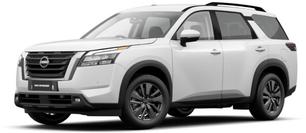
The Nissan Pathfinder has evolved over the years from what was quite a rough-and-tumble Ford Everest style vehicle to a remarkably plush three-row family SUV.
Although it took a while to reach Australia, when the fifth-generation version landed in late 2022 it was a huge leap over its predecessor. And yet it has been a relatively slow seller in Australia.
In the first half of 2024 only 405 were registered, less than a tenth of the segment benchmark Toyota Kluger (5861 sales).
This can be largely attributed to a lack of choice in the Pathfinder range, following Nissan culling entry-grade variants early on leaving only the relatively expensive Ti and Ti-L grades, both fitted with a V6 petrol engine.
To increase customer choice, Nissan has reintroduced the ST-L mid-spec trim with the option of front-wheel drive for under $60,000, before on-road costs. But is it a good buy?
It’s fair to say Mazda didn’t exactly rush into the electric vehicle market with a flourish. Its first battery-powered offering, the MX-30, was a small SUV with a big price and it sold in small numbers.
But with EV sales on the rise in 2026, the timing is perfect for its second electric offering to land in Australia, and the Mazda 6e is a very different proposition to the MX-30.
The 6e is a mid-size sedan, with a very competitive price and it has plenty of influence from the booming Chinese EV industry. The 6e is a product of the long-time joint-venture between Mazda and Changan and is the first car built in China sold in Australia by the Japanese brand.
The 6e (which is known as the EZ-6 in China) shares its underpinnings with the Deepal L07, with Deepal being the electric brand for Changan Automobiles.
So, can this second EV, with Chinese influence, help Mazda catch up lost ground in the electric car race? Read on to find out…
There’s a lot to like about the Nissan Pathfinder. The current model not only looks a lot better than its predecessor but in ST-L trim — and with an even cheaper front-wheel drive model — it offers the kind of value Australian families are chasing.Â
For all its practicalities, towing capacity and refined driving experience, the Pathfinder’s fatal flaw is its limited engine choice. A thirsty petrol V6 with no engine start-stop tech stunts its appeal for those who live in suburban areas where a Kluger hybrid just works better.
The ST-L is a worthy consideration for your next purchase if you’re less bothered about fuel use, and it's the pick of the line-up, offering just about every creature comfort and safety feature you'd want in a good-value package.
Mazda never had high hopes for the MX-30, it was always intended as a niche offering, but that is not the case with the 6e. The company is keeping its expectations in check, with sales of EVs seemingly returning to pre-oil crisis levels, but clearly there is a hope that this new-generation EV can help it catch up in the electric car race.
Certainly there is a lot to like with the 6e, starting with the price. It’s a cheaper alternative to both the BYD Seal and Tesla Model 3, so it starts strongly and then builds on that with the kind of design and driving experience we expect from Mazda.
There are definitely elements that need improvement, primarily the active safety calibration, but overall Mazda’s second electric car has a much better chance of success.
Given the similarities between the two, the cheaper price of the GT makes it the pick of the pair.
Note: CarsGuide attended this event as a guest of the manufacturer, with travel, accommodation and meals provided.