What's the difference?
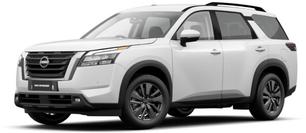
The Nissan Pathfinder has evolved over the years from what was quite a rough-and-tumble Ford Everest style vehicle to a remarkably plush three-row family SUV.
Although it took a while to reach Australia, when the fifth-generation version landed in late 2022 it was a huge leap over its predecessor. And yet it has been a relatively slow seller in Australia.
In the first half of 2024 only 405 were registered, less than a tenth of the segment benchmark Toyota Kluger (5861 sales).
This can be largely attributed to a lack of choice in the Pathfinder range, following Nissan culling entry-grade variants early on leaving only the relatively expensive Ti and Ti-L grades, both fitted with a V6 petrol engine.
To increase customer choice, Nissan has reintroduced the ST-L mid-spec trim with the option of front-wheel drive for under $60,000, before on-road costs. But is it a good buy?
Back in 2022 a friend asked me if they should buy the then-new BYD Atto 3. My advice was to avoid such a new brand, because despite positive first impressions of the electric SUV I couldn’t comment with any certainty on the long-term prospects for BYD.
Well, fast forward to 2026 and things could not be more different. No brand exemplifies the seismic shift in the local car industry more than BYD.
It has emerged not only as the clear leader of the pack from the Chinese car brands, but has done so by taking risks and offering some unusual products. This new Atto 3 Evo is a prime example of that, because while it looks almost-identical to the old model, it has huge changes underneath.
When I say ‘huge’ I mean major upgrades like all-new, 800-volt underpinnings, bigger batteries and even a switch to rear-wheel drive - at least for one model.
BYD is selling one model, with the same name but two very different powertrains and layouts. It highlights the radical changes brought on by the electric revolution in the car industry and demonstrates the flexibility of these platforms compared to internal combustion engine (ICE) vehicles.
And also explains why BYD is no longer just a newcomer with an uncertain future but rather a well-established member of the mainstream market.
But would I recommend buying this new Atto 3 Evo? Read on…
There’s a lot to like about the Nissan Pathfinder. The current model not only looks a lot better than its predecessor but in ST-L trim — and with an even cheaper front-wheel drive model — it offers the kind of value Australian families are chasing.
For all its practicalities, towing capacity and refined driving experience, the Pathfinder’s fatal flaw is its limited engine choice. A thirsty petrol V6 with no engine start-stop tech stunts its appeal for those who live in suburban areas where a Kluger hybrid just works better.
The ST-L is a worthy consideration for your next purchase if you’re less bothered about fuel use, and it's the pick of the line-up, offering just about every creature comfort and safety feature you'd want in a good-value package.
So, would I recommend this new Atto 3 Evo to my friend, or indeed anyone in the market for a mid-size electric SUV?
While it may look largely the same as it did back in 2022, the Atto 3 is now a far more compelling proposition than it was then. Certainly BYD has established itself in the market and that means there is more certainty for buyers.
But this new Atto 3 Premium is a big leap forward when it comes to the driving experience. And while that’s not likely to be a huge factor for most mid-size electric SUV buyers, given the price has only crept up marginally (by modern standards) it remains competitively positioned.
For context, the Leapmotor C10 is another mid-size, rear-wheel drive electric SUV from China and it is even more expensive than the Atto 3 and is, to be blunt, nowhere near as good.
If BYD continues to produce cars this good there’s no reason to believe it won’t be a major player for years to come.
Note: CarsGuide attended this event as a guest of the manufacturer with accommodation and meals provided.