What's the difference?
There was a time when utes were bought purely for work but some these days look more like high-riding prestige cars with their sparkling pearlescent paint, sumptuous leather seats that heat, cool and massage, high-tech hybrid drivetrains, independent rear suspensions and 0-100km/h times that were once the sole domain of supercars.
However, traditional ute buyers like tradies, farmers and fleets are still well catered for by some brands when seeking a utilitarian turbo-diesel workhorse designed primarily for hard yakka.
Mitsubishi has recently added 4x2 and 4x4 cab-chassis variants to its local Triton line-up comprising single-cab, club-cab and dual-cab body style across most model grades to broaden the Triton’s appeal for either working roles or adventuring.
We recently spent a week aboard one of these new cab-chassis variants in base GLX specification, to see from a tradie’s perspective if it has what it takes to cut it in the rough-and-tough world of working utes.
Freedom of choice has been the focus for the luxury car industry for more than a decade. Buyers were free to choose from a seemingly endless amount of variations and bodystyles to suit their taste and lifestyle.
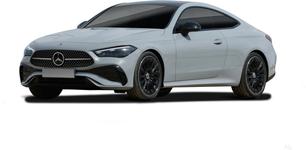
It gave birth to the ‘four-door coupe’ then the ‘SUV coupe’ and so many more. But now it seems car makers have reached their limit, as evidenced by Mercedes-Benz’s newest offering - the CLE Coupe and Cabriolet.
While technically a new addition to the range, the CLE actually replaces not one existing model, but two. The CLE will fill the gap left by both the C-Class Coupe and E-Class Coupe, allowing the German brand to simplify its line-up (ever so slightly).
So, what is the CLE Coupe and how will it live up to expectations of two different car buyers? Read on to find out…
Apart from its distracting driver attention monitor, we can't see any major flaws that would detract from this vehicle’s comfort, practicality and performance when serving as either a utilitarian 4x4 workhorse or back-to-basics 4x4 dual cab for adventures off the beaten track.
The CLE Coupe really feels like a car of the times. As the electric vehicle market continues to suck in resources, the days of endless variants and body styles is going to wane. But the truth is the CLE does a nice job of filling the demands that both previous C-Class Coupe and E-Class Coupe buyers are looking for.
It’s a stylish model with plenty of technology on the inside, so it should appeal to those who want something refined and elegant for their lifestyle. It has a hint of sportiness on road, without being overtly dynamic or uncomfortable; although Mercedes-AMG will cater to those buyers soon enough. And it offers the kind of space inside that buyers of both models will find acceptable (as long as they don’t have to climb into the back regularly).
The biggest challenge will be convincing C-Class customers to take the big jump up in price over the model it replaces, while at the same time convincing E-Class buyers that this is still something special and different given its similarities to the old model.
Note: CarsGuide attended this event as a guest of the manufacturer, with travel, accommodation and meals provided.
Our test vehicle rides on a compact 3130mm wheelbase and is 1865mm wide and 1795mm tall, which combined with a 12.4-metre turning circle makes it agile and easy to manoeuvre both on and off-road.
Speaking of which, its all-terrain credentials include 228mm of ground clearance, a useful 30.4 degrees approach angle (without bull-bar) and 23.4 degrees ramp breakover angle, with the departure angle dependent on the type of tray fitted. These numbers would be more than adequate for accessing rugged worksites.
Its front suspension is double-wishbone with coil-springs, paired with a robust leaf-spring live rear axle. Brakes are front discs and rear drums and it has electric power-assistance for the rack and pinion steering.
Looks are subjective of course but we reckon it has a robust and purposeful appearance in cab-chassis form, particularly with the accessories fitted to our example.
Chrome is all but extinct in its predominantly grey interior. However, hard surfaces on the centre console and door-pulls have a synthetic carbon-fibre finish, which adds a touch of style to a low-maintenance cabin that won’t get trashed by spilled coffee or muddy boots.
You also won’t find fancy features like digital instruments (it has analogue speedo/tacho) or an electronic handbrake (this one’s the good old manual lever). Plus there’s physical dials for audio volume/tuning and ‘piano key’ buttons for the cabin’s climate control, which ensures no distracting touchscreen prompts when driving.
Thankfully for the German brand its family look across its range means the CLE seamlessly integrates into both the C-Class and E-Class line-ups.
Mercedes does use some colourful language to describe the looks, with terms like 'sharknose' for the front end, and these ‘powerdomes’ on the bonnet, and there’s a swooping design that wraps around the tail to create a dynamic-looking vehicle.
The biggest question about design, though, is the size of the CLE, specifically how it compares to the two coupes it replaces. While based on the same basic underpinnings as the C-Class sedan, Mercedes has stretched and pulled the body to try and fill the space between it and the old E-Class Coupe.
The result is a car that is 164mm longer than the C-Class Coupe and +15mm longer than the E-Class overall, with the wheelbase stretched 25mm over the C-Class but actually 8mm shorter than the old E-Class two-door. It’s also 50mm wider than the previous C-Class but exactly the same width as the E-Class. So it’s definitely on the bigger size without actually matching up with either model it supersedes.
With a kerb weight of only 1993kg (without tray) and 3200kg GVM, our test vehicle has a 1207kg payload rating. However, after you add the combined weight of its steel tray and other accessories (417kg), the payload rating is reduced by the same amount to 790kg. Even so, that still leaves a sizeable weight capacity for up to five tradies and their tools.
It’s also rated to tow up to 3500kg of braked trailer but with its 6250kg GCM (or how much it can legally carry and tow at the same time) the payload would have to be reduced by 450kg (from 790kg to 340kg) to avoid exceeding the GCM.
In real-world use it’s unlikely that many (if any) Triton owners would need to tow 3500kg but it’s important to be across these numbers to avoid overloading, which is dangerous and illegal.
The genuine accessory galvanised steel tray is internally 1650mm long and 1780mm wide. It has a robust checker-plate floor and a tube-frame front bulkhead with sturdy wire-mesh rear window protection.
There’s also swing-up load retainers on top of the tube-frame on each side, which when paired with the matching rear tube-rack accessory provides secure carrying space for extension ladders or long lengths of timber and PVC pipe/conduit.
There’s also external rope/strap rails along each side but like all steel trays we’ve come across there’s no internal load-anchorage points.
The driver and front passenger have access to a bottle holder and storage bin in each front door plus an overhead glasses holder and a large open compartment above the glovebox. The centre console offers more open storage plus two bottle/cupholders in the centre and a usefully-sized box at the back with a lid that doubles as a driver’s elbow rest.
The rear bench seat is comfortable and surprisingly spacious for tall people, given I’m 186cm and when seated behind the driver’s seat when set in my position, I have about 40mm of kneeroom and 60mm of headroom.
There’s also adequate head clearance for those seated in the slightly higher centre position, but the floor’s prominent transmission tunnel requires one boot either side and knees together between the front seat backrests.
And like all dual-cab utes short of a full-size US pick-up, rear shoulder room is squeezy for three adults, which is tolerable for short trips but a maximum of two adults would be ideal for longer drives.
Rear seat storage includes a bottle-holder and bin in each door plus pockets on each front seat backrest. The centre seat’s backrest also folds forward to serve as an armrest with dual bottle/cup-holders.
The bench seat’s base cushion is fixed, so unlike numerous rivals it can’t swing up and be stored vertically if more internal carrying space is required.
Not surprisingly given the exterior growth over the old C-Class Coupe, Mercedes is talking up the increased interior room and practicality. Which is crucial to the success of the CLE because in replacing both the smaller C-Class and larger E-Class coupes, it now needs to appeal to both audiences.
Front seat room is generous, with plenty of shoulder room and the seats offer good comfort and support. In the back Mercedes’ designers have managed to create 95mm more legroom than the old C-Class Coupe, but fractionally less than the E-Class Coupe (just 1mm less). The rear seats are wider than both outgoing models, both across the shoulders and the mid-section. Headroom has been increased by 10mm over the C-Class but decreased by the same amount compared to the E-Class.
Putting the measuring tape aside, while the rear seats are fine for short trips, the back of the CLE is clearly not the place to be and if you plan on using the rear seats regularly then you should be looking at one of the brand’s sedans.
As for the boot, at 420 litres it’s 60 litres bigger than the old C-Class but five litres smaller when compared to the E-Class Coupe; so once again there’s a trade-off between the two.
The Triton’s cab-chassis list pricing (without tray) starts at $34,490 for the GLX single-cab 4x2 manual and finishes at $61,540 for the premium GSR dual-cab 4x4 auto.
Our GLX test vehicle comes standard with a 2.4-litre twin-turbo four-cylinder diesel engine (shared by all Tritons) and optional six-speed automatic for $49,490. This pricing is competitive with base-model 4x4 dual-cab-chassis equivalents like the Toyota HiLux Workmate ($48,735), Ford Ranger XL ($49,230) and Isuzu D-Max SX ($51,200).
However, our example is loaded with numerous items from Mitsubishi’s genuine accessories range including a steel tray ($5775), rear ladder rack ($951.42), steel bull-bar ($4755), driving lights ($1295), side-steps ($1750) and 3500kg towing kit/electronic brake controller ($2370).
This desirable ensemble adds almost $17,000 to the price, which with on-road costs would be nudging $70K to drive away. So, buyers must keep their budgets in mind, as it’s easy to get carried away in genuine accessory lolly shops.
Our test vehicle comes standard with 17-inch steel wheels and 265/65R17 all-terrain tyres plus a full-size spare. It also has heavy-duty rear suspension and underbody armour, front/rear parking sensors, reversing camera, tyre-pressure monitoring and more.
The work-focused cabin has wipe-clean fabric seat trim and vinyl floors, power-adjustable driver’s lumbar support, twin 12-volt accessory sockets and USB ports, 7.0-inch driver’s instrument cluster and a four-speaker audio system controlled by a 9.0-inch multimedia screen with Android Auto, Apple CarPlay and Bluetooth connectivity.
The initial range consists of just two models - the CLE200 and CLE300 4Matic, but an AMG variant, the CLE53 is due to follow soon (as is the expected-but-not-confirmed V8-powered CLE63), but not before the Cabriolet arrives. While the CLE300 Cabriolet was on hand for us to look at, we weren’t allowed to drive, so we’ll focus this review on the hard-top models.
The CLE200 is priced from $103,900 and the CLE300 is $124,900 (neither price includes on-road costs). While it’s hard to do a like-for-like comparison between the old models and this new one, the CLE is more than $20k more expensive than the old C-Class but around $9-12k cheaper than the equivalent E-Class Coupe.
For future reference, the CLE300 4Matic Cabriolet will be priced from $135,900.
Standard features on both models includes 19-inch alloy wheels, AMG Line exterior and interior packages, a panoramic sunroof, 64-colour ambient cabin lighting, heated front seats with memory function, a head-up display, a 12.3-inch digital instrument display, plus the latest MBUX infotainment system which runs through an 11.9-inch touchscreen as well as Burmester surround sound system. One of the key specification differences between the CLE200 and CLE300, aside from the powertrain, is the interior trim, with the cheaper model using synthetic leather while the more expensive one gets the genuine article.
The Triton’s 2.4-litre four-cylinder diesel engine is equipped with two turbochargers that work in sequence to boost efficiency, with the smaller one providing fast response at low rpm and the larger one optimising performance at higher rpm. The result is 150kW of power at 3500rpm and torque peaking at 470Nm between 1500-2750rpm, using AdBlue to minimise emissions.
It’s paired with a six-speed torque converter automatic that offers the choice of sequential manual shifting, which can be preferable when hauling and/or towing heavy loads, particularly in hilly terrain.
The 4x4 system is dual-range, part-time offering 2H (2WD High Range), 4H (4WD High Range) and 4L (4WD Low Range) controlled by a dial on the centre console. However, you need to step up to the GLX+ to get a rear diff-lock.
The CLE200 and CLE300 are both powered by four-cylinder turbocharged petrol engines, albeit in different states of tune, and each assisted by a mild-hybrid integrated starter generator.
The CLE200 Coupé makes 150kW and 320Nm and sends it to the rear wheels via a nine-speed auto transmission. While the CLE300 4Matic Coupé gets 190kW and 400Nm but also gets (as the name gives away) Mercedes’ 4Matic all-wheel-drive system.
While not really a hybrid in the conventional sense, the integrated starter generator adds an extra 17kW/205Nm boost when required while also helping to save fuel.
Mitsubishi claims official combined average consumption of 7.7L/100km but the dash display was showing 9.9 at the completion of our 316km test, which included the usual mix of suburban, city and highway driving of which about one third of that distance was hauling its maximum payload.
Our own consumption figure, calculated from fuel bowser and tripmeter readings, came in higher again at 10.7L/100km which is on the borderline of the usual 2-3L/100km discrepancy between manufacturer claims and real-world consumption.
So, based on our own numbers, the test vehicle should have a real-world driving range of around 700km from its 75-litre tank.
Make no mistake, the integrated starter generator is a mild-hybrid system, so don’t expect to see miserly returns from the CLE. Instead, the official figures for the pair are quite close, despite the different drivetrains.
The CLE200 has a claimed fuel rating of 7.2L/100km, while the CLE300 uses 7.4L/100km.
Large assist-handles on the A (and B) pillars, combined with the accessory side-steps on our example, make it easy to climb aboard and find a comfortable driving position.
The unladen ride is firm, as you’d expect given its 6.0-tonne-plus GCM rating, but it’s still supple enough to soak up the bumps without the harsh kidney-belting ride suffered in some cab-chassis one-tonners we’ve tested.
This is no doubt helped by the accessories fitted, which provide more than 400kg of additional sprung weight to engage the heavy-duty rear springs and improve the ride quality. That’s something to keep in mind if you often drive unladen.
The steering is firmly weighted and the brakes have good response, with the rear drums offering a terrier-like bite when the manual handbrake is applied on steep hills with a heavy load on board.
The four-cylinder 2.4-litre diesel, with its sequential turbocharging and strong outputs, provides energetic all-round performance with efficient gearing that ensures its operating within its peak torque band most of the time.
However, at highway speeds it does tend to hold top gear for too long, when the engine has dropped below 1500rpm and is clearly wanting a downshift.
To test its payload rating, we strapped 650kg on the tray which when combined with accessories and crew was right on the weight limit. The stout rear springs compressed only 25mm under this load, leaving ample bump-stop clearance that assured there was no bottoming-out on our test route.
The Triton handled this task with competence, maintaining good performance and chassis stability. It easily hauled this load up our 13 per cent gradient, 2.0km set climb at 60km/h, with the six-speed auto self-shifting down to third gear and 2500rpm which was comfortably within its peak torque band. Engine braking on the way down was also commendable.
Our only gripe is the driver distraction monitoring system which is still too reactive in certain situations, like scratching an itch below my eye even though I was looking straight ahead while doing it. Even though Mitsubishi has tried to improve this system, it needs more refinement, as it detracts from an otherwise positive driving experience.
To judge the CLE on its driving merits you first need to understand where it fits within the broader Mercedes-Benz line-up. Put simply, while coupes are seen as sporty cars, the German brand has other models that are designed to appeal to driving enthusiasts; such as the upcoming AMG versions of this car and the AMG GT Coupe.
So within that context, the CLE200 and CLE300 do an admirable job of being stylish cruisers that feel at home in the city but not out of place on a winding country road.
Sports suspension is standard on Australian delivered models, making it 15mm lower than overseas versions and fitted with firmer passive damping too. But still, it doesn’t translate to a dynamically agile and engaging sports coupe suddenly, instead it just gives the CLE a bit more sharpness when turning, at the expense of some comfort on pockmarked roads.
The engines perform nicely, the CLE200 feels adequately endowed with its 150kW/320Nm, so naturally the 190kW/400Nm CLE300 just feels like it has a bit more pep in its step. But I’d question the value of the all-wheel-drive system in a car like this, especially in Australia where the roads are rarely very slippery.
The Triton comes with a five-star ANCAP rating (tested 2024) and a suite of passive and active features highlighted by eight airbags (including side-curtains), auto emergency braking (AEB) with pedestrian/cyclist detection and junction assist, rear AEB when reversing, front/rear cross-traffic alert, traffic sign recognition, adaptive cruise control, lane-keeping, front/rear parking sensors, reversing camera, trailer stability assist and lots more. Rear seat has ISOFIX child-seat anchorages on the two outer rear seating positions and three top-tethers.
Both CLE models come with all the usual passive and active safety features you’d expect on a modern luxury car, including autonomous emergency braking, ‘Active Lane Keeping Assist’, ‘Active Brake Assist’, blind spot monitoring, traffic sign assist, active cruise control and Mercedes’ ‘Pre-Safe’ accident anticipation system. There’s also a ‘Parking Package’ with 360-degree camera view to keep you and those around you safe at low speeds.
There’s no ANCAP rating for this new model announced yet, but previously both the C-Class Coupe and E-Class Coupe were tested.
It comes with a five-year/100,000km standard warranty, or 10 years/200,000km if serviced at Mitsubishi dealers.
Scheduled servicing is every 12 months/15,000km whichever occurs first. Pricing is capped at $6860 for 10 scheduled services up to 10 years/150,000km, or an average of $686 per service.
Mitsubishi currently has more than 200 dealers across its national network that spans metro, rural and regional areas. Mitsubishi dealerships are also service centres.
The CLE is covered by Mercedes Australia’s usual five-year/unlimited kilometre warranty.
The brand offers pre-purchased service plans for maintenance covering three, four or five years, starting at $3325 then $4535 and then $6800.