What's the difference?
Meet the IM6 Performance, “presented by MG”. And that last bit’s important, because while it’s marketed and sold by the Chinese mainstream player, it really is unlike any other MG going around.
Think of it as like a Lexus to Toyota, or an Audi to Volkswagen, with the Chinese brand going premium, and seemingly making a direct play for Tesla’s fan base. How so? Well, there’s only two models in IM line-up (sound familiar?) with the IM6 a rival for the Model Y, and the IM5 (which we’ve also tested) a competitor to the Model 3.
The IM6 is spacious, pretty sumptuous and ridiculously fast. And it offers up some features I’ve only ever really seen in high-end German metal. But it’s also got some quirks.
So, can MG run with the big dogs of the premium car world with the IM6 Performance? And should Tesla be worried? Let’s find out.
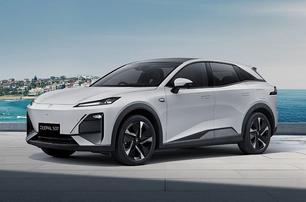
You’re getting flooded with new electric mid-size SUVs from China, I know. But if you’re struggling to recall them all, just remember – this is the good-looking one.
It’s the Deepal S07, the spearhead for the Deepal brand's new presence in Australia, and I reckon it looks damn sharp.
But is there substance to match the style? And can it take on the likes of the Kia EV5, Tesla Model Y and XPeng G6?
Let's find out, shall we?
A super solid first outing from the IM brand. Don't let the pricing fool you, there is still bang for buck on offer in the IM6 Performance, even if it at times feels a bit too digital for my tastes.
The Deepal S07 has the makings of a great family friendly EV, but with some quirks that really need to be ironed out.
I feel almost mean saying this, because there will be plenty of people who like the way the IM6 looks, and I don’t want to rain on their parade. But… I’m not one of them.
It reminds me a bit of the pre-facelift Tesla Model Y, in that it’s largely feature-less and a bit blobby, and there’s not a sharp angle anywhere to be found on the thing. Premium to me means powerful and assured — picture just about any Audi — whereas I just find this a bit bland and soft.
Anyway, I do like the big alloys, the insulated glass roof and the light treatment front and rear.
And I like the cabin. The seats aren’t leather, but they’re super thick and comfortable, and there is a genuinely premium air in the cabin, helped by the acreage of screens and the quality elements, like the little door panels.
The doors unlatch electrically, matching the pop-out door handles outside, but they can be a bit fidgety. Someone from MG told me how they worked (you kind of cover the handle and let the door come to you) but I watched everyone else who tried to open them struggle. If you're at the point where you have to explain how a door handle works, you might have over-egged the pudding.
The second screen below the main one acts a bit like a mobile phone. You can alter your home screen widgets and access the main menu, even as Apple CarPlay is synched at the top. You’ll get used to it, I’m sure, but I found it to be a bit fidgety.
Actually it reminds me a little bit of the Lexus trackpad, or whatever that hateful system was called, where you controlled the main screen via a little mousepad thing, though happily it’s nowhere near as annoying as that was.
If you’re left a little underwhelmed from the bland same-sameness of so many new SUVs, I reckon you’d like the Deepal S07 in the metal. Because boring it ain’t.
It’s sharp and purposeful and full of lovely creases and angles, and it stands out on the road — especially in this 'Sunset Orange' colour.
Deepal says it was designed in Turin, Italy, but I'm not sure that matters much. I mean, being in Italy doesn’t guarantee design success – just look to the modern Lancia range for proof – but I guess it’s something for a newish Chinese brand to hang its hat on.
Inside, the design is lovely, too. I like the materials used, the extended dash and the size of the central screen (though it tilting towards you or the passenger is probably overkill). And the flat-bottom wheel is a nice touch.
I'd like to know where the air con was designed, though. It feels massively underwhelming on a piping hot Sydney day. The main outlet is at the bottom of the dash, which is perfectly positioned to chill absolutely nothing, and you can’t really change the direction of the vents, either. Or, at least, I couldn't figure out how to.
The IM6 measures 4904mm long, 1988mm wide and 1669mm tall, and it rides on a 2950mm wheelbase, with IM describing it as a "mid-large SUV", though I expect it will be classed as a medium SUV Australia.
That said, ICE and EV mid-size electric SUVs are not cut from the same cloth, with the latter making use of a flat floor to maximise space. And so it is with the IM6, where backseat room is pretty damn impressive. I’m 175cm, and I had no problem at all with legroom or headroom, plus the same plush seats from up there are in the back, too.
There are also air vents but no temperature controls, and while there are USB ports, there is no regular household-style plug in the cabin.
The glass in the windows is laminated, while the roof is double glazed, which MG tells me is Australian summer-proof, but I guess we'll know for sure in a couple of months.
There’s no shortage of cargo room either. There’s a 32-litre frunk up front, and there’s 646 litres in the boot with the rear seats in place. They’re 60/40 split, and if you drop them, luggage space grows to 1621 litres.
The towing capacity is a braked 1500kg, too, but I don’t expect to see many of these towing a camper trailer around.
At just over 4.7m long and 1.9m wide, with a 2.9m wheelbase, the Deepal is a sizeable proposition, which means good passenger room and decent luggage space.
Starting at the boot, you’ll find 445 litres with the rear seats in place, but with the seats folded flat that number grows to 1385 litres. There’s a frunk up front, too, that holds another 125 litres.
In the back, the room is ample for full-size adults. When sitting behind my own 175cm driving position, I had more than enough knee and headroom to sit comfortably.
There’s also a heavy pulldown divider that’s home to twin cupholders, and there are two more up front, and USB connection points galore. Bonus points for the back seat riders being able to adjust their own air temps, too.
Premium play means more premium prices, and my IM6 Performance will set you back $80,990 on the road. That might have just sent your eyebrows skyward, but keep in mind it’s faster than some Ferraris, and is swimming with high-end tech, so the bang-for-buck factor is actually still pretty good.
There are cheaper ones, too. The single-motor Premium grade is $60,990 drive-away, albeit with less power and slower charging. Then there’s the Platinum, with a bigger battery and faster charging, which is $69,990
The Performance, though, gets everything IM has to give, including an 800-volt architecture, which means super-fast charging, as well as twin motors, brutal acceleration, a decent driving range and adaptive air suspension.
Elsewhere, you get LED lighting, a big and insulated glass roof, and 20-inch alloy wheels. Inside, there are thick and soft synthetic leather seats that are heated and cooled in both rows, a banging 20-speaker sound system, and wireless charging to pair with wireless Apple CarPlay and Android Auto.
There’s also 'active noise cancellation', and a seat-aware digital assistant which is about the best, and fastest, I’ve ever used. The IM6’s speaker system can locate where a voice is coming from, so any passenger can use the assistant. For example, if you’re in the backseat and say 'hey IM, lower my window', only your window opens. It’s a technology that I specifically remember the German brands crowing about not so long ago.
There’s also a 10.5-inch central touchscreen that controls much of the vast 26.3-inch screen that runs from in front of the driver to the centre of the cabin, as well as clever little magnets embedded in the dash in front of the driver, as well as in the back of the front seat headrests, that are designed to hold phones, iPads or other little accessories.
Also cool is the IM6’s self-parking tech, but there’s also a relatively useless crab walk function, which leans on the rear-wheel steering system to drive diagonally at slow speeds. I’m still not entirely sure when you’d use that one, to be honest.
Honestly, it’s a lot of stuff, and a lot of tech.
It’s easy picking in the Deepal range, given there’s one model with just the one trim level, simply called the S07.
It’s currently $58,521 drive-away in NSW, or $53,900 before on-road costs. And that’s probably about right. You can get an entry-level Kia EV5 for $56,770, though with less range and kit, or the XPeng G6 Standard Range for $54,800, though that’s before on-road costs. The new Model Y is a bit of a jump, at $63,400 on the road.
For that you get 19-inch alloys, a fixed sunroof with a sun shade, LED lighting all around and a powered boot.
Inside, there’s a giant 15.6-inch touchscreen that can swivel towards the driver or the passenger, wireless Apple CarPlay and Android Auto, a 14-speaker Sony stereo and wireless device charging.
There’s dual-zone air con, the seats (heated and ventilated up front) are trimmed in synthetic leather and there’s an interior camera with gesture control, so you can use a kind of sign language to take a photo, control the stereo or answer or hang up the phone. It's weird and makes you look like a turkey, which is why I used it once and once only, but you might like it.
This is the real party trick of the IM6, because there’s a nuclear power plant under the metal somewhere. All up, the twin-motor setup produces a total 578kW and 802Nm, though I suspect you’re never accessing all the grunt all at once. Still, 100km/h zips by in 3.4 seconds, and the top speed is 239km/h. For the record, that’s exactly as fast the Ferrari Roma Spider I recently handed back, so yeah, it’s properly supercar quick.
The S07 is powered by a single 160kW/320Nm rear-mounted electric motor and it's rear-wheel drive. That’s enough output, says Deepal, to push the S07 to 100km/h in 7.9 seconds — not bad for a two-tonne-plus SUV.
Also on board is a 100kWh Nickel-Cobalt-Magnesium battery that produces a WLTP driving range of 505kms. Pretty good.
Charging is strong, too. The high-tech platform allows for 396kW DC fast charging, which is faster than what is currently offered in Australia. The claim is 30-80 per cent charged in 15 minutes. There’s also an external vehicle-to-load (V2L) port.
The 79.97kWh ternary lithium battery delivers a claimed driving range of 475km. It is, however, set up for just 92kW DC fast charging, which means going from 30 to 80 per cent will take just over half an hour. That’s at an appropriate DC fast charger, of course. Your 7.0kW AC home wallbox will take 11 hours, or eight hours if you can draw 11kW.
First things first, don't get too distracted by the word "performance" here. The IM6 doesn't act like a performance car, it feels bit too plush, and bit too digital, for that.
But that's not necessarily a bad thing. Performance cars are often loud, raucous and uncomfortable, and the IM6 is none of those things. Instead, those mountains of power and torque make silky, silent progress absolutely effortless, which feels pretty premium to me.
MG makes a big deal of how much work went into insulating the cabin from noise – with active noise cancellation joined by double-paned insulated glass – and it is a properly calming and quiet space.
Also strong is the suspension, with the adaptive air setup soaking up most bumps and bruises, but I found it can clang over really solid bumps, sounding like it's bouncing off a stopper. The steering is solid, too, with a nice weight, if not overly talkative in the feedback department, while the rear-wheel steering helps eat into the turning circle for tight three-point turns.
The downside, though, is that it all feels a little too digital, and like there's been a little too much overthinking gone into it. Having to push a button to see behind you in a hurry is bonkers (see my explanation in the Safety section below), and the secondary screen is more annoying than intuitive. And there were several bings or bongs I couldn't even identify. All of which interrupts the otherwise calming nature of the drive experience.
Binging, bonging safety systems aside, the Deepal S07's drive experience is relatively peaceful.
It can feel heavy, and isn't dynamically perfect through tighter bends, and even in the city the suspension - which does a good job ironing out most road imperfections - can clang over sharper, bigger stuff, especially if you're too enthusiastic with a speed bump.
But provided you're not asking too much of it on some twisting pass, and you're gentle enough over really big bumps, the S07 behaves much as you'd expect a big, wafty electric SUV might.
That is, with a smooth flow of power, steering that isn't overly direct, but not overly sharp either and with comfort the order of the day.
There are some annoying quirks, though, that would seem easy enough to iron out. The safety systems are often intrusive – and other Chinese brands can get them to be far less annoying – but I also found the tech and user interface annoying and fiddly, which again would be easy enough to fix.
There is a long list of safety aids on the IM6, and I won't detail the lot here. But I will call out a couple of curious mentions.
As always, the driver distraction warning is annoying, but can be switched off. And MG also counts the IM platform, or what it calls a digital chassis, as part of the safety offering. It has its own digital brain that adapts the air suspension, the rear-wheel steering and the active safety kit on the fly.
The other curiosity is the weird way you see out the back. Rather than fit a digital rear-view mirror to counteract the almost non-existent rear vision, you instead push up on a little toggle on the steering wheel to bring up a live view of what's happening behind you on the central screen.
Handing out a low score for a five-star ANCAP car seems harsh, but bear with me.
All the major bases are covered, the standard spec including auto emergency braking (AEB) with car-to-car and 'vulnerable road user' (pedestrian, backover, cyclist, motorcycle) detection, blind-spot monitoring, lane-departure warning, lane keeping assist and more. And there are front, front side (chest), side curtain and front centre airbags.
But the single biggest drawback of the Deepal experience has to be the most annoying, infuriating active (crash-avoidance) safety systems I’ve ever come across. Honestly, it has to be experienced to be believed.
For one, whenever I wear sunglasses it gives me an “occlusion” warning, which I genuinely had to Google, but that’s nothing compared to the driver attention monitor, which seems rigged to go off if you so much as blink, sending chimes binging and bonging throughout the cabin, increasing in number like a bomb about to go off.
And if you have to turn them off every time you get in, you have to wonder if they have any business being there at all.
So yes, it wears a maximum five-star ANCAP rating from assessment in January this year, but it’s a tree falling in the forest, kind of vibe, like if a car has every active safety system known to man, and you want to switch them off every time you get in, is it any safer than a car that doesn’t have any systems at all?
The IM6 is covered by a five-year, unlimited-kilometre warranty, rather than MG’S 10-year term. Capped-price servicing is offered for the first five years, with your total bill just under $3000. The service intervals are 20,000kms or 12 months.
The S07 is covered for seven years or 160,000km, while the battery is covered for eight years or 240,000km.
Servicing is required every 12 months or 10,000km, and the brand’s capped-price servicing program covers the first seven services (or eight, if you include the initial 5000km check-in, which is free), for a total $2981.43 (or an average of $426 per paid workshop visit).