What's the difference?
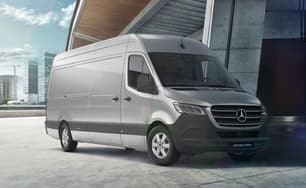
The Mercedes-Benz Sprinter has long been a formidable competitor in the Light Duty (3501-8000kg GVM) division of Australia’s highly competitive Heavy Commercial vehicle market.
The popular range offers a choice of panel van, cab-chassis and minibus body styles, four turbo-diesel engine variants (plus an all-electric drivetrain), three wheelbase lengths and for panel vans plus the choice of two roof heights.
An extensive overhaul of the Sprinter range in 2024 brought extra safety technologies, new comfort and convenience features and other benefits, which Mercedes-Benz claims can help drivers work more efficiently. We recently put one of the latest models to the test.
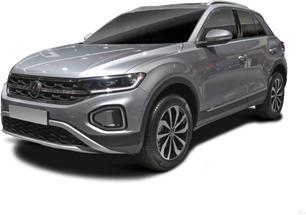
For a small SUV that technically starts under the $40,000 mark, the 2024 Volkswagen T-Roc has a fair bit going for it.
It’s still in its first generation, but updates have made some parts of the T-Roc feel properly up to speed. And the parts that haven’t? Well, maybe that’s not such a bad thing.
We’re driving the mid-spec Style 110TSI, which sits above the base CityLife, but below the R-Line. Then of course, there’s the wicked R variant.
But is this a Euro that could replace your trusted Japanese small SUV?
Given the original Sprinter was released in 1995, it’s not surprising the current third-generation model feels like it’s benefitted greatly from decades of continuous refinement. Although the list price difference between our test vehicle and its closest Chinese rival is substantial, the 417 MWB Panel Van is hard to fault in terms of driver comfort, safety and all-round competence. It really is very good.
So that’s the T-Roc, a bit of Euro style that’s still priced to take the fight to some small SUVs from Japan or Korea.
Is it the cheapest style-forward small SUV you can get? No, but it’s far from the expensive end of things.
Plus, if you can resist ticking some option boxes, it beats some value-focused rivals and looks good doing it.
If the feeling of a sturdy fit-out and a confidence inspiring drive is important to you, I reckon the T-Roc should be an entry on your shopping list.
The 417 MWB Panel Van rides on a 3665mm wheelbase (the shortest of three Sprinter wheelbases) and is almost 6.0 metres long (5932mm), more than 2.0 metres wide (2020mm) and stands almost 2.4 metres tall (2378mm). Its 12.4 metres kerb-to-kerb turning circle is impressively tight for a vehicle of this length.
It rides on simple and rugged MacPherson strut front suspension, with a robust live axle/leaf-spring arrangement under the tail. Steering is via rack and pinion and it has disc brakes all around.
Look beyond the optional silver metallic paint on our example and there’s extensive use of unpainted dark grey plastic on all the external surfaces where hard-working vans are most prone to wear and tear, including the hubcaps, front/rear bumpers, grille, door-handles/mirror shells and along the sides.
Its work-focused exterior styling is nicely integrated, combined with an equally neat and functional interior design that offers a visually-pleasing combination of patterned fabric seat-facings and hard surfaces that blend different shades of grey with splashes of satin chrome and piano black.
We also like the feel and response of mechanical switches (rather than touchscreen prompts) for adjusting settings like cabin temperature, fan speed and media volume.
The T-Roc subtly stands out without being garish, avoiding becoming part of the highway or suburban camouflage without relying on extreme design decisions.
For example, the LED daytime running lights that wrap around the shapes below the LED 'I.Q' headlights where vents would otherwise be on the R performance variant are quite cute.
In fact, the whole front end of this small SUV has a friendly look, even if there’s nothing specific that’s particularly exciting about it.
This 'Petroleum Blue Metallic' colour is a $700 option, but anything other than white costs extra.
However, the black roof two-tone look is a standard for the Style, as are the black mirror caps and its 18-inch alloys.
There are roof rails up top, tinted privacy windows for rear passengers and for the rear window and a sloping roofline at the rear that adds a touch of ‘sport’ to the silhouette along with a small spoiler at the top.
With its 2215kg kerb weight and 4100kg GVM, our test vehicle has a sizeable 1885kg payload rating.
It’s also rated to tow up to 2000kg of braked trailer and with its 6100kg GCM (or how it can legally carry and tow at the same time), that means it can tow its maximum trailer weight while hauling its maximum payload to ensure optimum versatility.
The cargo bay, which offers a cave-like 9.0 cubic metres of load volume and internal lighting front and rear, has internal dimensions of 3316mm length (with bulkhead), 1732mm width and 1719mm height.
So, with 1350mm between the rear wheel-housings, it can comfortably fit two standard 1165mm-square Aussie pallets or up to four 1200 x 800mm Euro pallets, held in place by a choice of 10 floor-mounted load-anchorage points.
The cargo bay is accessed through a single kerbside sliding door with a wide 1260mm opening, or symmetrical rear barn-doors with large handles on each pillar to assist operator access.
The barn-doors also have internal storage bins and open to a full 180-degrees to assist forklift and loading dock access. Thoughtfully, their hinge design also holds the doors firmly open at 180 degrees, to minimise the chance of wind gusts slamming them shut with potential injury to the operator.
There’s also plenty of cabin storage starting with two tiers of bins in each door, with the highest being spacious enough to hold large bottles.
There's also a deep shelf on the passenger side lower dash, a large lidded compartment in the central dash-pad and overhead shelves with lockable storage on the passenger side. Plus, the dash offers a total of eight cup/small-bottle holders.
The base cushion of the two-passenger bench seat is also hinged at the front, which allows it to tilt forward and provide access to a large hidden storage area beneath.
A crew of three can travel in relative comfort (for a commercial van that is) thanks to a central seating position that provides a sturdy hoop-handle for support, sufficient knee clearance from the dash even for tall people, and a reasonably flat and spacious floor area.
The cabin also features the latest next-gen 'MBUX' multimedia system with 10.25-inch touchscreen, which for the first time offers wireless connectivity for Apple CarPlay and Android Auto.
There’s also digital radio and enhanced functionality including an optional navigation upgrade with seven years of map updates.
Inside the T-Roc is a bit of an interesting dichotomy.
Some of what’s in here is ‘old-gen’ Volkswagen stuff, but it still holds up today against even some recently introduced models.
The dichotomy is that while it’s very usable and slick, some of its materials and surfaces let it down a touch.
The good points are that the cabin tech is a perfect level of physical and digital. The buttons and controls are easy to use and feel solid and even though the climate controls could be more physical, they’re still good as far as touch panel style controls go.
The older VW gear is arguably better than a lot of what’s found in newer models where some use of touchscreens and haptic panels has drawn negative feedback from customers.
The multimedia software managed via the 8.0-inch touchscreen is more simple and sensible than the new version, plus the Digital Cockpit Pro display for the driver is clear and, importantly, customisable. It’s a similar cockpit system that used to seem quite impressive in high-end Audis.
But what doesn’t feel very high-end is some of the plastic and the decisions around function in the rest of the space.
The leather on the seats is not a cheap option box to tick at $3450, but it feels a little cheap to the touch. It’s a tad hard and even has a bit of a rough look to it.
That option also makes them heated and electrically adjustable, though, which is welcome in winter. Otherwise, cloth seats without the optional leather or heating would be absolutely fine, and that means you get a storage space under them, too.
This central space between the driver and front passenger, too, is a little awkward with the cupholder placement. It’s behind the shifter meaning a tall bottle will be in the way and it’s got slightly odd sizing for bottles or cups with nothing to stop them wobbling.
I am, however, a fan of the angled-away phone slot under the climate controls to minimise phone screen visibility (and distraction) and the traditional shifter itself is welcome.
Look up, and (in our test car) there’s an optional ($2000) panoramic sunroof there. It’s yours if you want it, and it does have an electric blind, but some Japanese and Korean cars at this price point get that as standard.
An average-sized adult will find the second row is spacious enough and relatively comfortable. There’s an armrest, dual-directional vents and two USB-C ports.
Behind that, boot space is generous at 445L with the seats up thanks to an adjustable floor, which is very useful for tall items and even manages to fit a space saver spare tyre under it.
It’s a total of 1290L with the split-fold seats down, too, though they’re not super flat with the adjustable floor down.
Our test vehicle is the 417CDI MWB (Medium Wheelbase) Panel Van with standard roof height, which comes equipped with a 2.0-litre, four-cylinder, turbo-diesel engine and nine-speed automatic transmission for a list price of $86,018.
Our example is fitted with a couple of factory options, including the 'Cargo Pack' ($2265) which comprises a two-passenger bench seat, solid cabin bulkhead with fixed window and side-entrance assist handle, wooden cargo bay load floor and floor-to-roof wall-trim using 5.0mm-thick wood panelling.
It also has optional 'High-Tech Silver' metallic paint ($2534) which combined with the Cargo Pack raises the total price to $90,817.
In addition to the latest model’s upgraded safety (see Safety) and comfort/convenience (see Design) features, our test vehicle comes standard with 16-inch steel wheels and 235/65 R16C tyres plus a full-size spare, keyless start, steering wheel paddles for manual shifting, multi-function leather steering wheel, three USB-C ports and two 12-volt sockets, side marker lights and heated exterior mirrors.
There’s also daytime running lights, a parking package with reversing camera and front/rear parking sensors, traffic sign assist, tyre pressure monitoring and lots more.
The specific Style test vehicle being reviewed here is priced at $38,890, before on-road costs. But it's worth noting a new example of the Style will cost you $39,790 at the time of writing, as its price has since ours was 'delivered'.
While the Style features some older VW fitout, it comes with a decent list of features.
A set of 18-inch wheels, self-levelling headlights (with cornering function), some cute LED DRLs plus chrome highlights with black contrast trim are the best way to spot a Style from the outside.
Inside, there’s an 8.0-inch touchscreen for multimedia paired to the driver’s 'Digital Cockpit Pro' display.
The multimedia screen is last-gen VW gear, but that’s not a bad thing.
There’s also dual-zone climate control with an allergen filter, ambient lighting, a six-speaker sound system, wireless phone charger and wireless Android Auto and Apple CarPlay.
There are a few options on our test car that nudge the price up quite quickly, like the metallic paint, leather upholstery, sunroof, plus the keyless entry or ‘Easy open and close package’.
All this brings the total price as-tested to $45,640, before on-roads.
The good news is you don’t need to tick all, or any, of those options for this to still be a compelling option.
The (OM654) 2.0-litre, four-cylinder, turbo-diesel, which meets Euro 6 emissions standards using AdBlue, produces 125kW of power at 3800rpm with peak torque of 400Nm served between 1700-2400rpm. The nine-speed torque converter automatic offers the choice of sequential manual-shifting using the steering wheel-mounted paddles.
The engine in the T-Roc - as with most Volkswagens - does what it says on the tin. Essentially, a 110TSI means there’s 110kW of turbocharged VW happening, in this case a 1.4-litre four-cylinder that also makes 250Nm of torque.
It’s paired to an eight-speed torque converter, which will be music to the ears of those who have been scorned by older VW dual-clutches.
It drives the front wheels only, and there’s no hybridisation or 48-volt system.
The dash display was claiming average combined consumption of 9.5L/100km when we stopped to refuel at the completion of our 281km test, of which about one third of that distance was hauling a heavy payload (see Driving).
Our own figure of 11.7 (based on actual fuel bowser and tripmeter figures) was higher but still reasonable economy for a vehicle in this GVM class in mostly urban use.
So, based on our own figures, you could expect a ‘real world’ driving range of around 800km from its 93-litre tank, which has been enlarged from 71 litres as part of the latest upgrades.
A lack of electrification in a relatively small engine and a traditional drivetrain shouldn't scare you too much, in this case.
Combined cycle fuel consumption is a claimed 6.3L/100km. On test in mostly urban areas or for spirited driving we saw the fuel use rise a little higher than that but not by as much as you might think.
After a mix of primarily urban, some highway and a stint of dynamic test driving, the trip computer admitted to a figure of 8.1L/100km.
Large handles on the doors and overhead shelves assist climbing aboard and there’s enough adjustment in the well-bolstered seat and leather-rimmed steering wheel to find a comfortable position.
Driver views from all angles are excellent thanks to well-designed mirrors along with cameras supported by active aids like blind-spot monitoring etc.
The cabin, with its high roof relative to seat height, has a spacious and airy feel and all controls are reasonably intuitive and easy to reach.
Unladen ride quality is surprisingly supple for a vehicle with a 6.0-tonne-plus GCM rating, combined with excellent steering feel that strikes a fine balance between minimal turning effort at low speeds (for loading etc) and firm handling response at higher speeds.
The drivetrain is also energetic, pulling strongly and cleanly from 1000rpm even though its maximum torque is tapped higher in the 1700-2400rpm zone. The automatic transmission has admirable refinement, with near-seamless shifting between its nine ratios.
The Sprinter is also impressively quiet at speeds up to 80km/h. Tyre and wind noise (the latter mainly around the large door mirrors) naturally increase at highway speeds, but remain far from intrusive. And with the engine requiring less than 2000rpm to maintain 110km/h, it’s well-suited to highway work.
To test its load-carrying ability, we forklifted 1.3 tonnes into the cargo bay which with driver equalled a payload of 1.4 tonnes. That's still almost half a tonne less than its limit.
Not surprisingly, it handled this load with ease, as handling and braking were largely unaffected and the ride quality became smoother thanks to such a big increase in sprung weight. Even so, the rear springs only compressed about 30mm.
It easily conquered our 13 per cent gradient, 2.0km-long set climb at 60km/h with this load onboard, as the auto downshifted to fourth gear to tap maximum torque when hauling this load to the summit.
Engine-braking on the way down, in a manually-selected second gear, wasn’t as robust but not unexpected given a 2.0-litre engine trying to restrain 1.4 tonnes of payload on a steep descent. Even so, the quartet of disc brakes efficiently kept speeds in check.
Overall, it was an impressive performance. However, we did note that the speed sign recognition function was not working for the duration of our test. And some welcome enhancements would be a driver’s left footrest and a fold-down inboard armrest for the driver’s seat, as fitted to its smaller Vito sibling.
The T-Roc is essentially a previous-generation Golf-turned-small SUV in terms of its platform, and that’s a great thing for anyone who likes driving.
The Golf 7.5 was a benchmark for everyday driving as far as hatchbacks are concerned, and even though the current Mk8 might be a bit more up to date, the T-Roc’s use of the platform it rides on is practical and fun.
It’s not as nimble as a Golf, but the T-Roc in front-drive Style guise, with a responsive turbocharged engine and no all-wheel drive system weighing it down, is not only more dynamically capable than most rivals, it’s also easy to access that capability.
The 1.4-litre engine feels well-tuned for its two modes accessible through the shifter - calm but not lazy in ‘Drive’ and eager but not thrashy in ‘Sport’.
It works well with the transmission on the move, picking right gears fairly accurately, though there are paddles behind the wheel for those who prefer to take charge.
The drive modes are also more customisable than just those on the shifter, with 'Individual' selections for steering and drivetrain able to be used rather than the standard 'Eco', 'Normal' or 'Sport' full-system modes.
While the steering wheel itself is a little thick and the feedback, while adequate, isn’t the most telling, it’s accurate and inspires confidence in cornering.
The T-Roc handles turn-in and exits well, even soaking up bumps and not becoming unsettled when braking.
Its safety systems are relatively subtle, and the active cruise control is well sorted, though the automatic braking at car park speeds can be overzealous. Something I’ve experienced in VW Group models several times over the years.
The main culprit for the T-Roc was a shrub beside my driveway that, while not touching the car, would set off the automatic braking system. Still, better than letting the car roll back if there was a proper obstacle or someone who could be hurt in the way.
Aside from that, the Volkswagen T-Roc is fun and easy to drive, and the work that’s gone into that puts its price into perspective a little more.
There are more expensive cars available that are less impressive, some even disappointing.
ANCAP ratings do not apply to Heavy Commercial vehicles. Even so, in addition to the Sprinter’s existing long menu of passive and active safety features, the latest range adds significant enhancements as standard equipment including thorax-protecting airbags for driver and passenger, lane-keeping assist, traffic sign assist, rain-sensing wipers, tyre pressure monitoring and a parking package with reversing camera and front/rear sensors.
Also new is ‘Moving Off Information Assist’ which utilises a camera mounted in the grille plus six ultrasonic sensors to monitor an area 3.7 metres in front of the steered direction of the vehicle and 0.5 metres to the side.
This automatically activates at start-up and remains active up to 10km/h. So, if a road user is detected in the monitored area, the driver is alerted by audible and visual signals.
The latest range also introduces ‘Sideguard Assist’ which provides extended detection in the blind-spot on the passenger side. It activates when the vehicle is stationary and at low speeds, providing an extra set of eyes during parking, low-speed manoeuvring and traffic congestion.
In 2017, ANCAP gave the T-Roc five stars for safety. For most people, that says enough, plus the list of features the SUV comes with is fairly comprehensive even in the Style.
While its rating is getting on in years, the only real downside to the T-Roc’s age when it comes to safety is it only having six airbags - front and side for the front passengers, plus curtain airbags for front and rear passengers.
But the list of tech isn’t lacking, with driver fatigue detection, pedestrian monitoring, parking bay and parallel parking assistance, pedestrian monitoring, side assist, rear cross-traffic alert and lane assist.
Warranty is five years/250,000km whichever occurs first and includes a roadside assist support package.
Scheduled servicing is every 12 months/40,000km. Pay-as-you-go capped-pricing for the first five scheduled services totals $5905, or a pricey average of $1181 per year. Service plans are also available.
Volkswagen’s five-year/unlimited kilometre warranty is pretty standard for a premium-leaning brand, with VW also offering roadside assistance for the warranty period.
In terms of servicing, VW offers care plans of three years or five years, covering servicing for $1515 or $2770 respectively. That's an average of $505 or $554 per workshop visit.
Otherwise, servicing costs at 12-month/15,000km intervals can cost from $470 for some to $1104 to the biggest service if you don’t go with the locked-in package.