What's the difference?
Imagine a car that can pretty much drive itself, if you let it. And it’ll do that while you get a massage, pump some Beyonce, and enjoy the fragrance of a field full of flowers… And then, it can teach you to do stretches and exercises in the driver’s seat.
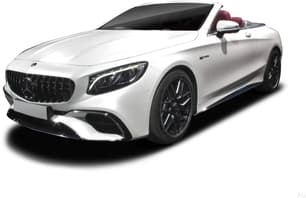
It may sound like fictional fiction, but it’s factual fact. And it’s the Mercedes-Benz S-Class 2018 model, which has taken the so-called ‘wellbeing’ of the driver to a new level.
The facelifted model has seen plenty of styling changes and some tech upgrades, and while making the flagship car in a particular brand’s line-up is often a task fraught with issues, the German company’s big, expensive, luxurious, limousine is undoubtedly a more thoughtful car for 2018.
But just remember, its predecessor was considered - at least for a little while - as the best car in the world by some automotive journalists.
Now Mercedes-Benz has updated it, and it reckons it’s better than before, bringing a bunch of new technology, new engines, a reworked model range and, perhaps not essentially, but still pleasantly, lower pricing.
Read on to see how Beyonce factors into the equation.
“Actyon!”
Any car with a name that sounds like the first word sung by Alicia Bridges on The Adventures of Priscilla, Queen of the Desert soundtrack version of the ‘70s disco classic, I Love the Nightlife, is crying out for attention.
But does the KGM Actyon, from the carmaker formerly known as SsangYong (from 1987, and Dong-A-Motor for 33 years before that) deserve to get the attention of medium SUV buyers against best-sellers like the Hyundai Tucson, Kia Sportage, Mitsubishi Outlander, Nissan X-Trail and Toyota RAV4?
Keep reading, because the latest offering from this intriguing new/70-plus year-old brand from South Korea is presented, priced and packaged like a pro ready for action, so let’s go!
The 2018 Mercedes-Benz S-Class remains a technological tour de force, a luxury sedan to be reckoned with - one that has safety, technology, comfort, finesse and performance all rolled into a stylish package.
It's hard to see why you'd need anything more than the S 350 d, which is now much more attractively priced. It'd be my pick, but I'd have to get the Energizing Comfort Control package, and probably the AMG styling pack, too. And even then it would cost less than its predecessor.
Is all of the above enough to spur you into Actyon? It should be, or at least make your medium-SUV shortlist.
Bold styling, keen pricing, an inviting cabin, loads of space and an involving driving experience make the new KGM everything we wanted from but never really got from the old SsangYong.
A bit more torque, a little less thirst and a softer ride would make a surprisingly good family-friendly medium SUV a real crowd pleaser.
We’re looking forward to what else KGM has coming in the future.
I swear it has been facelifted, and the changes are bigger than they might appear. There is no doubt that the S-Class shape is largely unchanged, but the German company has kept the modifications minimal in the scheme of things.
That doesn’t mean those changes are unnecessary, though. The new headlights, for example, are standard on every model, and are constructed with 84 LEDs (including three for the daytime running lights), and of course they’re adaptive with automated high-beam - meaning they’ll shield other road users from the glare of the lights at night. And the lights themselves will throw a main beam up to 650 metres, according to the company.
Other things are slightly more cosmetic, like the revised three-bar grille treatment, new front and rear bumper designs that feature broader sculpted sections to widen the stance of the car, and there are new LED tail-lights as well.
The smallest set of wheels used to consist of 18-inch rims, but now the base car rolls on 19s, while the rest of the expansive range sits on 20s.
The inside has seen some changes, too, but the appearance of things in the cabin isn’t the focal point - its the usability of the technology that's the big change.
Oh, but I should tell you there are now 64 ambient lighting colours to choose from, which is up from seven, and now you can also set the lighting in three different zones - so theoretically you can have blue, orange and green areas of the cockpit, if you’re gross.
KGM currently sells no fewer than three medium-sized SUVs of roughly similar dimensions.
There’s the more-compact Korando (which arrived in 2020), the bigger and boxier Torres (released in 2024) and, of course, the new Actyon. While all sit on variations of the same monocoque-bodied platform, the newcomer benefits from additional development (and funds) under KGM ownership.
Not obvious unless viewed together, the Actyon is designed to be a sportier and more coupe-like take on the Torres, and is slightly lower at 1680mm as a result. But it’s also a bit longer at 4740mm and wider at 1920mm wide. Both share the same 2680mm wheelbase.
This may seem an extravagant niche for KGM to pursue, but it claims the original SsangYong Actyon (unveiled in 2005) beat the admittedly far-more influential BMW X6 by about three years, to become the world’s first productionised coupe-style SUV.
Whatever, today’s Actyon is a sleeker and perhaps prettier design than the Torres, with obvious Range Rover (Evoque, Velar) homages throughout, particularly when it comes to the lighting elements.
According to KGM, the grille’s lighting design is inspired by the four symbols found on the South Korean flag, representing heaven, earth, water and fire.
A nod to SsangYong’s reputation for tough, rugged vehicles are the controversial bonnet-mounted ‘handles’, a decent ground clearance rating of 206mm, squared-off wheel arches, unusually-wide C-pillars and clear Jeep Grand Cherokee overtones in the tail-light and other rear-end treatments.
What should be a visual mess seems to meld together cohesively regardless of influence, making the Actyon a distinctive, handsomely-offbeat design.
If you’re buying a Mercedes-Benz S-Class there’s a good chance you’re more interested in the back seat than the front: you could be buying it for a business, or you could like to be driven around - and there are definitely worse places you could be.
We would suggest, though, that the best place you could be if that’s your caper is in the back of a long-wheelbase S-Class model, which has extra legroom.
And if you happen to be in a LWB model with the 'Business Class Package', you’ll enjoy two individual rear seats rather than a three-seat bench, folding tables for your bento box or laptop, and an ‘executive seat’ on the passenger side that features a foot rest and allows you to slide the front seat forward to liberate more room. Deluxe.
No matter if you are in one of the stretched models demarcated as such by the ‘L’ suffix or not, you will enjoy excellent seat comfort and good head- and shoulder-room. Legroom in the regular models isn’t as plentiful as you might expect: much more affordable cars like the Hyundai Sonata give the S-Class a run for its money in that regard.
There are good storage options for odds and ends, with the back seat featuring a fold-down armrest with pop-out cupholders and a storage box, as well as map pockets - and the boot space varies depending on the model, but the S 350 d has a 510-litre cargo capacity (VDA). All four doors have bottle holsters, and a bit of extra room besides. Of course there are rear-seat air-vents, and if you’re kids are lucky enough to ride around in a S-Class, the two ISOFIX/three top-tether points will be welcome.
Up front there are two cupholders between the seats, and a new wireless phone charger in the centre console (Qi compatible phones only). There are two USB ports as standard in most models, while models with the rear seat entertainment package fitted get rear USBs.
The huge screen that runs across two-thirds of the dashboard has seen the noticeable join marker removed for this update, with the monitors being upgraded to a higher resolution and the graphics have been reworked, too. The codpiece-style controller of the Comand media interface remains, and while it still isn’t as simple as other controllers, it is reasonably easy to get used to.
So … what about Beyonce?
She comes in as part of the Energizing Comfort Control system, which is standard in some models and a $1400 option in those that don’t have it fitted.
Essentially it allows you to choose between different set moods: 'Joy', 'Freshness', 'Vitality', 'Warmth', 'Comfort' and 'Training', the latter of which offers three different stretching/exercise programs that last for 10 minutes to stop fatigue. The instructions are given by voice over the sound system.
Each of the moods will adjust the temperature and ventilation (the Freshness setting offers ‘gusts’ of fresh air as if you’re at the beach!), ambient lighting, air fragrance and intensity, and the massage function for the seats. And the music bit - there are predefined songs the system can cue up to suit the mood, or it can identify songs on a hard-drive or USB that suit the programs by analysing the tempo of the tune. Amazing, right?
The new steering wheel looks a lot sportier than the one in the pre-update car, and it has finally done away with the awkward cruise control stalk in favour of steering wheel buttons for the adaptive cruise control system.
Inside is where the Actyon really gets into its groove, as an impressive, thoughtfully engineered family-sized SUV.
Big doors open up nice and wide, revealing a welcoming interior, with a sense of space and airiness, aided by deep windows, large mirrors, a lofty driving position and – in our top-spec K60 test vehicle – the vast glassy sunroof above.
The sporty front seats look and feel fab, fit like a glove and offer plenty of adjustability for a broad range of backs and bottoms alike.
A chunky square-ish steering wheel is good to grip, and, along with the instrumentation’s distinctively angular graphics, gives off lots of BMW vibes.
In fact, it is clear that KGM has been inspired by its latest round of up-spec Kia, Hyundai and even Genesis compatriots when it comes to the Actyon’s fit, finish and presentation. There seems to be no concessions of quality or ambience in order to maintain the Actyon’s keen pricing, and that’s remarkable.
Especially as most things work so well.
Let’s take the 12.3-inch central display. No physical buttons are present, unfortunately, and that’s probably partly due to the modern, clean, horizontal look that today’s designs seem to adopt wholesale.
However, the difference here is that it does not quite suffer the same pitfalls as normal software-based, electronics-heavy set-ups.
Along the left side of the main screen border is a row of permanent fast keys for home, media and climate. Up the top of it is a tab for a temporary menu for fast access to driving modes, stop/start on/off, traction control, camera views, vehicle settings and general settings. While down the right-hand side of the screen border and close to the driver for easy access is a swipe-left tab for a detailed computerised climate-control display. This takes up one-third of screen real estate.
Sounds complicated but it is actually disarmingly intuitive. You're still prodding and swiping screens, and that’s always a potentially-dangerous distraction. But at least nothing is more than a double action away. And almost all functions are also accessible in a dedicated widget home screen. Handy.
Helpfully, KGM also provides a big, physical button on the steering wheel as a ‘favourites’ fast-key to whatever you use most. We set ours for direct drive mode access.
Meanwhile, all of the Actyon’s other main cabin functions, including the climate control, endless storage, twin USB-C ports, varying interior lighting and audio sound of adequate quality, operate without complaint.
Now, while the upper-level materials seem premium, cold and hard lower plastics beg to differ, yet they neither look nor smell cheap, so that’s a win.
But all these favourable first impressions don’t mean there isn’t any room for fixes in this South Korean family truckster.
At the very top of that list should be turfing out the very, very fiddly drive selector. Imitating Volvo’s infinitely more-effective toggle functionality, it needs two, three and even four stabs at selecting Drive or Reverse before engaging. This is a form of torture.
Running close behind is a multimedia system that needs at least 20 seconds to boot up on initial start-up. Not every time, just after a period of inactivity. Painfully slow, it’s also a hazard as the reversing camera won’t operate during this time! Fail.
Other annoyances include the lack of digital radio and wireless Apple CarPlay/Android Auto, meaning you’ll need a cord to access both via your smartphone. And finally, that C-pillar is a massive blind spot.
Meanwhile, out back, all the expected (but not always available in others) amenities are present, like air vents, twin USB-C ports, overhead grab handles, reading lights, coat hooks, a folding armrest with cupholders and an abundance of storage.
But there is also a shocking number of surprise and delight features, including electric front passenger seat adjustment – for slide and recline, adjustable backrest angles, outboard seat heaters, side window blinds, tablet holders incorporated into the back of the front headrests, shallow pockets for smartphone storage set within the larger map pockets, huge door pockets that can hold a 1.5-litre bottle and a back-row speaker-mute function for weary rear-seat travellers needing peace.
When parked, there’s enough space with the backrests dropped for a 180cm person to sleep flat on their back, highlighting the 1440 litres of cargo capacity, or an impressive 668L with all five seats up.
The only note here is that there is no luggage cover to hide valuables (or snooze underneath). Lucky the glass is all heavily tinted. Beneath the floor is a space-saver spare wheel, thankfully.
Overall, then, the Actyon’s cabin is a cavernous, classy and well-equipped affair.
If you can call a car that starts near two-hundred grand good value, then you have much more money than I do. But there is no escaping it: the new S-Class 2018 range is better value than before.
The starting point in the range is entry-grade S 350 d, which is $195,900 plus on-road costs.
Standard kit for that model includes 19-inch alloy wheels, leather trim, heated and cooled front seats, nappa leather-wrapped steering wheel, those great new headlights and the new ambient lighting system, a panoramic sunroof, head-up display, dark brown 'Eucalyptus' trim, auto-dimming rear-view and side mirrors, a wireless phone charging system, keyless entry and push-button start. The entire S-Class range now gets auto-closing doors and an electric boot lid, too.
The media system in the S 350 d includes sat nav with traffic monitoring, a 13-speaker Burmester sound system, digital TV, DAB+ digital radio, Apple CarPlay and Android Auto, and the 'Comand Online' system with internet capability.
Next up the model range is the S 400d L (at $222,500), and the S 450 L ($227,500) - both of which are specified identically. Over the base model car they feature the extended wheelbase, as well as electronically adjustable rear seats with memory function, side window blinds, a rear blind, rear climate control, and 20-inch wheels.
The S 560 sees the price head north to $270,000 (for the short-wheelbase model, which loses the abovementioned stuff in the L models), or $295,000 for the S 560 L. It adds the following nice features: nappa leather, brown burr walnut trim, a wood/leather steering wheel, 'Energizing Comfort Control', different (five-spoke design) 20-inch wheels, laminated glass and an anti-theft protection package. The S 560 L has luxury rear head restraints - they’re more like pillows, honestly - an individual rear-seat entertainment system and two wireless headsets.
The top of the regular S-Class model range is the Mercedes-AMG S 63 L, which is a princely $375,000. It builds on the kit offered in the models below, and pushes the sports luxury aspect further, with a full AMG body kit, 20-inch AMG wheels, AMG specific drive programs, AMG brakes, an uprated exhaust, sports steering and retuned suspension. Inside there are model-specific elements, special wood trim, front seats with active bolstering, and heated and ventilated rear seats.
If you’re shopping at this end of the market, then you’ll likely also be tossing up between a BMW 7 Series, or maybe a Bentley Flying Spur. An all-new Lexus LS will arrive in April 2018, and the all-new Audi A8 isn’t far away, either.
If you love an underdog, you’ve come to the right place, because the Actyon – a portmanteau of action and young – is a minor player in a major league.
Medium-sized SUVs represent Australia’s largest automotive segment. So, to help get the ball rolling, even the ‘base’ K50 grade borders on bountiful.
Kicking off from $47,000, drive-away, you’ll find unexpected little luxuries like quilted leather and heated outboard seating front and back, powered and ventilated front seats, rear privacy glass, a heated steering wheel, multi-coloured ambient lighting, automatic walk-away locking, a powered tailgate (with motion sensors) and 20-inch alloys. Entry level, remember.
Plus, a space-saver spare wheel is fitted. Rural drivers thank you, KGM!
These come on top of most of the expected modern amenities, including climate control, embedded satellite navigation, a 12.3-inch touchscreen (alongside a same-sized electronic instrument display), wired Apple CarPlay/Android Auto, heated/powered folding mirrors, a reverse camera and parking sensors all around.
Thankfully, there’s also a decent wedge of advanced driver-assist safety, like autonomous emergency braking (AEB), lane-support systems and adaptive cruise control. More on those in the Safety section later on.
For an extra $3K, the K60, from $50,000, driveaway, adds a 360-degree-view camera, a panoramic sunroof with a solid shade (again, something Australians want), rear door blinds and a wireless phone charger.
But there are a few conspicuous omissions. No Actyon offers head-up instrumentation, digital radio, wireless CarPlay/Android Auto or the option of either a hybrid powertrain and/or all-wheel drive (AWD).
Still, from a value perspective, that’s a lot of kit for the cash. K60 money can’t buy you more than a basic RAV4 GX (albeit a hybrid), while you’re only at mid-grade Outlander LS, Sportage SX, Tucson Elite and X-Trail ST-L 2WD petrol.
And that’s not even taking in the Actyon’s extra length and girth that make this five-seater seem like it should offer a third row, or the very striking styling.
So far, so good.
The big news for the majority of S-Class buyers is the new engine in the S 350d, which is a 2.9-litre in-line six-cylinder turbo-diesel with 210kW of power and 600Nm of torque. It has a nine-speed automatic and is rear-wheel drive (RWD).
That same diesel engine is wicked up in the S 400d L, with that model churning out 250kW and 700Nm, and remains rear-drive with a nine-speed auto.
The petrol model range is opened by the S 450 L with a 3.0-litre six-cylinder twin-turbo mill producing 270kW/520Nm. Again, nine-speed auto, RWD.
The S 560 and S 560L run the same 4.0-litre twin-turbo V8 petrol with 345kW of power and 700Nm of torque. Nine-speed auto, rear-drive - naturally!
The AMG-fettled S 63 has a thumping twin-turbo 4.0-litre V8 petrol engine with 450kW and 900Nm, with a nine-speed MCT multi-clutch auto and - you guessed it - RWD.
A familiar unit if you’re an existing Korando or Torres driver, the Actyon uses a 1.5-litre, four-cylinder, direct-injection, turbo-petrol engine.
Delivering 120kW of power at 5400rpm and 280Nm of torque between 1500-4000rpm, it drives the front wheels only at this stage via a six-speed torque-converter auto supplied by Toyota-owned Aisin.
With a power-to-weight ratio of nearly 73kW per tonne, it falls behind the larger-capacity 2.5-litre non-turbo alternatives as found in the Mazda CX-5, but matches rival 2.0-litre non-turbo units as used in the Sportage and Tucson.
A trio of driving modes are offered – 'Normal', 'Sport' and 'Winter' (to control traction in slippery conditions) – while a handy pair of paddle shifters allow for some manual-ratio manipulation, though it will still change up automatically rather than bounce on the rev-limiter.
The KGM also follows class convention in its double wishbone front and multi-link independent rear-suspension set-up, though it boasts higher-than-usual ground clearances for a front-drive medium-SUV that’s resolutely not an off-roader.
Towing capacity is rated at 1500kg with a braked trailer and 750kg unbraked.
The diesel models are - unsurprisingly - the most frugal in the range, with the entry-level S 350 d using a claimed 5.4 litres per 100km across a range of disciplines.
The S 400 d L - which uses a higher-output version of the same diesel drivetrain as the model above - uses only a minuscule amount more: its claim is 5.5L/100km.
The most frugal of the petrols is the S 450 L, with its six-pot petrol twin-turbo using a claimed 8.4L/100km.
Every model has stop-start - including the AMG - and the V8 petrols also feature cylinder deactivation when in 'Eco' mode.
That cylinder deactivation system helps the S 560 achieve an incredibly low claimed consumption of 8.5L/100km. So does the longer, slightly heavier S 560 L.
The higher-out Mercedes-AMG S 63 L uses 9.0L/100km, according to its claim. Amazing for the outputs of the engine.
Without even mild-hybrid-style electrification to help improve efficiency, how does the Actyon perform when it comes to fuel economy?
The official combined cycle (urban/extra-urban) average consumption figure is 7.6L/100km with a CO2 emissions rating of 174g/km.
Which might not seem too bad, but remember this one likes to sip from the 95 RON premium petrol bowser. Filling the 50-litre tank should result in about 655km of range, on average.
So much for the theory. During our time with the Actyon, we recorded a disappointing 10.3L/100km – though it’s worth keeping in mind this included performance testing which tends to drain the tank a bit harder.
Smooth. It wasn’t even because I’d chosen the Energizing Comfort Control mood to elicit that vibe. It’s smooth - and so it should be.
Whether it’s the near-silent new six-cylinder diesel, which hauls the near two-tonne sedan along with less fuss than a medical centre receptionist dealing with a room full of coughing patients. There is no fuss. You just hand over control to the engine, and trust it will get you where you need to be.
The V8 petrol in the S 560 also has a bit of a silent killer vibe to it. There’s perhaps not as much noise as a V8 fan might want, but the mumbo is there, and in both cars the gearshifts are sublimely timed and super smooth.
Admittedly, the stiff-sided run-flat tyres on both the 19- and 20-inch wheels can exhibit a slight terseness over sharp edges, but when it comes to rolling over pockmarked surfaces or rougher country backroads, the ride offered up by the air suspension with variable dampers is superb. Put it in Sport mode and it stiffens up to the degree you’d expect, but Comfort is no doubt the best place to be.
The steering is super light but accurate, meaning it’s easier than you’d think to pilot this behemoth of a sedan through corners. The grip on offer is excellent, too, even if traction can be an issue - I had a full couple of seconds of strobe light action from the traction control light when I buried the throttle in the S 560.
I didn’t get a chance to drive the six-cylinder petrol S 450 L, or the S 400 d L. And, I’m really sad to report, there was no opportunity to drive the AMG S 63 L, either.
But the overall feeling of the updated range is that it remains a deluxe and delightful limousine - whether you have the good fortune of being in the driver’s seat or not.
Okay, this the best-driving KGM ever. No shocks there, as this is the first model under the company’s new stewardship.
But it’s also the best SsangYong ever. Faint praise maybe, considering how off-road-biased and workhorse-like so many models were/still are, yet the Actyon can hold its head up high in more-sophisticated circles.
Not that pressing the starter button reveals that straight away.
With a dinky capacity and hefty, circa-1650kg mass to overcome, the 120kW/280Nm 1.5-litre turbo four needs plenty of revs to get going, meaning there’s a moment of initial lag before the speed starts piling on. Not great if you’re in a hurry. And it's pretty vocal to boot.
Essentially, the Actyon regularly has to work harder than larger-engined alternatives to achieve the same result. A quick power-to-weight calculation tells the story: 72.8kW/tonne versus 85.6kW/tonne for the 1578kg, 135kW/245Nm 2.5-litre Nissan X-Trail.
But, once on the move, there is a decent wad of torque for spirited acceleration as well as smooth throttle responses, and enough in reserve for sufficiently quick highway overtaking. We clocked 9.7 seconds for the 0-100km/h sprint.
Three driving modes are offered – Normal, Sport and Winter. Sport holds on to the ratios for a big longer, and is best suited for open-road driving.
More torque wouldn’t go astray, though, especially when the car is fully laden.
And the six-speed auto transmission, whilst smooth, can also be slow to react to downshift requests. The abrupt and clumsy stop/start system doesn’t help when moving off the line again, either.
Things improve when on the move, aided by a handy set of paddle-shifters when you’re in the mood for some manual-mode ratio manipulation, though the software does upshift if you forget.
In the wet the KGM also feels planted. And though it does not take a lot to spin the sticky Michelin-shod front wheels, it remains composed. An AWD option would probably be a welcome addition to the range.
You’d never call the Actyon a sports SUV, but there is a keenness to the chassis tune, reflected in the strong braking and positive steering – the latter being an absolute first for a SsangYong product.
Light enough around town to be easily manoeuvrable (with help from deep windows and surround-view cameras), it weights up nicely and consistently at speed without ever feeling too heavy, and provides just enough road grip and feedback so you can confidently push on knowing what the front wheels are doing. That’s all you can ask for in a family SUV.
Plus, the advanced driver-assist safety (ADAS) tech is pretty reigned in most times, only making itself unwelcome with occasional lane-keep assist wheel-tugging and drowsy-driver alert paranoia.
Thankfully, a quick swipe up on the multimedia screen will extinguish these and others quickly.
Now, there’s a bit of body lean if you want to make your occupants car sick through tight corners, but a bigger problem is the Actyon’s busy/bouncy ride on anything other than smooth roads.
Blame the lack of suspension travel and standard 20-inch wheels, because they do not absorb enough of the bad stuff.
It’s worse with one person, and the ride improves with more bodies on board, but a recalibration and perhaps smaller alloys or adaptive dampers need to be on KGM’s to-do list. It’s the only dynamic blot. Our advice is to try this on your regular commute route before you buy.
Speaking of blotting things out, the Michelin tyres’ noise-reduction abilities seem to work, and impressively at times, though adding the missing rear luggage cover might be a more-effective sound barrier over Australian coarse bitumen highways.
Still, the Actyon is neither dull nor tiring to drive. And for a new brand offering a value SUV challenger proposition, that’s better than most nowadays.
Easily one of the safest cars, if not the safest car, on the road today if technology is anything to go by. Well, we can’t go by a crash test score, because the S-Class hasn’t been crashed by EuroNCAP or ANCAP. So I can’t really give it a 10/10 for safety…
But when the standard safety kit list is as lengthy as the S-Class’s, it seems a safe bet. Items fitted include a 360-degree camera system, parking sensors front and rear, auto emergency braking, active blind-spot monitoring, active lane-keeping assist, adaptive cruise control with active steering assist, drowsiness detection, crosswind assist, and pedestrian detection with evasive steering assist (which allows you to turn the wheel harder to avoid impact with a pedestrian).
Plus there are other items like the company’s Pre-Safe crash detection system which can flash the car’s hazard lights at other road users, and tighten the occupant’s seatbelt in anticipation of being hit. And if that happens, there are eight airbags (dual front, front side, rear side, curtain).
And speaking of challenging, how does the KGM newcomer behave in independent crash testing?
We can’t tell you, because at the time of recording, no results had been released. So, there is no ANCAP rating.
But the KGM looks like it can deliver the goods, offering a host of advanced driver-assist safety systems, including AEB, blind-spot warning, lane-keep assist and rear cross-traffic alert. And it's worth noting this tech is mercifully unintrusive (see the Driving section).
Eight airbags are also fitted (including a front-centre and full head/curtain coverage), along with adaptive cruise control, high-beam assist, front and rear parking sensors, tyre pressure monitors and LED daytime running lights.
Last, but not least, a pair of ISOFIX child-seat latch points and a trio of hooks for tether straps are fitted across the rear seat.
Mercedes-Benz offers a standard three-year/unlimited kilometre warranty.
Servicing is due every 12 months or 25,000km on all engines except AMG drivetrains, which require servicing every year or 20,000km.
Mercedes-Benz has a (pricey!) capped-price servicing plan. The standard diesel and petrol models in the S-Class range cost $596 for the first service, and $1192 for the second and third visits. The costs for the sole AMG model is $736 for the first service, then the second and third visits are $1472 per.
Owners also experience the peace of mind of a seven-year/unlimited kilometre warranty, as well five years of roadside assistance, which is better than most rivals in 2025.
Service intervals are at every 12 months or 15,000km, with alternating capped pricing of $338 or $442 per annum for the duration of those seven years.
Clearly, with such a competitive aftersales program, KGM is gunning for a firmer foothold in the most fiercely fought family SUV segment in Australia.