What's the difference?
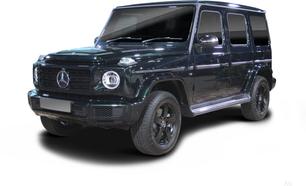
Everything you need to know about the Mercedes-AMG G 63's personality pokes out from underneath the polished alloy steps running down each of its flanks. Side pipes… no one does side pipes.
A colleague was pulled over in a G 63 because the cops thought the '60s muscle car-style exhaust was after-market and illegal. But it's not, and it's brilliant.
Launched globally in early 2018, this brutal take on the second-generation Mercedes-Benz G-Class might look the same as the G 63 it replaces, but under the skin it's a whole new ballgame.
The first-gen was like grandpa's axe, regularly updated but underneath it all the same basic framework. This is a whole new axe, including a fresh drivetrain, suspension set-up and interior treatment.
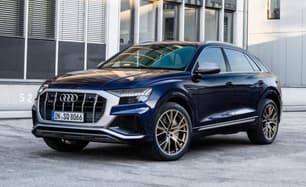
The Audi SQ8 has had a mid-life refresh but this upper large SUV still offers luxury with its powerful V8 engine that fans know and love, as well as the features you would expect in a top model.
It competes against the Mercedes-AMG GLE and Porsche Cayenne but we’re family testing the SQ8 to see how it handles domestic life.
Keep reading to see what we’ve discovered.
The Mercedes-AMG G 63 isn't for shrinking violets. It's bold, fast, and loud, and in second-generation form massively improved dynamically and technically. It's a lot of money, but there's a lot to love, and here's hoping it stays around for decades to come.
The Audi SQ8 isn’t your typical performance SUV. It’s more refined and less flashy. The tech can be more complicated than it needs to be and if you’re wanting that V8 soundscape, you won’t find it here.
However, the handling and on road experience are superb plus you can comfortably haul the family around and look good doing it.
The original (W460) G-Glass, then known as the G-Wagen (or Geländewagen for cross-country vehicle), was launched in 1979 as an ultra-capable off-roader, soon favoured by armies the world over. Arriving here in 1982, its distinctive, slab-sided form remained unchanged over the best part of four decades.
At close to 4.8m nose-to-tail, more than 1.8m across, and a bit over 1.9m tall, the G 63 is now longer (+110mm), wider (+106mm), and fractionally lower overall (-13mm), but still pulls off a convincing impersonation of a bread box.
Merc-AMG confidently quotes a drag coefficient (Cd) of 0.55 for the G 63, which isn't as bad as a brick (around 2.0… I Googled it) although it is in the same league as a heavy truck.
But it's the car's unique, upright stance, complete with pumped wheelarches and old-school flat glass, that sets it apart and draws people in. Looking more like a take-no-prisoners, functional device than a luxury cruiser, I can assure you it attracts as many admiring looks and comments as a low-flying supercar wedge.
The new-gen G 63 features AMG's vertically slatted 'Panamericana' grille, and our test example was fitted with the optional 'Night Package' ($5900) adding a range of dark exterior details including tinted indicator lenses, dark tinted glass, black exterior mirror shells and spare wheel ring, other black trim pieces and painted areas, as well as 22-inch AMG forged alloy rims.
Also worth noting, Merc has retained the G-Class's solid metal door handles, complete with the mechanism's unmistakable 'click-clack' opening and closing sound. Nice touch.
Inside, the biggest change is the upgrade from a conventional dual-gauge instrument cluster and central media stack to a pair of 12.3-inch digital screens, forming a sleek widescreen display, and bringing the G 63 in line with other recent Merc offerings.
Similarly, the gearshift moves from a traditional console-mounted set-up to Merc's 'Direct Select' lever on the steering column (exactly where the indicator stalk is located in 90 per cent of right-hand drive cars). And the standard flat-bottom, leather-trimmed 'AMG Performance' steering wheel is a racy addition.
Like the exterior door handles, another tip of the hat to the car's heritage is retention of the horizontal grab handle ahead of the front passenger on the dash above the glove box. Nice to have something to hold on to if the going gets rough.
The SQ8 is a gorgeous coupe-style SUV that looks purposeful and poised with its balanced proportions and wide stance. It’s stands apart from its siblings thanks to the S-styled nose treatment and our test model's black accent package makes the honeycomb grille look even sportier.
The update sees new air intake vents at the front, matrix LED headlights and new chrome exhaust tailpipes.
The upgraded 23-inch alloys with red calipers behind them hint at what’s under the bonnet, as does the Sakhir (sack-heer) Gold paintwork which is aptly named after the one-off Grand Prix race circuit.
The interior looks luxuriously appointed with the black Valcona leather upholstery and the dash is headlined by three high-end technology screens. The SQ8 also gets sport seats featuring a quilted design and 'S' badging but there’s not much else separating it from its siblings.
Audi fans will love the the SQ8's more understated interior but newcomers might be surprised it's not as flashy as some of its rivals.
The G-Class has never been a particularly squeezy proposition for passengers or cargo, but an extra 40mm in the wheelbase adds even more breathing space.
Getting in is the first step, and it's a big one. At 183cm tall, in an athletic mood, I could grab the A-pillar and swing up into the driver's seat in one vaguely respectable movement.
But, those side steps aren't just for show, and at the end of a long day provide a handy staging camp between terra firma and the lofty pilot's chair.
Once on-board there's plenty of room up front, with adequate storage including a bin between the seats (now with a double door opening rather than a single hinged lid), a modest glove box, oddments space and two cupholders in the centre console, and bins with space for bottles in the doors.
There's a 12-volt power outlet in the front, second row and cargo area, while there are two USB ports in the centre console bin and a charging USB port in the second row.
In the back I could have donned a dusty Akubra and still had headroom to spare, with generous foot room, and a substantial gap between my knees and the driver's seat (set to my position).
A fold-down armrest incorporates a pair of cupholders (as well as a through-port to the cargo space for long items) and there are map pockets on the front seat backs as well as space for bottles in the doors. Two adjustable air vents in the rear of the front centre console, and another pair in the B-pillars also provide climate-controlled air to those in the rear.
With the rear seats upright boot volume is quoted at 454 litres (VDA); enough to easily swallow our three-piece hard suitcase set (35, 68 and 105 litres) or the CarsGuide pram, or a largest-suitcase-and-pram combo.
There are tie-down shackles in each corner of the floor, usefully bright lighting, a netted storage area on the passenger side (containing five fluorescent emergency vests), and folding the 60/40 split rear seat liberates even more space.
Unfortunately, gaining access to that load space is fraught with compromise. First, the single-piece rear door hinges vertically and opens from right to left. No problem when you've nosed into a shopping centre space, but not so great when you're parking nose-to-tail on the left-hand side of the road.
That means you typically have a small space between you and the car behind to get the door open, and when it is at 90 degrees, you're blocked from unloading things onto the footpath until you've shut the door.
As well as that, the door has a full-size spare (alloy) wheel and tyre attached to it. Good because a full-size spare is welcome, and bad because it makes the already bulky door even heavier.
Those keen on towing things will be pleased to hear the G 63 is rated to haul up to 3.5 tonnes of braked trailer and 750kg unbraked.
The upper large SUV tag certainly makes sense when it comes to cabin space because there's a lot of it. Both rows enjoy ample head- and legroom and access is great thanks to wide door apertures and high ground clearance.
Comfort is high with well-padded seats and thanks to the Sensory Package all but the middle back seater get some luxury extras.
The centre rear position has compromised legroom courtesy of the transmission tunnel, so it's best for a kid. However, the front seats take the cake with their massage, heat and cooling functions and adjustable supports.
Amenities are great throughout the car and the extendable sun visors, rear electric sunshades, soft-close doors and four-zone climate control clinch the practicality deal.
Individual storage is a bit sparse up front with two cupholders, a drink bottle holder in each door and a shallow middle console that realistically only fits a phone.
The glove box is a great size. I can fit my handbag in it, but there are not a lot of areas to pop your smaller items in.
Individual storage is a bit better in the rear as you get two big map pockets, a drink bottle holder in each door, plus two cupholders in the fold-down armrest - so it feels like you have more places for your bits and pieces.
Technology looks amazing but overwhelming to use until you wrap your head around it all. The haptic feedback also gets tired fast. The built-in satellite navigation is super simple while the head-up display and digital instrument cluster feature pull through directions, which is handy.
Charging options are good with each row getting two USB-C ports and a 12-volt socket but the front also enjoys a wireless charging pad. The pad is slow to charge, though, and left my iPhone feeling super hot whenever it was used.
The boot is a good size at 605L and easy to access, too. The sloping roof means larger items have to sit flush with the seats but you shouldn’t have to worry for road trips.
The back seat has a 40/20/40 split which opens up storage options and this model has a powered tailgate.
Okay, you're laying down a quarter of a million bucks ($247,329 before on-road costs) and it's fair to expect some serious tech and standard equipment to keep you feeling warm and fuzzy after you're finished impressing friends and family with the G 63's howling acceleration.
For a start, there's a bunch of leading-edge safety tech on-board (detailed in the safety section below), and as expected that substantial cost-of-entry brings an extensive list of luxury features.
We've touched on the twin 12.3-inch 'Widescreen Cockpit', and available media includes digital radio and TV tuner, internet connectivity and 3D nav (with dynamic route guidance), as well as smartphone integration with Apple CarPlay and Android Auto.
Audio is a thumping 15-speaker, and 590-watt Burmester surround sound system, and the ambient lighting set-up offers a choice of 64 colours.
Also included are 'Multibeam' LED headlights, 'AMG Ride Control' adaptive damping, a 'Parking Package' with 'Active Parking Assist' and 360 camera, a sliding glass sunroof (with tilt function), the selectable AMG sports exhaust system, keyless entry and start, the AMG Performance steering wheel (trimmed in nappa leather), and 21-inch AMG '5-Twin spoke' alloy wheels.
Then there are the three 100 per cent differential locks (plus an 'off-road information centre'), electronically adjustable front seats (ventilated front and heated front and outer rear), steering column and mirrors (with memory function), three-zone climate control, nappa leather upholstery, a leather-finished dashboard with open-pore ash wood trim, a 'Dinamica' microfibre roof liner, and an AMG-specific IWC design analogue clock. Plus, the 'Dynamic Select' system enables a choice of pre-set driving profiles or individual settings.
The optional 'Exclusive Interior Plus Package' ($10,300) fitted to 'our' car adds deluxe nappa hide on the dashboard, door centre panels and grab handle, as well as a diamond quilted treatment on the seat centres, a black 'Dinamica' roof liner, velour floor mats (with edging in nappa leather), a frameless interior mirror and air vents in 'Silvershadow'.
On top of that the test vehicle was optioned with the 'Night Package' ($5900) detailed in the Design section, and Designo 'diamond white bright' paint ($5900) for a manufacturer's recommended list price (MRLP) of $269,429.
That puts the G 63 in the same price and equipment ballpark as the supercharged V8 Range Rover Autobiography ($268,900), twin-turbo V8 Porsche Cayenne Turbo ($239,400), and its Mercedes-AMG GLS 63 sibling ($221,729), powered by a version of the 5.5-litre twin-turbo V8 used in the first-gen G 63.
An impressive trio of alternatives, but in reality the idiosyncratic G 63 doesn't have any direct competitors, and for those who give in to the pull of its powerful tractor beams value-for-money becomes a uniquely personal concept.
There are three fuel-based variants for the Q8 and the model on test is the top-spec SQ8 TFSI quattro. Its mid-life refresh has seen a price hike of $10,015, bringing it's before on-road costs price to $178,815.
Our test vehicle has also been fitted with a few extras, like a 'Sensory Package' ($14,400) which includes a black headliner, upgraded 23-speaker Bang & Olufsen 3D surround sound system, massage function for the front seats, heat function for the rear outboard seats, electric sunshades for the rear row and an air-quality perfume function.
Also fitted are various black and matt carbon accents across/inside the body for a total of $5400, optioned 23-inch alloy wheels ($3000) and specialised 'Sakhir Gold Metallic' paintwork for $1600. Which brings the total MSRP price tag to $203,215.
Even with all of these extras, the SQ8 is still the most affordable performance SUV compared to its nearest rivals as the Porsche Cayenne GTS starts from $212,600 MSRP and the Mercedes-AMG GLE 63 outstrips them both at $272,300 MSRP.
As you'd expect the standard features list is robust for the SQ8 and includes premium features like a panoramic sunroof, electric front seats with heating/cooling and memory functions, full-leather upholstery, soft-close doors and a heated steering wheel.
There is a bunch of high-end technology throughout which includes a colour head-up display, 10.1-inch touchscreen multimedia system, 8.6-inch climate control panel, 12.3-inch digital instrument cluster, satellite navigation, wired/wireless Apple CarPlay and Android Auto, digital radio, four USB-C ports, three 12-volt sockets and a wireless charging pad.
Practical features include keyless entry and start, rain-sensing windscreen wipers, dusk-sensing LED headlights, a powered tailgate, adaptive air-suspension and four-zone climate control.
Overall, not a bad list of features for this part of the market and you won't be left wanting.
The G 63's 4.0-litre (M177) all-alloy V8 is closed deck design using direct-injection and a pair of twin-scroll turbos to produce 430kW at 6000rpm and no less than 850Nm from 2500-3500rpm. That's 10kW/90Nm more than the 5.5-litre twin-turbo V8 it replaces!
To improve throttle response and optimise efficiency, the turbos are located inside the engine's 'V', improving air flow and shortening the distance from the exhaust side to the turbos, and in turn, from the turbos to the inlet side.
And the housings on the twin-scroll turbos are divided into two parallel flow channels connecting with separate ducts in the exhaust manifold, allowing fine management of the exhaust gas coming in and pressure going out. Result is more torque and even better response times.
Drive goes to all four wheels via a new 'AMG Speedshift' nine-speed, dual-clutch auto (replacing the previous seven-speed auto transmission) with paddle shifters and a multiple downshift function which will go to the lowest ratio possible as you keep squeezing the shift paddle.
The 'AMG Performance 4Matic' all wheel drive system is front/rear biased 40/60 (50/50 in the previous model), although if you want to head off-highway the G 63 still features three 100 per cent diff locks and low-range off-road gear reduction.
Our test vehicle has a 4.0-litre, twin-turbo petrol V8 engine that produces 373kW and 770Nm. That means it sits in the middle of its rivals in terms of outputs with the Mercedes being top-dog with its 450kW/850Nm combo.
Still... the SQ8 is no dainty flower when it comes to power delivery and has an impressive 0-100km/h sprint time of just 4.1 seconds.
The SQ8 is a full-time all-wheel drive with an eight-speed auto transmission and the whole engine combo delivers a powerful but elegant on-road experience.
Claimed fuel economy for the combined (ADR 81/02 - urban, extra-urban) cycle is 13.1L/100km, with the 4.0-litre, twin-turbo V8 emitting 299g/km of CO2 in the process.
Despite the fact cylinder management tech means the engine will run on four cylinders under light load, and start-stop (with 'glide mode') is standard, we managed 16.7L/100km (measured at the bowser) over a mix of city, suburban and freeway running. To be expected for such a big bus, especially one that constantly tempts you into squeezing the throttle just to hear the exhaust bellow.
Minimum fuel requirement is 98 RON premium unleaded, and you'll need 100 litres of it to fill the tank.
The official combined (urban/extra-urban) fuel cycle figure is 11.9L/100km, which is lower than its rivals.
My real world usage sits at 12.3L/100km after a mix of open-road and urban driving.
This result is decent for a performance SUV but expect it to be thirsty in an urban environment as the on-board gauge hit the mid-20s in the city.
Based on the large 85L fuel tank theoretical driving range is 714km and around 690 using our real-world result. Respectable for a performance SUV but not as good as some family SUVs.
Let's cut to the chase. The G 63's pure grunt overpowers its challenging aero profile to thrust this boom box on wheels from 0-100km/h in a claimed 4.5 seconds. And believe it or not, despite its greater length and width, it has enough power to punch a 240km/h hole in the air (maximum velocity is limited to 220km/h if you choose not to opt for the 'AMG Driver's Package').
The new electronic architecture brings with it the latest version of Merc's 'Dynamic Select' system with five driving modes adjusting the engine, transmission, suspension, steering and assistance systems right up to maximum attack Sport+ mode.
All 850Nm of peak torque is available between 2500-3500rpm and pinning the throttle anywhere in that band feels like lining up a runway and preparing to rotate for take-off.
The two-stage exhaust flap arrangement allows you to turn the noise up from growl to roar even at modest around town speeds, and the nine-speed transmission is sharp and positive, with the multiple downshift function (in manual mode) hilariously good fun.
The racy AMG sports seats are as grippy as they are comfortable, and the fat 295/40 Goodyear Eagle F1 rubber, wrapped around the optional 22-inch forged alloys, does a good job of keeping all that mass and momentum in control as the high riding G 63 careens around corners.
And speaking of mass, the job of hauling it from warp speed to rest sits with big ventilated discs all around (cross-drilled 400mm front/370mm rear), clamped by monster six piston calipers at the front and single piston at the back. They're progressive and reassuringly powerful.
So, the performance is as dramatic as ever, but when I think of previous Merc-AMG G-Class offerings, two main shortcomings come to mind... steering and ride.
The steering was like a laggy mouse, with a few beats separating input at the wheel from response at the front treads. And the damping came up short, with a bouncy ride par for the course.
Still sitting on a ladder-type frame, the new G's suspension was developed by Mercedes-Benz and Mercedes-AMG. And finally, it has a decent double-wishbone independent front-end, with a rigid axle at the rear and coil springs all around. Plus, a strut tower brace, Merc-AMG calls it a 'suspension bridge', now connects the front strut towers, increasing torsional rigidity.
Ride comfort, especially in the most compliant 'Ride Control' suspension setting and riding on the big 22s, is massively better. It's no limo. You'll still feel jittering over higher frequency imperfections. But it's way, way ahead of the first-gen version.
The steering system changes from a recirculating ball to rack and pinion, and is now variable ratio with electro-mechanical rather than purely hydraulic assistance. And it's also much improved. We're not talking about a Lotus Elise-style connection with the road, but the steering is clearly more predictable and responsive.
One thing that hasn't changed is an ocean liner-worthy, 13.6m turning circle. You'll need to plan ahead for U-turns and reverse parks, but enough parking cameras (including surround view) to please Cecil B DeMille are on hand to help.
It's like a whole new world with a familiar cover wrapped around a markedly improved package. But (there must be a but) visibility is still compromised by thick window and door pillars, and despite the new dash layout ergonomic efficiency is patchy, with some switches and knobs located in relatively awkward positions.
As mentioned earlier the G 63 features three 100 per cent diff locks and low-range off-road gear reduction. But forget breakover angles and wading depths. This 4x4 seeing off-road action is as likely as an Abbott 2.0 prime ministership.
Suffice it to say, this car wears the 'Schöckl' badge at the base of its B-pillar. And in case you were wondering, Schöckl is a 1445m mountain in Graz, the Austrian city where the G-Class is built (and big Arnie Schwarzenegger was born!).
In the second-gen G-Class's development, prototypes covered roughly 2000km over a five kay trail including gradients of up to 60 per cent and lateral inclines up to 40 per cent. So, despite its irrelevance, the off-highway box is ticked.
The SQ8 delivers on power because it’s effortless to get up to speed and the pick up is super responsive when the start/stop function is turned off (otherwise there can be some lag).
The engine doesn’t sound like a big and grumbly V8, though. There are some growls but it’s mainly when you turn the engine on and not to be obnoxious about it but if you're in a V8, you want to hear it as it’s part of the fun of having a big bruiser engine like this!
What doesn’t help the V8 soundscape is the fact the cabin sounds like a noise-cancelling headphone inside. There is a small hum from road noise but it’s pretty darn quiet. Almost EV quiet at times but that means the driving experience leans more towards refined and elegant rather than sporty and fun.
The SQ8's handling is great - super direct steering, stable in corners and well-rounded passenger comfort when it comes to suspension.
You still get road feedback, which I like as a driver, but it’s not too stiff thanks to the adaptive suspension.
The SQ8 is a large car but you wouldn’t know it when it comes to parking. The 360-degree view camera is clear and the dynamic guidelines help you to position this big unit even the smallest of car parks.
The second-gen G 63 hasn't been assessed by ANCAP or Euro NCAP but its new electronic architecture brings the car up to speed on active safety tech, now incorporating 'Distronic' cruise control with 'Active Distance Assist', 'Active Brake Assist', AEB (forward and reverse), 'Active Lane Keeping Assist', 'Blind Spot Assist', 'Adaptive High-Beam Assist', tyre pressure monitoring, and 'Traffic Sign Assist'. Plus, the 'Pre-Safe' system prepares the vehicle and occupants in the face of an inevitable collision.
And once that impact has occurred, you're protected by nine airbags, including rear seat airbags, full-length curtains and a driver's knee bag.
There are three top tether points for child restraints/seats across the back seat, with ISOFIX anchors in the two outer positions.
The SQ8 has a maximum five-star ANCAP safety rating from testing done in 2019 and features eight airbags, including side chest airbags for both rows. It's common to only find the latter in the front – so that’s great for a family car.
The SQ8 scored well across its ANCAP individual protection segments, scoring 93 per cent for adult occupant, 88 per cent for child occupant, 71 per cent for vulnerable road user and 75 per cent for its safety assist.
The SQ8 has a long list of safety features including blind-spot monitoring, safe exit warning, driver attention monitor, fatigue reminder, matrix LED lights, SOS call, forward collision warning, rear collision warning, rear cross-traffic alert, lane keeping/departure aids, tyre pressure monitoring, adaptive cruise control (with stop & go and lane keeping), park assist and a 360-degree reversing camera plus front and rear parking sensors.
The rear row features two ISOFIX child seat mounts and three top tether anchors.
The SQ8 has AEB with car, pedestrian, and cyclist detection and is operational from 10 – 250km/h but it is usual to see this system operate from as low as 4.0km/h.
Mercedes-Benz (and by extension Mercedes-AMG) offers a three-year/unlimited km warranty with 24 hour 'Road Care' emergency roadside assistance provide for three years.
Servicing is recommended every 12 months/20,000km and a capped price servicing plan is available at Silver and Platinum levels for up to five years/100,000km.
The SQ8 comes with a five-year/unlimited km warranty, which is a normal term for the class.
It also comes with capped servicing for five years or up to 75,000km and averages $920 per service, which is very good for the segment.
Servicing intervals are reasonable at every 12-months or 15,000km, whichever occurs first.