What's the difference?
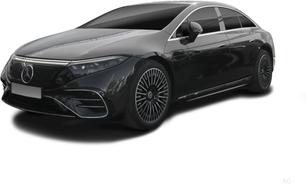
The Mercedes-Benz EQS is a car faced with multiple momentous responsibilities.
Not only is it the latest purely electric offering from Mercedes-Benz, but it also has to represent the future of the historic S-Class limousine, and in the AMG-spiced 53 trim we’re reviewing, it has to represent the future of the brand’s driving experience, too.
So can this oddly-shaped EV really take it all on and succeed? Read on to find out.
People with camper-trailers are increasingly looking to push their travel boundaries and so they head off the bitumen, onto dirt roads and go bush.
But on-road camper-trailers are not suited to cope with the extra stresses that dirt-road or gravel-track driving bring, which is why campers better equipped for light-duty bush driving, such as Jayco’s Outback versions of its models, are finding favor with buyers.
We took an Eagle Outback into the bush to check it out.

It’s unquestionably fast, certainly luxurious, but I’ll be honest, I don’t think the EQS is going to be for everyone. The styling will be challenging for some and the glittery interior tech offering might be a bit much, even for the more rusted-on Benz traditionalists.
Then again, shouldn't an electrified flagship be all about challenging the status quo, trying new ideas, and bringing new fans to the brand? If anything, I think that might be what the EQS does best.
The Jayco Eagle Outback, for me, is an example of a camper-trailer getting closer to what I reckon a truly off-road-capable Jayco camper will be like.
There's nothing in Jayco's current line-up that offers comfort and full functionality and is also capable of tackling decent off-roading, so we're looking forward to testing Jayco's first line-up of dedicated off-road campers, including the JTrak Outback and Outback X.
The EQS is enormous, so it’s a good thing there’s huge amounts of interior space, even for what is ostensibly an S-Class, and with its bespoke electrified underpinnings, it also scores the kinds of innovations we like to see from electric cars.
These include things like a huge cutaway under the floating dash for extra storage, which the brand has seen fit to add elastic tie-downs so your objects don’t go flying in corners!
Storage up front is otherwise excellent with decent bins in the doors with height-limited sections for bottles, a flip open tray which houses the wireless charger and a set of fold-away bottle holders, and split-opening armrest console box which is deep and features yet another set of USB-C outlets.
Adjustability is great for front passengers, but ergonomically I found something a little weird about the digital dash. For me to rest my arms and hold the wheel, I had to set it so low the top of the wheel obscured the instruments, and if I set it high enough to see the full cluster, to comfortably hold the wheel my elbows would need to float above the armrests. Weird.
It doesn’t end there for the entirely touch-based controls either. While the (admittedly very cool-looking) wheel is packed full of buttons and touch sliders, they require near-surgical precision to operate with your thumbs, distracting while you’re driving, and the enormous centre screen’s main drawback is the fact CarPlay, for example, was not designed for the buttons and functions on the far left to be a metre away from where the driver’s hand is. Again, it’s distracting to have to lean out of your seat to hit the ‘back’ button on most context menus.
I would like to tell you at this point the Mercedes-Benz menus are mercifully simple to aid you with such an overwhelming system, but this isn’t true either. For some reason, there’s a ‘vehicle settings’ menu accessed easily through the main panel, or another menu with a separate set of key functions activated by a car-shaped shortcut button on the floating console. Why? Why aren’t these menus the same? I discovered this in my attempts to use the ‘raise vehicle’ function when faced with a steep driveway. You’re going to need to use this function often in a car measuring over 5.2 metres long, so hiding it in a confusing menu is an interesting choice.
The back seat is where the EQS should shine, and in terms of space it’s stellar. I can barely touch the seat in front of me when set to my own (182cm tall) driving position. It comes with some soft pillows which attach to the headrests, the sunroof extends back there nicely while not impeding on the great headroom, and the lavish trims all continue into the doors and seat bases, too.
The drop-down armrest has a trick pop-out bottle holder in it, and there are a further two on the doors. Amenity-wise rear passengers score four adjustable air vents with two climate zones adjusted via their own touch-panel, but I was interested to see there was a lack of screens back there.
This is particularly notable as most S-Classes are bought to be driven in rather than to drive, and the screens are so much in the front, I was expecting a matching offering for rear travellers. Not so.
You also can’t adjust the rear seats at all, and unlike some EVs coming out in this space, there’s no recliner mode for the full business-class experience.
The boot is much larger than in the smaller EQE, with the EQS making use of its extended dimensions nicely. The floor is fully flat, and has a secret compartment underneath for the storage of both your included Type 2 to Type 2 public AC charging cable, and Type 2 to wall-socket converter for garage charging.
With a total space of 580 litres, the EQS comfortably consumed our entire CarsGuide luggage set with space to spare.
These Jayco camper-trailers have a familiar touring-friendly floor-plan – check out the accompanying photos for proof of that – and most adhere to a similar approach to interior functionality – neat and simple – and that’s well suited to those who venture off the blacktop and hit the dirt.
Interior height is 2070mm, standard for campers of this type, so there’s plenty of stretch space for those of us not gifted with the vertical inches of Collingwood’s Mason Cox. Bench height, also standard for a camper-trailer, remains just lower than an average bloke’s hip so stooping to work in the kitchen is still an issue, but that’s part and parcel of the lifestyle, so stop whinging and get used to it.
Looking from the door, to the left is the front bed and club lounge; along the wall is the kitchen area (replete with four-burner stove, Dometic 95-litre fridge*, storage drawers and pantry); and to the right is the rear bed and dinette area. (* Outback models get the 95-litre fridge; Touring models get the 90-litre fridge.)
Overhead interior lighting includes LEDs for the main area and reading lights for the beds; there’s a fan for the beds.
There are also power points and USB port.
The EQS is quite surreal to drive, and you’ll notice a whole bunch of odd things first.
Immediately the driving position will be surprising. It’s nothing like what a traditional sedan feels like. This is because you sit high in the EQS. This helps facilitate extra under-floor space for the batteries, but the way Benz puts it, this driving position is deliberately SUV-like to grant buyers the more desirable view of the road which they now (apparently) seek.
It has some oddities, as mentioned earlier, with the fixed digital instrument cluster, and the way the wheel can block it depending on your height, but on the whole I found visibility in the EQS to be pretty good, despite limitations out the distant rear window.
Sound-wise AMG has created a bespoke soundscape for its electric models, two soundscapes, in fact. One sounds like a facsimile of a distant, digitised, V8 (weird) while the other is a bit more sci-fi. I can’t decide which one I really like, but props to the brand for thinking of individual sounds for things like accelerating, regenerative braking, as well as turning the car off and on. There’s even a humming tone for when the car is idling.
AMG says “it doesn’t work without sound” and I suppose it does add some sort of feedback to the experience which would otherwise be missing. I’d rather have it than not I suppose is the take-away here.
The acceleration is completely over-the-top in Sport or Sport+, allowing you to move such a large vehicle forward in an almost comically quick fashion. It has the sudden urge of a Tesla, but with an element of grace that follows courtesy of the adaptive suspension which, not only settles the ride, but keeps the car comfortable.
It is the suspension though which sets cars like the EQS (and even rivals from BMW) apart from the likes of Tesla. The ride in the EQS is superb, befitting the heir apparent to the S-Class throne. It’s hard to find a ride so void of issues, particularly in the everyday Comfort drive-mode. It’s not just the fact I can’t complain about brutality from this car’s oversized 22-inch wheels, but also there has clearly been delicate work conducted to control the rebound, body-roll, and jiggle which can occur as a result of moving around a near-three-tonne chunk of aluminium, steel, lithium and leather at enthusiastic speeds.
This settled ride combines gloriously with the four-wheel steer system to make the EQS a keen corner carver, despite gravity constantly working against it.
I was surprised to find the four-wheel steer system to be pretty much identical in feel to the system also employed in the EQE and new C43, in that it is unobtrusive to the overall feel of the car, only helping to add a little extra turn-in to the corners when need be.
In a vehicle as long as the EQS it’s a bit more noticeable, and requires a moment of brain-adjustment, as the car (bizarrely) goes exactly where you point it, requiring no over- or under-adjustments, the grip from the enormously capable four-wheel drive system refusing to let any shift under sensible driving conditions.
So, it’s comfortable enough to be an S-Class, fast enough to be an AMG, but I must say there is something a bit clinical about how it attacks the road. Missing some of theAMG drama we’ve become so used to from the brand’s combustion range, perhaps?
This single-axle camper – at 5060mm long (including drawbar), 1910mm high, 2240mm wide, and with a 1270kg tare weight – towed smoothly behind the Mitsubishi Pajero Sport we used on this review.
It sat snug and steady on the towball (with a 150kg download) during open-road driving, as well as during short sections of slightly bumpy gravel track and undulating dirt road.
The Eagle Outback has a hot dip galvanised Endurance Chassis riding on Jayco’s own JTech coil-spring suspension set-up.
Please note: Jayco’s Outback models are designed and engineered for, at worst, dirt roads and gravel roads, not 4WD tracks. Do not think that because these campers have been branded ‘Outback’ that they are actually able to tackle hard-core off-roading.