What's the difference?
They're doing it again! Actually they've been doing it again for a bit now. It’s Mercedes-Benz Australia and plug-in hybrid tech.
The Ross and Rachel, or Jim and Pam of the premium automotive world.
It's been a will they, won't they for a while, and in the past Mercedes has dipped its proverbial plug into the electrons a few times and gotten cold feet.
But now it says it’s all in. There are others, the GLA and GLC SUVs, plus there’s the new C63 performance car, but this one feels like a bit of an arrival.
Yeah, the C-Class is no longer the Mercedes-Benz in terms of sales, but it might be the best way to make the most of a bit of battery power.
It’s finally happened: Rolls-Royce has become so divorced from the everyday world of common folk that it's no longer even sharing the previously agreed meanings of words. Rolls has its own meanings, possibly its own language, which must be spoken with a plum on the tongue.
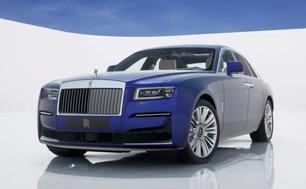
They’ve been heading here for a while. For example, at Rolls, “affordable” means the car we're driving today, the Rolls-Royce Ghost Series II, which is yours for just $680,000 (an indicative price, bumping to $800K for the Black Badge). And “iconic British marque” means, obviously, “BMW bought us in 2003, so there might be some German bits”.
It turns out that “driver-focused” means something different at Rolls-Royce, too. Thanks to a smattering of chassis innovations, Rolls says this updated 2025 Ghost is “the most driver-focused V12 Rolls-Royce ever”. Which is “a side of Ghost’s character that our clients increasingly and enthusiastically embrace”.
Don’t fall for it. The Ghost’s extra focus is not actually very focusy, and its additional dynamism is really only more dynamic in the way that a bed that could corner at all would be more dynamic than a normal bed. None of that matters.
The reason it doesn’t matter is because the Ghost Series II is wonderful. Indeed, it is very nearly perfect. Which is a word that even Rolls won’t quibble over.
Plug-in hybrids will probably not appeal to all buyers, but in the premium space they make sense.
Smooth electric driving paired with the potential for weekend trips outside the 100km-or-so range make the C350e a decent thing, let alone its price parity with the C300.
It still doesn’t top the charts for value or practicality, but even aside from the PHEV tech, the C350e remains a fun-to-drive sedan that holds its own in the executive space.
Note: CarsGuide attended this event as a guest of the manufacturer, with meals provided.
In a disruptive era when the coachbuilder has pivoted to SUVs like the Cullinan, a sort of London black cab that’s been dipped in opulence, and succeeds despite itself, and the brand’s grand, million-dollar EV, the Spectre, the Ghost is a safe and familiar space.
A beautiful, long, broad, immaculate land boat. It’s a space Rolls inhabits with relish.
The Ghost Series II feels nothing like a track-day option when you’re behind the wheel. But it might do if you were stepping out of a Phantom. Or a Cullinan. Or a Wraith. Especially if you’re stepping out of the back doors.
It’s the perfect driver’s car. As long as all your other cars are also Rolls-Royces.
The C350e doesn’t depart massively from the familiar visual formula that is the current ‘206’ generation C-Class and that’s no bad thing.
Call it conservative if you like, but having seen what’s possible when Mercedes takes risks (hello EQ models), the traditional Mercedes design language is put into healthy perspective.
Handsome proportions and lines without any fuss - there are no unnecessary creases or panels or materials.
The plug-in C350e comes, as mentioned, with the AMG Line pack, adding 18-inch five-spoke AMG wheels, an AMG front apron, grille insert, and of course EQ Hybrid badging.
The pack also includes AMG Line styling inside, where you’d have to be a Mercedes regular to spot the specifics. The AMG-style steering wheel and seats are the biggest giveaways.
Yes, its exterior is more monolithic than before. The previous iteration was hardly fiddly, but the (apparently client driven) evolution here edges ever so gracefully towards what Rolls-Royce might secretly think of as brutalism.
The Ghost Series II’s generous 2148mm width is further emphasised up front, stretched across its upright prow, with slimline headlights adding definition and — surprisingly — a touch of villainy.
New, Spectre-inspired tail lamps and a discreetly inscribed double ‘R’ monogram add a reserved flourish from behind, and buyers can choose from two new 22-inch, nine-spoke wheel designs.
It’s subtle, no doubt. But it’s also impeccable.
The space inside the C-Class remains straight-forward as ever. The layout and features don’t stray from convention, meaning there’s a sizable central screen, digital driver display, central cupholders, and places to put things like a phone, with wireless charging included.
The electrically adjustable seat and steering column make getting into a comfortable position easy, and the memory settings keep it that way.
While physical buttons are scarce, the key controls are easy to access via the central multimedia touchscreen and there’s a lack of complicated sub-menus. It's a refreshingly straightforward system compared to some from rivals, especially that of former category benchmark BMW.
There are fewer than a dozen main tile buttons on the menu, and they’re clear and easy to work out. The main screen also defaults to the navigation, and the climate controls are always visible on the touchscreen.
The central storage area is laid out so a phone sitting in the charging pad is slightly hidden, meaning it’s not a distraction, plus the cover means the cupholders and storage can be hidden away. Tidy!
The AMG-style steering wheel’s haptic controls can be used as regular buttons, but more than once on the test drive I nudged the volume and turned my music back on, just a minor annoyance.
In the second row, there’s generous space for a mid-size sedan, and the seats are comfortable for an adult to ride along for a lengthy trip.
There’s a centre armrest, hidden cupholders, and a generally light and open feeling thanks to the panoramic sunroof.
The battery for the hybrid system sits under the second row seats, which means there’s no uneven flooring in the 315L boot.
Inside, yes, there are bonkers touches in this most refined of automotive spaces, such as upholstery pinpricked by 107,000 'Placed Perforations' of 1.2mm in diameter, each individually examined, that replicate the shape of some clouds spotted over Rolls-Royce's Goodwood HQ.
Beside those flourishes of lunatic opulence, the more practical features feel pedestrian, but they’re comprehensive. The wireless Apple CarPlay and Android Auto, the seamless 'Central Information Display' and the 18-speaker 1400-watt audio, the upgraded Wi-Fi hotspot and the unobtrusive USB-C ports. The rear-seats flush with giant, streaming-optimised screens and heated and ventilated massaging seats.
Rolls acknowledges the generational movement of its clientele from back seat to front, with over 90 per cent of buyers now opting to — gasp! — steer themselves in a Ghost. But with back-seat savoir faire in its DNA, Rolls simply extends its hospitality to every seat.
The Mercedes-Benz C350e kicks off from $98,200, that’s before options and on-road costs.
And there are some key options, the main one being the ability to DC fast-charge which costs $1500 and brings the total to $99,700.
Pricing sits par with the C300 non-PHEV because of its similar specification, and Mercedes Australia said it wanted to give buyers the choice of internal combustion engine (ICE) or PHEV without having to consider the costs.
There’s a decent stack of standard kit in the C350e, including power adjustable heated leather seats, a 12.3-inch multimedia touchscreen and same-size digital driver display, head-up display, and wireless Android Auto and Apple CarPlay.
The C350e also scores some more fun stuff as standard, including a Burmester surround sound system, panoramic sunroof, the Driving Assist Plus pack, augmented reality MBUX, and the AMG Line pack which adds some sportier-looking design features.
It also comes with Mercedes’ Comfort Suspension which includes self-levelling suspension, and Digital Lights with adaptive high beam.
The Ghost Series II is yours for an indicative price of just $680,000 (or $800K for the Black Badge) plus substantial on-road costs. The Ghost Series II extended (which we didn’t drive at the international launch in Provence) will slip in at around $20K less than the Black Badge before additional charges.
If they seem like big numbers, you’re probably the sort of person who looks at price tags, or who shops in shops that put price tags on things. These are not common traits of Rolls-Royce buyers, who may only be vaguely aware of the actual price of their vehicle, and whose historical impression of guillotines is generally unfavourable.
So, high six-hundreds is table stakes.
But you might also think the ‘standard’ Ghost, like all Rolls-Royces, is considered by most buyers to be a mere starting point, from which they’ll typically up-spec their ride from a sumptuous and expensive options list.
Spending another 10 percent of the purchase price on customisation is a bare-bones outlay for most owners, but even so, the evolved Ghost’s out-of-the-box features are so comprehensive as to be almost overwhelming.
First, because the Ghost has been Rolls-Royce’s driver’s car since the first (modern) generation arrived in 2010, specifically to cater to a weird (for Rolls clientele) new generation of buyers who wanted to drive their Rolls themselves.
So that price gets you, above all, that proven but superb 6.75-litre twin-turbo V12 engine, massaged via an eight-speed transmission and an AWD system that’s as rich and viscous as Crassus’s last libation.
There’s its subtly tinkered 'flight on land' 'Planar Suspension System' (note the unspoken dissonance between the terms ‘flight on land’ and ‘driver-focused'), with an ingenious 'Satellite Aided Transmission' system that uses GPS to pick the ideal gear with which to launch out of turns.
It works hand-in-velvet-glove with Goodwood's 'Flagbearer' camera system, which tracks the road ahead to chide potholes into submission in advance.
Because it’s a Rolls, though, that’s barely even the start of the story.
The coachwork is extraordinary, with new trim options including natural open-pore 'Grey Stained Ash' design elements, a sumptuous new bamboo rayon textile called 'Duality Twill'.
There a night-sky inspired illuminated fascia that apes elements of time-lapse celestial photography, part of the central glass panel that stretches the length of the dash.
Sure, you might expect that level of detail for the outlay. But for the outlay it’s far from missing anything you’d expect.
The C350e’s plug-in hybrid drivetrain consists of a 2.0-litre turbo-petrol four-cylinder engine and an electric motor that drives the rear wheels via a nine-speed automatic transmission.
The combustion engine’s peak outputs are 150kW and 320Nm, while the 95kW/440Nm electric motor works with it to land on a total system output of 230kW and 550Nm.
While it’s not lightning quick, the C350e has a decent claimed 0-100km/h sprint of 6.1 seconds, and from the driver’s seat it certainly feels brisk enough to get out of its own way.
Rolls doesn’t like acceleration figures — too gauche, darling — but armed with that proven 420kW and 850Nm V12, the Ghost Series II has serious heft. Delivering max torque from 1600rpm — just 600rpm above idle — the effect is genuinely of one endless surge, a wafting cloud of momentum that subtly slips between gears as it exudes itself across the countryside.
The Black Badge edition, like all of its, er, ‘disruptive’ ilk offers a ‘Low’ button (‘Low’ means ‘Sport’ in Rollspeak), which bumps gearshift speeds by 50 percent when you plant your foot, and delivers a distinctly non-Rolls-like pop and burble on overrun. It also provides an extra 21kW and 50Nm, because Black Badge is mean and tough.
Mercedes officially claims the C350e has a driving range of 104km under NEDC testing, with a 25.4kWh battery supplying the juice.
Official fuel use is just 1.5L/100km, but Mercedes says that becomes 7.6L without any battery charge to help it out.
Under standard 11kW AC charging, it’s about two hours from flat to full, but with the optional 55kW DC fast-charging, it takes about 20 minutes from flat to 80 per cent.
Provence is not entirely a driver’s paradise, with every stretch of slightly twisty tarmac only a counterpoint to a motorway lined with Marseille lorries, Depardieu-esque men in tractors who refuse to move to the verge, and small villages where each kerbside corners sit millimetres from the foot of an adjacent boulangerie.
Which is to say it’s neither a place for economy runs, nor a location at which to run up the consumption numbers with a madcap series of impromptu hill climbs.
Our Ghost II drive returned around 16L/100km, which feels about right with that gorilla-in-a-tuxedo 6.75L V12, and is only slightly above the official figures of 15.8L/100km. Not great, could be worse.
The C350e has a few drive modes that are mostly self-explanatory, those being Battery Hold, Electric, Hybrid, Sport and Individual.
You’ll likely find yourself using Electric and Hybrid most of the time, so we’ll focus on those. Sport is fine but somewhat defeats the purpose of the plug-in system for day-to-day driving.
In electric mode, the C350e doesn’t feel like it’s lacking any power without the engine helping it along. Acceleration is smooth, brisk enough, and a 130km/h top speed means you won’t need the engine on your commute.
Realistically, its 104km range is probably somewhere closer to 80km, but covers you for a decent daily distance.
Let the car use the engine to help out via Hybrid mode and, if you’ve got music playing, you might not notice the engine starting and cutting. The system is smooth and it means a much longer life out of the battery before needing to charge. That, and there’s the benefit of more brisk acceleration thanks to the hefty 230kW/550Nm total outputs.
Everything else about the C350e is classic C-Class - the ride is controlled and the suspension does a decent job of soaking up bumps and rough roads, the comfort and self-levelling suspension makes cornering smooth and inspires confidence.
The most noticeable shortcoming for the car is its transmission hesitation if you put your foot down quickly, though the ability to use the paddles to choose your own gears in Sport mode avoids this.
In Electric or Hybrid, the paddles decide how much braking regen to apply, a useful feature that lets you recuperate some power for the battery if your drive includes a lot of downhill slopes or if you’re avoiding relying on the brake pedal.
The C530e’s extra weight doesn’t dull its driving characteristics as you might expect from a car laden with PHEV tech, so it’s a welcome surprise that you could pick up a plush plug-in for the same price as a combustion C300.
The Ghost Series II drives like a magic carpet, serene and untroubled; in almost any stable other than that of Rolls, calling it a ‘driver’s car’ would have you throttled by their skunkworks. Everything is relative.
Still, it hides its considerable dimensions well. There’s never any doubt that you’re in a large saloon, as you white-knuckle the Ghost’s impeccably appointed steering wheel, but there’s always enough power to deliver creamily instant throttle response, even in the case of initially misjudged cambers.
Nor can the Black Badge hide the shimmy of that characteristic ‘flight on land’ body drift. The upside is that its manners are impeccable, even through the worst possible pieces of corrugation Provence can deliver.
If anything, the Ghost Series II’s big-hearted bulk adds to the fun factor, especially in some of Rolls-Royce’s more garish colour options, when gasping South of France MAMILs stare in amazement as a bright yellow, five-and-a-half metre Rolls passes them on the outside, scattering their various baguettes and garlands of onions.
The C-Class has a five-star ANCAP rating, but it was tested in 2022 before the plug-in variant arrived.
Still, 10 airbags and an advanced list of safety features provides peace of mind.
The C-Class benefits from the brand’s Pre-Safe collision protection system to minimise occupant injuries from an impact, even to your hearing.
It also has emergency collision avoidance via steering input, driver monitoring, speed limit assist with adaptive cruise control, and parking sensors with surround-view cameras.
You get airbags, ESC, adaptive cruise, parking sensors and auto parking, and a rear camera. But don’t expect Rolls-Royce to allow the blighters at ANCAP to wreck one.
Mercedes has a five-year, unlimited kilometre warranty which is decent for a premium brand.
Servicing is pricey, though.
A three-year pack covering a service every 12 months (or 25,000km, whichever comes first) costs $3355, that being just three services.
Four years costs $4630, or five includes a more expensive service and brings the total to $6890. That’s an average of $1378 per service.
Finding somewhere to spend that money shouldn’t be hard as there are 100 dealers listed in Australia.