What's the difference?
Once upon a time, people would dream about owning a Mercedes-Benz 450SLC – the C107 sports/luxury coupe flagship of the 1970s.
Sexy, stylish, secure and incredibly solid, it embodied the brand’s ‘Engineered Like No Other Car' mantra of the era.
Today’s all-new, second-generation, C192 AMG GT Coupe is something of an indirect descendant of this sort of thinking, changing tack from its supercar-esque 2014 C190 predecessor, with more space, more seats, more sensibility and, conversely, even more steak and sizzle from its glorious V8.
A modern-day SLC? The Porsche 911, Aston Martin DB12, Maserati GranTurismo and Bentley Continental GT’s worst nightmare? Or something else entirely?
These questions and more are answered below.
Few cars have had the sheer staying power of the Suzuki Swift.
Except for a four-year hiatus as the original Ignis from 2001, the Japanese supermini has been a segment mainstay since 1983, winning over consumers worldwide as an inexpensive, economical and reliable yet fun option in the Toyota Yaris class.
In Australia, its impact has been even more profound, providing Holden with its famous “beep-beep” Barina for two early iterations from 1985, while also introducing us to the pocket rocket decades before the Volkswagen Polo GTI, with the Swift GTi of 1986.
Now there’s this – the sixth-gen model in 41 years if you exclude that Ignis – doing what the little Suzuki has always done: offering buyers a great budget alternative. But this time, in this new-electrification era, where precious few attainable choices remain.
Is it any good? Let’s dive straight in.
The GT63 4Matic+ is a breathtaking example of everything that Mercedes-Benz and AMG are.
Ferociously fast, incredibly agile and superbly sophisticated, it should be on anybody’s shortlist, if that also includes a Porsche, Aston Martin, Maserati or even a Lamborghini. And it’s definitely much more than yesterday’s SLC ever was – for similar money in today’s terms, as it turns out.
But, around Tasmania’s glorious roads at least, the Mercedes-AMG lacks the ride comfort and road noise isolation to be a fully-rounded-out GT, and that’s a disappointment for a brand with such formidable history in making such cars.
So, there you have it. A brief look at the new, sixth-gen Swift.
Better where it needs to be, the supermini survivor still remains competitively priced, with loads of new efficiency and safety tech that buyers will appreciate.
But, most of all, the Suzuki still feels, drives and rewards like the old model used to. It just does so with more sophistication.
As inexpensive city cars continue to fade, the new Swift continues 41 years of providing a fun, affordable and dependable solution, in a vibrant and desirable package.
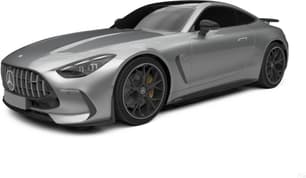
This is still clearly a Mercedes AMG GT coupe, like the 2014 C190 original, but a ground-up redesign sees it subtly yet significantly altered.
Some 270kg heavier than before, the larger-in-every-dimension body combines aluminium, steel, magnesium and fibre composite materials for improved rigidity and a lower centre of gravity. Length (4729mm) and wheelbase (2700mm) have been stretched by 177mm and 70mm respectively. Width (1984mm) and height (1352mm) are also up.
The nose treatment is similar to before, especially with the bulgy bonnet and signature vertical slatted grille fitted. These, combined with the LED digital headlight shape effect, is reminiscent of, but far-better executed than, the goofy-looking MG5’s face.
Underneath, it's an all-new platform shared with the SL, with the rear transaxle of the old car replaced by a permanent AWD system, leading from 46:54 front/rear weight distribution to 50:50 as a result.
That aggressive, exaggerated cab-backward/ultra-long bonnet silhouette that visually connected it with the SLS gives way to more-conventional and practical coupe proportions that is striking if not especially original, since they do look quite 911-esque. Along with the longer wheelbase and wider tracks, the result allows for two small rear seats to be fitted, while liftback cargo access remains.
Similarly, in the name of way-more usable interior packaging, Mercedes-AMG says it pushed the driving position nearly 180mm forward compared to the previous GT. Let’s see what that all looks like inside.
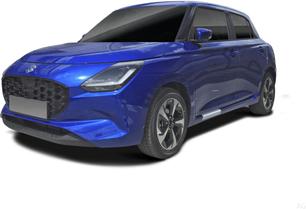
At first glance, the new one looks a lot like the old one. Short overhangs, long wheelbase, upright A-pillars, that signature 'floating' roof. This could be nothing else but a Swift.
Obviously, though, every single panel has changed, resulting in a stronger, quieter and more aerodynamic body.
Helping communicate this is a new and very definite crease line added to create a more-pronounced shoulder. The bonnet seems to be more clamshell-like and the nose is squarer, too. Indeed, everything about the overall styling seems to be more upright.
Debate is already raging in some circles. Is the new Swift too fussy? Too conservative? Has it lost the playful boldness of the proceeding version's gently-sculptured sides and hidden rear-door handles? Are the proportions slightly out now? Has the previous design integrity and oneness of vision been diluted? Does the 2017 predecessor look better?
Underneath, the platform is essentially the same, while overall dimensions are largely identical except for a 20mm stretch and 25mm roof lift. Length, width, height and wheelbase numbers 3860mm, 1735mm, 1520mm and 2450mm, respectively.
Happily, the aesthetic changes inside are likely to please rather than perplex, and even delight rather than divide opinion.
The first impression inside is that of space, despite the falling roofline and coupe-like upsweep of the side windows and you look back. While, again, similar to a 911s, a kink at the door gives the GT a unique character.
Even larger people will appreciate the generous amounts of room up front, with space to stretch, sat in sumptuously comfy bucket seats. Note that the standard ones are better than the racier but firmer Sports versions.
The driving position is perfect, ahead of a dashboard that is very typical modern Mercedes in appearance and layout.
To that end, the tablet-style integrated touchscreen (11.9 inches) is clear, fast and intuitive once time is taken to learn it. And points are also won for the multi-configurable electronic instrumentation, that allows for a variety of screens, including track, classic and minimalist views.
The trademark turbine air vents, the quite beautiful material and trim finishes and just the general solid feel are further typical contemporary Mercedes cabin treatments, as are the excellent ventilation and ample storage options.
And while rear vision isn't great, that's what cameras are for. It's all pretty much on brand.
It is a shame, given how elevated the Mercedes-AMG engineering is underneath, that the GT’s interior look and ambience is so similar to those of a (albeit higher-spec) C-Class or GLE. It's simply not as special as some of the company’s previous sports cars.
More annoyingly, the ride is too firm and bumpy for a GT, and this has the unhappy effect of provoking random rattly trim sounds within the cabin. It’s a bit like scrunched-up cellophane. In a $420K (as tested) Merc, that’s very disappointing, especially as it can be heard over the copious amount of road and tyre noise droning through, particularly on coarser bitumen surfaces.
Further back, the rear seat is strictly two-plus-two, and nobody over 150cm tall is recommended to travel there by Mercedes itself. That sloping roofline is the culprit. That said, brief trips with a bowed head are possible, as the fixed cushions and split-folding backrests are actually surprisingly comfy. But only for short journeys. Kids should love it though, and the second row does open up the GT’s usefulness enormously.
As does a near-doubling of the AMG’s cargo capacity, jumping 146 litres to 321L with backrests erect, to a whopping 675L (+325L) in two-seater mode. The flat floor is accessed via a large electrically-operated liftback door, offering quite a large aperture for easy loading/unloading.
Having no spare wheel helps here, with a tyre inflation kit included in lieu of that.
Meanwhile, at the front, under the bonnet, things have definitely changed for the better as well.
From a packaging perspective, the latest Swift carries on from before, and that’s no bad thing. It remains exceptionally roomy as well as practical.
To that end, entry and egress are easy, there’s a sense of spaciousness thanks to deep windows, a high ceiling and lofty seating, while the latter also helps provide an agreeable driving position. Storage and ventilation are provided in abundance.
For many people, the dash redesign reflects a big change in attitude, having finally grown up and away from the previous cheap and cheerful look. Highlights include pleasing seat fabrics, interesting textures and a sense of quality craftspersonship, within a stylish and sweeping design. After 41 years, the Swift has matured gracefully.
It’s also worth pointing out the super-clear analogue instrumentation dials, supported by a digital speedo and configurable trip computer data; actual buttons for the heating and air-conditioning system and – joy of joys – a handbrake lever.
Plus, if you want to turn off the various beeps from the driver-assist systems, physical buttons are but a simple press away. No distracting sub-menu searches within fiddly touchscreens here, thanks.
Except if you want to change the volume because you’ll need to prod the screen after all. The knob is always the better option, Suzuki.
What else? The rear bench area is a little plain but surprisingly roomy for this class of light car. Probably more so than a Corolla provided back in the early 2000s, with a decent level of cushy support for two people or three at a squeeze.
Given the extra specification, even the cheapest grade is all the Swift you’ll need. A sign of a democratic car.
But keep in mind the base variant no longer comes with a driver’s seat adjuster, passenger vanity mirror and multiple USB ports found in the Plus and GLX versions, while it is alone with a clammy plastic rather than leather-sheathed steering wheel rim.
At least cargo capacity edges up, by 23 litres to 265L (VDA), and that’s just under the luggage cover, thanks to some clever repackaging of a now-lower boot floor and internal tailgate panels. Drop the rear backrests and that expands to 569L.
Note, however, that for the Swift to achieve its sensationally low kerb weight that starts from just 919kg (up around 50kg), it now uses a fiddly and frankly-inadequate tyre repair kit. Thankfully, Suzuki offers that space-saver spare, at extra cost (and mass) of course.
Still, keeping those kilos low pays high dividends when it comes to performance and economy.
Starting from $370,400 (all prices are before on-road costs), the Mercedes-AMG GT63 4Matic+ is priced and positioned as something of an eagle amongst some pretty delectable doves, given its combination of four seats, 430kW of power, 800Nm of torque and four-wheel drive.
No rival equivalents can match the Mercedes on paper. The 398kW/610Nm 911 Carrera 4 GTS T-Hybrid offers less power but starts from $400,000-plus. The 410kW/650Nm GranTurismo Trofeo begins at $450K, the 500kW/800Nm DB12 from $455K and the 404kW/470Nm Continental GT from $460K.
Only the 460kW/750Nm BMW M8 Competition comes closest to the Mercedes-AMG, from $380K.
Side note, today’s GT is only slightly more expensive than what the 450SLC was nearly half a century ago when adjusted for inflation.
And, just like with that classic old Benz, it shares much with the brand’s legendary SL convertible stablemate – including, in this case, standard all-wheel drive and active rear-axle steering… aka 4WS to select third and fourth-generation Honda Prelude owners out there.
What else does $400K-plus buy you? As you’d expect, the GT63 4Matic+ comes choc-full of standard equipment, much of it typical of the luxury coupe breed, with leather-covered and electrically operated everything.
How about a front-axle lift system with GPS-enabled memory that automatically raises the GT’s nose to help clear bumps and then remembers to do so next time?
There are climate-controlled AMG sports seats with inflatable bolstering and massaging functionality, a fixed glass roof, a head-up display, augmented-reality satellite navigation, 360-degree surround views, performance telemetry data as part of an extensive multimedia system, an 11.9-inch portrait touchscreen, 11-speaker Burmester audio, a handsfree-powered tailgate, 21-inch alloys and cutting-edge driver-assist safety tech. More on that in the Safety section below.
Then there are the myriad option packs, bumping the GT63’s price up towards $500,000. These include a $2.7K seat trim package; a $10K AMG Night Package that adds darker trim treatments (often where chrome was); an aerodynamics package with fixed spoiler replacing the standard active spoiler; a $2.6K AMG Performance Seat package; a $13K Carbon Fibre package and $13.2K Ceramic Brakes.
Now, while the new GT does ditch the previous model’s unique rear transaxle spaceframe pioneered by the gull-winged SLS of the early 2010s, the resulting longer wheelbase and shorter overhangs do provide less outlandish and more practical design.
Let’s check that out in more detail.
So. Why are there so few affordable city-sized superminis like the Swift?
Just 10 years ago, the Swift had at least 25 rivals under $25,000. Today that’s phonetically as well as literally down "t(w)o" "three" – namely, the ageing but still-surprisingly-spry Mazda2 and intriguing all-new MG 3, as well as Australia’s sole sub-$20K new car, Kia's darling Picanto.
Many of the Class of 2014 have since morphed into pint-sized crossover hatchbacks like Suzuki’s soon-to-be-discontinued Ignis, the Hyundai Venue and Kia Stonic. And if you must, there are also the cheerless MG ZS and ancient Mitsubishi ASX biggish-small SUVs – but they’re cheapo for a reason.
Unlike the latest Swift... which, from $24,490 drive-away, is more than reasonably cheap, since it introduces some electrification tech across the whole range, while still being around the same price as the old base GL.
This now makes the new Swift Australia’s cheapest 'hybrid'.
Granted, despite wearing the Hybrid badge on every grade, it’s just a mild hybrid system, but one that provides extra electrification to usefully boost performance and economy for the all-new powertrain and revised transmissions. More on all that later.
What else? The base Swift at last gains LED lights, telescopic as well as tilt steering adjustment and important driver-assist safety like Autonomous Emergency Braking (AEB), along with lane-support systems, adaptive cruise control and rear parking sensors.
Also included now are keyless entry/start, a 9.0-inch touchscreen as part of a new multimedia set-up, wireless for Apple CarPlay (but not for the Android Auto), a digital radio, heated mirrors, traffic sign recognition, auto high beams and an alarm.
And there's more. The entry-level Swift Hybrid is also class unique in offering a manual gearbox. Good on you, Suzuki.
Not for you? Don't worry, because the Hybrid auto that is expected to be the bestseller starts from $26,990, drive-away. For the record, that’s only about $1000 more than the equivalent old version but with all that extra gear to boot.
But, beware, the base-model Hybrid alone lacks a few items that may or may not have been standard in the outgoing Swift, such as a driver’s seat-height adjuster, leather-wrapped steering wheel, privacy glass, alloy wheels, front passenger vanity mirror, front-seat map pockets, multiple USB charging outlets and a spare wheel (though you can pay extra for one as the wheel-well remains).
All of the above, except the missing spare, are included in the new Hybrid Plus auto grade, from $28,490 drive-away, along with heated front seats and additional driver-assist tech like a blind-spot monitor. We’ll get into more detail in the Safety section below.
Finally, there’s the Hybrid GLX auto, with its wireless phone charger, folding exterior mirrors, steering wheel paddle shifters, climate control, glossy alloys and more from $29,490, drive-away.
Sadly, the terrific old GLX 'BoosterJet' three-cylinder turbo is no more, and there might not even be a new Swift Sport to continue the GTi hot-hatch legacy.
Still, Suzuki’s managed to keep the entire range under $30K drive-away, despite big changes inside and out. Let’s check those out.
There’s a plaque signifying which engineer “handcrafted” the GT’s engine – in this case, the famous M177 in 3982cc, 4.0-litre twin-turbo intercooled V8 petrol guise.
Delivering 430kW of power at 6500rpm and 800Nm of torque from 2500-4500rpm, it sends drive to all four wheels via a nine-speed multi-clutch transmission (dubbed MCT in AMG-speak), catapulting the GT63 4Matic+ from 0-100km/h in just 3.2 seconds, on the way to a top speed of 315km/h.
How does it do that?
With AWD, the GT is now nearly 15 per cent heavier than before, but it still manages a punchy 218kW/tonne. Active aerodynamics over, inside and under a more-rigid body structure also helps.
The AMG 4Matic+ AWD system goes from 50/50 front/rear, to 100 per cent rear, variable torque distribution according to conditions and settings, and backed up by an electronic limited-slip differential. Among the many driving settings are Race Start, Drift Mode and good-old Comfort, if it all becomes too much.
Also keeping all that performance in check is a high-performance composite brake setup with improved cooling for faster responses.
Interlinked active roll bars improve body control, the five-link independent suspension features adaptive dampers for a softer ride.
And, as for that 4WS tech, the rear wheels steer opposite to the fronts at up to 100km/h (by some 2.5 degrees) for tighter and tidier handling, or 0.7 degrees in the same direction above 100, for greater stability and road-holding.
Its effect on the way this near-two-tonne coupe zigs and zags around corners is something you need to experience to really appreciate.
If there’s one area where Suzuki shines, that’s in making sweet little engines, and the new, chain-driven, 1197cc 1.2-litre mild hybrid three-cylinder petrol unit is no exception.
Now, on paper, 61kW at 5700rpm and 112Nm at 4500rpm may seem slightly lacking. A Mazda2 manages to make nearly 35 and 30 per cent more power and torque, respectively.
But the Swift's new 'ISG' integrated starter/generator/electric motor unit delivers an additional 2.3kW and 60Nm.
Combined with the hatchback's comparative lightness, it makes for a sufficient power-to-weight ratio of between 63 and 66kW per tonne.
Or, in other words, it provides some welcome extra low-down muscle.
Drive is naturally sent to the front wheels, via either a light-yet-positive shifting five-speed manual gearbox, or new CVT auto. Both have been heavily revised in their new roles serving the mild-hybrid powertrain.
Actually, the GT’s economy isn’t horrendous considering how fast it can go.
Even blasting a few times around beckoning country roads, we managed an indicated 13.0L/100km, which is an improvement on what Mercedes-AMG says the GT averages the 14.6L/100km average that Mercedes-AMG officially states.
That translates to a carbon dioxide emissions rating of 334g/km.
Using 98 RON premium unleaded petrol, an average of just under 480km between refills of the 70L tank is possible. The urban run sees consumption rocket to 21.8L/100km (for just 321km of range), or 10.4 out on the highway run, meaning that over 670km is possible should you decide to drive in a docile manner.
The latest Swift’s maturity does not end with its suave cabin presentation.
Prioritising high economy and subsequently low pollution, this Euro 6d-rated three-pot hybrid powertrain promises an astonishing combined fuel-consumption average of just 3.8 litres per 100km for the manual, and slightly more for the CVT at 4.0L/100km.
The results are 78 and 80 grams per kilometre of carbon dioxide emissions, respectively, along with around 970km between refills of the meagre 37L fuel tank.
These facts somewhat ease the pain of the need for more-expensive 95 RON premium unleaded petrol instead of the regular brew. High-tech solutions do require superior fuel, after all.
With just 70km on our ultra-tight test car’s odometer, the trip computer’s 6.7L readout is likely no indicator of the frugality we’re expecting to come.
So, how are such low consumption figures attainable? Along with better aerodynamics and a low kerb weight, the latest Swift Hybrid’s ISG hybrid unit generates supplementary electricity under acceleration, to ease the engine’s reliance on petrol.
It also recharges the 12-volt lithium-ion battery that lives beneath the front passenger-seat floor off-throttle via regenerative braking.
Note that the Suzuki never drives purely on electricity.
Nobody will drive the GT63 4Matic+ and think, ‘Oh, this is OK’, because its breadth of performance is phenomenal.
No matter which mode you're in, from Comfort through to track-tuned Race, the Mercedes-AMG blends forceful pace and commanding control without ever breaking a sweat.
Flex your right foot and the two-tonne coupe bounds into action like a giant on a mission, striding past posted speed limit signs in nanoseconds and way, way faster than the law will stand if diligence isn’t exercised.
And there’s no point relying on seat-of-your-pants sensations, either, because the chassis below embraces the road with an almost zealous devotion. Which is astounding, given how agile the four-wheel steering-enhanced handling is.
The 63’s super power is exactly that – it dulls your sense of speed. One tester admitted to exceeding 150km/h before noticing. An odd confession considering the sonic boombox that is the bi-turbo V8’s howl.
But jailbait performance is not even the 63’s most lingering joy. That would be its steering perfection, that delivers that rare trifecta of keenness, crispness and communication. The wheel feels eager and alive in your hands, even when powering between tight turns, backed up by sensational grip and control. How can a two-tonne GT handle so sharply?
Warm, dry roads were the order of the day, so we can’t tell you how the 4Matic+ permanent AWD system deals with wet or slippery surfaces, but the slick multi-clutch transmission, seamless torque-vectoring tech and sticky tyres more than cope with the 63’s formidable outputs.
So, that's the gushing part out the way, then.
Despite the adaptive dampers, rigid architecture and exquisitely sophisticated suspension, the ride is simply too stiff in Comfort mode, and downright jittery on some of the Tasmanian roads we tested on, for the 63 to be considered a true luxury grand tourer. It just isn't comfortable, luxurious or supple enough.
Plus, grippy as they are, the 21-inch wheels transmit too much road and tyre noise through to the cabin, meaning that the GT isn't as quiet as you'd hope. Add the aforementioned trim squeaks, and the expected cocooned silence isn’t always there.
The upshot is that the 63 possesses more of a sports car character than a luxury GT character. Great news if you're a 911 type buyer and are seeking a high-performance 2+2 alternative, but a disappointment if comfort and refinement are priorities.
Still, it is impossible not to be deeply moved by this Mercedes-AMG.
No Swift since 2004’s new-millennium redesign has been anything less than fun to punt around. A focus on driving pleasure and superior dynamics has helped make each version a cut-above most rivals.
Losing the smooth old 1.2-litre four-cylinder engine in the name of low consumption and emissions is a noble move. But how does this translate out in the real world, especially with a Swift fan behind the wheel?
It's mostly great, actually.
Losing a cylinder results in a slightly less creamy power delivery, especially as it’s accompanied by a distinctive three-cylinder exhaust-note thrum. But that’s still in keeping with the Swift’s endearingly sporty character.
Better still, even with all the examples we tested showing barely more than delivery mileage on the odometer, there seems to be more than enough grunt to please driving enthusiasts.
While not wanting to tax engines that weren’t even run-in yet, the charming revvy eagerness and instant throttle response remains, along with a discernible extra kick when accelerating away from standstill.
Even being so new, our Swifts proved to be lively, lusty and surprisingly rapid performers. We can’t wait to test run-in examples!
The five-speed manual is deliciously well-oiled and precise, immersing the driver into the Swift experience on another level compared to the CVT auto, which still manages to impress by responding quickly and effortlessly, without feeling laggy or droney. A lot like the old version.
Suzuki is making a lot of noise over how agile yet comfortable the newcomer’s handling and ride qualities are, as a result of improved rigidity and noise-dampening measures.
The Swift’s MacPherson-style front struts and torsion beam rear suspension systems have been revised with stronger and quieter mounts for better performance, while the electric steering has been retuned for greater feel and linearity.
The result? Even our limited time behind the wheel revealed tactile and precise steering, composed handling and extraordinary isolation from the road below for a car barely weighing 950kg (at most).
Combined with the nuanced driver-assist safety tech that rarely interrupted the fun, the latest Swift is a cheerfully animated, nimble and rewarding experience... and one that stands out all the more for evolving while so many other like-minded rivals like the Ford Fiesta have sadly fallen away.
Bravo, Suzuki. Generation Number Six remains the enthusiast driver’s choice, and a hybrid bargain to boot.
While the GT doesn’t score an ANCAP rating – probably because it’s too expensive to crash test – we’d wager that it would be above-average, given Benz’s track record as a pioneer in this field.
That’d due to the scores of active, passive and driver-assist safety features fitted, from multi-faceted autonomous emergency braking (AEB) and lane-support systems to Mercedes’ PRE-SAFE tech that anticipates a crash and then prepares the car for impact.
More specifically, the GT includes Active Lane Change/Keep Assist, adaptive high beam as part of its megapixel LED set-up, adaptive cruise control, Cross-Traffic Assist, Evasive manoeuvre support, an emergency services call-out system, 360-degree camera views, pedestrian protection bonnet and eight airbags.
In other Mercedes products of today, AEB operating parameters are 7-80km/h for vulnerable road users like pedestrians and cyclists, and from 7-250km/h for vehicle-to-vehicle, while the lane-keep support systems operate between 60-200km/h.
Finally, there are ISOFIX child-seat anchorages in the front passenger seat and two in the rear seats.
The latest, sixth-generation Swift has yet to be crash-tested by ANCAP.
Even the base Hybrid now includes driver-assist safety like AEB that includes night and day pedestrian and cyclist detection as standard, along with lane-departure warning, lane-keep assist, 'Weaving Alert' (a driver-drowsiness warning prompt), rear parking sensors, traffic-sign recognition, a reverse camera, automatic high beams and adaptive cruise control.
You’ll need to go Hybrid Plus for rear-cross traffic alert and blind-spot warning tech, though.
Note that Suzuki does not supply information about the AEB and other driver-assist tech’s operating parameters.
Also fitted are six airbags (dual front, dual front side and curtain), electronic stability control, anti-lock brakes with electronic brake-force distribution and brake-assist.
The rear seats also contain a trio of child-seat tether anchorages, as well as an outboard pair of ISOFIX attachments.
What’s the GT like to own?
Mercedes-Benz offers a five-year/unlimited km warranty, with five years of roadside assistance. This is average for most mainstream and luxury brands, but superior to most sports-car makers like Porsche and Lamborghini.
Intervals are every 12 months or 20,000km, and while no capped-priced servicing is offered on the GT, pre-paid three-, four- or five-year service plans are available, ranging from $5165, $7700 and $8665 respectively.
Big performance demands big maintenance bills, it seems.
Suzuki offers an industry-average five-year/unlimited kilometre warranty and roadside assistance.
Service intervals are every 12 months or 15,000km, while basic capped-price servicing is available, with the website showing pricing for the first five years and 100,000km averaging $391 per workshop visit.