What's the difference?
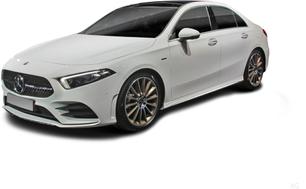
Meet the world’s most aerodynamically efficient passenger car. Mercedes-Benz says the drag co-efficient for this new sedan version of its fourth-generation A-Class is the lowest ever measured for a passenger vehicle.
Which is quite a claim, but you only have to look at it to see how much work has gone into marrying good looks with slippery aero performance.
The A-Class sedan is substantially longer and fractionally taller than its hatchback sibling, but does that mean it’s better, or simply different?
The Nissan Juke was meant to herald a new era for Nissan in Australia.
It was the first in a slew of new-generation SUVs and has now been joined by the Qashqai, X-Trail, and Pathfinder as part of a new-look Nissan.
Unlike those others, though, the Juke hasn’t quite resonated with buyers. Since arriving to what Nissan probably expected to be fanfare back in 2020, the new Juke has since sunk to the bottom of its compact SUV segment, outselling only a handful of other models.
So, what went wrong? Is the quirky styling of the Juke too much? Are there too many appealing choices in the compact SUV space? Alternatively, could the Juke be an underrated gem worth checking out?
I find myself in an upper mid-spec ST-L to find out.
Mercedes-Benz knows its way around a sedan, and this A-Class is a well-equipped, comfortable and efficient city-sized four-door.
But more than that, to my eyes anyway, it’s a perfect example of restrained form matching aero function with beautiful results.
Note: CarsGuide attended this event as a guest of the manufacturer, with travel and meals provided.
The Juke is a fun little car. It looks cool, it packs most of the important features and safety equipment, but while it can be fun to drive, it’s also a little clunky around town.
It’s so frustrating, because there is a great car in there somewhere, and it would take only small tweaks and enhancements to bring it out.
A global carmaker can’t hold its head up in public without a formal design strategy, and Mercedes-Benz uses ‘Sensual Purity’ as a guiding principle in developing the look and feel of its current models. It may sound airy-fairy, but I for one reckon it’s accurate in describing the A-Class sedan.
The overall form is flowing and minimalist, the major exception being a hard character line running down the side of the car from the trailing edge of the angular LED headlights and along the top of the doors to link with the tail-lights.
A rear-biased glasshouse emphasises the length of the bonnet, at the same time delivering a broad, muscular stance with short overhangs front and rear.
Ultra-fine panel gaps, careful sealing around the headlights and curved strakes either side of the bonnet keep the look clean and simple, not to mention super-slippery.
The interior has been styled to within an inch of its life, the dash dominated by the slick twin 10.25-inch widescreen ‘MBUX’ display covering instruments, ventilation, media and vehicle settings.
Five signature, turbine-style air vents (three in the centre, and one at each edge) lift the dash’s visual interest, and the quality of fit and finish is top-shelf.
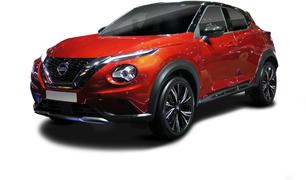
Urban style is clearly what the Juke is about. It’s always been about this, but the original incarnation, while unusual, was a bit bulbous and awkward. The current version is a razor-sharp re-interpretation of the original.
Ugly duckling no more, the Juke blends the elements of Nissan’s current design language with its own unique take, in a clever way.
The roofline and bulbous face of the original car, complete with its ‘eye’ headlights are all maintained, but this time they look more contemporary with a splash of chrome and gunmetal plastic in the face, offset by gloss blacks running down the doorline.
The new light fittings look great and the curviness is also gently off-set with some sharp angles. The massive 19-inch wheels finished in a two-tone gloss black and aluminium brush keep this car looking like a concept come to life. Just don’t crash them into the curb. It would be very easy to.
The cool elements continue inside, with rotary air vents, a blend of textures, including a gloss grey for the vent claddings, with white stitching for the wheel, seat, and into the door cards, too.
There are touches of chrome about the place, and an ambient red LED light surrounding the shifter, which sits on its own little pedestal thing.
It’s quirky and punches above its weight when it comes to soft trims in the doors. Like most higher-grade Nissans the seats are pretty comfy, too, clad in a hard-wearing synthetic leather material.
But it won’t be for everyone, and it’s not without its downsides. The abundance of grey plastic down the centre console is a bit cheap, and the tech offering doesn’t match the youthful style.
The centre screen is adequate, but compared to many rivals it’s a bit small and dull, and the Juke is still missing a digital overhaul for its instrument cluster.
The black headlining, usually reserved for sportier cars, makes the cabin feel smaller than it is.
At a bit over 4.5m long, a fraction under 1.8m wide, and close to 1.5m tall the A-Class sedan is 130mm longer and 6.0mm higher than the hatch version.
The A-Class sedan driver is presented with the same sleek widescreen display as found in the hatch, and storage runs to two cupholders in the centre console, a lidded bin/armrest between the seats (including twin USB ports), decent door pockets with room for bottles and a medium-size glove box.
In a swap to the rear, sitting behind the driver’s seat set to my (183cm) position, I enjoyed adequate knee and headroom, although stretching up a to a straight-back position led to a scalp to headlining interface.
In the A 200 a centre fold-down armrest incorporates two cupholders, again there are generous pockets in the doors with room for bottles, and adjustable ventilation outlets are set into the back of the front centre console. Always a plus.
There are three belted positions across the rear, but the adults using them for anything other than short journeys will have to be good friends and flexible. Best for two grown-ups, and three kids will be fine.
One snag is the size of the rear door aperture. Okay for taller people on the way in, but a limb-unfolding gymnastic exercise on exit.
But of course the reason we’re all here is the boot, and the sedan’s extra length translates to an additional 60 litres of luggage space for a total cargo volume of 430 litres (VDA).
Extra space is one thing, but usability is another. The benefit of a hatch is a large opening that allows bulky stuff to find a home, and Merc has pushed the sedan’s boot aperture to just under a metre across and there’s half a metre between the base of the rear window and the lower edge of the boot lid.
That’s made a big difference and access is good, with the rear seats folding 40/20/40 to add extra flexibility and volume. There are also tie-down hooks at each corner of the floor (a luggage net is included) and a netted pocket behind the passenger side wheel tub (with 12-volt outlet).
At the time of writing Mercedes-Benz wasn’t quoting towing specifications, and don’t bother looking for a spare wheel, the tyres are run-flats.
The Juke is a small SUV in the true sense of the word, sitting below the Qashqai which is more like a mid-sizer these days in terms of dimensions.
However, it’s quite cleverly packaged on the inside and is more useful than it first appears.
The front seats, for example, offer heaps of headroom and a surprising amount of width, and while the seats are manual, they’re pretty adjustable. I was able to find a great seating position.
There are big pockets in the doors with an integrated bottle holder suitable for even the largest bottles, although the centre console area is a bit less versatile, choosing its funky design over additional storage.
It features two good bottle holders, but a tiny armrest box and a shallow tray with one 12V socket and a USB-A outlet, as well as an auxiliary audio input under the climate controls.
On the topic of climate controls, I love the fact the Juke maintains a dedicated ventilation panel complete with buttons and dials for all the core functions. No touchscreen nonsense here.
The media screen, as mentioned, is a tad small, and falls victim to glare easily.
The stock Nissan software is a massive upgrade on the brand’s previous-generation products, but while it’s functional it’s far from the prettiest or the fastest on the market.
The back seat offers more space than you might assume, but it’s not as well thought-out as the front of the cabin. At 182cm tall I fit behind my own driving position with just enough space for my knees and just enough headroom.
There are decent bottle holders in the doors, and a further two small ones in the drop-down armrest. The backs of the front seats are clad in that synthetic leather material, which is nice, and have soft pockets, too.
The back of the front centre console offers just a single USB-A outlet and a small cubby. There are no adjustable air vents for rear passengers. It also feels a little claustrophobic back there thanks to the black trim on everything and smaller windows.
Boot capacity for the Juke is impressive for an SUV in this class, with 422 litres on offer, which is close to the volume we’d expect from something a size-bracket up, and 1305L with the second row folded down. There is a space-saver spare under the boot floor.
The A-Class sedan is launching with two variants, the A 200 at $49,400, before on-road costs, and an entry-level A 180, arriving in August 2019 at $44,900.
We’ll cover active and passive safety tech in the safety section, but above and beyond that standard equipment for the A 180 runs to 17-inch alloy wheels, ‘Artico’ faux leather upholstery, the ‘MBUX’ widescreen cockpit display (two 10.25-inch digital screens), auto LED headlights and DRLs, keyless entry and start, auto-dimming rearview mirror, climate-control, sat nav, multi-function sports steering wheel, cruise control, rain-sensing wipers, ‘Active Parking Assist’ (with ultrasonic proximity sensors front and rear), tinted glass, plus nine-speaker, 225W audio with digital radio, as well as Apple CarPlay and Android Auto.
The A200 steps up to 18-inch alloy rims, and adds a dual exhaust system, four-way electrical adjustment for the driver’s seat (with lumbar support), a folding rear armrest (with twin cupholders), adaptive high-beam assist, and a wireless device charging bay.
The Juke range kicks off from just $28,390 which gets you into a base ST and reaches to $36,890 for the top-spec Ti.
We’re driving the $34,440 (before on-road costs) ST-L which is the upper mid-grade car.
It scores concept-style 19-inch alloy wheels, synthetic leather interior trim, an 8.0-inch multimedia touchscreen with Apple CarPlay and Android Auto connectivity, a 7.0-inch digital screen between the analog dials, a surround camera system, single-zone climate, keyless entry and push-start ignition, and LED headlights.
The quite attractive ‘Magnetic Blue’ paint our car wears is a $700 option. For an additional $1133 you can also step up to the ST-L+ grade which adds alternate two-tone seat trim, chrome and black highlights and a 10-speaker Bose audio system.
While this ST-L grade gets the lion’s share of Juke equipment without the price-hike to the Ti (and is therefore the pick of the range) there are some notable items missing at this price.
For example, there’s no wireless phone charging, no head-up display, no fully digital instrument cluster, and no electrical adjustment for the seats. The 8.0-inch multimedia screen is starting to look a bit dated, too.
Still, it looks trendy and those massive wheels are well above the standard for a car at this size or price. So, if you’re going for style over equipment there is a choice to be made here.
Nissan also hasn’t cheaped out on safety equipment, with most active stuff coming standard, even on the base ST. More on this later.
Pricing is about line-ball with its most direct competitors. It’s a tad cheaper than some like the outgoing similarly-styled Toyota C-HR (Koba 2WD - $35,695), or slightly more expensive than others like the current equivalent Ford Puma (ST-Line - $33,190) or Mazda CX-3 (Touring SP - $34,300) although it is also ever so slightly larger than those last two by width, height, and wheelbase.
Both models are powered by the same 1.3-litre (M282) direct-injection four-cylinder turbo-petrol engine as the hatch, the A180 tuned to deliver 100kW (at 5500rpm) and 200Nm (at 1460rpm), with the A 200 bumping that up to 120kW (at 5500rpm) and 250Nm (at 1620rpm).
Drive goes to the front wheels only via a seven-speed dual-clutch automatic transmission.
In the Juke’s messy engine bay lies a 1.0-litre, three-cylinder, turbo-petrol engine which sends 84kW/180Nm to the front wheels.
Nissan has its own 'HR10DET' engine code for this unit but it’s actually a Renault 'H5Dt' engine as evidenced by Renault logos all over the place.
Power is communicated by a seven-speed dual-clutch automatic which has been a source of strife for this car since it arrived. This very European engine and transmission combination is one which the Juke shares with its Renault Captur cousin.
I can’t believe I’m actually saying this, but I would prefer a continuously variable transmission (CVT) which Nissan uses elsewhere in its range. It would solve maybe the main issue with this car, which we’ll explore up next in the driving section of this review
Claimed fuel economy for the combined (ADR 81/02 - urban, extra-urban) cycle is 5.7L/100km for both models, with a CO2 emissions figure of 130g/km.
Over roughly 250km of open highway driving on the launch program the A 200’s on-board computer coughed up a figure of 6.3L/100km. So, the real-world highway cycle figure is higher than the claimed combined number. Which is a miss, but not a massive one, and fuel-efficiency is still pretty impressive.
Minimum fuel requirement is 95 RON premium unleaded, and you’ll need 43 litres of it (plus a 5.0-litre reserve) to fill the tank.
One of the reasons this car comes equipped with a dual-clutch automatic is to chase fuel efficiency as well as emissions output. On paper DCT autos don’t suffer the inherent losses of a traditional torque converter transmission.
The official combined cycle fuel consumption figure is 5.8L/100km. My week of driving, weighted slightly more towards freeway conditions, produced a marginally higher average of 6.8L/100km. It’s not the claim, but it’s pretty good.
This little engine requires mid-shelf 95RON unleaded fuel, and the Juke has a 46-litre fuel tank, suggesting a driving range of 793km using the official fuel consumption number.
Three things stand out on first meeting with the A-Class sedan – ride comfort, steering feel, and road noise, or rather the lack of it.
The ‘biggest’ compliment you can pay a small car is that it rides like a bigger one, and behind the A 200’s wheel you’d swear the wheelbase was appreciably longer than the 2.7 metres it actually measures.
Over long undulations, even higher frequency bumps and ruts, the A-Class remains stable and composed thanks to a thoroughly sorted (strut front, torsion beam rear) suspension, with beautifully progressive damping a particular highlight.
Electromechanically-assisted steering points accurately and delivers good road feel without any undue vibration. And despite the A-Class launch drive loop covering typically coarse-chip bitumen roads through rural Victoria, overall noise levels remained impressively low.
Acceleration is brisk rather than properly sharp, but in the A 200 there’s more than enough oomph to keep things on the boil for easy highway cruising and overtaking.
With maximum torque available from just above 1600rpm, and a seven-speed dual-clutch auto transmission keeping revs in the sweet spot, the A 200 breezes through the cut and thrust of city traffic, too.
Auto shifts are smooth and quick, with manual changes via the wheel-mounted paddles adding even more direct access to your ratio of choice. And the bonus is no sign of the slow-speed shuntiness sometimes exhibited by dual-clutch autos, especially in twisting, three-point parking manoeuvres.
Special call-out for the cruise control which responds to adjustments quickly (including 10km/h jumps up or down with a firm press of the thumb) and rapidly retards downhill speeds.
Several unbroken hours in the front seat couldn’t generate a twinge of discomfort, the brakes are strong, and over-shoulder visibility is marginally better than in the hatch (not that it’s a weakness in the latter).
Add the sleek and intuitive multimedia system, high-quality audio, plus excellent ergonomics and you have a neatly resolved compact sedan that’s easy to use in the city and suburbs, keeping solid road-tripping ability up its sleeve as well.
The Juke can be fun to drive, and I wanted to like it more, but the transmission its peppy little engine is paired with is frustrating.
Outputs of 84kW/180Nm doesn’t sound like a lot, but power isn’t the problem. The little engine has a fun turbo-surge which pairs with the Juke's light frame to make for a car which is quite athletic when you push it.
The issue is a mountain of turbo-lag conspires with the clunky dual-clutch automatic to make it far too sluggish off the line.
There’s a full second (or two, at times) to wait for any power to arrive, which simply isn’t good enough at T-junctions and roundabouts, the kind of situations a little urban SUV like this will constantly be encountering.
Nissan says the transmission software was even updated after the Juke’s launch, but it’s still not where it should be.
It has good traits, too. When you’re out on the open road, it has quick, snappy and well-defined shifts, and the engine is much better when it’s being properly pushed, too.
It has a gruff, entertaining tone, and the Juke’s light frame, firm ride, and comparatively heavy steering make it a joy to throw into some corners.
The long wheelbase for such a small SUV, paired with a decent set of tyres, also keeps it confident when its predecessor was a little clumsy.
Again, though, the reasonably hard ride, not helped by the very large wheels, isn't its best trait in an urban environment. The Juke is by no means uncomfortable, it just seems like the priorities for this little SUV aren’t in the right place.
I’ve said this before but there’s a great car in here somewhere. The Juke is fun to drive in the right environment, it’s just this environment is not where most prospective buyers will primarily be looking to use it.
What could fix this issue? A different transmission perhaps. Better yet, an e-Power hybrid powertrain.
Think automotive safety and Mercedes-Benz will be one of the first names to pop into your mind, and the A 180 offers in impressive suite of active features including ABS, BA, EBD, stability and traction controls, a reversing camera (with dynamic guidelines), ‘Active Brake Assist’ (Merc-speak for AEB), ‘Adaptive Brake’, ‘Attention Assist’, ‘Blind Spot Assist’, ‘Cross-wind Assist’, ‘Lane Keep Assist’, a tyre pressure warning system, the ‘Pre-Safe’ accident anticipatory system, and ‘Traffic Sign Assist’. The A 200 adds ‘Adaptive Highbeam Assist’.
If all that fails to prevent an impact you’ll be protected by nine airbags (front, pelvis and window for driver and front passenger, side airbags for rear seat occupants and a driver’s knee bag), and the ‘Active Bonnet’ automatically tilts to minimise pedestrian injuries.
The A-Class was awarded a maximum five ANCAP stars in 2018, and for smaller occupants there are three child restraint/baby capsule top tether points across the back seat, with ISOFIX anchors on the two outer positions.
The Juke's standard active safety features include freeway-speed auto emergency braking, lane departure warning with lane keep assist, blind-spot monitoring with rear cross-traffic alert, adaptive cruise control and traffic sign recognition.
Last time I reviewed this car I complained about the way it vibrates the steering wheel when the lane keep function decides you’re going out of your lane. But having since experienced so many more invasive lane keep systems, this one seems comparatively low-key.
Elsewhere, the Juke gets the standard array of six airbags (dual front, side, and curtain) and wears a maximum five-star ANCAP safety rating to the 2019 standards.
Mercedes-Benz covers its passenger car range with a three year/unlimited km warranty, like the other two members of the German ‘Big Three’ (Audi and BMW) .
That lags behind the mainstream market where the majority of players are now at five years/unlimited km, with some at seven years.
On the upside, Mercedes-Benz Road Care assistance is included in the deal for three years.
Service is scheduled for 12 months/25,000km (whichever comes first) with pricing available on an ‘Up-front’ or ‘Pay-as-you-go’ basis.
Pre-payment delivers a $500 saving with the first three A-Class services set at a total of $2050, compared to $2550 PAYG. Fourth and fifth services are also available for pre-purchase.
Nissan offers the Juke with a five-year, unlimited km warranty, with five-years of roadside assist included.
It requires servicing every 12 months or 20,000km and the cost is subject to a capped price servicing program for the first six years.
This averages $651.33 annually, which is not cheap for a small SUV in this class.
However, there is also the option of a pre-paid five-year service plan which brings the annual cost over five years down to a more reasonable $429.60.
But, notably, it does not include the pricy $1521 sixth-year interval. It’s worth asking yourself how long you’ll own the car for before splurging on it.