What's the difference?
Driving naked is ill-advised, and possibly illegal, but taking a spin in the Lotus Exige 350 Sport is as close as you'd ever want to get. It's not so much that you feel you've left your clothes at home, but that the car has shed its accoutrements, and indeed its very flesh, leaving you with a kind of skeletal vehicle; just bare bones and muscle.
What this punishingly hard and fiercely focused machine does to your bones and flesh is best described as extreme chiropractry - in particular the stress of ingress and egress - but fortunately it makes up for the moans, bangs and bruises by fizzing your adrenal glands in a big way.
The question is whether the fun is worth the suffering, and the $138,782.85 price tag.
Lotus - it’s one of the most iconic names in the history of automobiles and was once Great Britain’s answer to Ferrari - on the road and the Formula One circuit.
But that was a long time ago, in the 1960s and ‘70s. Since then Lotus has been on a rollercoaster ride through various owners who put in various levels of investment, resulting in various degrees of success.
But through it all, Lotus has stayed true to the ethos of company founder, Colin Chapman - ‘simplify, then add lightness.’ It’s obviously a playful saying, but it spoke to the core elements of Lotus cars, agility and driving purity.
Lotus rarely worried about big, powerful engines and instead focused on creating the best-handling cars.
That was the past, though, because Lotus Cars is now owned by Geely, the Chinese automotive giant that also counts Volvo, Polestar, Zeekr and more under its control.
Geely’s vision for Lotus is very different to what has come before, with a future focused on building electric SUVs and sedans; such as the already released Eletre and Emeya.
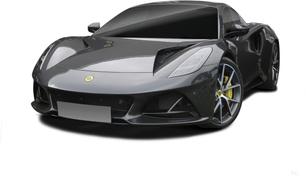
All of which is a very long way to get us to the car we’re actually testing - the MY24 Lotus Emira.
This is the last petrol-powered sports car from Lotus, and while it has been available already with a V6 engine, it has recently arrived with a Mercedes-AMG four-cylinder turbo.
Given its place in the grand scheme of things, the Emira not only needs to live up to the legacy of the iconic models that came before it, but also needs to lay the foundations for the brand’s electric future. Which is a lot of pressure for one car to carry…
To say the Lotus Exige 350 Sport exists at the very pointy end of motoring is a sharp understatement. It is, in essence, a track car that you’re somehow allowed to drive on the road, which means it's hugely compromised in various ways as a vehicle for day-to-day use, yet it's not really fair to criticise it for those failings, because commuting was never its intended purpose.
While it would obviously shine in its natural environment of a race circuit, the fact is you could also enjoy it enormously between track days if you pointed it at a suitably smooth and winding bit of country blacktop.
The performance, handling, steering and stopping are all fantastic, in the right conditions, and you can see how someone might justify it to themselves as a far cheaper version of a ($327,100) Porsche 911 GT3. The difference being that a Porsche doesn't make you fold yourself up like a pocket knife every time you get in.
The Lotus, then, is a car for the extreme enthusiast, only. And possibly for nudists, too.
If this really is the final petrol-powered Lotus sports car then it’s a sad day for fans of the brand and its history. But it’s also worthy of celebration because they have made a car that is genuinely impressive.
It may not be perfect, and it will have to fight hard to lure buyers away from Porsche, BMW and co. but for anyone who enjoys a dynamic, engaging and incredibly fun sports car the Emira should be on your short-list.
Alternatively, if you’ve always dreamed of buying a traditional Lotus sports car and haven’t got around to it until now, this is your last chance so don’t wait too long.