What's the difference?
Driving naked is ill-advised, and possibly illegal, but taking a spin in the Lotus Exige 350 Sport is as close as you'd ever want to get. It's not so much that you feel you've left your clothes at home, but that the car has shed its accoutrements, and indeed its very flesh, leaving you with a kind of skeletal vehicle; just bare bones and muscle.
What this punishingly hard and fiercely focused machine does to your bones and flesh is best described as extreme chiropractry - in particular the stress of ingress and egress - but fortunately it makes up for the moans, bangs and bruises by fizzing your adrenal glands in a big way.
The question is whether the fun is worth the suffering, and the $138,782.85 price tag.
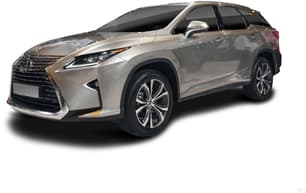
It's just about so late to the seven-seat party that all that remains is a tired cleaner sweeping up confetti and cake crumbs, but Lexus has at last launched an SUV with a third row of seats.
Well, technically it hasn’t so much launched a new model as it has extended its existing large SUV, adding a 110mm extension behind the rear wheels to squeeze in two extra seats and form the RX L
Lexus shifted around 2000 units of its five-seat RX last year, and the brand’s local executives reckon 20 per cent of premium SUV shoppers are chasing a seven-seat car. If those numbers stack up, it could mean a 400-strong annual sales boost for the RX range.
A big deal for the Japanese premium brand, then. But what about the rest of us? Is bigger really better for the RX?
To say the Lotus Exige 350 Sport exists at the very pointy end of motoring is a sharp understatement. It is, in essence, a track car that you’re somehow allowed to drive on the road, which means it's hugely compromised in various ways as a vehicle for day-to-day use, yet it's not really fair to criticise it for those failings, because commuting was never its intended purpose.
While it would obviously shine in its natural environment of a race circuit, the fact is you could also enjoy it enormously between track days if you pointed it at a suitably smooth and winding bit of country blacktop.
The performance, handling, steering and stopping are all fantastic, in the right conditions, and you can see how someone might justify it to themselves as a far cheaper version of a ($327,100) Porsche 911 GT3. The difference being that a Porsche doesn't make you fold yourself up like a pocket knife every time you get in.
The Lotus, then, is a car for the extreme enthusiast, only. And possibly for nudists, too.
Lexus has seemingly added two extra seats to its RX range without any design or dynamic drawbacks. If you're a fan of the five-seat car, there's little doubt you'll be a fan of this one, too.
What it will come down to, though, is how often you use the third row of seats, and how big the humans that will be sitting in them in are. If they're for kids or for occasional use, the space will be ample. But if your child has undergone a Tom Hanks in Big-style growth spurt, you will likely find the space back there too tight for everyday use.
The Lotus philosophy is summed by this slightly absurd mission statement: "Simplify, then add lightness". In the words of the great Barnaby Joyce "you don’t have to be Sigmund Freud" to work out that lightness is not something you can 'add', but you get the idea.
Everything about a Lotus is focused on the power-to-weight ratio, and this 350 Sport version takes the Exige to the ultimate degree, weighing in a full 51kg lighter than the S version, at just 1125kg, and with its hefty 3.5-litre supercharged V6 it is capable of lapping the company’s Hethel, UK test circuit a full 2.5 seconds faster.
Lap times, rather than road manners, are what this car is all about, and as such there are no creature comforts of any kind.
The Exige is an eye-catching beast, though, looking a bit like Darth Vader's helmet strapped to a skateboard. Everything about it is a statement of intent, and while the interior is as bare as Barnaby's brain, the gear lever, with its exposed workings and shiny silver knob, is a thing of strange beauty.
All the action takes place at the back end here (essentially from the rear wheels back), with Lexus adding 110mm in length to form the RX L, which sits on an identical wheelbase to the five-seat car.
They deserve credit for not making this seven-seat version feel like a behemoth, with the extension in keeping with the style of the five-seat car (same 'floating roof' sitting above a kinked pane of glass), with only the more vertical and extended boot line hinting at the third row inside.
Elsewhere, it’s business as usual for the RX L, with the bigger model sharing the sharply angled body styling, narrow headlights and ferocious-looking grille of the standard RX.
Inside, expect a premium-feel interior, with leather seats in the first and second rows (the third gets the man-made stuff), elegant wood finishing and a sleek and simple dash set-up dominated by a floating screen in its centre.
Both the words 'practical' and 'space' have no place in a road test of this Lotus, so shall we just move on?
Oh, all right. There is no shoulder room to speak of and to change gears you have to fondle your passenger's leg. You're also in danger of breathing into each other’s mouths accidentally, you’re sitting that close.
Speaking of impractical, the door apertures are so small, and the whole car so low, that getting in or out is about as much fun as attempting to hide in a child's suitcase.
Cupholders? Forget it, nor is there anywhere to put your phone. There are two tiny oddment storage holes just near each well-hidden door handle, and a kind of slidey, slick shelf where a glove box might be, on which it’s not safe to leave anything.
Put things on the floor and they will slide under the super low seats and never be seen again.
The Lotus people pointed out a parcel shelf behind the seats, but I think they imagined it, and there is a tiny boot at the rear, behind the engine, which is smaller than some actual boots.
You know how there are some seven-seat SUVs in which, at a pinch, you can squeeze two adults into the third row? Well, the RX L isn't one of them.
For one, climbing over the second row (after pulling a manual handle that Lexus says is quicker than an electric set-up) requires some acrobatics. And once in the seat, my head (I'm 175cm) found itself in an intimate relationship with the roof. My knees were forced into the seat in front, and most worryingly, my presence pushed the second row far enough forward to make that passenger uncomfortable, too.
Still, how often are you really going to squeeze adults back there? There is certainly enough room for younger kids, or - as I suspect is more likely - for the third row to be used as an in-case-of-emergency option. It can house a child seat, too.
There's not a bad ambiance back there, though, with artificial leather seats, two central cupholders and tri-zone climate with vents and temperature controls. Middle-row riders now get an extra 45mm of forward adjustability (to compensate for the third row), and there are two cupholders hidden in the pull-down seat divider and bottle room in each of the rear doors.
Up front, expect two cupholders, along with a pocket in each door, while the large central storage bin is home to two USB connection points and a power source, the latter matching a second power source underneath the air-conditioning controls.
And so, to the boot. All three rows in place, you'll find 176 litres of storage to the seat-tops (211 litres to the roof). Lower the third row, and that number climbs to 433 litres. Drop the second and third row, and you'll find 966 litres of storage.
The question of 'value' is a tricky one when you’re looking at a $138,782.85 car that’s about as useful in day-to-day life as a matchbox-sized handbag. But you have to consider what people buy a Lotus for, and the answer has absolutely nothing to do with practicality.
A car like this Exige 350 Sport is purely purchased as a toy, a track-day special that you can, in theory, drive to the circuit via public roads. Franky, if I was rich enough to have one I’d still transport it there on the back of a truck.
Relatively speaking, you could have a far more practical and infinitely more comfortable Porsche Cayman for $30K less, but the Lotus is $30K cheaper than the similarly track-focused and brutal ($169,990) KTM X-Bow.
It is the opposite of comfortable.
In terms of features, you get four wheels, an engine, a steering wheel, some seats, and that’s about it. You can buy a circa 1993 removable-face two-speaker stereo, which you can't really hear over the engine and road noise, for $1199. Oh, and they do throw in air conditioning, which is also noisy.
Our slick-looking metallic black paint was also $1999, the 'full carpets' another $1099 (expensive floor mats, basically), the Alcantara trim pack $4499, cruise control (really?) $299 and the hilarious optional 'Sound Insulation' $1499 (I think they actually forgot to fit it). All up, our press car’s price climbed to $157,846, which, I have to say, is no one’s idea of good value.
On the plus side, the local Lotus people - Simply Sports Cars - do offer features a buyer would love, like regular Lotus Only Track Days, a chance to take part in the Phillip Island 6 Hour and the Targa High Country event, and various other racy experiences.
First, the bad news. There's a price punish for opting for the seven-seat RX. How much, though, depends on which trim level you decide on.
The RX L arrives in 'Luxury' and 'Sport Luxury' trim levels, and with two engines; a petrol-powered V6 or a hybrid option that adds an electric motor. Luxury prices start from $84,700 (a $3280 increase over the five-seat car), while the Sport Luxury models start from $101,500 (a $1630 rise).
Opt for a Luxury car ($84,700 for the 350L, $93,440 for the 450hL) and you'll find leather seats in rows one and two, and artificial leather in the third. You'll also get heated and ventilated front seats, a leather-wrapped steering wheel and tri-zone climate control.
Outside, expect proximity unlocking, 20-inch alloys, LED headlamps and DRLs as well as standard roof rails. Technology is handled by a nav-equipped, 8.0-inch display that pairs with 12 speakers. There is no Apple CarPlay or Android Auto, though, and the entire system is operated via the 'Lexus Remote Touch' mouse pad thingy that I can't get used to no matter how hard I try.
Spring for the Sport Luxury ($101,500 for the 350L, $110,240 for the 450hL) and you'll add a colour head-up display and moon roof, as well as adaptive suspension, heated second-row seats, a nicer interior treatment and LED headlights with adaptive high beam. Your screen is bigger (now 12.3 inches), and it now pairs with a 15-speaker Mark Levinson stereo, too.
In the past, Lotus engineers were satisfied with the power they got from tiny four-cylinder Toyota engines, but this Exige 350 Sport is a Very Serious Car and thus has a relatively whopping 3.5-litre, supercharged V6 shoehorned into its backside, which makes 258kW and 400Nm, and that's enough to fire this tiny machine from 0-100km/h in just 3.9 seconds, although it feels, and sounds, a lot faster.
The six-speed gearbox feels like it's been stolen from an old racing car and is an absolute joy to snick shift at speed.
There are two engine options on offer here; the V6 of the 350L or the hybrid powertrain of the 450hL.
The six-cylinder petrol engine is good for 216kW at 6300rpm and 358Nm at 4600rpm, sending that power to all four wheels via an eight-speed automatic transmission.
The hybrid option uses the exact same engine, just with lower outputs of 193kW at 6000rpm and 335Nm at 4600rpm. It's paired with an electric motor that lifts the total output to 230kW. That combination pairs with a CVT auto, sending power to all four wheels.
Lexus claims identical performance figures for both options, with a 0-100km/h sprint of 8.0 seconds and a top speed of 200km/h.
Lotus claims a combined fuel economy figure of 10.1L/100km. We don't believe that would be easy to achieve, because the temptation to rev the hell out of it and hear it roar would be too great, and too constant.
The petrol V6 will require a claimed 10.6L per 100km on the combined cycle, with the hybrid predictably performing better, returning 6.0L/100km on the same cycle. Emissions of CO2 are pegged at 234g/km (V6) and 137g/km (hybrid).
The V6-powered RX boasts a 72-litre tank, while the hybrid shaves several of those off, offering 65 litres.
It's rare to find a car that is such an improbable mix of furious fun and infuriating annoyance. The Lotus is rattly, noisy, hugely firm to the point of punishing, with seats that offer encouragement but not support.
It is the opposite of comfortable and so hard to see out of that driving it around town, in any sort of traffic, feels borderline dangerous. There’s also the distinct sensation that you’re so low and so little that all those people in their SUVs won't see you.
Throw in the fact that it's so painfully, stupidly difficult to get in and out of and it's definitely not the sort of car you take if you're heading to the shops. I got so sick of its hard-edged annoyances at one stage that I became too grumpy to even take people for joy rides in it. I just couldn’t be bothered with the hassle, but then an inner-city suburb with high kerbs and even higher speed humps is not the Exige's natural environment.
The gearbox is a thrill a minute, as is the engine.
Making it even more of a challenge around town, at low speeds or in parking situations is the steering, which isn't so much heavy as wilfully obtuse. Doing a three-point turn is the equivalent of 20 minutes of bench pressing your own body weight. At least.
Out on a winding bit of country road, however, the steering becomes one of the best things about the car, because its pure, unassisted weighting feels so alive in your hands. There’s a sense of actually wrestling, or finessing it around corners that makes you feel a bit Ayrton Senna.
Indeed, the whole car comes alive, and starts to make some kind of sense, once you're on a smooth, perfect piece of tarmac. It is fast, noisy, thrilling, utterly and overtly involving, stiff of chassis and firm of ride, with brakes capable of pulling you up with indecent haste. It’s also, thanks to its low centre of gravity and mid-engined layout, beautifully balanced.
The gearbox is a thrill a minute, as is the engine, particularly once you explore the upper rev ranges, at which point the scenery really does become a scary blur out the ridiculously small windscreen.
Sure, you can't see anything behind you other than the engine, but what a lovely sight that is, and nothing is going to catch you anyway.
It does feel edgy, of course, and sharp, and it’s not as easy or refined to drive as some cheaper sports cars; an MX-5 makes for a far more pleasant companion. But this is an extreme Exige, a machine built by and for genuine enthusiasts.
And, above all, for the sort of people who will take it to a race track, which is where it both looks and feels completely at home.
Unfortunately, on public roads, it would be annoying more often than it would be thrilling, but the truly hardcore Lotus aficionados would never admit such a thing.
Let’s start with the good news: having admittedly only been behind the wheel for a shortish stretch (and a lot of that was on a freeway) I’ll be damned if I can spot the difference from five- to seven-seater.
Its 110mm longer than the five-seat car, of course, and it's heavier, too. And a more thorough test might well reveal those extra kilograms from behind the wheel. But I suspect you'd have to be truly pushing the RX L around some serious corners to have any chance of noticing.
Keep in mind, this isn't the sportiest option in the segment, and this L version isn’t either. The steering feels a little vague and flat on-centre, and neither engine offers face-peeling acceleration. But the ride is terrific, the cabin is comfortable and polished and both the Luxury and Sport Luxury are ferociously well-equipped.
We'll wait until we get the RX L into the office for a more thorough examination, but after our brief taste test, we reckon there'll be no on-road penalty in opting for the seven-seat option.
Unsurprisingly, considering it will sell fewer than 100 cars in Australia, Lotus has not had the Exige ADR crash tested, so there's no star rating. You do get two airbags, passenger and driver, as well as ABS, 'Hydraulic Brake Assist', 'Lotus Dynamic Performance Management', driver-selectable ESP with three modes, cornering brake control and EBD.
Lexus has a strong reputation on this front, and the RX L is predictably well-sorted from a standard safety viewpoint.
Expect 10 airbags (with the curtain bad extended to the third row), a reversing camera, blind-spot monitoring, rear cross-traffic alert and rear parking sensors. 'Lexus Safety Sense+' also arrives as standard, which adds active cruise control, lane-keep assist, auto high beam and an AEB pre-collision safety system the now includes pedestrian detection for the first time.
The five-seat RX was awarded the maximum five-star ANCAP crash rating when tested in 2015.
Your Lotus comes with a three-year unlimited kilometre warranty and three years of roadside assist. A service costs $295, plus parts.
Expect a four-year/100,000km warranty (that's 12 months longer than both Germans), and the RX L will require a trip to the service centre every 12 months or 15,000kms. Your first service is free, and total maintenance costs for the first 60,000km will run you $2031.31.