What's the difference?
Lotus - it’s one of the most iconic names in the history of automobiles and was once Great Britain’s answer to Ferrari - on the road and the Formula One circuit.
But that was a long time ago, in the 1960s and ‘70s. Since then Lotus has been on a rollercoaster ride through various owners who put in various levels of investment, resulting in various degrees of success.
But through it all, Lotus has stayed true to the ethos of company founder, Colin Chapman - ‘simplify, then add lightness.’ It’s obviously a playful saying, but it spoke to the core elements of Lotus cars, agility and driving purity.
Lotus rarely worried about big, powerful engines and instead focused on creating the best-handling cars.
That was the past, though, because Lotus Cars is now owned by Geely, the Chinese automotive giant that also counts Volvo, Polestar, Zeekr and more under its control.
Geely’s vision for Lotus is very different to what has come before, with a future focused on building electric SUVs and sedans; such as the already released Eletre and Emeya.
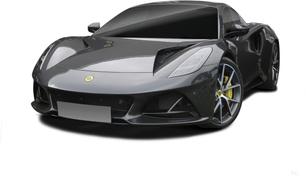
All of which is a very long way to get us to the car we’re actually testing - the MY24 Lotus Emira.
This is the last petrol-powered sports car from Lotus, and while it has been available already with a V6 engine, it has recently arrived with a Mercedes-AMG four-cylinder turbo.
Given its place in the grand scheme of things, the Emira not only needs to live up to the legacy of the iconic models that came before it, but also needs to lay the foundations for the brand’s electric future. Which is a lot of pressure for one car to carry…
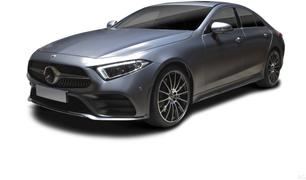
There are people who probably wish the Mercedes-Benz CLS would just go away. Call security, have it escorted off the premises. That’s probably because they don’t agree with its styling. For them, it’s not how a large four-door Mercedes-Benz should look, with its ‘rude’ coupe roofline.
But for some of you those looks are exactly why you want it, and there’s enough of you out there for Mercedes-Benz to tell us at the launch of the new-generation CLS that the model is here to stay.
“You don’t surrender a segment… a vehicle has to do 100 units to justify bringing it – this will do 100 units no problem sat all,” were the exact words from Benz’s head of communications David McCarthy.
You could say Benz created the four-door coupe segment when it launched its first-generation CLS 14 years ago, triggering its rivals to fire back with their own four-door coupes - the Audi A7 and BMW 6 Series Gran Coupe.
Far from surrendering, the CLS has evolved again with this third-generation bringing new engines and styling. So, what do you gain and what will you have to surrender (for lack of a better word) if you choose to go down the non-traditional route of the CLS?
I found out when I drove the new CLS 450 4Matic for the first time on Australian roads at its recent launch.
If this really is the final petrol-powered Lotus sports car then it’s a sad day for fans of the brand and its history. But it’s also worthy of celebration because they have made a car that is genuinely impressive.
It may not be perfect, and it will have to fight hard to lure buyers away from Porsche, BMW and co. but for anyone who enjoys a dynamic, engaging and incredibly fun sports car the Emira should be on your short-list.
Alternatively, if you’ve always dreamed of buying a traditional Lotus sports car and haven’t got around to it until now, this is your last chance so don’t wait too long.
The Mercedes-Benz CLS has proven to be a niche hero, creating a segment and then evolving into something even more elegant, while keeping its unique appeal. A beautiful, modern cabin and the new engine in the CLS 450 provides the swiftness to match those looks.