What's the difference?
Lexus has finally brought a plug-in hybrid to the Australian market with the RX450h+, and we’ve been testing the second-from-the-top Sports Luxury grade to see how it stacks up.
Promising a blend of electric efficiency and the high-end comfort Lexus is known for, this large SUV steps into a competitive segment. But does it deliver on both fronts?
The truly great thing about great wealth - I mean like, drop $1 million on a new Rolls-Royce with a casual yawn and a mouse click wealth - would be how great it is not having to do anything for yourself.
Personally, I would hire a chef, so I’d never have to cook again, and a pilot to fly my private jet, so I’d never have to catch pneumonia while flying 34 hours to Ibiza with strangers to do my weird job (oh, and if I was rich I wouldn’t have to work anyway), and in theory I might even hire a chauffeur for those odd times when I didn’t want to drive myself in one of my fleet of beautiful cars.
All right, so I can’t even imagine that last one, but the most interesting fact I gleaned while in Spain, tirelessly testing the new Rolls-Royce Cullinan Series II, is that even the ridiculously rich are falling out of love with not driving these days.
Perhaps, being tech-savvy types, they can see the end of driving and the rise of autonomy coming and they want to make the most of it while they still can. But according to Rolls, the percentage of its buyers who sit in the back rather than in the driver’s seat has flipped entirely over the past 15 years.
Back in the day, 80 per cent of Rolls owners were back-seat passengers, blowing cigar smoke at the back of a chauffeur’s head, while 20 per cent actually drove their expensive motors.
Today, the number who drive themselves has soared to 80 per cent, and apparently that’s not just because it would feel weird being chauffeured around in what is now the most popular Rolls-Royce by far - the Cullinan SUV.
The other big change, apparently, is that the average age of a Rolls-Royce buyer has also dropped, from 56 to the low 40s. And that means more buyers with kids, and gold-plated prams and other associated dross, which means they need bigger Rolls-Royces, family-sized SUV ones, which again helps to explain why the Cullinan now makes up as much as half of all the brand’s sales in some markets.
And why the arrival of this, the facelifted, tweaked and twirled Series II version of a car that was greeted cynically by many in the media when it arrived (“one group was not sceptical, and that was our clients,” as a Rolls spokeswoman delightedly pointed out) is such a big deal.
The new Lexus RX450h+ Sports Luxury is packed with a wealth of premium features and strikes a solid balance between refinement and practicality. There are enough thoughtful touches that make everyday driving a little easier.
You’ll get the most out of the plug-in hybrid powertrain if you’re able to charge it regularly; ideally every day. That might not always be practical for busy people on the go, but overall, the RX450h+ manages to blend efficiency with Lexus’ signature comfort and quality.
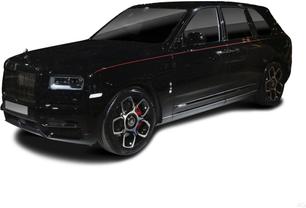
The Cullinan might not be the most beautiful or traditional Rolls-Royce, and it’s a shame modern success means providing an SUV option to everyone, but it’s still a remarkable machine, either to drive or just to sit in. It remains not just a marvel of engineering, but a marvellous of engineering. Hats doffed, old bean.
Note: CarsGuide attended this event as a guest of the manufacturer, with travel, accommodation and meals provided.
The RX isn’t breaking new ground with its plug-in hybrid design, but it still delivers that signature Lexus understated refinement.
The strong, flowing body lines, 21-inch alloy wheels and updated 'spindle grille' all give it presence without screaming for attention.
And in a segment where boxy and bulky designs tend to dominate, the RX’s swoopy silhouette helps it stand apart in all the right ways.
Inside, the cabin feels considered and luxurious. There's a heavy use of premium materials, including the leather and suede upholstery, plush soft-touch surfaces and the big, crisp displays that make the space feel modern and high-end.
The panoramic sunroof brings in loads of natural light, too, which is especially welcome given the dark headliner that might otherwise feel a little heavy.
If I have one gripe, it’s the thin steering wheel, which doesn’t quite match the otherwise solid, tactile feel of the rest of the interior. But overall, the cabin is a space that feels luxurious and well-executed. It's quietly confident, just like the RX.
It is something of an achievement when a team of designers manage to make a facelifted version of a vehicle less ugly, daunting and disappointing than the original.
I thought the first Cullinan, launched five years ago, looked like a London black cab that had been mounted and inseminated by a double-decker bus. Big? Sure? Impressive? Yes. Beautiful? Only if you think Boris Johnson is sexy.
There was a lot of chat at the launch about the changes made for Series II, but in summary they tried to make it look more… like a boat, according to Exterior Design Lead Henry Clarke.
“We don’t look for speedy, overcomplicated lines, we take our inspiration from the luxury world, and it’s often from yachts, it’s that same sense of scale and grandeur, that’s the key to the timelessness of a Rolls-Royce,” he explained.
“We’re not focused on the world of automotive design, and if you look at the Cullinan it has that ethos you think of with a yacht, that strong, vital bow and then everything rearwards, the back of a yacht, has an elegance and grace to it.”
Fair enough, but what I appreciated was that they’ve squared the front end off a bit more, by outlining the grille, adding some gills beneath it and putting in some natty DRLs, and then rounded off the rear a little as well, so that it looks less… awful.
Indeed, after a couple of days of staring at it (and particularly admiring how good it looks in your rear-view mirror when behind you), I did come around to its looks. Certainly a lot more than last time.
And strangers driving past seemed to really like it, because they keep smiling and clapping at me.
The RX cabin is thoughtfully laid out and impressively practical, with a premium feel that doesn’t come at the cost of everyday usability.
Up front, there’s plenty of space for driver and passenger, yet the stepped dash design brings a sense of intimacy. The electric front seats are seriously comfortable, with four-way lumbar support and extra adjustment functions that make this an easy choice for long drives.
Storage options are generous, too. There’s a clever dual-opening centre console, large glove box, multiple phone-sized shelves, map pockets and a couple of cup- and drink holders in each row.
Charging is taken care of by four USB-C ports, one USB-A port and a wireless charging pad.
Tech is up-to-date and well-integrated. The upgraded 14-inch media display looks crisp, supports wireless Apple CarPlay and Android Auto, and is paired with a revamped 12.3-inch digital instrument cluster and a colour head-up display.
The cluster’s new layout is modern and much easier to read than the previous offering. The digital rear view mirror also earns its keep when the cabin’s packed with passengers or gear.
One of my favourite touches? The seat controls on the side of the front passenger seat. It makes quick work of moving the seat forward, especially helpful when you’ve got a kid clambering in with a school bag full of projects.
Access to the rear row is easy, but the stadium-style seating, where you're perched noticeably higher than those in the front, won’t be for everyone.
That said, the rear seats are plush and padded, though they lack side bolsters, which rear passengers might notice during cornering.
Legroom is generous and the hardened kickplates are a dream to clean when your child’s treating the seatbacks like a climbing wall.
My eight-year old gives the back seat a glowing review, thanks to its creature comforts, including rear climate control, directional air vents, seat heating/ventilation on the outboard seats, two USB-C ports and retractable sun-blinds, which are a crowd favourite in our household.
There are three top-tether anchor points, and the bench is wide enough to fit three child seats, though bulky booster seats might be tricky due to the raised seating height.
At the back, the boot is well set up for families, offering electrically folding rear seats, a 12-volt socket, flat loading floor, and a hands-free powered tailgate.
Under the floor, there’s a small compartment for your charging cables (Lexus throws in two!) and a usable 612L of capacity when all seats are in use. One downside, though, is the lack of a spare tyre as you just get a tyre repair/inflation kit.
In terms of being a vehicle you might actually use - and keeping in mind that if you can afford one of these you’ve also got at least a half dozen other choices - every day, the Cullinan is the pick of the Rolls-Royce enclosure.
From the big boot space - 600 litres with the seats up, 1930 litres with them down - and its lovely little Viewing Suite, through the spacious rear relaxing zone to the absurdly comfortable and plush front seats, there’s a sense of grandeur about the whole Cullinan experience.
You can opt for a champagne fridge between those rear seats, if you like, or you can just lie back and stare at the blinking pins of light in your 'Starlight Headliner' and imagine that each one of them represents one of your millions, smiling down at you.
It’s a lovely place to be, in short, and with its super-thick double glazed glass, coated with an acoustic layer on top of that, and carpets thick enough to keep out road noise on their own, it’s also a very pleasantly quiet one.
There are four variants in the RX range, and we’re testing the 450h+ Sports Luxury AWD, which sits just below the flagship and packs in plenty of premium kit for its $123,500, before on-road costs, price tag.
That makes it slightly more affordable than its main PHEV rivals; the BMW X5 xDrive50e (from $125,885 MSRP) and the Volvo XC90 Ultra (from $124,466 MSRP).
The Volvo does offer seven seats to the Lexus’ five, which may matter for larger families, and both rivals also outdo the RX on electric-only driving range - 65km in the RX compared with 77km in the Volvo XC90 and a generous 101km in the BMW X5.
Still, the RX fights back with a seriously stacked features list. Highlights include a panoramic sunroof, 10-way powered front seats with heating and ventilation, electrically folding rear seats (also heated and ventilated in the outboard positions), and a heated, power-adjustable steering wheel. Sound is taken care of by a premium 21-speaker Mark Levinson surround system.
Technology has had a solid upgrade with the 14-inch touchscreen multimedia display, 12.3-inch digital instrument cluster, digital rearview mirror, colour head-up display, live traffic navigation, wireless Apple CarPlay and Android Auto, 4G connectivity, four USB-C ports, one USB-A port and a fast wireless charging pad.
There’s also access to the 'Lexus Connected Services' app, allowing you to remotely lock or unlock the vehicle, pre-set the cabin temperature via three-zone climate control, configure driver profiles and even use your phone as a digital key.
Practical features include keyless entry and start, rain-sensing wipers, dusk-sensing LED headlights, rear sun-blinds, intelligent seatbelt reminders for the first two rows, a child presence alert and a hands-free powered tailgate. However, due to the plug-in hybrid system there’s no spare tyre, just a tyre repair kit.
Value? Price? What are these things you speak of, little plebeian person? Such is the disdain for such things at Rolls-Royce that they wouldn’t even tell us what the Series II is going to cost when it lands in Australia later this year.
The people who can afford one don’t much care, of course, but for the rest of us, who like to shake our heads and make low, whistling noises, you can bet the price will rise just a little from where it was with the original Cullinan - and that was $705,000 for the basic car, or closer to $795,000 for the sportier, and blacker, Black Badge variant.
In terms of value, it’s hard to grasp that any car could cost that much, but for a Rolls buyer the equation is very different. They don’t need a Rolls, no-one does, but it makes a nice change from buying art works, gold or small countries.
In terms of features, it has almost too many to mention, but let’s pause on the marvellous massage seats, the bespoke sound system, entirely unique to this case and built by Rolls itself, with incredible levels of detail, the Rolls umbrellas tucked into each door and the very lovely 'Viewing Suite'.
This consists of two pop-up seats in the rear, with a little champagne and canapés table in between, where “you can watch your children play football”.
Try that in Australia, at the rugby league, and you’ll be covered in half-time oranges and abuse spittle in no time. Stick to the polo, perhaps.
Under the bonnet the RX450h+ Sports Luxury runs a plug-in hybrid powertrain that pairs a 2.5-litre four-cylinder petrol engine with a CVT auto and dual electric motors - one on each axle. Together, they produce a total of 227kW of power, though Lexus doesn’t quote a combined torque figure.
Still, it’s quick off the mark for a large SUV, with a 0-100km/h time of 6.5 seconds. There’s more than enough grunt for daily driving and overtaking, even if it doesn’t quite match the outright power of its key PHEV rivals.
Rolls-Royce has committed to being a fully EV brand by 2030, so it’s a safe bet this Series II Cullinan will be the last one offered with its storming, staunch V12 engine.
Indeed, Rolls hinted the only reason it hung around in this version is that this is only a mid-life face-lift for the Cullinan, and the car that replaces it will arrive on an entirely new, all-electric platform.
As good as the EV Roller, the Spectre undeniably is, driving this old-school Cullinan with its 6.75-litre twin-turbocharged V12 making the kind of thumping, torque-thick, nothing-is-too-much-trouble acceleration is a hoot.
It’s not loud, but it’s just loud enough that you can enjoy its deep, brassy tones, and it’s got plenty of power in reserve to hurl even this 2.75-tonne machine past lesser vehicles with ease.
There are two Cullinans to choose from, of course, with the base model providing a very pleasant 420kW and 850Nm or the sportier Black Badge version (Rolls calls it the brand’s “alter ego”) with 441kW and 900Nm.
The plug-in hybrid system brings solid efficiency, with claimed fuel use of just 1.3L/100km. In real-world conditions (mostly urban driving with regular recharging) I managed a respectable 4.8L/100km, which makes a strong case for the hybrid set-up.
The fuel tank holds 55 litres and it's worth noting Lexus recommends using a minimum of 95 RON unleaded petrol to fill it.
Using our real-world economy figure you can expect a range in excess of 1100km between fills.
The RX450h+ is fitted with a relatively small 18.1kWh lithium-ion battery, supporting an NEDC electric-only range of up to 65km.
While that’s fine for short daily trips, it’s shorter than you'd ideally want in a family SUV of this size and it lags behind rivals like the BMW X5 and Volvo XC90 in this department.
Charging is simple enough. The RX uses a Type 2 charging port and accepts up to 7.0kW on AC power, which means a full charge takes around 7.5 hours, perfect for overnight top-ups. Lexus also includes an at-home charging cable and second adapter cable as standard, which is a thoughtful touch.
Rolls-Royce claims the Cullinan will provide you with between 16 litres per 100km and 16.8L/100km, but I believe you’d have to drive it quite steadily to achieve even that quite appalling figure.
Twelve cylinders, 2.75 tonnes, you do the math, but it's interesting to note that with a nearly full tank - and we’re talking 100 litres of fuel - my distance to empty was looking like barely more than 500km - that’s an EV-like number.
The RX450h+ delivers power that’s pert and prompt, with genuine bursts of acceleration that make driving fun. It’s always ready to go and there's no lag in stop-start traffic - which gives it a lively, dynamic feel around town.
The transition between petrol and electric power is seamless; you hardly notice the switch, which makes for a smooth, refined driving experience. The cabin is impressively quiet, even on the highway, making long trips comfortable and peaceful.
Regenerative braking isn’t adjustable and is subtle enough that many won’t notice it which is likely a plus for fans of traditional internal combustion engines who are making the PHEV leap.
The adaptive variable suspension adds a sporty edge to handling, letting you confidently take corners at speed. There’s some body roll but the RX never feels top-heavy or unsettled.
The steering carries the weight of the SUV but remains well-balanced and responsive. Overall, it’s a well-tuned machine that’s a pleasure to drive.
Maneuverability is a strong suit, too, thanks to a tight 11.8-metre turning circle and a clear, easy-to-use 360-degree camera system. Parking is easy-as-pie, which a lot of drivers will appreciate.
The first word that comes to mind when describing the experience of driving a Rolls-Royce the size of a small housing estate is 'intimidating', because it's one of those cars where you take a few deep breaths before setting off (while muttering “please don’t crash it”) and then some sharp intakes of breath the first few times you find cars coming towards you on a narrow road, of which there are many on Ibiza where we were summoned to drive it.
I followed a panicked young man from India who had never driven a Rolls, nor a left-hand-drive car before, and boy, he sure looked intimidated, even if he didn’t ever get above 30km/h.
The incredible thing about the Cullinan, however, is how quickly it relaxes you and how astonishingly light and easy it is to drive. The steering feels almost absurdly light at first, you really can drive it with just one finger, two if you’re feeling cautious, but once you get used to it it just feels very Rolls-Royce.
The whole brand lives on the idea of effortlessness, wafting over the world, and the much-touted 'Magic Carpet Ride', and it really does deliver that sense of ease. You’re almost as relaxed at the wheel as you are in the rear seat (and the massage functions only make you feel more so).
Speed humps do upset the Cullinan, but only a very little, and you’re aware when the car finds broken surfaces, but only distantly so. It feels like someone is dealing with bumps and imperfections in a far-off-place, perhaps the car’s basement, and it shouldn’t worry you too much.
When traffic annoys you, you can just make it disappear by engaging your whumping V12 engine and making the world go briefly blurry.
Attempt to throw the Cullinan through sharp bends at speed, however, and it reacts in much the same way you’d expect the cruise ship it somewhat resembles to.
There’s a bit of body roll, but it’s all quite polite and a sense that if you need to drive like that, perhaps you should go and get one of your other cars.
The Black Badge version does feel just a trifle sportier than the base Cullinan but we’re splitting very grey and expensively coiffed hairs here.
The overall experience is one of grand relaxation, imperiousness and a certain touch of superior glee.
The RX earned a maximum five-star ANCAP safety rating in 2022, scoring highly across all protection categories: 90 per cent for adult protection, 89 per cent for child protection, 89 per cent for vulnerable road users, and 93 per cent for safety assist systems.
Standard safety gear includes eight airbags (dual front, front side, curtains, front centre, and driver’s knee) plus a comprehensive suite of driver aids. Standout features include emergency call functionality, child detection alert, side exit assist, front and rear collision warnings, park assist and emergency steering assist.
Additional tech covers blind-spot monitoring, driver attention monitoring, tyre pressure monitoring, daytime running lights, LED cornering lights, rear cross-traffic alert, lane departure alert, lane keeping assist, traffic sign recognition, and intelligent seatbelt warnings for the front two rows.
Visibility and parking are enhanced by a 360-degree camera system and front/rear parking sensors, while adaptive cruise control adds comfort on longer drives.
The rear seats have two ISOFIX mounts plus three top tether anchors, accommodating child seats safely. Autonomous emergency braking is active from 5.0 to 80km/h for pedestrians, cyclists, and backover and up to 180 km/h for cars.
The Rolls-Royce Cullinan SUV has not been ANCAP tested, but it feels safe because it’s bigger than a tank. It has eight airbags - driver, front passenger, two curtains, driver side, front passenger side, two rear passenger side), and a full-suite of active-safety tech including Forward Collision Warning and Automatic Emergency Braking.
The RX comes with a five-year, unlimited-kilometre warranty, which matches its key rivals but isn’t exactly class-leading by today’s standards.
Servicing is handled via a capped-price program, with each service costing $695. The intervals are well spaced at every 12 months or 15,000km, whichever comes first.
This Sports Luxury grade also includes a three-year complimentary 'Lexus Encore' membership, granting access to a handy phone app and member benefits at partners like Westfield and Ampol. On top of that, you get 24/7 roadside assistance for added peace of mind.
Questions about service intervals and warranties seem to confuse the people at Rolls, as if none of their customers have ever bothered to ask.
Yes, you would think servicing would be free when you’re pushing a $1 million price tag, and that the warranty would be for life, particularly considering the low mileage on these things, but it is, in fact, just a four-year servicing and warranty offer for Australian customers of this vehicle. So that means an unlimited-mileage warranty, including all services, for the first four years (at which point you obviously buy a new one). "Rolls-Royce Motor Cars will offer a service inclusive package but no pricing available yet and this will not be required until the fifth year of ownership."