What's the difference?
Lexus has finally brought a plug-in hybrid to the Australian market with the RX450h+, and we’ve been testing the second-from-the-top Sports Luxury grade to see how it stacks up.
Promising a blend of electric efficiency and the high-end comfort Lexus is known for, this large SUV steps into a competitive segment. But does it deliver on both fronts?
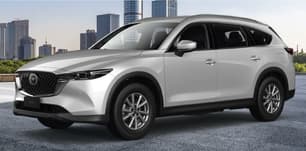
Mazda has a tendency to have a lot of similar looking horses in the stable; blink and you'll miss the (very) subtle differences between the CX-8 and the CX-9 but if you're not super keen on the bulk of the CX-9 and you've outgrown the space of the CX-5... this one's for you.
Especially, if you've been considering its competition - the Hyundai Santa Fe Elite CRDi AWD and Toyota Kluger GXL AWD. Both of which have become known for their features and space.
So, how does it compare? The CX-8 GT SP diesel all-wheel drive seats seven, has a decent boot space (albeit, when the third row isn't in use) and handles like a dream.
Perfect combination? Maybe. I've been driving it for the last week with my family to find out for you.
The new Lexus RX450h+ Sports Luxury is packed with a wealth of premium features and strikes a solid balance between refinement and practicality. There are enough thoughtful touches that make everyday driving a little easier.
You’ll get the most out of the plug-in hybrid powertrain if you’re able to charge it regularly; ideally every day. That might not always be practical for busy people on the go, but overall, the RX450h+ manages to blend efficiency with Lexus’ signature comfort and quality.
So, what did my family think about the Mazda CX-8 GT SP diesel all-wheel drive? I love how it performs on the road - it's super easy to drive and you don't notice how large it is in a car park.
There are some great family-friendly features scattered throughout and I like how practical this is too with the extra seats and top-tether points. The multimedia system isn’t my favourite and I would have preferred to have seen a few extra airbags and a 360-degree view camera, but overall, it’s a good family car and gets an 8.0/10 from me.
My son loved the sun blinds and the cool colour of the seats. He also gives it an 8.0/10.
The RX isn’t breaking new ground with its plug-in hybrid design, but it still delivers that signature Lexus understated refinement.
The strong, flowing body lines, 21-inch alloy wheels and updated 'spindle grille' all give it presence without screaming for attention.
And in a segment where boxy and bulky designs tend to dominate, the RX’s swoopy silhouette helps it stand apart in all the right ways.
Inside, the cabin feels considered and luxurious. There's a heavy use of premium materials, including the leather and suede upholstery, plush soft-touch surfaces and the big, crisp displays that make the space feel modern and high-end.
The panoramic sunroof brings in loads of natural light, too, which is especially welcome given the dark headliner that might otherwise feel a little heavy.
If I have one gripe, it’s the thin steering wheel, which doesn’t quite match the otherwise solid, tactile feel of the rest of the interior. But overall, the cabin is a space that feels luxurious and well-executed. It's quietly confident, just like the RX.
To be honest, I can't really tell the CX-8 and CX-9 apart on the road. They're both large SUVs that sport the classic Mazda bonnet - sharp and long. Up close, the CX-9 has a bulkier shape but otherwise they are remarkably similar.
The CX-8's darkened grille generates some interest with its lattice-work and there are enough shiny chrome accents scattered about the car that it looks pretty.
Yet, the sporty sharpness that Mazda is known for is still hinted at with its shaping and the 19-inch black alloy wheels.
Our model is finished in 'Platinum Quartz Metallic' and it is the highlight for the exterior styling for me. I think because it's such an interesting colour to look at - it varies a lot depending on lighting conditions. Sometimes, it almost has a sheen of pink to it and at others, it looks like pearly sand.
The interior looks polished and refined with its burgundy leather trim and soft-touchpoints. Again, there is a lot of chrome inside to make otherwise dull features, like air vents, pop out.
The RX cabin is thoughtfully laid out and impressively practical, with a premium feel that doesn’t come at the cost of everyday usability.
Up front, there’s plenty of space for driver and passenger, yet the stepped dash design brings a sense of intimacy. The electric front seats are seriously comfortable, with four-way lumbar support and extra adjustment functions that make this an easy choice for long drives.
Storage options are generous, too. There’s a clever dual-opening centre console, large glove box, multiple phone-sized shelves, map pockets and a couple of cup- and drink holders in each row.
Charging is taken care of by four USB-C ports, one USB-A port and a wireless charging pad.
Tech is up-to-date and well-integrated. The upgraded 14-inch media display looks crisp, supports wireless Apple CarPlay and Android Auto, and is paired with a revamped 12.3-inch digital instrument cluster and a colour head-up display.
The cluster’s new layout is modern and much easier to read than the previous offering. The digital rear view mirror also earns its keep when the cabin’s packed with passengers or gear.
One of my favourite touches? The seat controls on the side of the front passenger seat. It makes quick work of moving the seat forward, especially helpful when you’ve got a kid clambering in with a school bag full of projects.
Access to the rear row is easy, but the stadium-style seating, where you're perched noticeably higher than those in the front, won’t be for everyone.
That said, the rear seats are plush and padded, though they lack side bolsters, which rear passengers might notice during cornering.
Legroom is generous and the hardened kickplates are a dream to clean when your child’s treating the seatbacks like a climbing wall.
My eight-year old gives the back seat a glowing review, thanks to its creature comforts, including rear climate control, directional air vents, seat heating/ventilation on the outboard seats, two USB-C ports and retractable sun-blinds, which are a crowd favourite in our household.
There are three top-tether anchor points, and the bench is wide enough to fit three child seats, though bulky booster seats might be tricky due to the raised seating height.
At the back, the boot is well set up for families, offering electrically folding rear seats, a 12-volt socket, flat loading floor, and a hands-free powered tailgate.
Under the floor, there’s a small compartment for your charging cables (Lexus throws in two!) and a usable 612L of capacity when all seats are in use. One downside, though, is the lack of a spare tyre as you just get a tyre repair/inflation kit.
The CX-8 is a very practical family hauler because there's ample room in all three rows. Yes, even adults will be able to squeeze into that third row without too many complaints!
All rows enjoy well-cushioned seats and up front they are electrically adjustable, but unfortunately, only the driver's side has lumbar support.
The middle row can slide forward manually or by using the electric button found on the side of the seats... but doing it yourself is way faster.
They do slide far enough forward that you won't embarrass yourself too much when you have to clamber into the third row. Where the seats have a 50/50 split-fold and manual adjustments (accessed via the boot).
In the first two rows there are lots of individual storage options but the front enjoys the most. The middle console is deep enough to be useful and I like the dual opening lid. Each row gets a couple of cupholders and drink bottle holders, too.
The charging options are great, with each row getting two USB-C ports and the front getting a wireless charging pad and 12-volt socket.
All of the controls and dials feel within easy reach and the 10.25-inch touchscreen multimedia system graphics are clear.
You can use it as a touchscreen or opt for the rotary dial but switching between the two was awkward for me. Especially, since the touchscreen function is disabled when you are using the wireless Apple CarPlay. This also has wired Android Auto, for those users.
The amenities are practical throughout with a dark headliner, three-zone climate control and heated outboard seats and retractable sun-blinds in the middle row.
Good news for families because there are five top-tether points across the back rows and ISOFIX child seat mounts on the outboard seats in middle row, in case you need them.
You can fit a 0-4 rearward facing child seat and it shouldn’t impact on front passenger comfort.
My six-year old found it super easy to get in and out of this car because of the 205mm ground clearance and wide door apertures. He enjoyed the high seating position, too, but was disappointed he couldn’t see out of the sunroof!
The boot space is a bit cramped with all three rows are in use at 209L but folding the third row opens up a more respectable 775L - perfect for the average family and its stuff!
The loading space is level, with the temporary spare tyre and clever storage compartments housed underneath. There is a retractable cargo blind and net, luggage anchor points and a 12-volt port, too.
And, as always, I love a powered tailgate, which this has!
There are four variants in the RX range, and we’re testing the 450h+ Sports Luxury AWD, which sits just below the flagship and packs in plenty of premium kit for its $123,500, before on-road costs, price tag.
That makes it slightly more affordable than its main PHEV rivals; the BMW X5 xDrive50e (from $125,885 MSRP) and the Volvo XC90 Ultra (from $124,466 MSRP).
The Volvo does offer seven seats to the Lexus’ five, which may matter for larger families, and both rivals also outdo the RX on electric-only driving range - 65km in the RX compared with 77km in the Volvo XC90 and a generous 101km in the BMW X5.
Still, the RX fights back with a seriously stacked features list. Highlights include a panoramic sunroof, 10-way powered front seats with heating and ventilation, electrically folding rear seats (also heated and ventilated in the outboard positions), and a heated, power-adjustable steering wheel. Sound is taken care of by a premium 21-speaker Mark Levinson surround system.
Technology has had a solid upgrade with the 14-inch touchscreen multimedia display, 12.3-inch digital instrument cluster, digital rearview mirror, colour head-up display, live traffic navigation, wireless Apple CarPlay and Android Auto, 4G connectivity, four USB-C ports, one USB-A port and a fast wireless charging pad.
There’s also access to the 'Lexus Connected Services' app, allowing you to remotely lock or unlock the vehicle, pre-set the cabin temperature via three-zone climate control, configure driver profiles and even use your phone as a digital key.
Practical features include keyless entry and start, rain-sensing wipers, dusk-sensing LED headlights, rear sun-blinds, intelligent seatbelt reminders for the first two rows, a child presence alert and a hands-free powered tailgate. However, due to the plug-in hybrid system there’s no spare tyre, just a tyre repair kit.
The GT SP diesel AWD is one of the premium models, sitting third from the top and will cost you $65,560, before on road costs.
However, its price tag positions it as the most expensive compared to its rivals. With the closest rival being the Kluger at $65,310 and the most affordable being the Santa Fe at $60,000.
You do get a stylish-looking package with lots of features for your cash, like heated front seats, heated rear outboard seats, a tilt and slide sunroof, and premium leather interior trim.
There's some great tech scattered throughout, too, like the 10.25-inch touchscreen multimedia system, wireless charging pad, USB-A ports in the third row, Bose Premium sound system with 10 speakers, wireless Apple CarPlay and wired Android Auto.